A Belgian Visionary: Delvaux’s Life and Artistic Beginnings
Despite its size, Belgium has a long and distinguished artistic tradition that goes back to the Middle Ages, considerably pre-dating the foundation of the current state in 1830. Art from the areas making up modern Belgium is called in English Netherl...
Paul Delvaux, a name synonymous with unsettling beauty and dreamlike reverie, occupies a unique position within the landscape of 20th-century art. Born in Antheit, Belgium, in 1897, his journey to becoming one of Surrealism’s most compelling figures was far from predetermined. Unlike many artists who embraced avant-garde movements from youth, Delvaux initially pursued architecture at the Académie des Beaux-Arts in Brussels. This early training, however, proved unexpectedly formative, instilling within him a profound appreciation for spatial composition and classical structure – elements that would become hallmarks of his mature style. The rigid lines and precise perspectives he learned as an aspiring architect were not abandoned but rather subtly subverted, becoming the very framework upon which he constructed his enigmatic worlds.
The shadow of World War I loomed large over Delvaux’s formative years, a period that undoubtedly contributed to the pervasive sense of melancholy and unease found in his work. After briefly serving as an ambulance driver during the conflict, he turned decisively towards painting, initially exploring Expressionist tendencies before discovering the allure of Symbolism and, eventually, the burgeoning Surrealist movement. While Delvaux maintained a somewhat detached relationship with the official tenets of Surrealism – famously resisting strict adherence to André Breton’s doctrines – his paintings resonated deeply with the group's exploration of the unconscious mind and the irrational.
His early works, though less immediately recognizable as distinctly “Delvauxian,” reveal nascent themes that would later define his oeuvre: a fascination with trains, classical architecture, and the female form. These elements weren’t merely aesthetic choices; they were deeply personal symbols rooted in childhood memories and intellectual pursuits. The railway stations, for instance, evoked the atmosphere of his hometown and represented both escape and isolation, while the classical motifs reflected his academic background and a lifelong engagement with art history.
The Dreamscapes Unveiled: Recurring Motifs & Symbolic Language
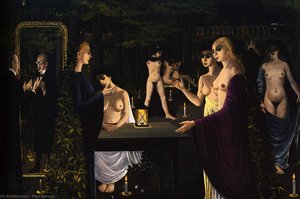 The Sabbath
Discover Paul Delvaux’s ‘The Sabbath,’ a haunting surrealist oil painting from 1962. Explore its dreamlike imagery, dark palette & classical influence – a captivating piece for art lovers.
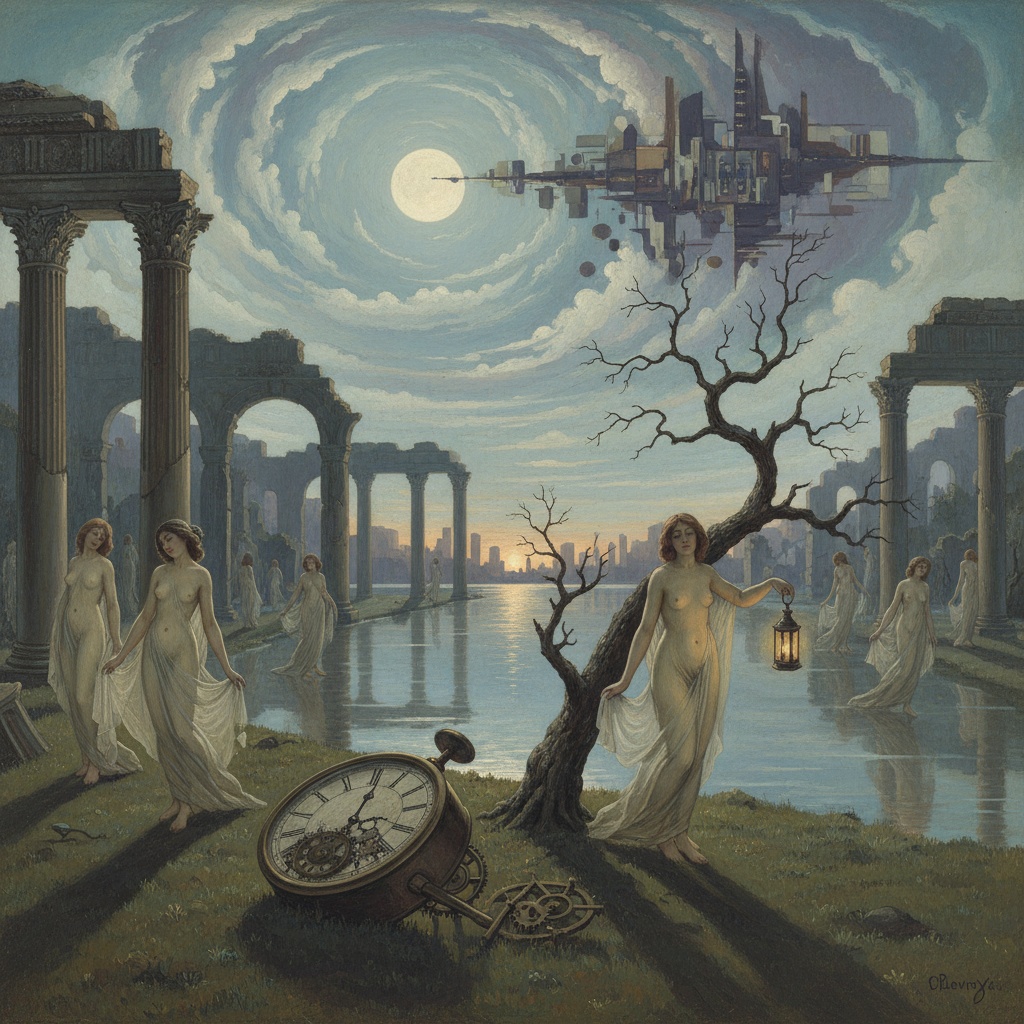
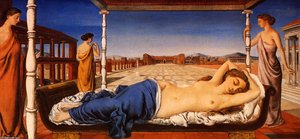
To encounter a Paul Delvaux painting is to enter a realm suspended between reality and dream. His canvases are populated by figures seemingly caught in moments of quiet contemplation, often nude women amidst imposing classical structures or the stark geometry of railway stations. These aren’t depictions of specific events but rather distillations of atmosphere, fragments of memory, and archetypal symbols woven together into unsettling narratives.
The female figure is central to Delvaux's iconography. She rarely appears as a fully realized individual but instead exists as an embodiment of desire, vulnerability, or melancholic beauty. Often depicted with averted gazes or lost in thought, these women are both alluring and remote, inviting speculation about their inner lives while simultaneously remaining elusive. Their nudity is not overtly sexualized; rather, it suggests a state of primal innocence or a detachment from the constraints of societal norms.
Trains, another recurring motif, function as powerful symbols of transition, longing, and the passage of time. They appear in desolate stations, bathed in an eerie moonlight, often juxtaposed with classical architecture, creating a jarring contrast between modernity and antiquity. The skeletons that occasionally populate his scenes add a layer of macabre symbolism, reminding viewers of mortality and the fragility of existence. These aren’t simply morbid additions; they serve as memento mori, prompting contemplation on the ephemeral nature of life and beauty.
Delvaux masterfully employed perspective to create a sense of depth and disorientation within his compositions. His oblique angles and exaggerated spatial relationships contribute to the dreamlike quality of his work, blurring the boundaries between foreground and background, reality and illusion. The meticulous detail with which he rendered each element – from the folds of fabric to the architectural details – further enhances this effect, creating a world that feels both intensely real and profoundly unreal.
Beyond Surrealism: Classical Influences and Personal Mythology
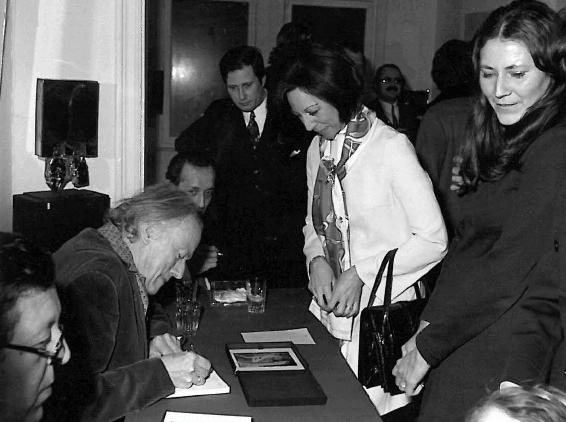 Wikipedia: Paul Delvaux
Paul Delvaux (French: [dɛlvo]; 23 September 1897 – 20 July 1994) was a Belgian painter noted for his dream-like scenes of women, classical architecture, trains and train stations, and skeletons, often in combination. He is often considered a surreali...
While often categorized as a Surrealist, Delvaux’s artistic lineage extends far beyond the boundaries of that movement. His deep engagement with classical art – particularly Renaissance painting and sculpture – is readily apparent in his depictions of nude figures, architectural settings, and allegorical themes. He wasn't merely borrowing from the past; he was actively reinterpreting it, imbuing classical forms with a distinctly modern sensibility.
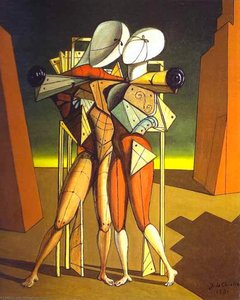
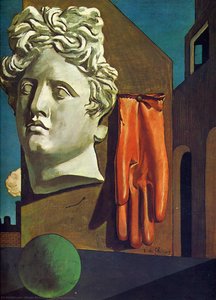
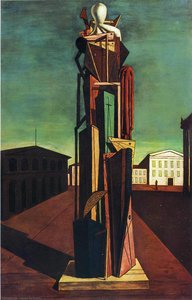
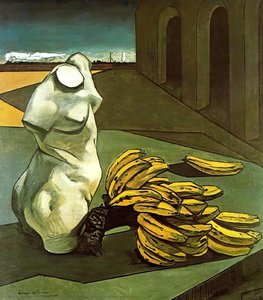
The influence of artists like Giorgio de Chirico, whose metaphysical paintings explored similar themes of alienation and psychological unease, is also evident in Delvaux’s early work. However, Delvaux quickly developed his own unique voice, moving away from the stark abstraction of De Chirico towards a more detailed and figurative style. He found inspiration not only in art history but also in literature, particularly the works of Jules Verne and Homer, whose epic narratives provided fertile ground for his imaginative explorations.
Delvaux’s personal mythology – shaped by childhood memories, literary influences, and intellectual pursuits – played a crucial role in shaping his artistic vision. He often revisited specific themes and motifs throughout his career, creating variations on familiar subjects that reveal subtle shifts in meaning and emotional resonance. His paintings aren't simply representations of external reality; they are distillations of inner experience, fragments of dreams and memories brought to life on canvas.
The Poetics of Disquiet: Exploring the Emotional Resonance of Delvaux's Work
What truly sets Delvaux apart is his ability to evoke a profound sense of disquiet within seemingly idyllic scenes. His paintings aren’t overtly shocking or disturbing; rather, they create a subtle unease through their unsettling juxtapositions, ambiguous narratives, and melancholic atmosphere. This emotional resonance stems from his exploration of universal themes – desire, loss, mortality, and the search for meaning – filtered through the lens of his unique personal mythology.
The stillness that pervades many of Delvaux’s compositions contributes to this sense of unease. His figures often appear frozen in time, caught in moments of quiet contemplation or suspended between action and inaction. This lack of dynamism creates a feeling of isolation and detachment, inviting viewers to project their own emotions and interpretations onto the scene.
The use of light and shadow also plays a crucial role in shaping the emotional tone of his work. His paintings are often bathed in an eerie moonlight or illuminated by artificial sources, creating dramatic contrasts that heighten the sense of mystery and unease. The dark palette he frequently employed further reinforces this atmosphere, evoking a feeling of melancholy and introspection.
Delvaux’s Legacy: Influence on Contemporary Art and Enduring Appeal
Paul Delvaux's influence extends far beyond the realm of Surrealism, impacting generations of artists with his unique blend of classical form, dreamlike imagery, and psychological depth. His work continues to resonate with contemporary audiences, captivating viewers with its unsettling beauty and enigmatic narratives.
While he resisted easy categorization throughout his career, Delvaux’s paintings have inspired countless artists working in diverse media – from painting and sculpture to photography and film. His exploration of the unconscious mind, his masterful use of symbolism, and his ability to evoke a profound sense of atmosphere continue to be admired and emulated.
Today, Paul Delvaux remains one of the most important figures in 20th-century art. ArtsDot.com offers high-quality reproductions of his iconic paintings, allowing you to experience the haunting beauty and dreamlike reverie of this Belgian visionary firsthand. Explore our collection and discover the enduring power of Delvaux’s unique artistic vision – a world where reality and illusion intertwine, and the subconscious comes to life on canvas.