



Introduction: Echoes of Opulence – The Resurgence of Gilded Age Aesthetics
Modernism was an early 20th-century movement in literature, visual arts, performing arts, and music that emphasized experimentation, abstraction, and subjective experience. Philosophy, politics, architecture, and social issues were all aspects of thi...
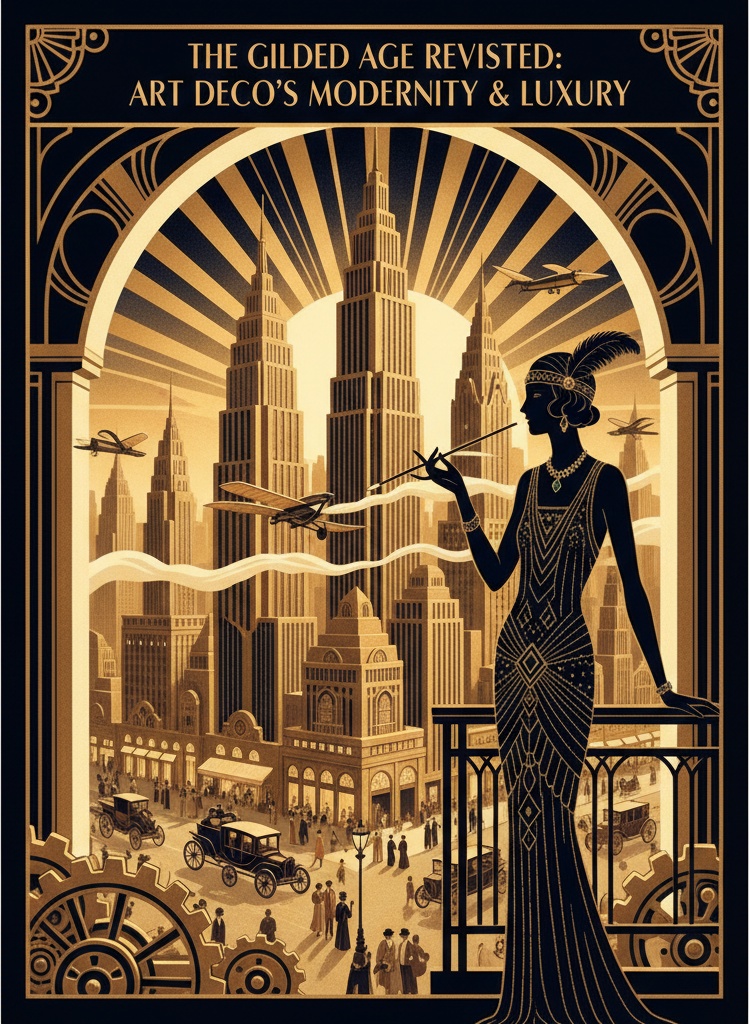
The allure of the Gilded Age—a period defined by unprecedented prosperity, industrial innovation, and a flamboyant embrace of luxury—continues to resonate deeply within contemporary art circles. More than mere nostalgia, there’s a renewed appreciation for the era's aesthetic principles, particularly as embodied in the sleek lines and bold colors of Art Deco. This isn't simply about replicating a style; it’s about understanding a cultural moment where optimism met modernity, and artistic expression flourished amidst social upheaval. The current fascination with this period reflects a desire for elegance, sophistication, and a touch of escapism – qualities powerfully captured in the paintings that defined the age.
Art Deco's Genesis: From Paris Salons to Global Phenomenon
Art Deco, short for the French Arts décoratifs (lit. 'Decorative Arts'), is a style of visual arts, architecture, and product design that first appeared in Paris in the 1910s just before World War I and flourished internationally during the 1920s to ...
While often associated with the Roaring Twenties in America, Art Deco’s roots lie firmly within the Parisian art world of the pre-World War I era. Emerging from movements like Cubism and Fauvism, it represented a deliberate shift away from the organic forms of Art Nouveau towards geometric precision and streamlined design. The 1925 Exposition Internationale des Arts Décoratifs et Industriels Modernes in Paris served as its official launchpad, showcasing a dazzling array of furniture, textiles, and artworks that epitomized this new aesthetic. However, it wasn’t merely a French phenomenon. Art Deco quickly transcended national boundaries, finding fertile ground in the United States—particularly during the economic boom of the 1920s and early 30s—and influencing architecture, fashion, and design worldwide. The style became synonymous with progress, technological advancement, and a celebration of the machine age.
Glamour & Modernity: Key Characteristics of Art Deco Painting
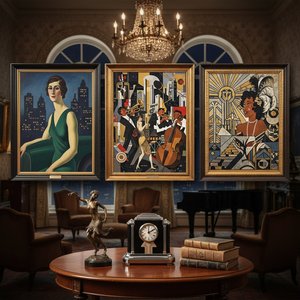
Art Deco painting is instantly recognizable for its distinctive visual language. Bold geometric shapes—zigzags, chevrons, sunbursts—are frequently employed, often rendered in rich, saturated colors like emerald green, sapphire blue, and ruby red. A fascination with exoticism – drawing inspiration from ancient Egypt, Mayan art, and Asian motifs – is also prevalent. Artists skillfully blended these influences with modern sensibilities, creating compositions that were both opulent and dynamic. The use of polished surfaces, often mimicking materials like chrome or lacquer, further enhanced the sense of luxury and sophistication. Beyond aesthetics, Art Deco paintings frequently depicted scenes of high society—cocktail parties, glamorous portraits, and stylized nudes—reflecting a culture obsessed with leisure and indulgence. Rafael de Penagos’s “Untitled (282)”, for example, exemplifies this aesthetic through its striking use of color and bold lines to capture the essence of 1920s portraiture.
Iconic Artists of the Era: De Lempicka, Stettheimer, and Beyond
 Tamara de Lempicka
Discover Tamara de Lempicka (1898-1980), the iconic Polish Art Deco painter! Explore her glamorous portraits & stylized nudes, celebrating aristocracy & modern femininity.
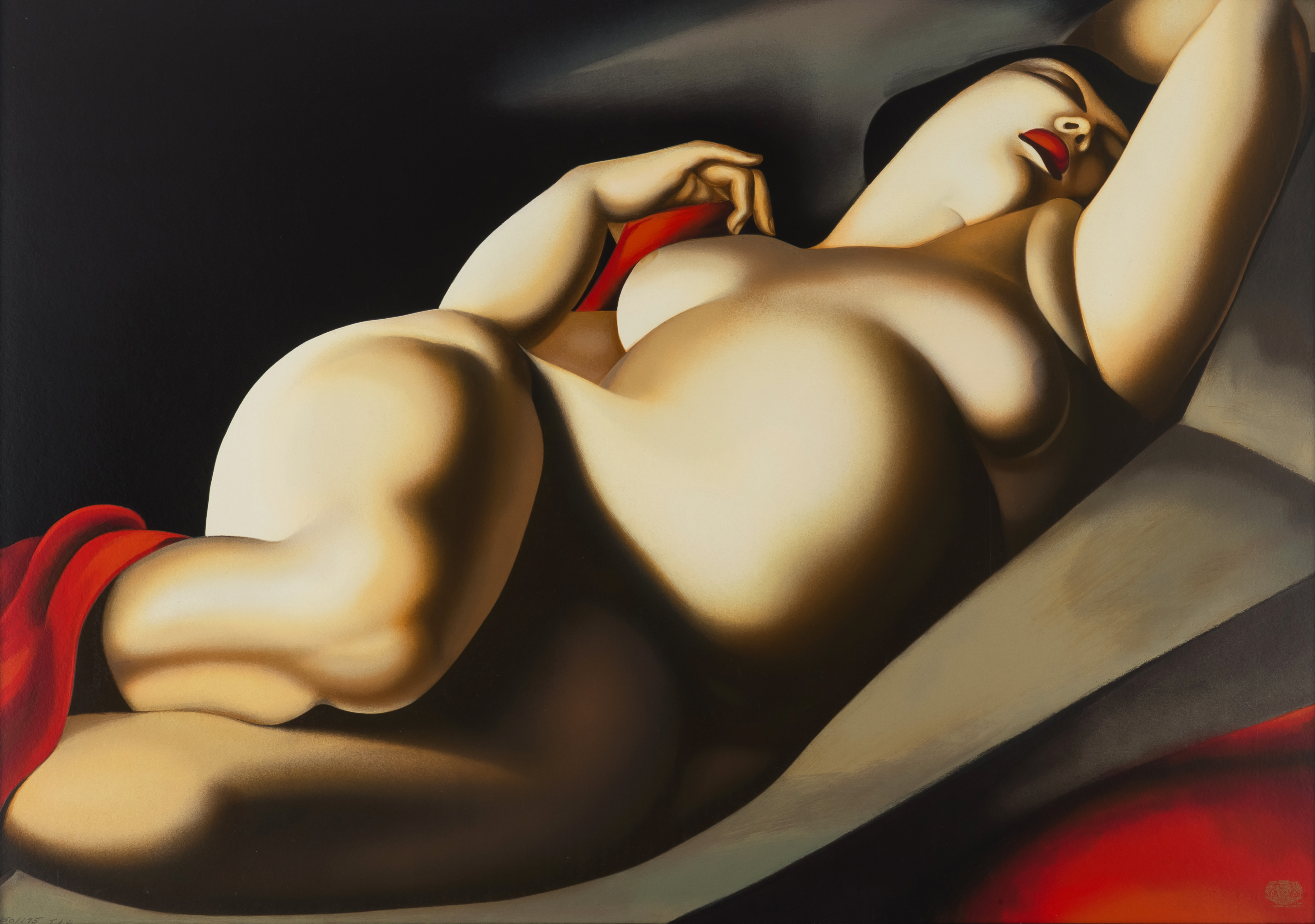
Several artists stand out as defining figures of the Art Deco movement. Tamara de Lempicka, perhaps the most celebrated, became renowned for her glamorous portraits of aristocratic women—powerful, independent figures exuding confidence and sophistication. Her paintings are characterized by a distinctive blend of Cubist influences and classical technique, creating an instantly recognizable style. Florine Stettheimer, while less conventionally known, offers a fascinating counterpoint to de Lempicka’s polished glamour. Stettheimer's work is deeply rooted in the Jazz Age New York social scene, capturing the vibrancy and energy of the city with a unique decorative sensibility and feminist themes. Her 'Cathedral' series provides an intimate glimpse into the lives of her circle. Archibald John Motley Jr., another significant figure, brought a different perspective to Art Deco painting, vividly depicting the Black community in Chicago through scenes like “Cocktails,” capturing the energy and camaraderie of speakeasies during the New Negro Movement. These artists, each with their distinct style, collectively shaped the visual landscape of the era.
The Jazz Age Influence: Capturing a Spirit of Liberation and Change
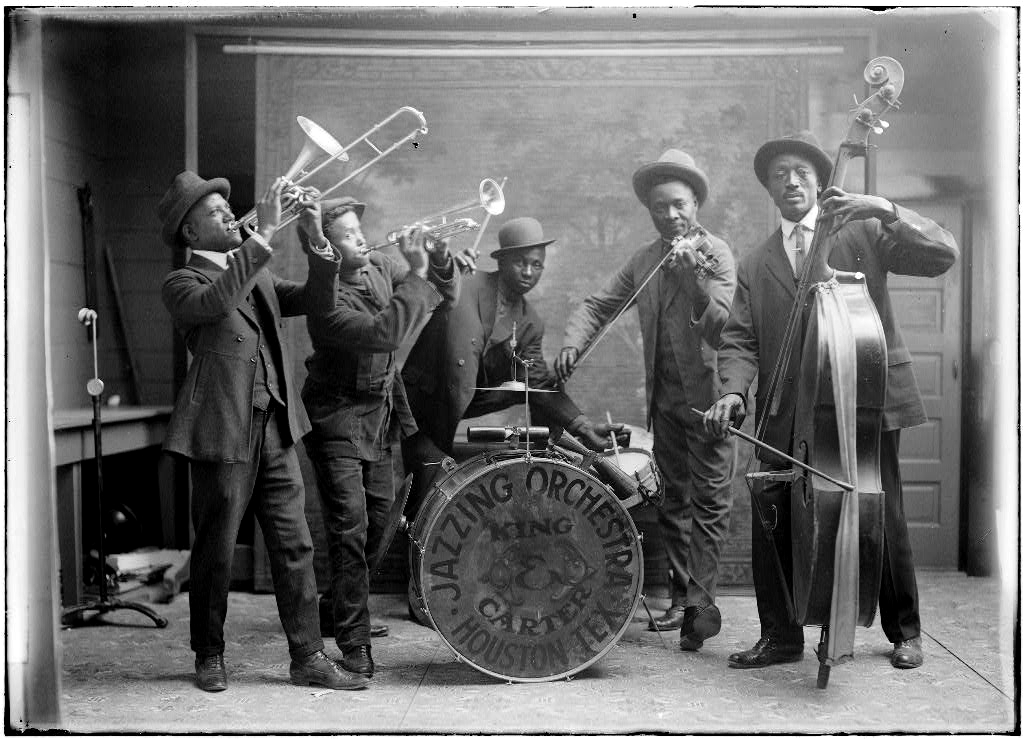 Wikipedia: Jazz Age
The Jazz Age was a period from 1920 to the early 1930s in which jazz music and dance styles gained worldwide popularity. The Jazz Age's cultural repercussions were primarily felt in the United States, the birthplace of jazz. Originating in New Orlean...
The Jazz Age was inextricably linked to Art Deco, providing both thematic inspiration and a cultural backdrop. The music itself—characterized by improvisation, syncopation, and a rebellious spirit—mirrored the artistic experimentation of the period. Paintings from this era often depict scenes of lively dance halls, bustling speakeasies, and fashionable flappers, capturing a sense of liberation and social change. The introduction of radio further amplified jazz’s reach, spreading its influence across the nation and beyond. This cultural shift is evident in works that celebrate modernity, youthfulness, and a rejection of traditional norms. The energy of the Jazz Age fueled a desire for new forms of expression, leading to bold experimentation in both art and design.
Collecting Art Deco Today: Investing in Timeless Elegance
Today, collecting Art Deco paintings represents more than just acquiring beautiful objects; it’s about investing in a significant cultural moment. The enduring appeal of the style—its elegance, sophistication, and celebration of modernity—continues to captivate collectors worldwide. Original works by artists like de Lempicka and Stettheimer command high prices, but there are also numerous lesser-known artists whose paintings offer excellent value. When considering an Art Deco acquisition, it’s important to look for authenticity, condition, and provenance. ArtsDot provides access to museum-quality reproductions of iconic Art Deco masterpieces, allowing collectors to experience the beauty and glamour of this era without compromising on quality or affordability. Whether you're a seasoned art enthusiast or just beginning your collection journey, Art Deco paintings offer a timeless investment that will continue to inspire for generations to come.