Introduction: The Dawn of a New Artistic Era
 Wikipedia: High Renaissance
In art history, the High Renaissance was a short period of the most exceptional artistic production in the Italian states, particularly Rome, capital of the Papal States, and in Florence, during the Italian Renaissance. Most art historians state that...
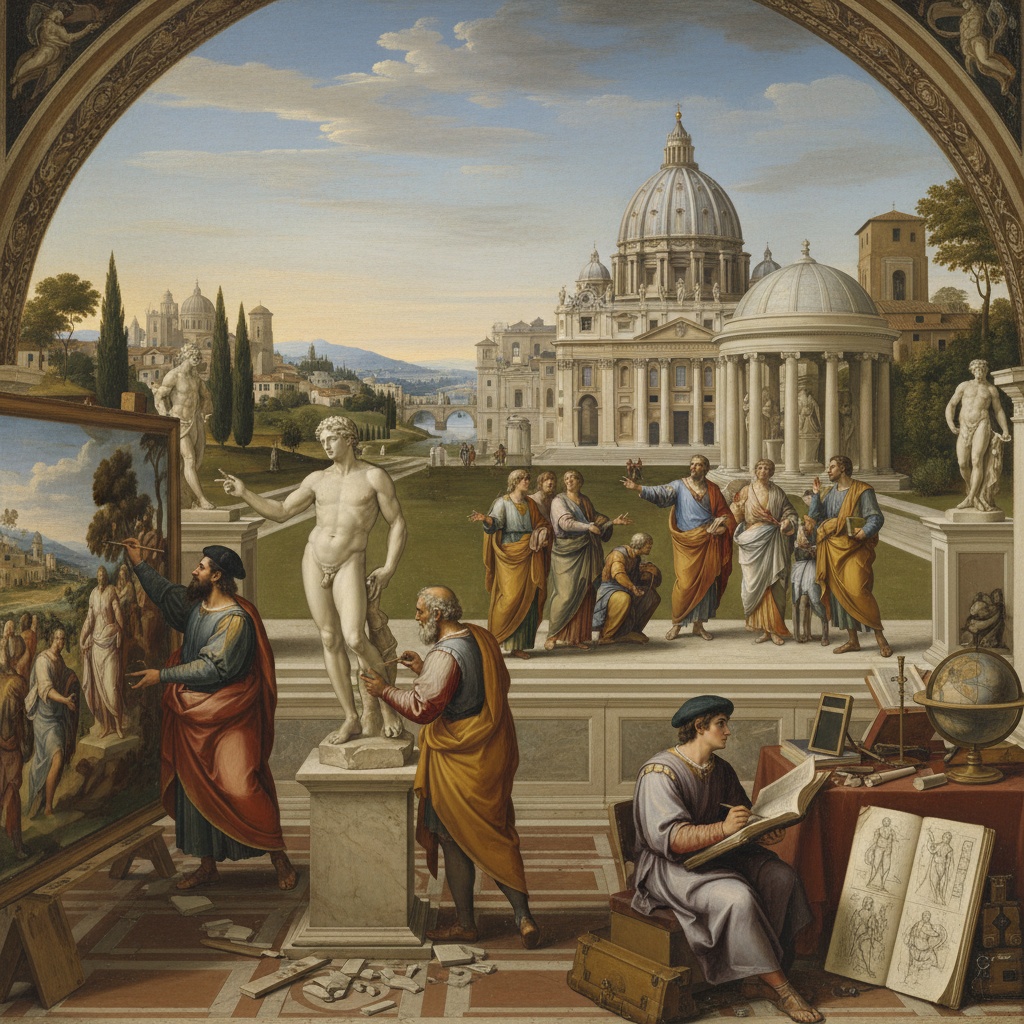
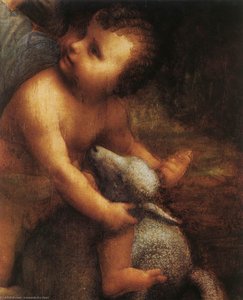
The High Renaissance, a relatively brief but incandescent period spanning roughly from 1490 to 1527, represents the apex of artistic achievement in Europe. Emerging from the Early Renaissance’s burgeoning rediscovery of classical antiquity, it wasn't merely a continuation of previous styles, but a profound transformation—a blossoming of human potential and intellectual curiosity that irrevocably altered the course of Western art. Centered initially in Florence and later shifting to Rome under the patronage of ambitious popes, this era witnessed an unprecedented confluence of artistic genius, scientific inquiry, and philosophical exploration. It was a time when artists were no longer simply craftsmen but celebrated intellectuals, their work imbued with layers of meaning and technical mastery that continue to captivate audiences centuries later.
Humanism at the Heart of Renaissance Art
Humanism is a philosophical stance that emphasizes the individual and social potential, and agency of human beings, whom it considers the starting point for serious moral and philosophical inquiry. The meaning of the term "humanism" has changed accor...
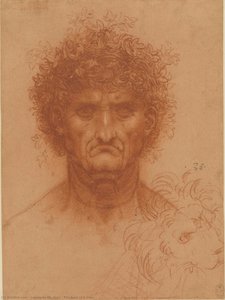
Underpinning the High Renaissance’s aesthetic revolution was the philosophical movement of Humanism. Rejecting the medieval focus on solely divine matters, Humanism celebrated human intellect, achievement, and earthly beauty. This shift in worldview profoundly impacted artistic subject matter and approach. Artists began to depict classical mythology alongside religious scenes, not as contradictions but as complementary explorations of universal truths about humanity. The study of anatomy—exemplified by Leonardo da Vinci’s meticulous dissections—wasn't simply about accurate representation; it was a means of understanding God’s creation through the perfection of the human form. Portraits moved beyond mere likenesses to become psychological studies, capturing the inner lives and individual character of their subjects. This emphasis on the individual is powerfully evident in works like Leonardo’s haunting ‘Head of a Man’, where subtle nuances of expression hint at complex emotions and intellectual depth. The rediscovery of classical texts also fueled an interest in idealized forms, proportion, and harmony—principles that artists sought to emulate and surpass.
Key Masters and Their Defining Works: Da Vinci, Michelangelo & Raphael
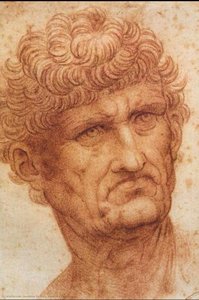 Head of a Man
Born in Vicenza in 1452, Leonardo da Vinci was a true polymath whose intellect spanned painting, sculpture, engineering, architecture, botany, geology, anatomy, and more. His apprenticeship under Andrea del Verrocchio instilled in him a dedication to...
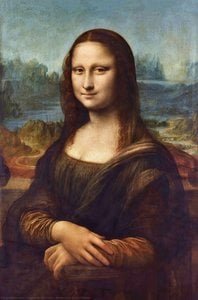
The High Renaissance is synonymous with the names of Leonardo da Vinci, Michelangelo Buonarroti, and Raffaello Sanzio. Leonardo, a true polymath, embodied the Renaissance ideal of the ‘universal man’. His insatiable curiosity led him to excel in painting, sculpture, engineering, anatomy, botany—a breadth of knowledge that informed his groundbreaking artistic innovations. Works like the Mona Lisa demonstrate his mastery of *sfumato*, a technique employing subtle gradations of light and shadow to create an ethereal, almost dreamlike quality. Michelangelo, renowned for his sculptural power and dramatic compositions, brought a monumental intensity to his art. His David is not merely a depiction of biblical heroism but a celebration of human strength and potential. Raphael, celebrated for the grace and harmony of his paintings, synthesized the achievements of his predecessors, creating works of exquisite beauty and balance—exemplified in the frescoes of the Stanze della Segnatura at the Vatican. Each artist, while distinct in style, shared a commitment to realism, anatomical accuracy, and the exploration of human emotion.
Techniques and Innovations Shaping High Renaissance Aesthetics
In art, chiaroscuro (English: kee-AR-ə-SKOOR-oh, -SKURE-, Italian: [ˌkjaroˈskuːro]; lit. 'light-dark') is the use of strong contrasts between light and dark, usually bold contrasts affecting a whole composition. It is also a technical term used by ...
The artists of the High Renaissance weren’t simply reviving classical forms; they were actively innovating new techniques that revolutionized painting and sculpture. Linear perspective, perfected during the Early Renaissance, reached its zenith in the hands of these masters, creating illusions of depth and space with unparalleled realism. Chiaroscuro—the dramatic use of light and shadow—became a powerful tool for modeling form and conveying emotion, as seen in Leonardo’s ‘Grotesque Portrait Study of Man’. The development of oil painting allowed for greater detail, richer colors, and more subtle blending than previous mediums. Fresco technique, particularly favored for large-scale murals, demanded exceptional skill and precision. Artists also explored new compositional techniques, such as pyramidal arrangements and dynamic poses, to create a sense of movement and drama. The study of anatomy was crucial, enabling artists to accurately depict the human form in all its complexity. These technical advancements weren’t merely aesthetic choices; they were integral to conveying the humanist ideals of realism, harmony, and emotional depth.
Patronage and the Flourishing of Creativity in Italian Republics
The artistic flourishing of the High Renaissance was inextricably linked to the competitive patronage system prevalent in the independent Italian city-states. Wealthy merchants, powerful families like the Medici in Florence, and ambitious popes commissioned artworks not only for religious devotion but also as displays of their wealth, power, and cultural sophistication. This competition spurred innovation, as patrons sought out artists who could create increasingly impressive and groundbreaking works. The Church, particularly under Julius II and Leo X, became a major patron of the arts, commissioning monumental projects like the rebuilding of St. Peter’s Basilica and the decoration of the Vatican Stanze. Artists often worked for multiple patrons simultaneously, navigating complex political and social landscapes. This system, while sometimes fraught with challenges, provided artists with the financial resources and creative freedom to pursue their ambitious visions. The demand for art also led to the establishment of workshops and academies, fostering a culture of artistic training and collaboration.
The Enduring Legacy: How the High Renaissance Continues to Inspire
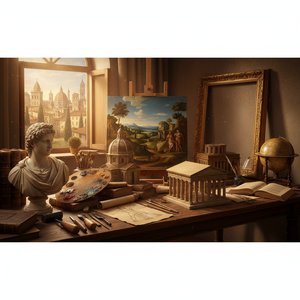 The Enduring Legacy of Renaissance Art: Innovation, Humanism & Mastery
Explore the enduring legacy of Renaissance art! Discover its historical context, humanist ideals, iconic masterpieces, and lasting influence on Western art with .
The impact of the High Renaissance extends far beyond its historical context. Its emphasis on humanism, realism, and technical mastery continues to inspire artists today. The works of Da Vinci, Michelangelo, and Raphael remain iconic symbols of artistic achievement, studied and admired by generations. Their innovations in painting, sculpture, and architecture laid the foundation for subsequent art movements. The Renaissance’s celebration of individual potential and intellectual curiosity has profoundly shaped Western culture. The principles of perspective, chiaroscuro, and anatomical accuracy continue to be fundamental elements of artistic training. Even beyond the realm of fine art, the High Renaissance’s influence can be seen in literature, philosophy, and science. At ArtsDot.com, we are dedicated to making these masterpieces accessible to all, offering high-quality reproductions that capture the beauty and spirit of this extraordinary era. Explore our collection today and experience the enduring power of High Renaissance art—a testament to the boundless creativity and intellectual curiosity of humankind. From custom oil paintings replicating your favorite works to museum-quality prints, we strive to bring the legacy of these masters into your home.