
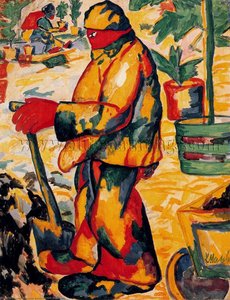
The Seeds of Disruption: From Realism to the Dawn of Modernity
Modern art includes artistic work produced during the period extending roughly from the 1860s to the 1970s, and denotes the styles and philosophies of the art produced during that era. The term is usually associated with art in which the traditions o...
The story of Modern art isn’t a sudden rupture, but rather a gradual unfolding—a series of deliberate fractures with the established order that began well before the commonly cited dates. While 1863, marked by Manet’s controversial Le Déjeuner sur l'herbe, often signals its birth, the roots lie deeper, in the societal upheavals following the Enlightenment and the rise of Realism. Artists like Gustave Courbet challenged academic conventions with their unflinching depictions of everyday life, a move that questioned not just *what* was painted but *why*. This questioning spirit, born from revolutionary fervor and a growing self-consciousness about art’s role in society, paved the way for artists to look inward, to explore subjective experience rather than objective representation. The Impressionists, with their fleeting glimpses of light and color, further destabilized traditional forms, prioritizing sensation over precise depiction. They weren't merely painting what they saw; they were capturing *how* they saw it—a subtle but profound shift in artistic intent. This focus on the artist’s perception was a crucial stepping stone towards the radical experimentation that would define Modernism.
Formal Innovation & The Avant-Garde: Challenging Artistic Conventions
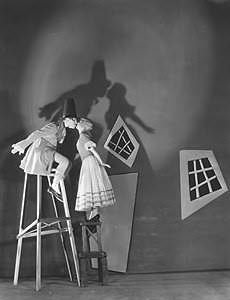 Wikipedia: Avant-garde
In the arts and literature, the term avant-garde (from French meaning 'advance guard' or 'vanguard') identifies an experimental genre or work of art, and the artist who created it, which usually is aesthetically innovative, whilst initially being ide...
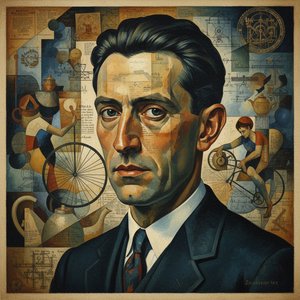
As the 19th century drew to a close, a new breed of artists emerged—the avant-garde. Derived from the military term for an advance guard, these pioneers weren’t simply pushing boundaries; they were actively scouting new territories in art, challenging not only aesthetic norms but also the very definition of what constituted ‘art.’ This wasn't about refinement or improvement within existing frameworks; it was a deliberate rejection of tradition, fueled by a desire to reflect the rapidly changing world and the anxieties of modernity. The concept of “form” itself became central. Artists began dissecting objects, analyzing their underlying structures, and representing them in fragmented, abstracted ways. This pursuit led to movements like Cubism, pioneered by Pablo Picasso and Georges Braque, which shattered perspective and presented multiple viewpoints simultaneously. Simultaneously, artists explored the expressive power of color—Henri Matisse’s Fauvism unleashed a vibrant palette that prioritized emotional intensity over realistic representation. The avant-garde wasn't merely an artistic style; it was a philosophical stance, a rebellion against societal norms, and a commitment to radical innovation.
Key Movements & Masters: Cubism, Futurism, and Beyond
Throughout the twentieth century, the evolution of mainstream modernism in the arts has been shadowed and complicated by.
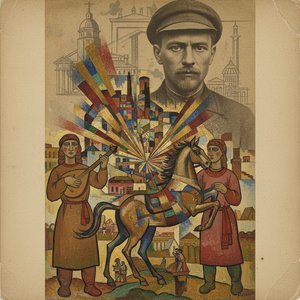
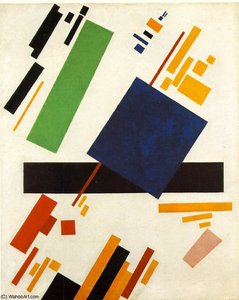
The early 20th century witnessed an explosion of artistic movements, each vying for dominance and pushing the boundaries of expression. Cubism, with its geometric fragmentation, sought to represent the totality of an object’s form, challenging traditional notions of space and perspective. Simultaneously, Futurism, born in Italy, celebrated speed, technology, and the dynamism of modern life—artists like Umberto Boccioni attempted to capture movement itself on canvas. But Modernism wasn't limited to these iconic movements. Expressionism, emerging in Germany, delved into the depths of human emotion, often portraying distorted figures and unsettling landscapes. And within Russia, artists like Kazimir Malevich embarked on a quest for pure abstraction with Suprematism—his Black Square, a seemingly simple composition, became an icon of non-objective art, representing the ultimate reduction to essential form and color. El Lissitzky’s dynamic compositions, such as ‘Composition,’ exemplify Constructivism's embrace of geometric abstraction and its connection to revolutionary ideals. These masters weren’t simply creating aesthetically pleasing objects; they were exploring fundamental questions about perception, representation, and the nature of reality.
Abstraction's Ascent: Exploring Non-Representational Forms and Pure Feeling
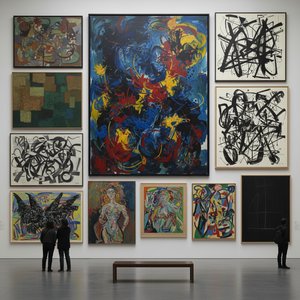
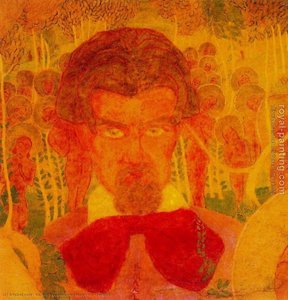
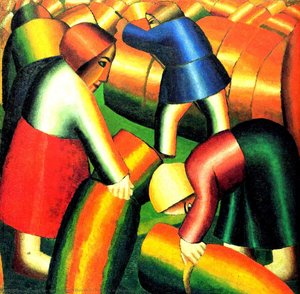
The move towards abstraction was perhaps the most radical departure in Modern art history. Artists increasingly rejected the need to depict recognizable subjects, instead focusing on the inherent qualities of form, color, and line. This wasn’t a rejection of reality, but rather an attempt to access a deeper level of truth—a realm beyond the limitations of visual representation. Pavel Filonov, a Russian avant-garde master of Analytical Realism, developed a unique abstract style based on his philosophical theories about the “making visible” of inner processes. His works are characterized by intricate patterns and layered colors that evoke a sense of organic growth and transformation. Kazimir Malevich’s Suprematism took this exploration even further, reducing art to its most basic elements—geometric shapes floating in space. The goal wasn't to represent something *else*, but rather to create an experience of pure feeling through the interplay of color and form. This emphasis on subjective experience marked a profound shift in artistic intent, paving the way for subsequent generations of abstract artists.
The Philosophical Underpinnings: Kant, Nietzsche, and the Modern Condition
Modern art wasn’t born in a vacuum; it was deeply intertwined with the philosophical currents of its time. Immanuel Kant's critique of reason challenged traditional notions of objective truth, suggesting that our perception shapes reality. Friedrich Nietzsche’s proclamation of “God is dead” questioned established moral and societal frameworks, leading to a sense of existential uncertainty. These ideas resonated with artists who were grappling with the anxieties of modernity—the rapid industrialization, urbanization, and social upheaval of the era. The avant-garde embraced this spirit of questioning, challenging not only artistic conventions but also the very foundations of Western thought. The rejection of traditional narrative in art reflected a broader sense of disillusionment with established institutions and beliefs. Artists sought to create new forms of expression that could capture the fragmented, chaotic nature of modern experience.
Modernism’s Enduring Influence: A Legacy of Experimentation and Expression
Though often debated and redefined, Modernism's impact on art remains undeniable. Its legacy is one of relentless experimentation, a commitment to pushing boundaries, and a profound exploration of the human condition. From the abstract expressionists of post-war America to the conceptual artists of the 1960s, subsequent generations have built upon the foundations laid by the Modern masters. The emphasis on form, color, and subjective experience continues to resonate with contemporary artists today. At ArtsDot.com, we celebrate this rich artistic heritage by offering meticulously crafted reproductions of iconic Modernist works—allowing you to bring the spirit of innovation and expression into your own home. Whether you’re captivated by the geometric abstraction of Malevich, the vibrant colors of Matisse, or the fragmented forms of Picasso, our collection offers a glimpse into the revolutionary world of Modern art. Explore our selection today and discover the masterpieces that continue to inspire and challenge us.