The Dawn of Humanism: A Philosophical Shift
The Renaissance, a term meaning “rebirth,” wasn’t merely a stylistic shift in art; it was the culmination of profound intellectual and philosophical changes that swept across Europe beginning in the 14th century. At its heart lay Humanism – a renewed focus on human potential, achievement, and earthly life, moving away from the predominantly theological concerns of the Medieval period. This wasn’t an outright rejection of faith, but rather a re-evaluation of humanity's place within the divine order. Scholars rediscovered classical texts—the works of Plato, Aristotle, Cicero, and others—lost to Western Europe for centuries, finding in them models of eloquence, reason, and civic virtue. Figures like Petrarch championed these ancient ideals, advocating for *studia humanitatis*, a curriculum emphasizing rhetoric, grammar, poetry, history, and moral philosophy. This emphasis on the individual, coupled with a burgeoning spirit of inquiry, laid the groundwork for an artistic revolution that celebrated the beauty and complexity of the human form and experience.
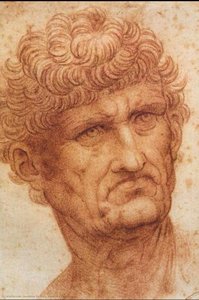
The impact was immediate. Artists began to depict subjects not just as symbols of religious doctrine, but as individuals possessing inner lives and emotions. Portraiture gained prominence, reflecting a growing interest in capturing the unique characteristics of each sitter. While medieval art often presented figures with elongated proportions and stylized features, Renaissance artists strived for anatomical accuracy and realism, drawing inspiration from classical sculpture and a meticulous observation of nature. This wasn’t simply about technical skill; it was about honoring God through the faithful representation of His creation – humanity itself.
Early Renaissance Innovations in Painting & Sculpture (1400-1490)
Florence, fueled by the wealth and patronage of families like the Medici, became the epicenter of this artistic awakening. Masaccio’s frescoes, particularly those in the Brancacci Chapel, represent a watershed moment. His use of linear perspective—a mathematical system for creating the illusion of depth on a flat surface—revolutionized painting, imbuing scenes with unprecedented realism and spatial coherence. The Holy Trinity fresco is a prime example; its architectural setting recedes convincingly into the distance, drawing the viewer into the sacred narrative. Donatello’s sculpture similarly broke from medieval conventions. His *David*, cast in bronze, stands as a powerful testament to human strength and civic pride—a nude figure embodying classical ideals of beauty and heroism. This was not merely a revival of ancient forms; Donatello imbued his work with psychological depth and emotional intensity.
Other key figures like Piero della Francesca explored perspective and light with scientific precision, creating compositions of serene beauty and mathematical harmony. Uccello’s *Battle of San Romano* demonstrates an almost obsessive fascination with perspective, pushing the boundaries of pictorial space. These early Renaissance artists weren't simply replicating classical models; they were building upon them, developing new techniques and approaches that would define the artistic landscape for generations to come.
High Renaissance Masters: Leonardo, Michelangelo & Raphael
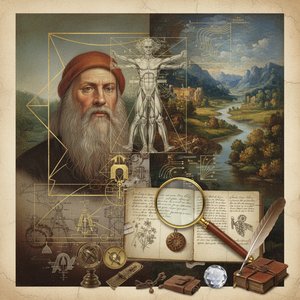
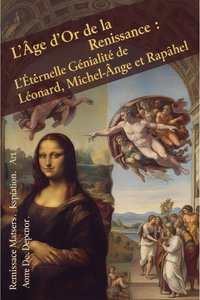
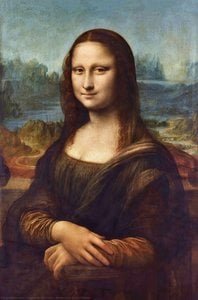
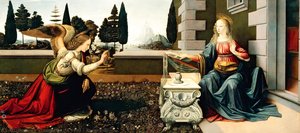
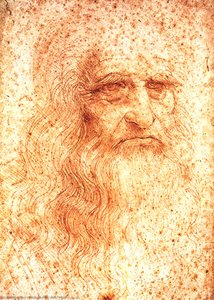
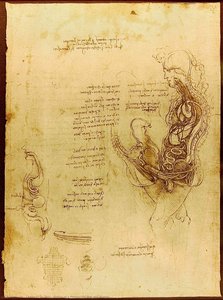
The High Renaissance (roughly 1490-1527) witnessed an unparalleled concentration of artistic genius. Leonardo da Vinci, a true polymath—painter, sculptor, architect, scientist, and inventor—embodied the humanist ideal of the “universal man.” His *Mona Lisa* remains arguably the most famous painting in the world, captivating viewers with its enigmatic smile and subtle sfumato technique – a blurring of outlines that creates a sense of atmospheric depth. Leonardo’s anatomical studies informed his art, allowing him to depict the human form with breathtaking accuracy and realism. Michelangelo Buonarroti, equally gifted as a sculptor, painter, and architect, pushed the boundaries of artistic expression. His *David*, carved from a single block of marble, is a monumental celebration of human strength and beauty. The Sistine Chapel ceiling, adorned with scenes from Genesis, stands as one of the greatest achievements in Western art—a testament to Michelangelo’s mastery of anatomy, composition, and narrative storytelling.
Raphael Sanzio, known for his grace and harmony, synthesized the best elements of Leonardo and Michelangelo. His frescoes in the Vatican Stanze, particularly *The School of Athens*, celebrate classical philosophy and learning, depicting Plato, Aristotle, and other great thinkers engaged in lively debate. These three masters—Leonardo, Michelangelo, and Raphael—defined the High Renaissance aesthetic: balance, proportion, clarity, and a profound understanding of human anatomy and emotion.
Chiaroscuro and Dramatic Realism: Exploring Light and Shadow
A defining characteristic of Renaissance art, particularly in the works of artists like Caravaggio and later masters such as Rembrandt, was the masterful use of chiaroscuro. This technique—derived from the Italian for “light-dark”—involved strong contrasts between light and shadow to create a sense of volume, depth, and drama. Artists didn’t simply depict light; they used it strategically to highlight key figures and emotions, drawing the viewer's eye to specific areas of the composition. The Chiaroscuro woodcut in Renaissance Italy was also an important technique for creating prints with dramatic effects.
Caravaggio took chiaroscuro to its extreme, employing a technique known as tenebrism, where dark backgrounds dominate and figures emerge from the shadows like beacons of light. This created a sense of intense realism and emotional power. Antonio Allegri (Correggio) also employed dynamic compositions and chiaroscuro effects in his frescoes, influencing generations of artists with his innovative use of light and shadow. The effect wasn’t merely aesthetic; it was intended to evoke a visceral response from the viewer, drawing them into the scene and heightening their emotional connection to the subject matter.
Beyond Italy: The Northern Renaissance's Unique Voice
While the Italian Renaissance laid the foundation for artistic innovation, the Northern Renaissance—flourishing in countries like Flanders, Germany, and the Netherlands—developed its own distinct characteristics. Artists like Jan van Eyck focused on meticulous detail and realism, capturing the textures of fabrics, the play of light on surfaces, and the subtle nuances of human expression. His *Arnolfini Portrait* is a masterpiece of symbolism and observation, depicting a wealthy couple in their home with astonishing accuracy. Pieter Bruegel the Elder, known for his landscapes and peasant scenes, offered a unique perspective on everyday life, capturing the joys and hardships of rural existence.
Unlike their Italian counterparts, Northern Renaissance artists often focused on genre scenes—depictions of ordinary people engaged in daily activities—rather than classical mythology or religious narratives. They also excelled in portraiture, creating realistic and psychologically compelling representations of their sitters. The use of oil paint allowed for greater detail and luminosity, contributing to the distinctive style of the Northern Renaissance.
The Enduring Legacy of Renaissance Art
The impact of the Renaissance on Western art is immeasurable. Its emphasis on humanism, realism, perspective, and chiaroscuro revolutionized painting, sculpture, and architecture, shaping artistic traditions for centuries to come. The rediscovery of classical ideals inspired a renewed appreciation for beauty, harmony, and proportion. Artists like Leonardo, Michelangelo, and Raphael continue to captivate audiences with their masterpieces, serving as enduring symbols of human creativity and achievement.
The Renaissance wasn’t simply about replicating the past; it was about building upon it, developing new techniques and approaches that pushed the boundaries of artistic expression. Its legacy extends beyond the realm of art, influencing philosophy, literature, science, and culture as a whole. At ArtsDot.com, we are proud to offer high-quality reproductions of Renaissance masterpieces, allowing you to bring the beauty and inspiration of this transformative period into your own home. Explore our collection today and discover the enduring power of Renaissance art.