The Seeds of Revival: Enlightenment Ideals & Rediscovering Classical Antiquity
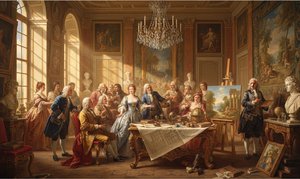
The latter half of the 18th century witnessed a profound shift in European artistic sensibilities, a deliberate turning away from the ornate frivolity of the Rococo and towards a renewed fascination with the art and philosophy of classical antiquity. This wasn’t merely a stylistic whim; it was deeply interwoven with the intellectual currents of the Enlightenment – an age that championed reason, order, and civic virtue. Thinkers like Voltaire and Rousseau challenged established norms, advocating for a return to natural law and emphasizing the importance of human agency. This burgeoning emphasis on rationality found its visual counterpart in a desire to emulate the perceived clarity, balance, and moral gravitas of ancient Greece and Rome. The rediscovery of Pompeii and Herculaneum in the 1730s and 40s acted as a catalyst, unearthing entire cities frozen in time, offering an unprecedented glimpse into the daily life, art, and architecture of these bygone civilizations. Suddenly, classical forms weren’t just theoretical concepts gleaned from texts; they were tangible realities, inspiring artists to re-evaluate their own approaches and seek inspiration from the past.
Jacques-Louis David: The Architect of Neoclassical Painting
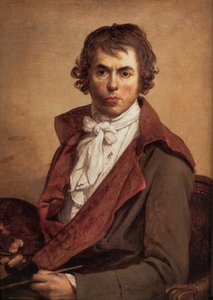 Jacques-Louis David
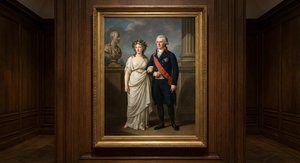
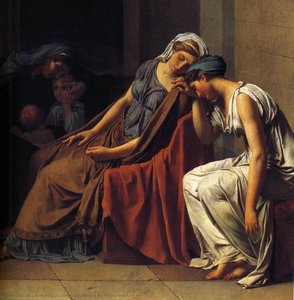
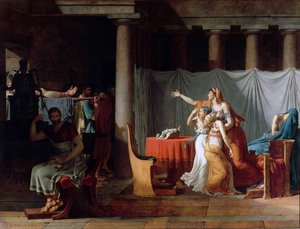
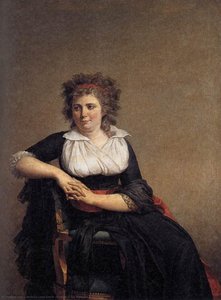
Jacques-Louis David (1748-1825): Leading French Neoclassical painter of the Revolution & Napoleonic eras. Known for 'Oath of the Horatii,' his art embodies heroism, drama & classical ideals.
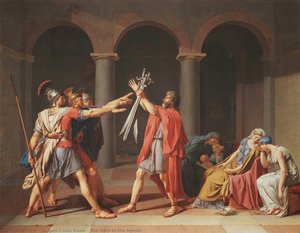
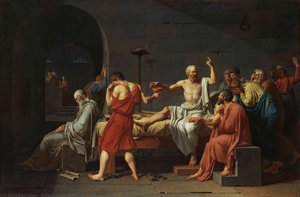
No figure embodies the spirit of this artistic revolution more powerfully than Jacques-Louis David (1748-1825). Initially trained in the Rococo style, David underwent a dramatic transformation, becoming the leading exponent – and arguably the dictator – of French Neoclassicism. His early masterpiece, The Oath of the Horatii (1784), served as a manifesto for the new aesthetic. The painting depicts a scene from Roman history, showcasing three brothers swearing an oath to defend Rome, even at the cost of their lives. David eschewed the pastel hues and playful compositions of Rococo in favor of stark contrasts, precise draftsmanship, and a rigorous attention to anatomical accuracy. More importantly, he imbued the work with a powerful moral message – one of patriotism, self-sacrifice, and civic duty. This resonated deeply with a society on the cusp of revolution. David’s influence extended beyond his own canvases; he established a studio that became a breeding ground for future Neoclassical artists, shaping the artistic landscape of France for decades to come. His later works, such as The Death of Marat, further cemented his role as a propagandist for revolutionary ideals, transforming historical events into powerful allegories.
Key Characteristics of the Neoclassical Style: Form, Composition, and Subject Matter
Neoclassicism wasn’t simply about copying ancient art; it was about distilling its essence. Artists sought to capture the *ideal* form – a sense of timeless beauty rooted in mathematical proportion and harmonious balance. Compositionally, paintings often featured clear, linear arrangements, reminiscent of classical friezes. Dramatic lighting played a crucial role, highlighting key figures and emphasizing their emotional intensity. Subject matter frequently drew from Roman history, mythology, and literature, chosen for its moral lessons and heroic narratives. The emphasis was on portraying noble deeds, virtuous characters, and moments of self-sacrifice. Color palettes were typically restrained, favoring muted tones and earthy hues that evoked a sense of antiquity. Brushstrokes were often deliberately minimized, creating smooth surfaces and polished finishes – a stark contrast to the visible textures favored by earlier Baroque and Rococo painters. The goal wasn’t to showcase artistic virtuosity but rather to convey a sense of clarity, order, and timelessness.
Beyond Painting: Neoclassicism in Sculpture, Architecture, and Decorative Arts
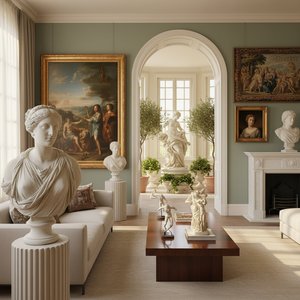
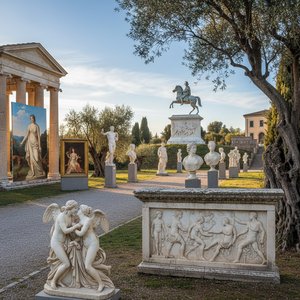
The influence of Neoclassicism extended far beyond the realm of painting. Sculptors like Antonio Canova embraced classical ideals with equal fervor, creating works that celebrated beauty, grace, and anatomical perfection. His sculptures often depicted mythological figures – such as Psyche Revived by Cupid’s Kiss – rendered in pristine marble with an exquisite attention to detail. In architecture, Neoclassicism manifested itself in grand public buildings inspired by ancient temples and Roman forums. The Pantheon in Paris, with its imposing dome and classical columns, stands as a testament to this architectural revival. Interior design also underwent a transformation, favoring symmetrical arrangements, restrained ornamentation, and furniture inspired by ancient models. The use of pilasters, friezes, and classical motifs became commonplace, creating spaces that evoked a sense of order, dignity, and timeless elegance.
The Grand Tour & the Dissemination of Classical Influence
The Grand Tour was the principally 17th- to early 19th-century custom of a traditional trip through Europe, with Italy as a key destination, undertaken by upper-class young European men of sufficient means and rank (typically accompanied by a tutor o...
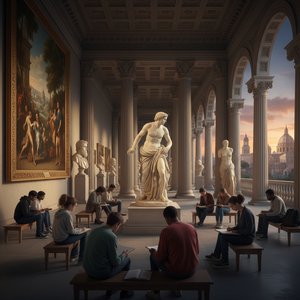
A crucial factor in the widespread adoption of Neoclassical ideals was the Grand Tour. This customary journey undertaken by wealthy young Europeans – typically accompanied by a tutor – exposed them to the artistic and cultural treasures of Italy. Rome, with its ancient ruins, Renaissance masterpieces, and thriving art scene, became the epicenter of this educational pilgrimage. Students meticulously copied classical sculptures, studied ancient architecture, and absorbed the principles of Italian painting. Upon their return home, they brought with them a newfound appreciation for classical aesthetics, influencing not only their own artistic endeavors but also the tastes of their patrons. The Grand Tour wasn’t merely about acquiring knowledge; it was about cultivating a refined sensibility – one that valued order, reason, and the enduring legacy of antiquity. The dissemination of engravings and illustrated books further amplified this influence, allowing classical motifs and designs to reach a wider audience.
Neoclassicism's Enduring Legacy: From Romanticism to Modern Aesthetics
While Neoclassicism eventually gave way to the emotional intensity of Romanticism in the early 19th century, its legacy continues to resonate today. The emphasis on clarity, order, and moral purpose profoundly influenced subsequent artistic movements. The principles of classical composition and design remain fundamental tenets of art education. Furthermore, Neoclassical architecture continues to inspire contemporary architects seeking to create buildings that evoke a sense of dignity, permanence, and timeless beauty. Even in modern aesthetics, the pursuit of ideal form and harmonious balance – hallmarks of Neoclassicism – persists. The works of Jacques-Louis David and his contemporaries serve as enduring reminders of the power of art to embody ideals, shape perceptions, and connect us to the rich cultural heritage of the past. At ArtsDot.com, we are proud to offer high-quality reproductions of these masterpieces, allowing you to bring the elegance and grandeur of Neoclassical art into your own home.