Introduction: Beyond Reduction – Defining Minimalism's Core Aesthetic
Minimalism, often perceived as a stark departure from the expressive exuberance of its predecessors, is far more than simply “less.” It’s a deliberate distillation—a stripping away of extraneous elements to reveal the fundamental essence of form, space, and material. Emerging in the 1960s, this movement wasn't about emptiness but rather about presence; not about what was removed, but about what remained. To understand minimalism is to appreciate its subtle power – a quiet revolution that challenged conventional notions of art’s purpose and redefined the relationship between artwork and viewer. It demanded a new kind of looking, one focused on direct experience rather than narrative interpretation. The works invite contemplation, prompting us to consider not just *what* we see, but *how* we perceive it.
The Historical Roots of Minimalism: From Abstract Expressionism to Geometric Purity
The seeds of minimalism were sown in the aftermath of World War II, as artists began to question the intensely personal and often chaotic nature of Abstract Expressionism. While figures like Jackson Pollock and Mark Rothko explored emotional depth through gestural brushwork and vibrant color, a growing contingent sought a more objective approach. This wasn’t necessarily a rejection of emotion, but rather a shift in its expression—from the internal to the external, from subjective feeling to tangible form. Artists began experimenting with geometric shapes, industrial materials, and serial repetition, moving away from the unique “hand” of the artist towards a sense of impersonal precision. Frank Stella's early black paintings, for example, served as pivotal works in this transition, reducing painting to its most basic components: canvas, paint, and form. This move toward geometric abstraction was also influenced by earlier movements like De Stijl and Russian Constructivism, which emphasized pure abstraction and the inherent qualities of materials.
Spatial Specificity and the Viewer’s Experience: Engaging with Absence and Form
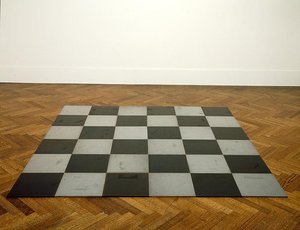
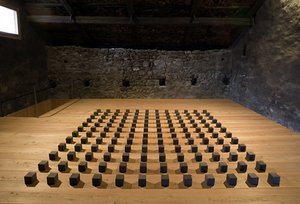 Spatial Specificity
Experience 'Spatial Specificity' by Carl Andre – a monumental minimalist installation exploring form & space within a historic setting. Discover site-specific art’s impact.
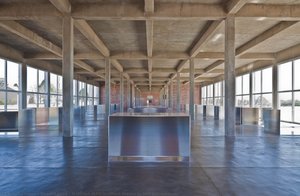
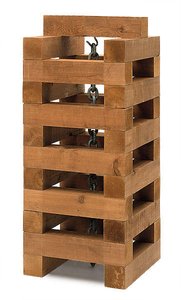
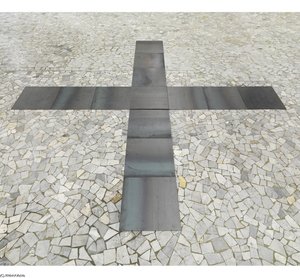
A defining characteristic of minimalism is its engagement with space. Artists weren't merely creating objects *in* space; they were creating space itself. Carl Andre’s “Spatial Specificity,” a monumental installation comprised of simple metal plates arranged on the floor, exemplifies this concept perfectly. The work isn’t about the individual elements but about the relationship between them and the surrounding environment—the gallery, the viewer, even the air in the room. This emphasis on site-specificity forces us to confront our own physicality within the artwork, blurring the boundaries between object and observer. Similarly, Donald Judd's “stacks” – vertically arranged boxes – invite a careful consideration of volume, proportion, and the interplay of light and shadow. The works aren’t meant to be viewed from a single vantage point but rather experienced as three-dimensional forms that change with perspective. This active engagement transforms the viewer from passive recipient to integral participant.
Color as Emotion: The Nuances of Restrained Palettes in Minimalist Works
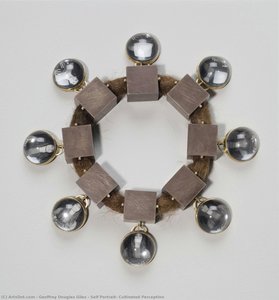 Self Portrait, Cultivated Perception
Explore Geoffrey Douglas Giles’ ‘Self Portrait, Cultivated Perception.’ A minimalist geometric still life of cubes & spheres in warm tones. Abstract art, precise rendering – a captivating study in form and texture.
While often associated with monochrome palettes, color plays a surprisingly nuanced role in minimalist art. It’s not about the absence of color but rather its deliberate restraint and subtle application. Agnes Martin's paintings, for instance, utilize pale washes of color—soft pinks, grays, and creams—to create an atmosphere of quiet contemplation. These aren’t bold statements but gentle invitations to introspection. The limited palette forces us to focus on the delicate variations in tone and texture, revealing a subtle emotional depth that might be lost in more vibrant compositions. Geoffrey Douglas Giles' “Self Portrait, Cultivated Perception” demonstrates this beautifully; warm tones are used with precision to define geometric forms, creating a captivating study in form and texture. The choice of color isn’t arbitrary but rather carefully considered—a means of evoking specific moods and sensations without resorting to overt symbolism.
Minimalism's Enduring Legacy: Contemporary Artists and its Influence on Interior Design
The influence of minimalism extends far beyond the confines of the art world, permeating contemporary design, architecture, and even everyday life. Its emphasis on simplicity, functionality, and clean lines has shaped modern aesthetics for decades. Today, a new generation of artists continues to explore minimalist principles, often incorporating digital technologies and unconventional materials. The movement’s core tenets—a focus on form, space, and material—remain remarkably relevant in an increasingly complex world. In interior design, minimalism promotes a sense of calm and order, creating spaces that are both aesthetically pleasing and emotionally restorative. Neutral color palettes, uncluttered surfaces, and carefully curated objects contribute to a feeling of tranquility and spaciousness. The enduring appeal of minimalism lies in its ability to transcend trends—a timeless aesthetic that prioritizes quality over quantity and substance over style.
Collecting Minimalism: Considerations for Building a Thoughtful Selection
For the discerning collector, acquiring minimalist art requires careful consideration. Unlike more representational styles, evaluating minimalist works demands an appreciation for subtlety and nuance. Focus on the artist’s intent—the underlying principles that guided their creative process. Consider the quality of materials, the precision of execution, and the overall impact of the work. Researching the artist's background and historical context is crucial to understanding their contribution to the movement. When building a collection, prioritize pieces that resonate with your personal aesthetic and evoke a genuine emotional response. At ArtsDot.com, we offer a curated selection of handmade oil paintings and museum-quality prints by leading minimalist artists, allowing you to bring this timeless aesthetic into your home. Our commitment to authenticity and quality ensures that each piece is a faithful reproduction of the original artwork, crafted with meticulous attention to detail. Explore our collection today and discover the transformative power of minimalism.