Early Life and Academic Foundations: Manchester Roots and Royal Academy Beginnings
Thomas Edwin Mostyn, a name that resonates with the gentle beauty of Victorian England, was born in Liverpool in 1864 but found his formative artistic environment in the burgeoning industrial city of Manchester. While often associated with idyllic landscapes, his beginnings were steeped in the practicalities of academic training and early exposure to the art world. His father, Edwin Mostyn, himself an artist, undoubtedly played a crucial role in nurturing young Thomas’s talent, initiating him into the fundamentals of drawing and painting at the Manchester Academy of Fine Arts. This foundational education provided the technical skills that would later allow him to so effectively capture both the harsh realities and ethereal dreams he depicted throughout his career.
By the remarkably young age of twenty-nine, Mostyn had already achieved a significant milestone: exhibiting work at the prestigious Royal Academy in London. This early acceptance signaled not only technical proficiency but also an inherent understanding of composition, color theory, and the prevailing aesthetic sensibilities of the time. The Royal Academy represented the pinnacle of artistic recognition in Britain, and its endorsement provided Mostyn with invaluable exposure and validation as he embarked on his professional journey. It was a period marked by ambition and a growing desire to explore diverse artistic avenues.
From Social Realism to Genre Painting: Depicting Victorian Poverty and Working-Class Life
Genre painting (or petit genre) is the painting of genre art, which depicts aspects of everyday life by portraying ordinary people engaged in common activities. One common definition of a genre scene is that it shows figures to whom no identity can b...
The late 19th century was an era of profound social change, characterized by rapid industrialization, stark class divisions, and widespread poverty. Mostyn’s early work directly engaged with these realities, reflecting a conscious effort to document the lives of the working classes. In 1893, he entered the school of Sir Hubert Von Herkomer, a renowned artist known for his realistic depictions of everyday life, particularly those focusing on the struggles and hardships faced by laborers. Under Von Herkomer’s tutelage, Mostyn honed his skills in capturing the gritty details of urban existence, creating paintings that were both technically accomplished and emotionally resonant.
Works from this period, such as *The Torrent* (exhibited at the Royal Academy in 1895) and *The Dreamers* (1897), are characterized by a stark realism that eschews romantic idealization. These paintings offer unflinching glimpses into the lives of ordinary people, often portraying scenes of hardship, desperation, and quiet dignity. This commitment to social commentary distinguishes this early phase of Mostyn’s career, revealing an artist deeply concerned with the plight of his fellow citizens. He wasn't merely painting pictures; he was offering a visual testimony to the complexities of Victorian society – a form of genre painting imbued with moral weight.
The Shift Towards Romantic Garden Scenes: A Transformation in Style and Subject Matter
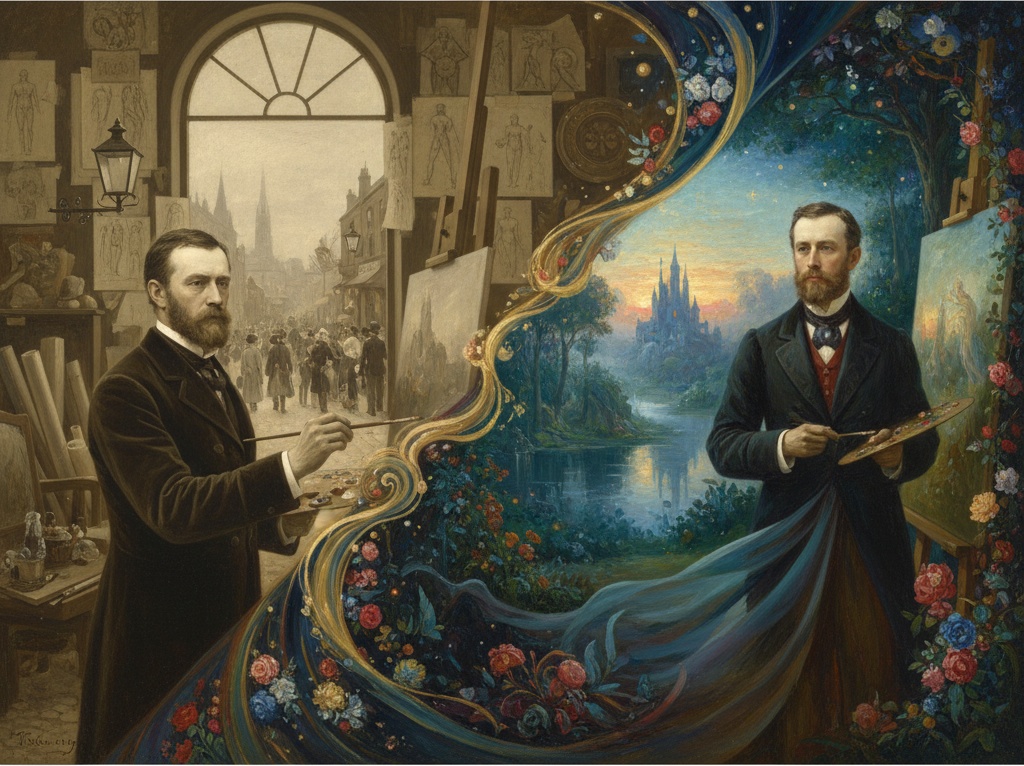
As the 19th century drew to a close, Mostyn’s artistic focus began to undergo a significant transformation. While he continued to exhibit technical mastery, his subject matter shifted away from the harsh realities of urban life towards the more idyllic realm of garden scenes. This wasn't an abrupt departure but rather a gradual evolution, influenced by a growing desire for beauty, tranquility, and escapism. The end of World War I likely played a role in this shift, as artists across Europe sought solace and renewal in depictions of nature and idealized landscapes.
This transition was marked by a move away from the precise realism of his earlier work towards a more impressionistic style, characterized by softer brushstrokes, vibrant colors, and a heightened sense of atmosphere. He began to explore themes of romance, nostalgia, and the ephemeral beauty of nature, creating paintings that evoked a sense of peace and serenity. This period saw him experimenting with light and shadow, capturing the golden hues of twilight and the lush textures of blossoming gardens.
Mostyn's Mature Period: Enchanted Landscapes and the Pursuit of Ideal Beauty
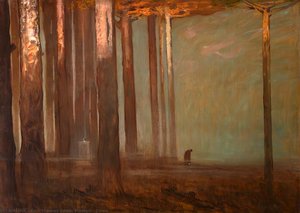 Dawn
DawnExperience 'Dawn' by Thomas Edwin Mostyn – a stunning 1919 landscape painting of a golden forest scene. Romantic Victorian art, large format, captivating detail.
The years following World War I represent the pinnacle of Mostyn’s artistic achievement. Relocating to Devon in 1918, he fully embraced his newfound passion for garden scenes, creating a series of paintings that would become his signature style. These works are characterized by their dreamlike quality, vibrant color palettes, and an almost otherworldly sense of beauty. He wasn't simply depicting gardens; he was constructing idealized landscapes – places of enchantment and escape.
Mostyn’s technique during this period involved layering thick impasto with a palette knife, creating rich textures and a dynamic interplay of light and color. This bold approach resulted in paintings that were both visually striking and emotionally evocative. He deliberately eschewed strict realism, prioritizing atmosphere and emotional impact over precise representation. Paintings like *Dawn* (1919) exemplify this mature style, showcasing a golden forest scene bathed in ethereal light – a testament to his ability to capture the fleeting beauty of nature. Memory’s Garden* (1900), with its lush detail, exemplifies the romantic sensibility that defines this period.
Legacy and Auction Records: Assessing Mostyn’s Place in Victorian Art History
Thomas Edwin Mostyn died in Manchester in 1930 at the age of sixty-six, leaving behind a diverse body of work that reflects the changing artistic sensibilities of his time. While he may not be as widely recognized as some of his contemporaries, his paintings continue to captivate audiences with their beauty, emotional depth, and technical skill. His journey from social realism to romantic idealism offers a fascinating glimpse into the complexities of Victorian society and the evolving role of art.
Mostyn’s works have consistently attracted attention at auction, demonstrating a sustained demand for his paintings among collectors. In September 2003, *Portrait of a lady, three-quarter-length, in a green and gold dress* sold at Christie's for an impressive £39,950 – nearly eight times its high estimate, breaking the artist’s previous auction record. This sale underscores the growing appreciation for Mostyn’s work and his enduring appeal to art enthusiasts.
Exploring Mostyn’s Works Today: Availability, Reproductions & The Enduring Appeal
Today, Thomas Edwin Mostyn's paintings can be found in private collections and occasionally at auction. His works offer a unique window into the Victorian era, capturing both its social realities and its romantic ideals. For those seeking to experience his art firsthand, high-quality reproductions are readily available through platforms like ArtsDot. These reproductions allow collectors and enthusiasts alike to enjoy the beauty and emotional depth of Mostyn’s paintings without the expense of acquiring an original.
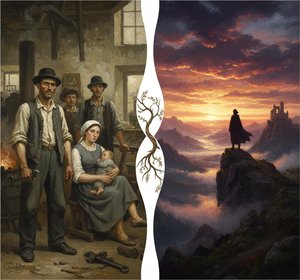
Whether you're drawn to his early depictions of working-class life or his later enchanted garden scenes, Thomas Edwin Mostyn offers a compelling artistic vision that continues to resonate with audiences today. His ability to capture both the harsh realities and ethereal dreams of Victorian England makes him a truly unique and captivating artist – a testament to the power of art to reflect and shape our understanding of the world around us.