Early Life & Apprenticeship: Forging a Path Beyond Topography
Thomas Girtin (18 February 1775 – 9 November 1802) was an English watercolourist and etcher. A friend and rival of J. M. W. Turner, Girtin played a key role in establishing watercolour as a reputable art form. == Life == Thomas Girtin was born in ...
Thomas Girtin, born in the bustling heart of Southwark, London, in 1775, emerged from humble beginnings to become a pivotal figure in the evolution of British watercolour painting. His father, a brushmaker of Huguenot descent, died early in his life, leaving a young Thomas under the care of his mother and her subsequent marriage to a pattern-draughtsman. This familial shift subtly shaped his artistic trajectory, exposing him to the world of design and draftsmanship from an early age. While formal training began with classes under Thomas Malton, it was his apprenticeship with Edward Dayes in 1789 that proved foundational – though not without its complexities. Dayes, a respected topographical watercolourist, instilled technical proficiency but seemingly failed to recognize the burgeoning talent of his young pupil. Accounts suggest a strained relationship, even whispers of Girtin’s brief imprisonment for perceived insubordination. This early experience, however, may have fueled a rebellious spirit and an eagerness to transcend the limitations of purely descriptive landscape work.
The prevailing artistic climate of the late 18th century favored precise renderings of estates and views – a demand Dayes readily catered to. Girtin’s initial sketches reflect this influence, demonstrating a meticulous attention to detail. Yet, even in these early works, hints of something more profound begin to emerge: a sensitivity to light, an atmospheric quality that foreshadowed his later mastery. He was not content merely to *record* the landscape; he sought to capture its essence, its mood, and its emotional resonance.
The Emergence of a Romantic Style: Innovation in Watercolour Technique
Aerial perspective, or atmospheric perspective, is the effect the atmosphere has on the appearance of an object as viewed from a distance. As the distance between an object and a viewer increases, the contrast between the object and its background de...
Girtin’s true artistic revolution began with his departure from Dayes' studio and his burgeoning friendship with J.M.W. Turner. The two young artists, both precocious talents, found common ground in their shared dissatisfaction with established conventions. While initially employed in the mundane task of coloring prints, this collaboration sparked a creative dialogue that would profoundly impact British art. Girtin began exhibiting at the Royal Academy from 1794, quickly gaining recognition for his architectural and topographical sketches. However, it was his innovative approach to watercolour – his willingness to experiment with washes, layering, and atmospheric effects – that truly set him apart.
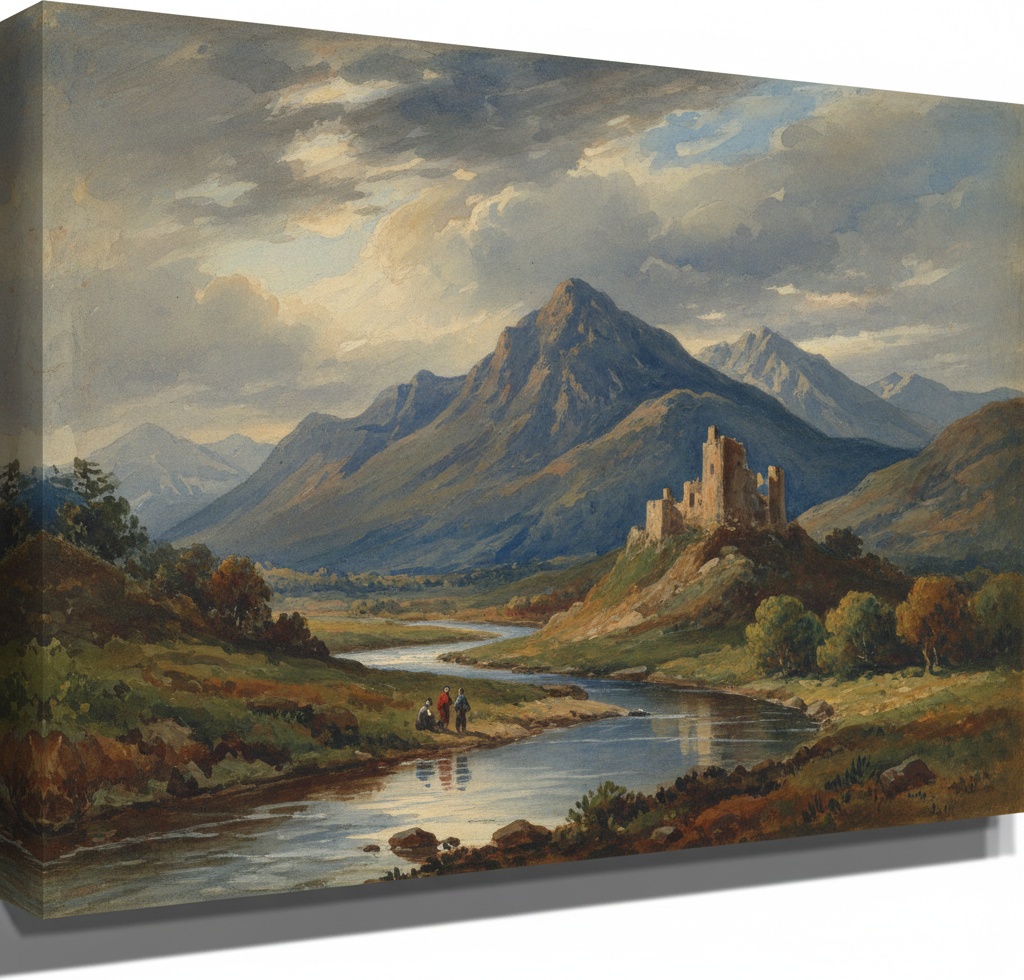
He moved away from the traditional method of building up tones in grey wash and then applying pastel highlights. Instead, Girtin embraced broad, expressive washes of color, creating a luminous quality rarely seen before. He skillfully employed aerial perspective, softening outlines and blurring details to convey distance and depth – a technique beautifully illustrated in works like “Jedburgh Abbey from the South-East.” This wasn’t simply about replicating what the eye saw; it was about evoking a *feeling* of space and atmosphere. His use of pen and brown ink, often combined with varnish, added richness and complexity to his compositions, further distinguishing his style.
Girtin and Turner: A Pivotal Artistic Friendship and Rivalry
The relationship between Thomas Girtin and J.M.W. Turner is one of the most fascinating in British art history – a complex blend of friendship, rivalry, and mutual influence. They first met as teenagers, working together to color prints, and quickly formed a close bond. Both were ambitious and driven, eager to establish themselves in a competitive artistic landscape. While they shared a similar vision for the future of watercolour painting, their approaches diverged over time.
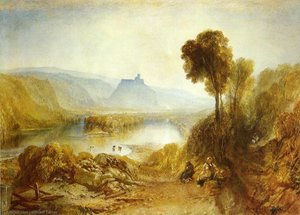
Turner, known for his dramatic depictions of light and movement, embraced a more expressive and often turbulent style. Girtin, while equally innovative, tended towards a greater sense of serenity and atmospheric nuance. They frequently sketched together, exchanging ideas and techniques, but also competed for commissions and recognition. This healthy rivalry pushed both artists to excel, ultimately benefiting the art world as a whole. Though Turner would later overshadow Girtin in terms of fame and longevity, it’s widely acknowledged that Girtin played a crucial role in establishing watercolour as a legitimate and respected art form.
Masterpieces of Atmosphere: Key Works and Their Evocative Power
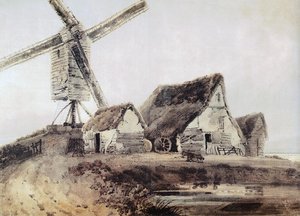 Mill in Essex
Thomas Girtin’s "Mill in Essex" captures a serene 18th-century English landscape in delicate watercolor. Explore this evocative scene of rural life & tradition – a timeless work of art.
Girtin's oeuvre, though tragically cut short by his early death at the age of 27, is remarkably rich and diverse. “Mill in Essex” exemplifies his ability to capture the tranquility of rural life with delicate washes and subtle tonal variations. The scene exudes a sense of peace and harmony, inviting the viewer into a timeless pastoral world. In contrast, “St Nicholas Hospital, Richmond, Yorkshire” reveals a haunting beauty in decay. The crumbling Roman ruins are rendered with an atmospheric sensitivity that evokes a sense of melancholy and the passage of time.
Perhaps his most celebrated work is “The White House at Chelsea” (1800), admired by Turner himself for its masterful use of light and shadow. This painting showcases Girtin’s ability to transform an ordinary subject into something extraordinary, imbuing it with a poetic quality that transcends mere representation. His later Parisian sketches, created during his five-month sojourn in 1801–1802, demonstrate his adaptability and continued experimentation with technique. These works, posthumously published as “Twenty Views in Paris and its Environs,” offer a glimpse into the vibrant cityscape of the French capital.
Legacy & Influence: Establishing Watercolour as a Reputable Art Form
Thomas Girtin’s impact on British art is undeniable. He not only elevated watercolour to new heights of artistic expression but also paved the way for future generations of landscape painters. His innovative techniques, particularly his use of atmospheric perspective and expressive washes, influenced artists such as Turner and John Sell Cotman. By demonstrating the potential of watercolour to capture mood, emotion, and atmosphere, he challenged conventional notions of what the medium could achieve.
His work resonated with the burgeoning Romantic movement, which championed subjectivity, imagination, and an appreciation for nature. Girtin’s paintings weren't simply depictions of places; they were expressions of feeling, imbued with a poetic sensibility that captivated audiences. Today, his works are held in prestigious collections such as the British Museum and the Victoria and Albert Museum, testament to his enduring legacy. Collecting Girtin today is an opportunity to own a piece of art history – a glimpse into the birth of Romantic watercolour painting and the vision of an artist who dared to break with convention.