





The Silent Partner: Defining the Frame's Role in Visual Narrative
 The Frame as Argument: An Expert Guide to Selecting the Perfect Frame for Your Art
The Silent Partner: Understanding the Frame's Role in Visual Narrative Beyond the Canvas: Framing as a Catalyst for Value & Aesthetic Impact in Luxury Art Reproduction The Historical Significance of Framing: Beyond Protection For centuries, the frame...
To the casual observer, a frame may appear as nothing more than a functional boundary, a wooden perimeter designed to separate the vibrant world of the canvas from the static reality of the wall. Yet, for those of us who have spent decades lost in the luminous depths of a Monet or the swirling textures of a Van Gogh, we understand that the frame is far more than a mere border; it is a silent partner in the profound dialogue between the artwork and the observer. It acts as a curated gateway, a threshold that prepares the mind for the emotional journey ahead. Much like the concept of framing in our own lives—where we use mental filters to interpret reality—the physical frame provides a cognitive structure for visual information. It tells us precisely where the world of the painting ends and our own reality begins, focusing our attention and directing the gaze inward, preventing the eye from wandering into the periphery of the room.
When we contemplate a masterpiece, our perception is immediately shaped by this structural introduction. A thoughtfully chosen frame provides the necessary punctuation to the artist's visual sentence. Without it, the image remains a mere depiction; with it, the work becomes a curated object of contemplation. The frame establishes the initial context, setting the stage upon which the artist’s vision performs. It is an act of intentionality that elevates the painting, transforming a simple arrangement of pigment and oil into a window through which we glimpse another era, another light, and another soul.
A Threshold of Light: How Frames Shape Impressionist Perception
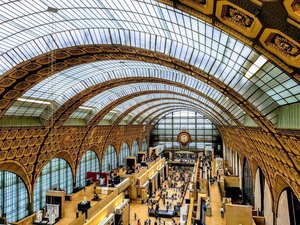 Musee National d'Orsay
A Palace of Light Embracing Impressionism’s Soul The Musée d'Orsay is far more than a mere repository for canvas and pigment; it is a profound sensory experience, a journey back to the vibrant, pulsing heart of nineteenth-century artistic revolution....
In the realm of Impressionism, where the very essence of the movement lies in the fleeting nature of light and atmosphere, the frame takes on an almost spiritual dimension. Consider the works of Claude Monet or Pierre-Auguste Renoir, where the boundaries between subject and sky are often blurred by soft, dappled light. A frame for such works must do more than enclose; it must breathe. It must act as a conduit for the light that seems to emanate from within the canvas itself. When we look at the Impressionist masters, we are looking for movement, for the way sunlight dances upon water or filters through a grove of trees. A frame that is too heavy or visually aggressive can stifle this delicate respiration, trapping the light within a rigid cage.
The great frame makers of the past understood this delicate balance. They recognized that to frame an Impressionist vision, one must respect the movement and the subjective impression over sharp detail. The goal is to create a transition so seamless that the eye moves from the room into the painting without a jarring interruption. This is why the choice of texture and depth in a frame is so vital; it must complement the impasto brushstrokes and the luminous, airy quality of the pigments. When the frame succeeds, it becomes an extension of the atmosphere, allowing the viewer to step directly into the sun-drenched landscapes of Giverny or the misty mornings of the Seine.
The Weight of History: From Gilded Grandeur to Modern Minimalism
 robert kulicke
Robert Kulicke: The Maestro of Modern Frames and Delicate Still Lifes Robert Moore Kulicke (1924 – December 14, 2007) stands as a singular figure in the history of American art and design—a man whose legacy extends far beyond simply crafting picture ...
Throughout the centuries, the aesthetic role of the frame has evolved from a display of power to an expression of restraint. During the Renaissance and the subsequent eras of grand patronage, frames were often elaborate displays of wealth and status. Gilded carvings, adorned with acanthus leaves and egg-and-dart moldings, served as symbols of the sitter's or the patron's importance. These heavy, ornate borders commanded reverence and added a sense of historical weight to portraits, demanding that the viewer acknowledge the gravity of the subject matter.
As we moved into the modern era, this architectural grandeur began to give way to a more nuanced understanding of space. The rise of minimalism brought with it a preference for clean lines and understated elegance. We see this transition reflected in the work of legendary craftsmen like Robert Kulicke, who bridged the gap between traditional methods and the burgeoning abstract expressionist movement. Today, we find ourselves navigating a spectrum of styles. A richly stained mahogany frame might evoke a sense of timelessness and classical grace, perfect for a portrait steeped in history. Conversely, a minimalist edge allows for a more contemporary, unmediated connection to the art, stripping away the distractions to focus solely on the artist's brushwork. The choice between these styles is an argument in itself, a decision that fundamentally alters how much historical weight we wish to impose upon the viewing experience.
Architectural Harmony: Integrating Masterpieces into the Contemporary Home
 Enhancing Art with Framing: A Guide to Selection & Aesthetic Integration
Understanding the Role of Framing in Art Presentation For freelance decorators, understanding the power of framing extends far beyond simply enclosing a piece of art. It’s about completing the visual narrative, enhancing its impact, and protecting a ...
Bringing a piece of Impressionist history into a modern living space requires more than just hanging a picture; it requires an act of architectural integration. The frame serves as the essential bridge between the historical soul of the painting and the contemporary aesthetic of your home. For the discerning collector, the challenge is to ensure that the artwork does not merely sit upon the wall but becomes part of the room's very fabric. A well-chosen frame can harmonize a bold, colorful Van Gogh with a neutral, modern interior, or it can provide a sophisticated anchor for a large-scale multi-panel set spanning a grand staircase.
This integration is particularly effective when considering the scale and layout of your space. For wider walls, the trend of using multi-panel layouts—splitting a single landscape across three or five canvases—can create a breathtaking architectural effect that mimics the grandeur of a mural. The frame then acts as the unifying element, ensuring that the colors and brushstrokes flow seamlessly across every panel. Whether you are seeking a frameless, modern look with an extended wrap or a more traditional, structured presentation, the goal remains the same: to create a cohesive environment where art and architecture exist in a state of beautiful, luminous embrace.
The Art of Selection: Avoiding the Pitfalls of Mismatched Boundaries
 Framing Perception: A Comprehensive Guide to Selecting Frames that Enhance Interior Styles and Artwork Value
The Art of Framing: Beyond Protection – Elevating Interiors & Artwork Value Wikipedia: Interior design Interior design is the art and science of enhancing the interior of a building to achieve a healthier and more aesthetically pleasing environment f...
The danger of a poorly selected frame lies in its ability to "ruin" the very magic it is meant to protect. A mismatch can create a visual dissonance that pulls the viewer out of the painting's narrative. Imagine a delicate, light-drenched landscape by Sisley, suddenly interrupted by a thick, dark, and overly ornate frame that feels heavy and suffocating. The eye is no longer wandering through the countryside; it is trapped against a dark perimeter. Such a mistake creates a psychological barrier, making the artwork feel like an intruder in the room rather than a welcomed guest.
To avoid these pitfalls, one must approach framing with the same level of artistic consideration as the painting itself. It is vital to analyze the color palette, the intensity of the brushwork, and the overall mood of the piece before deciding on a border. A frame that is too bright may compete with the colors of the painting, while one that is too dark may diminish its luminosity. The secret lies in finding the "middle ground"—a frame that provides enough structure to define the work without overwhelming it. It is about finding the perfect punctuation mark that completes the artist's visual sentence without changing its meaning.
Preserving the Legacy: The Technical Importance of Framing and Protection
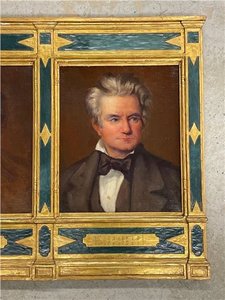 frederick william harer
a life dedicated to art and craftsmanship frederick william harer , an american painter, sculptor, and etcher, left an indelible mark on the world of art with his exceptional skill as a gilder and framemaker. born in blossburg, pennsylvania, on novem...
Beyond the aesthetic, we must never forget the fundamental duty of the frame: protection. For those of us who cherish these reproductions as lasting legacies, the technical integrity of the presentation is paramount. A high-quality frame is a shield against the elements, safeguarding the delicate layers of oil paint and the texture of the cotton canvas from dust, moisture, and atmospheric pollutants. The use of acid-free matting and proper glazing is essential to create an air gap that prevents moisture damage and ensures that the pigments remain as vibrant as the day they were painted.
True preservation involves a commitment to the chemistry of art. This includes using flexible gesso to prevent cracking over time and applying a protective coat of Damar varnish to shield the surface. When we invest in professional framing, we are not just decorating; we are ensuring that the brushstrokes of the masters—the very soul of the work—can be enjoyed by generations to come. It is this dedication to craftsmanship and longevity that transforms a beautiful object into a true heirloom, preserving the light and emotion of the Impressionist era for the future.
At ArtsDot.com, we believe that every masterpiece deserves a presentation as profound as its subject. Whether you are looking to commission a bespoke oil reproduction or seeking expert advice on how to integrate a new piece into your collection, our passion for the Impressionist movement guides every brushstroke and every frame we select. We invite you to explore our curated world of Monet, Renoir, and Van Gogh, where history is not just remembered, but vividly brought to life.