The Shifting Horizon: From Impressionist Luminosity to Surrealist Shadows
For those of us who have spent decades finding solace in the sun-dappulated haystacks of Monet or the soft, rhythmic brushstrokes of Renoir, the transition into the twentieth century can feel like a sudden, unsettling shift in the light. We are accustomed to landscapes that celebrate the fleeting dance of atmosphere and the warmth of a recognizable meadow. Yet, as the world moved through the profound upheavals of the early 1900s, the horizon line began to fracture. The landscape, once a vessel for capturing naturalistic beauty, transformed into something far more introspective. Where Impressionism sought to master the external light, the Surrealist movement sought to illuminate the shadows within. It was a departure from the tangible world, moving away from the sensory delights of the visible meadow toward a realm where the very ground beneath our feet might dissolve into liquid or mountains might float suspended in a sky of bruised violet. This evolution did not abandon the landscape; rather, it reimagined it as a stage for the profound mysteries of the human psyche.
The Architecture of Dreams: Constructing the Impossible Landscape
 Beyond Reality: A Curated Guide to the Dreamlike World of Surrealist Landscapes
The Architecture of Dreams: Defining the Surrealist Landscape To step into a Surrealist landscape is to abandon the safety of the horizon line and enter a realm where the laws of physics are merely suggestions. Unlike the traditional landscapes of th...
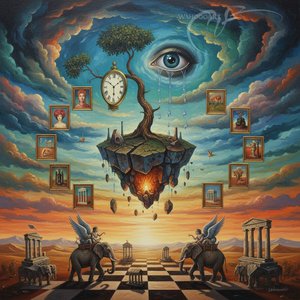
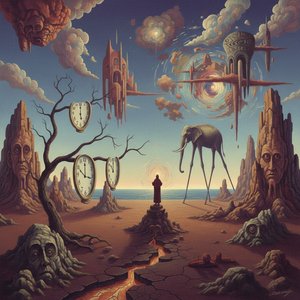
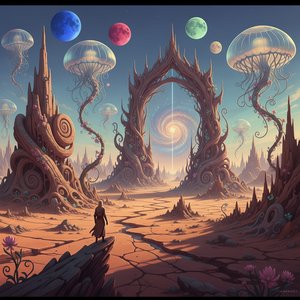
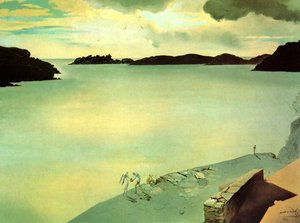
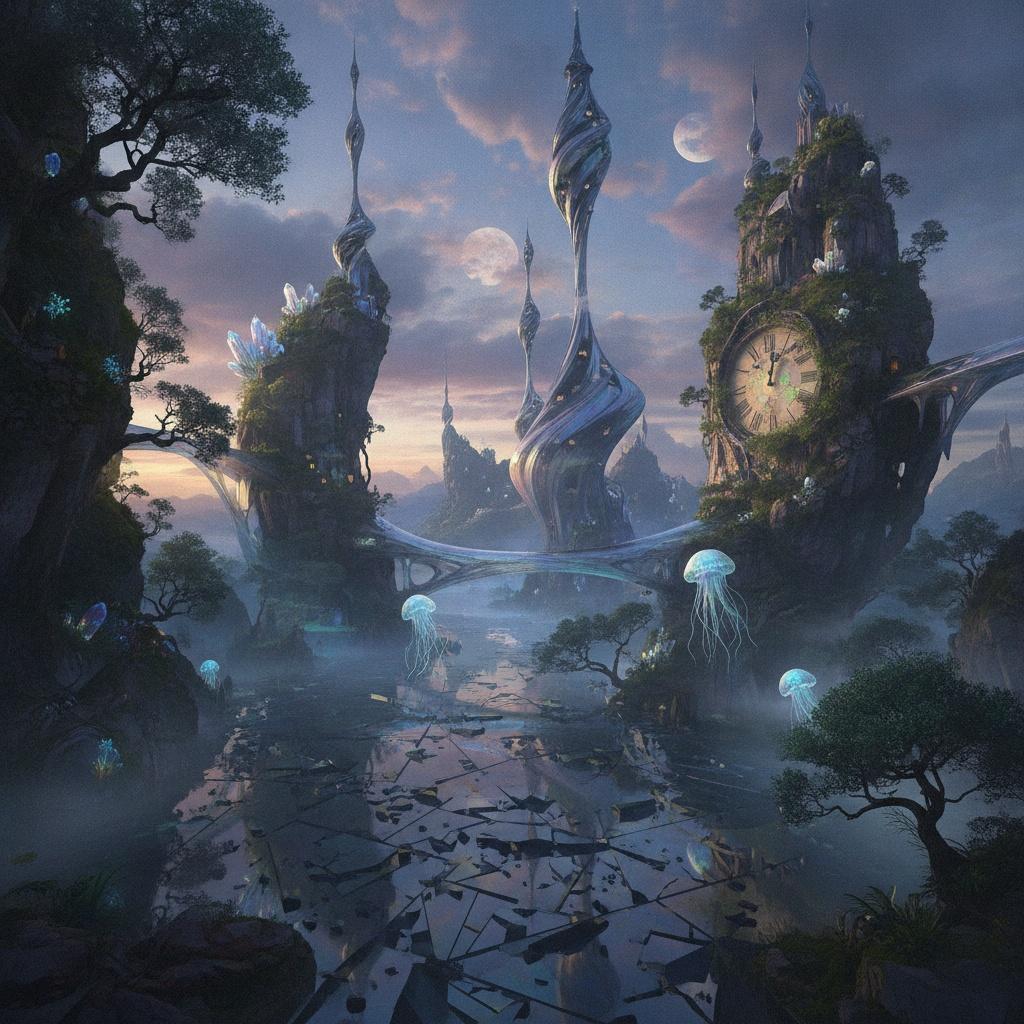
To step into a Surrealist landscape is to abandon the safety of physical laws and enter an architecture built entirely of dreams. Unlike the traditional genres that preceded it, which relied on the familiar topography of hills and valleys, Surrealism constructs vistas that defy all logic. These are not mere depictions of places, but rather carefully crafted architectures of the impossible. In these works, we find a deliberate departure from the recognizable world, replacing it with landscapes that serve as windows into the subconscious mind. The structural elements—the way an unnaturally long shadow stretches across a barren desert or how an object appears simultaneously solid and translucent—work in concert to create a sense of profound disorientation. It is a landscape where the boundaries between the internal psyche and the external environment are irrevocably blurred, inviting us to view the world not as it appears, but as it is felt in our most fevered dreams.
Decoding the Subconscious: Salvador Dalí and the Paranoiac-Critical Method
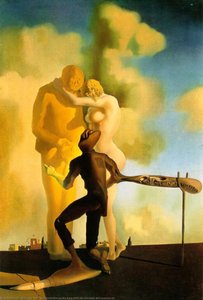
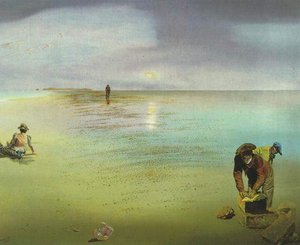 Mediumnistic-Paranoiac Image, 1935
A Descent into Dream Logic: Exploring Salvador Dalí’s “Mediumnistic-Paranoiac Image” “Mediumnistic-Paranoiac Image,” painted in 1935, stands as a cornerstone of Surrealist art and a testament to Salvador Dalí's unparalleled ability to translate the s...
No figure looms larger over this dreamlike terrain than Salvador Dalí, an artist whose technical mastery allowed him to translate the irrationality of the mind with astonishing precision. Dalí’s work, particularly his 1935 masterpiece
Mediumnistic-Paranoiac Image, stands as a testament to his ability to bridge the gap between meticulous realism and profound psychological terror. Central to his vision was the "paranoiac-critical method," a technique he developed to induce hallucinatory states while simultaneously analyzing them with rational clarity. This paradoxical process resulted in images characterized by exquisite, velvety brushstrokes and precise shading, yet populated by bizarre, distorted imagery that undermines our sense of reality. Through his eyes, we witness landscapes that are both hauntingly beautiful and deeply unsettling, where the textures of a beach or the wings of a butterfly serve as anchors for much deeper, Freudian explorations of desire, anxiety, and the fluidity of memory.
Visual Paradoxes: The Art of Juxtaposition and Symbolic Depth
The true magic of the Surrealist landscape lies in its mastery of visual paradox, achieved primarily through the potent technique of juxtaposition. This involves the placement of two completely unrelated objects within a shared space to create a jarring, new meaning that disrupts our cognitive expectations. Imagine the profound shock of seeing a telephone resting upon a lobster, or a train emerging unexpectedly from a fireplace; such images force the viewer to look beneath the surface level of the imagery to find a deeper, symbolic truth. This use of scale and perspective plays a crucial role in this disorientation, often presenting objects that are both monumental and miniscule within the same frame. By manipulating these elements, Surrealist artists created a visual language of symbols—where a fleshy, distorted shape or a stark, red framework could represent the artist's deepest obsessions or the very essence of transformation itself.
Enchanted Vistas: The Ethereal Contributions of Women Surrealists
Women surrealistsWomen surrealists are women artists, photographers, filmmakers and authors connected with the surrealist movement, which began in the early 1920s. == Painters == Gertrude Abercrombie (1909–1977), Chicago artist inspired by the surrealists, who became...
While the history of Surrealism often highlights its most famous male icons, a profound and ethereal dimension was added by the women of the movement. These artists brought a unique, often more organic and autobiographical perspective to the dreamscape. Artists such as
Leonora Carrington and
Gertrude Abercrombie infused their landscapes with a sense of myth and enchantment that felt deeply personal. Their works often moved away from the starker, more aggressive distortions of Dalí, opting instead for intricate, sometimes hauntingly beautiful compositions that explored themes of identity, magic, and the natural world. Whether through the abstract organic shapes of
Eileen Agar or the startling, sphinx-like apparitions found in the work of
Leonor Fini, these women expanded the boundaries of the Surrealist landscape, proving that the exploration of the subconscious could be as much about enchantment and metamorphosis as it was about fear and fragmentation.
Beyond the Tangible: The Enduring Legacy of the Surrealist Vision
Surrealist Landscapes - MoMA--- title: Surrealist Landscapes | MoMA author: Anne Umland url: https://www.moma.org/collection/terms/surrealism/surrealist-landscapes hostname: moma.org description: Landscapes remained a popular subject at the height of the Surrealist movement in ...
As we reflect upon these impossible vistas, we realize that the legacy of Surrealism is not merely found in the museum galleries of the MoMA or the halls of history, but within our own capacity for imagination. These landscapes continue to resonate because they speak to a universal truth: that the interior world of the psyche is as complex and ripe for exploration as the world beyond our bodies. The movement challenged us to question reality, to embrace the irrational, and to find beauty in the unsettling. For the true art enthusiast, these works offer a potent reminder of the importance of intuition and the courage to confront the hidden corners of our own minds. Whether through the meticulously rendered textures of an oil reproduction or the quiet contemplation of a print, the Surrealist vision remains a timeless invitation to wander through the infinite, beautiful, and often terrifying architecture of our dreams.


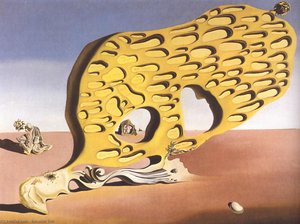
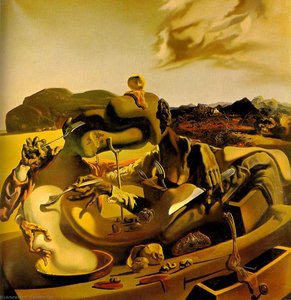
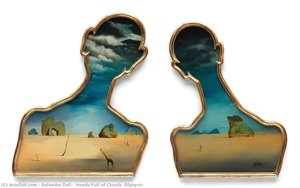
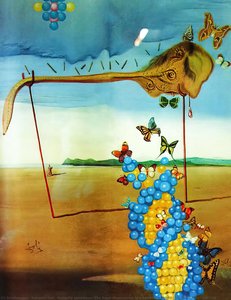 Butterfly Landscape (The Great Masturbator in a Surrealist Landscape with D.N.A.), 1957-58