

The Architecture of Dreams: Understanding the Surrealist Manifesto
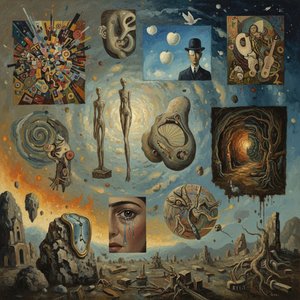
To step into a Surrealist landscape is to abandon the safety of logic and surrender to the profound, often unsettling, beauty of the unconscious mind. Emerging from the turbulent aftermath of the First World War, Surrealism was far more than an aesthetic movement; it was a revolutionary attempt to bridge the gap between the waking world and the dream state. Influenced heavily by Freudian psychoanalysis, the pioneers of this movement sought to liberate the human imagination from the restrictive shackles of rational thought and societal convention. They believed that beneath the veneer of our structured reality lies a reservoir of raw, unfiltered truth—a realm where time is fluid, space is distorted, and the impossible becomes tangible.
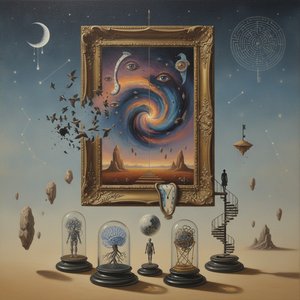
The architecture of these dreamscapes is built upon the principle of psychic automatism, a method designed to allow the hand to move without the interference of conscious intent. By bypassing the intellect, artists could tap into the primal imagery of the psyche, creating compositions that feel both deeply personal and universally haunting. This pursuit of the marvelous required a radical reimagining of what art could achieve, moving away from mere representation toward a profound exploration of the symbolic language of our deepest desires and fears. It is within this tension between the recognizable and the bizarre that the true power of Surrealism resides, inviting the viewer to question the very nature of their perceived reality.
Salvador Dalí and the Mastery of the Subconscious Vision
No name resonates with more hypnotic intensity within the annals of Surrealism than Salvador Dalí. A virtuoso of technical precision, Dalí possessed the rare ability to render the most irrational concepts with a clarity so sharp it felt hyper-real. His work does not merely suggest a dream; it documents one with the meticulous detail of a scientific specimen. Through his unique "paranoiac-critical" method, Dalí cultivated a state of self-induced hallucination, allowing him to perceive multiple, overlapping meanings within a single image. This technique transformed the canvas into a stage where the boundaries between the physical and the metaphysical dissolved entirely.
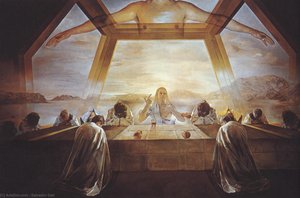
Dalí’s mastery lay in his ability to manipulate the viewer's perception through light, shadow, and perspective. In masterpieces such as The Sacrament of the Last Supper, he weaves together religious iconography with distorted, melting forms, creating a sense of divine disorientation. His landscapes are often vast, desolate expansations that evoke an eternal, sun-drenched stillness, providing a stark backdrop for his more grotesque or whimsical subjects. To observe a Dalí painting is to participate in a psychological dialogue; the artist presents us with a puzzle of the soul, demanding that we look past the surface to find the hidden truths buried within the folds of his dreamlike compositions.
Symbolism Unveiled: Decoding Melting Clocks and Distorted Realities
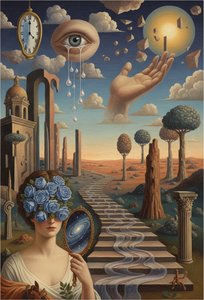
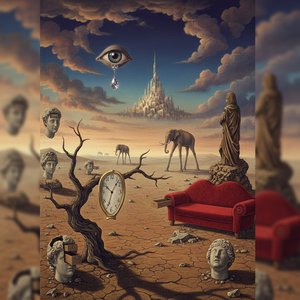
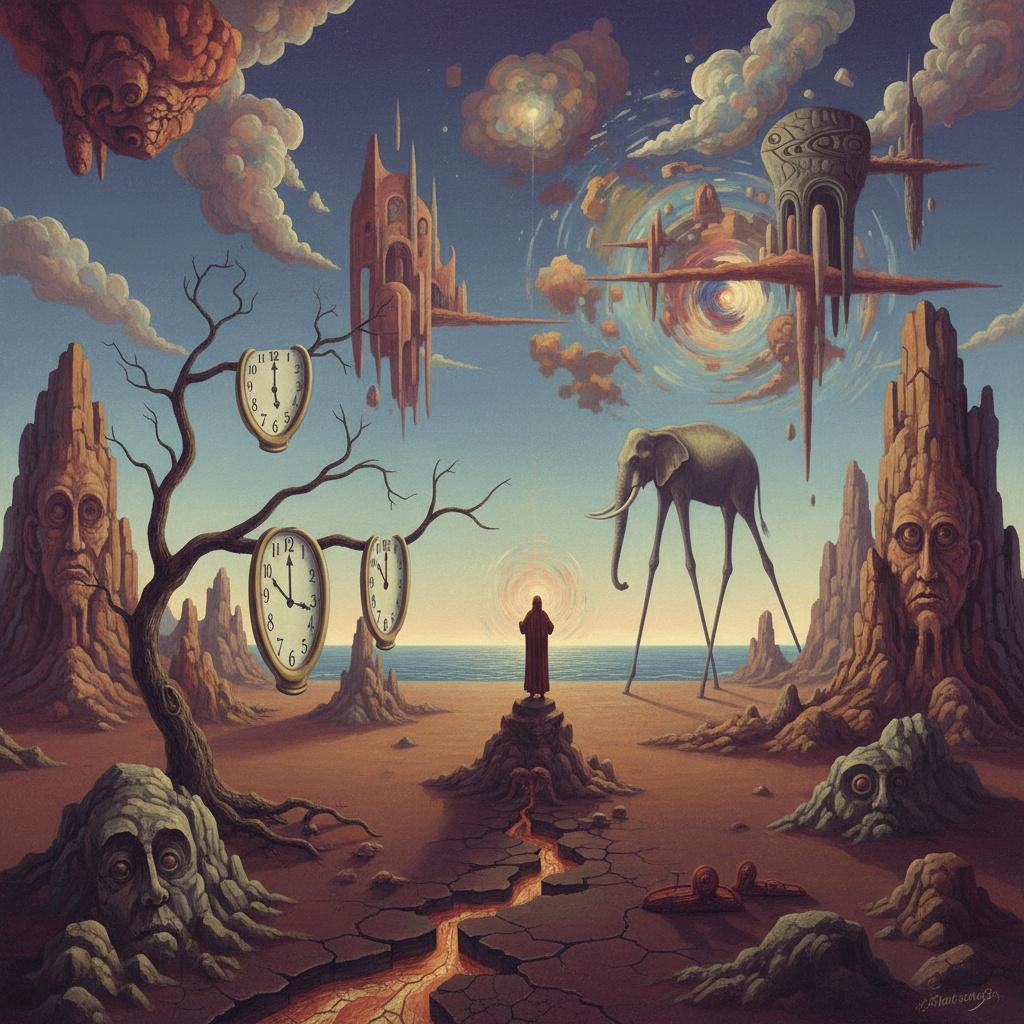
The brilliance of Surrealist art lies in its secret vocabulary—a lexicon of symbols that communicate through emotion rather than literal definition. For the discerning collector, decoding these images is an essential part of the aesthetic experience. Consider the iconic imagery of melting watches, perhaps the most famous motif in Dalí’s repertoire. These soft, drooping timepieces serve as a poignant meditation on the relativity of time and the inevitable decay of all material things. They suggest that in the realm of the subconscious, the rigid structures of the clock no longer hold dominion, allowing for an eternal present where memory and anticipation coexist.
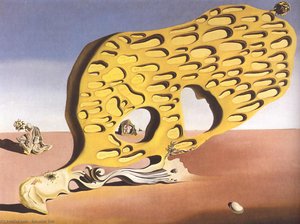
< p>Beyond the clocks, Dalí’s work is populated by a recurring cast of symbolic figures: the ants that represent decay and mortality, the crutches that provide support to fragile, drooping forms, and the vast, empty landscapes that mirror the isolation of the human spirit. Even more complex works, such as The Weaning of Furniture Nutrition or his stereoscopic explorations in The Wash Basin, utilize symbolic imagery to probe the depths of biological and religious obsession. Each element is a carefully placed tile in a larger mosaic of meaning, inviting the observer to peel back layers of symbolism to uncover the profound anxieties and aspirations that define our shared human condition.The Tactile Sublime: Capturing Surrealist Depth through Oil Impasto
While the subject matter of Surrealism is ethereal and intangible, the medium used to capture it must be profoundly physical. The true impact of a Surrealist masterpiece is often found in its texture—the way light catches a raised ridge of paint or disappears into a deep, shadowed crevice. To replicate the "soul" of these works, one must look toward the technique of impasto, where thick, deliberate brushstrokes create a three-dimensional topography on the canvas. This tactile quality provides a necessary anchor for the dreamlike subject matter; the weight and presence of the oil paint lend a sense of permanence to the fleeting visions of the mind.
A high-quality reproduction must honor this physical depth. Unlike flat, digital prints, a hand-painted oil recreation utilizes multiple layers of pigment to build a living surface. The use of heavy-duty cotton canvas and premium, lightfast pigments ensures that the subtle transitions from light to shadow—essential for creating the illusion of infinite space—remain vibrant for generations. When an artist applies layers of oil with varying textures, they are not merely copying an image; they are reconstructing the very energy and movement of the original master’s hand, allowing the viewer to feel the pulse of the dream through the texture of the paint itself.
Curating the Impossible: Integrating Surrealist Masterpieces into Modern Interiors
Integrating Surrealist art into a contemporary living space requires a sophisticated approach to curation. These are not merely decorative objects; they are intellectual provocations that demand attention. For the modern collector, a large-scale Surrealist piece can serve as a powerful focal point, breaking the monotony of minimalist design with its unexpected complexity. Whether it is a multi-panel set spanning a grand staircase or a singular, commanding canvas above a mantle, the key is to allow the artwork enough "breathing room" to exert its psychological influence.
The challenge lies in balancing the dreamlike intensity of the art with the architectural reality of the home. One might consider pairing a Dalí-inspired reproduction with sleek, modern furniture to create a striking juxtaposition between the rational and the irrational. For those seeking a more cohesive aesthetic, utilizing color analysis can help align the palette of the artwork with existing interior tones, ensuring that the piece feels like an organic extension of the room rather than an intrusion. Ultimately, curating Surrealism is about creating a space for contemplation—a sanctuary where the boundaries between the domestic and the divine are beautifully, and intentionally, blurred.
At ArtsDot.com, we specialize in preserving this extraordinary legacy. From bespoke oil reproductions that capture every tactile brushstroke to museum-grade Giclée prints designed for longevity, our mission is to bring the magic of the masters into your private collection. Whether you seek to transform a personal memory through our custom painting services or wish to explore the profound depths of art history through our expert consultations, ArtsDot provides the bridge between the tangible world and the infinite beauty of the artistic imagination.