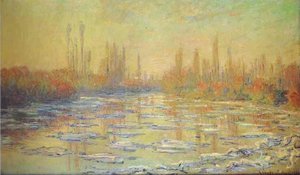
The Poetry of Perception: Understanding the Impressionist Revolution
 Impressionist Landscapes: 10 Masterpieces for Your Home | ArtsDot
Introduction Imagine stepping into a world bathed in dappled sunlight, where colors dance and shimmer with an ethereal quality. This is the realm of Impressionism – a revolutionary art movement that forever altered how we perceive light, color, and t...
To step into the world of Impressionism is to abandon the rigid, often heavy constraints of tradition and embrace a more delicate truth. For those of us who have spent decades finding solace in the soft edges of a canvas, the movement represents far more than a mere stylistic shift; it was a profound rebellion of the soul. In the late 19th century, a group of visionaries—led by the incomparable Claude Monet, alongside Renoir, Pissarro, and Sisley—sought to break free from the stifling perfection of the French Salon. They rejected the dark, somber tones and meticulous, almost photographic detail that had long defined academic painting.
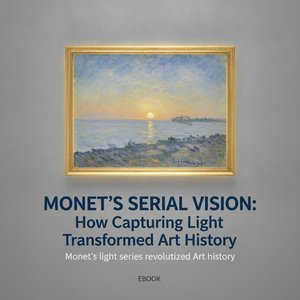
Instead, they turned their gaze toward the ephemeral. The very term Impressionism, famously derived from Monet’s Impine, soleil levant, suggests a momentary glance, a sensory flicker captured before it vanishes forever. This was art that did not seek to document every leaf or stone with clinical accuracy, but rather to translate the feeling of seeing them. It was an invitation to slow down, to breathe deeply, and to find the extraordinary within the ordinary. For the seasoned lover of art, this movement offers a sanctuary where the boundaries between the observer and the observed begin to dissolve into a beautiful, luminous haze.
En Plein Air: Capturing the Fleeting Dance of Light and Atmosphere
 Capturing Ephemeral Light: Plein Air Painting from Impressionism to Today
The Genesis of 'En Plein Air': From Studio Tradition to Landscape Portraiture Wikipedia: En plein air En plein air (pronounced [ɑ̃ plɛ.n‿ɛʁ]; French for 'outdoors'), or plein-air painting, is the act of painting outdoors. This method contrasts with s...
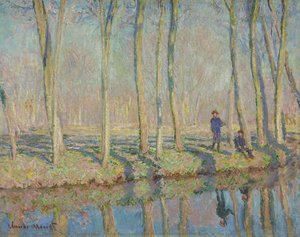
At the heart of this revolution lay a transformative practice known as en plein air. While the masters of old labored within the dim, controlled environments of their studios, the Impressionists took their easels into the wild, unpredictable embrace of nature. This method, championed by Monet after his pivotal encounter with Eugène Boudin, changed everything. By painting outdoors, these artists became chroniclers of the atmosphere itself. They were no longer just painting landscapes; they were painting the very air that moved through them.
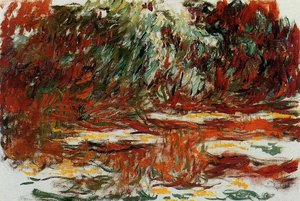
This dedication to direct observation allowed for a revolutionary use of color and brushwork. To capture the way sunlight dances upon a river or filters through a canopy of trees, the artists employed loose, broken brushstrokes and a vibrant palette. They understood that shadows are rarely black or grey, but are instead composed of deep blues, violets, and reflected hues from the surrounding world. This technique creates a sense of vibration and energy, a tactile quality where the paint itself seems to shimmer with life. When we gaze upon these works, we are not merely looking at a scene; we capturing the pulse of a living, breathing moment, frozen in time through the sheer will of the artist’s perception.
Series and Soul: How Monet Chronicled the Passing of Time
 Rouen Cathedral (Monet series)
The Rouen Cathedral series was painted in the 1890s by French impressionist Claude Monet. The paintings in the series each capture the façade of Rouen Cathedral at different times of the day and year and reflect changes in its appearance under differ...
Perhaps no aspect of Impressionism captures the heart quite like the concept of the series. Claude Monet, a poet of light, understood that a single subject could be transformed entirely by the changing sun. His fascination with repetition was not an act of redundancy, but an exploration of metamorphosis. Through his famous series—be it the architectural grandeur of the Rouen Cathedral or the humble, golden warmth of the Haystacks—he demonstrated that nothing in nature is ever truly static.
In the Rouen Cathedral series, Monet captured the façade at different hours of the day, revealing how morning mist can soften stone into something ethereal, while the harsh midday sun can carve deep, dramatic shadows. Similarly, his studies of haystacks allowed him to explore the subtle shifts from the heat of summer to the crisp, biting light of autumn. Even his beloved Chrysanthemums served as a poignant reminder of the passing seasons and the inevitable cycle of bloom and decay. These series invite us into a meditative state, teaching us that beauty is found not in permanence, but in the exquisite, fleeting transitions that define our existence.
Beyond the Canvas: The Emotional Resonance of Nature's Ephemeral Beauty
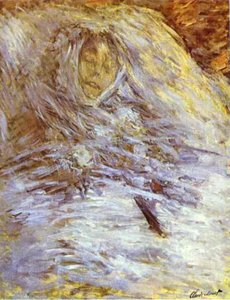 Camille Monet on Her Deathbed
The Artist: Claude Monet Claude Monet , born Oscar-Claude Monet (1840-1926), was a French artist who played a pivotal role in founding Impressionist painting, significantly influencing modernism. His philosophy, primarily based on capturing immediate...
While we often discuss Impressionism through the lens of technique and light, its true power lies in its emotional depth. There is a profound intimacy within these landscapes that speaks to the human condition. We see it in the way Monet captured the poignant, quiet moments of his own life, such as the heartbreakingly tender Camille Monet on Her Deathbed. Even amidst the vastness of a landscape, there is an underlying pulse of sentiment—a connection to the earth and to our shared mortality.
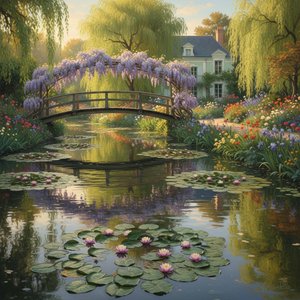
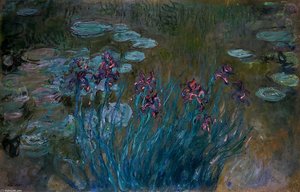
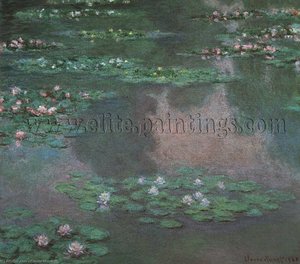
The movement resonates because it mirrors our own capacity for wonder and our innate need for connection to the natural world. In an increasingly industrialized and hurried era, these paintings serve as a gentle reminder of the importance of presence. The dappled sunlight on a water lily pond or the rhythmic swaying of poppies in a field are not just visual delights; they are emotional anchors. They offer us a way to reconnect with the simple, profound beauty that exists when we allow ourselves to truly see.
Bringing the Impressionist Spirit Home: Curating a Sanctuary of Light
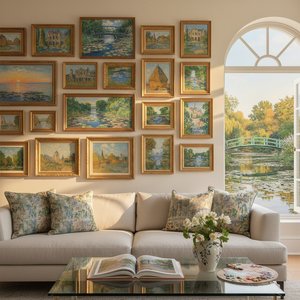 Monet's Masterpieces: 25 Iconic Artworks to Transform Your Home
Introduction Imagine stepping into a world bathed in dappled sunlight, where water lilies shimmer and fields of poppies dance in the breeze. Claude Monet’s art isn't merely about depicting scenes; it’s about capturing an *impression* – a fleeting mom...
For the collector, bringing these works into one's personal space is an act of curation for the soul. An Impressionist masterpiece does more than decorate a wall; it alters the very atmosphere of a room, infusing it with a sense of tranquility and light. Whether it is a large-scale multi-panel work that spans a grand staircase or a delicate study tucked into a quiet reading nook, these paintings invite contemplation and peace.
When selecting pieces to transform your home, consider the interplay of color and light within your own surroundings. An oil reproduction, with its visible, textured brushstrokes and deep tonal range, offers a tactile richness that a mere print cannot replicate. It brings the physical essence of the artist's hand into your sanctuary. By surrounding ourselves with these luminous windows into another time and place, we create a home that is not just a residence, but a curated gallery of inspiration—a permanent, beautiful echo of the light we all seek to chase.