The Soul of the Soil: Millet’s Life and the Rhythms of Normandy
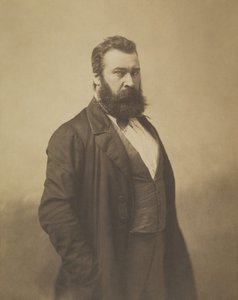 Jean-François Millet
A Life Rooted in the Soil: The World of Jean-François Millet Jean-François Millet, a name synonymous with the dignity of rural life and the burgeoning Realist movement in 19th-century France, was born not into artistic privilege but into the very wor...
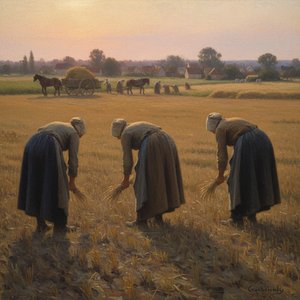
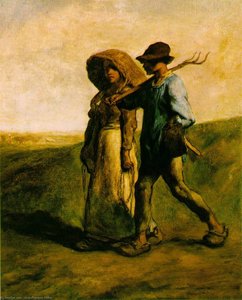
To truly understand the gravity within a Jean-François Millet canvas, one must first walk the sun-drenched, dew-laden fields of Gruchy. Born in 1814 to a farming family in Normandy, Millet was not merely an observer of the rural landscape; he was a child of its very dust and grit. His early years were defined by the relentless, rhythmic pulse of agricultural life—the heavy scent of freshly turned earth, the arduous task of mowing hay, and the seasonal dance of sowing and reaping. This intimate connection to the land meant that when he eventually picked up a brush, he was not painting a distant, romanticized fantasy, but rather translating a lived reality.
While his formal training took him to the prestigious École des Beaux-Arts in Paris under Paul Delaroche, the call of the soil remained an indelible part of his artistic DNA. The labor he witnessed as a young man—the backbreaking work of binding sheaves and spreading manure—became the foundational vocabulary of his art. There is a profound, quiet gravity in his work, a sense that every brushstroke carries the weight of the seasons and the enduring strength of those who toil beneath the vast French sky. For those of us who find solace in the memory of simpler times, Millet’s life serves as a beautiful testament to the idea that our deepest inspirations are often rooted in the very ground beneath our feet.
Beyond the Pastoral: The Radical Realism of the Barbizon School
 Realism (art movement)
Realism was an artistic movement that emerged in France in the 1840s. Realists rejected Romanticism, which had dominated French literature and art since the early 19th century. The artist Gustave Courbet, the original proponent of Realism, sought to ...
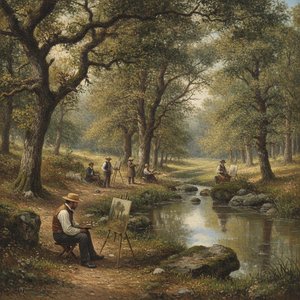
When Millet moved to the village of Barbizon in 1849, he became a cornerstone of a movement that would forever alter the trajectory of French art. Alongside his contemporaries, he helped found the Barbizon School, a group of artists who sought to reject the polished, theatrical artifice of the Paris Salons. In an era where the academic establishment favored grand mythological narratives and idealized, dramatic landscapes, Millet and his peers turned their gaze toward the unvarnated truth of nature. This was the birth of Realism—a movement that found beauty not in the exotic or the legendary, but in the honest, often difficult, reality of contemporary life.
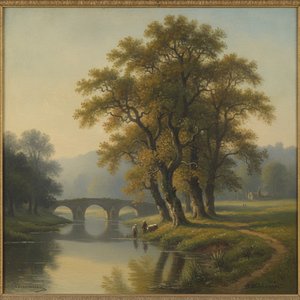
This shift was nothing short of radical. By choosing to depict the humble peasant and the subdued, atmospheric landscapes of the Fontainebleau forest, Millet challenged the very definition of what was considered "worthy" of fine art. He moved away from the stiff, artificial compositions of his era in favor of plein air truth, capturing the raw textures of the countryside as they appeared under the shifting light of dawn and dusk. His work served as a quiet rebellion against the encroaching industrialization of France, offering instead a sacred dialogue between humanity and the landscape—a dialogue that remains strikingly vital even in our modern, digital age.
Dignity in Toil: A Journey Through Masterpieces of Labor
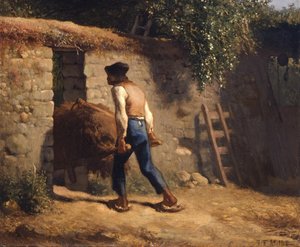 Peasant with a Wheelbarrow
The Dignified Laborer: Jean-François Millet’s ‘Peasant with a Wheelbarrow’ Jean-François Millet's “Peasant with a Wheelbarrow,” painted in 1848, is more than just a depiction of rural toil; it’s a poignant meditation on the dignity of manual labor an...
There is a monumental quality to Millet’s depictions of the working class that transcends mere documentation. In iconic works such as "Peasant with a Wheelbarrow," we encounter more than just a scene of rural toil; we witness a profound meditation on human dignity. The solitary figure, navigating the earthy expanse of a field while burdened by the weight of his livelihood, is rendered with a seriousness that elevates manual labor to something almost biblical. Millet does not shy away from the sweat or the worn fabric of a laborer's clothes, yet he imbues these figures with an undeniable sense of self-respect and resilience.
Consider also the powerful themes found in "The Sower." In this masterpiece, the act of planting seeds becomes a symbolic gesture of hope and continuity. The sower moves with long, purposeful strides, his silhouette etched against a rising sun that signals the dawn of a new cycle. Even in more intimate settings, such as his exploration of his own "House Birthplace," Millet captures the quiet strength found in the daily routines of a peasant family. There is no trace of grand ambition here, only the steady, unyielding contentment of lives lived in harmony with the natural world. Through his eyes, the mundane tasks of the peasantry are transformed into scenes of epic, enduring importance.
Light, Texture, and Truth: The Technical Mastery of the Brushstroke
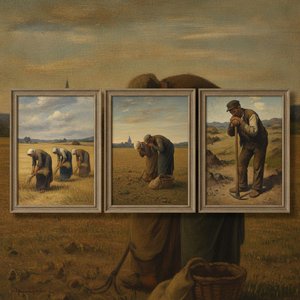 25 Masterpieces by Jean-François Millet: The Soul of Rural Realism
Introduction Close your eyes for a moment and imagine the scent of damp earth after a summer rain, the rhythmic, heavy breathing of laborers under a golden sun, and the profound, quiet dignity of a life lived in harmony with the seasons. To step into...
The emotional resonance of Millet’s art is inextricably linked to his masterful command of light and texture. He possessed a rare ability to use illumination not just to reveal form, but to evoke mood. A warm, golden glow might bathe a field, casting long, contemplative shadows that highlight the rugged contours of a worker's body, or a soft, misty light might descend during the twilight hours to create an atmosphere of profound stillness. His use of light is carefully orchestrated, elevating ordinary subjects into something sublime.
Furthermore, his technique reflects the very textures he sought to portray. There is a tactile quality to his oil paintings; one can almost feel the grit of the soil and the roughness of the thatch. His brushstrokes are not merely marks on a canvas but are imbued with the weight of the earth itself. This commitment to Realism meant avoiding any unnecessary embellishment, focusing instead on the subtle modeling of walls, the weathered texture of wood, and the glistening sheen of sweat. It is this dedication to the physical truth of his subjects that allows his work to breathe with the very pulse of the French countryside, offering a sensory experience that remains as potent today as it was in the 19th century.
A Sanctuary of Stillness: Finding Modern Peace in Millet’s Landscapes
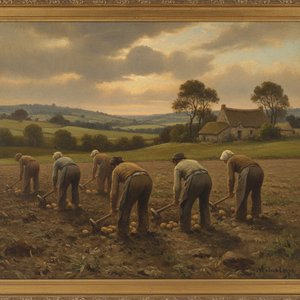 Masterpieces of the Soil: The Top 25 Artworks by Jean-François Millet
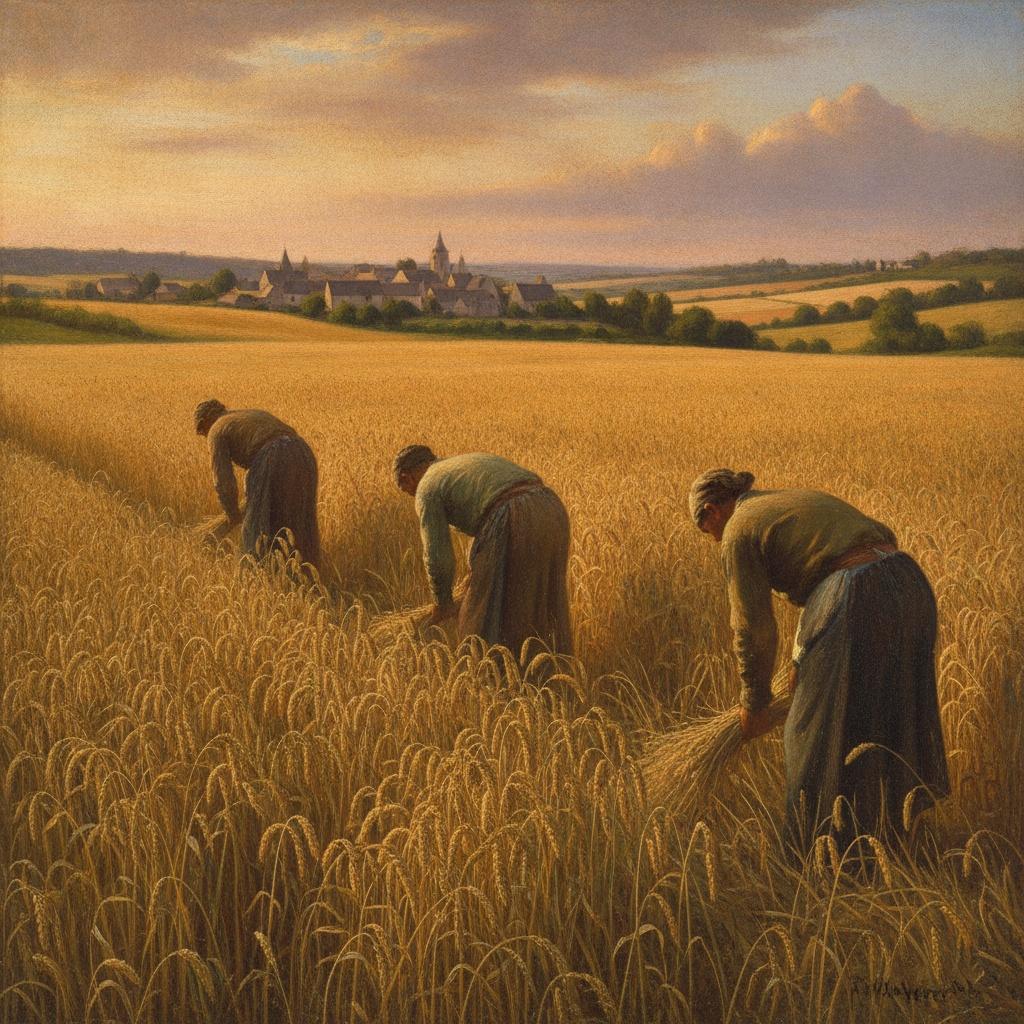
Introduction Imagine walking through a quiet, sun-drenched field at dawn, where the only sound is the soft rustle of wheat and the distant rhythm of a worker’s stride. This is the world Jean-François Millet invites us to inhabit—a world not of grand ...
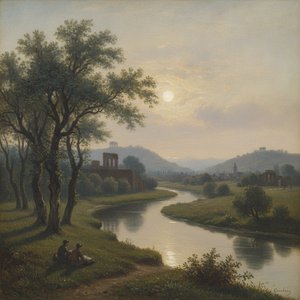
In our contemporary world, characterized by a frantic pace and an ever-present sense of urban detachment, stepping into the world of Jean-François Millet feels like entering a sanctuary. His canvases offer us a window into a vanished way of life, inviting us to slow our breathing and listen to the soft rustle of wheat or the distant rhythm of a worker’s stride. There is a profound, quiet gravity in his landscapes that encourages reflection and provides a much-needed moment of spiritual repose.
As we look upon these masterpieces, we are reminded of our fundamental connection to the earth and the enduring strength of the human spirit. Millet’s ability to find the extraordinary within the ordinary serves as a powerful reminder that beauty is often found in the simplest of places—in the scent of damp earth after rain or the quietude of a sun-drenched field at dawn. His art remains a timeless treasure, a collection of soulful echoes from a time when life was measured by the seasons and the dignity of one's labor. For those of us who cherish the enduring beauty of the masters, Millet’s work continues to offer a landscape of peace, resilience, and eternal grace.