A Symphony of Light: How Impressionism Transformed the Human Form
 History of the nude in art
The historical evolution of the nude in art runs parallel to the history of art in general, except for small particularities derived from the different acceptance of nudity by the various societies and cultures that have succeeded each other in the w...
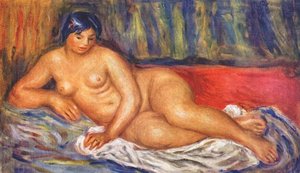
The history of the nude in art is a profound chronicle that runs parallel to the evolution of art itself, reflecting the shifting social standards and aesthetic ideals of each passing era. For centuries, the human form was captured through the rigid, often idealized lens of academic tradition, seeking a perfection found in mythology or classical sculpture. However, as we journey into the late nineteenth century, a revolutionary spirit began to stir within the heart of France. The Impressionists, a group of daring visionaries who challenged the strict constraints of the Salon system, sought to move away from photographic precision and toward something far more elusive: the capture of a fleeting moment.
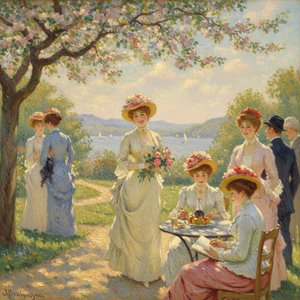
To gaze upon an Impressionist masterpiece is to step into a world where colors dance and shimmer with an ethereal glow. These artists rejected the meticulous, heavy-handed details of their predecessors in favor of en plein air techniques, painting directly from nature to observe the transient effects of light and atmosphere. In this movement, the human body ceased to be merely a subject of anatomical study or mythological allegory; instead, it became a canvas upon which the sun, the wind, and the passing hours could leave their unmistakable marks. This was not just a change in technique, but a fundamental shift in perception—a move from documenting what is seen to expressing how it is felt.
Renoir’s Radiance: The Intimate Beauty of Luminous Skin and Soft Shadows
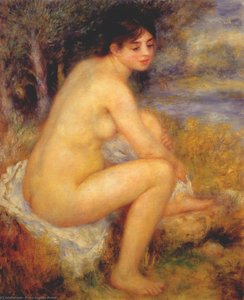
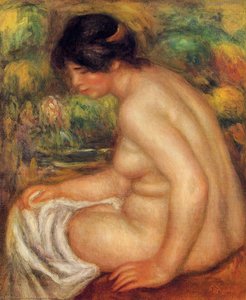 'Seated Nude in Profile (also known as Gabrielle)'
A Glimpse into Sensuality and Light: Renoir’s ‘Seated Nude in Profile (also known as Gabrielle)’ Pierre-Auguste Renoir's 1913 painting, *Seated Nude in Profile (also known as Gabrielle)*, is a captivating example of the artist’s late Impressionistic ...
No artist embodied this luminous revolution more tenderly than Pierre-Auguste Renoir. His work, particularly in his later years, offers a captivating glimpse into a world of sensuality and light. In works such as Seated Nude in Profile (also known as Gabrielle), painted around 1913, we witness a profound sense of maturity and introspection. Here, Renoir transcends the simple depiction of the female form, offering instead an intimate study of beauty and the human experience. The painting does not rely on dramatic poses or overt sensuality; rather, it finds its power in the natural curves of the body and the delicate play of light upon the skin.
Renoir’s palette in these works is a masterclass in warmth, utilizing rosy pinks, creamy whites, and gentle ochres to create an atmosphere of serenity and comfort. His brushstrokes, soft and fluid, build up form through subtle gradations of tone, allowing the light to seem as though it is emanating from within the subject itself. When we observe these figures, we are not merely looking at a model; we are witnessing a moment of quiet contemplation, where the boundaries between the human figure and the surrounding atmosphere begin to dissolve into a soft, sun-drenched reverie.
Dappled Sunlight and Grace: The Interplay of Nature and the Figure
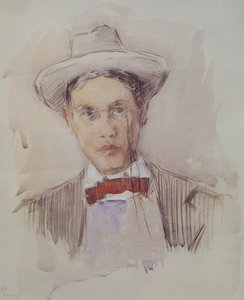 Frederick Carl Frieseke
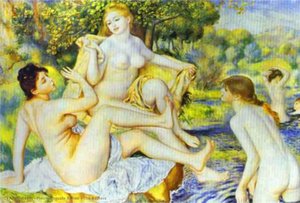
A Life Bathed in Sunlight: The Artistic Journey of Frederick Carl Frieseke Born in the small Michigan town of Owosso on April 7, 1874, Frederick Carl Frieseke embarked on a path that would lead him to become a pivotal figure in American Impressionism...
The Impressionist fascination with light naturally extended to the relationship between the human form and the natural world. This is perhaps most exquisitely realized in the works of American Impressionists like Frederick Carl Frieseke. His approach, often described as “decorative impressionism,” brought a refined elegance to the genre. Influenced by the vibrant art scene of Giverny and the legacy of Claude Monet, Frieseke’s oeuvre is characterized by a sensitive approach to light filtering through foliage, creating patterns of dappled sunlight that dance across graceful female figures.
In these compositions, the figure and the environment exist in a harmonious, almost rhythmic relationship. The skin of the subject becomes an extension of the landscape, catching the same golden hues as the leaves and flowers surrounding her. This technique creates a sense of unity, where the boundaries of the individual are softened by the textures of nature. It is a celebration of beauty that is both grounded in the physical world and elevated by an almost dreamlike, decorative quality, reminding us that we are forever part of the light and the landscape we inhabit.
Beyond the Surface: Emotional Resonance in Post-Impressionist Nudes
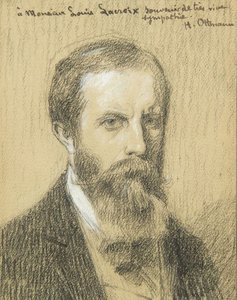 Henri Ottmann
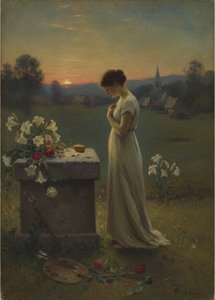
A Glimpse into the French Soul: The Life and Art of Henri Ottmann Henri Ottmann, a name perhaps less immediately recognized than some of his contemporaries, nevertheless occupies a significant niche in the transition between Impressionism and Post-Im...
As the nineteenth century drew to a close, the movement began to evolve into Post-Impressionism, a period marked by a desire to move beyond mere optical representation toward deeper emotional and symbolic expression. Artists like Henri Ottmann occupied this significant niche, bridging the gap between the light-drenched Impressionist style and a more poignant, personal approach to color and form. While they retained the lessons of capturing light, these artists began to seek an underlying emotional resonance that could speak across generations.
In this era, the nude became a vehicle for exploring the human soul. The focus shifted from the way light hits the surface of the skin to the way color can evoke a sense of longing, melancholy, or spiritual intensity. This transition laid the groundwork for modern art, proving that the representation of the body could be as much about internal truth as it was about external beauty. It is this depth—this ability to capture not just an appearance, but an emotion—that continues to captivate collectors and art lovers today.
The Tactile Legacy: Bringing the Soul of Masterpieces into Your Home
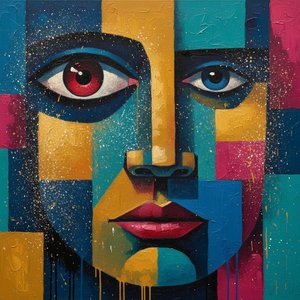 Fragmented Soul in Prismatic Planes: A Monumental One of One Masterpiece
Experience the intense energy of Fragmented Soul in Prismatic Planes by Christian Noiret, a cubist-inspired masterpiece of geometric abstraction and vibrant impasto textures available exclusively at ArtsDot.com.
For those of us who have cherished these movements for decades, the desire to surround ourselves with such beauty is profound. At ArtsDot.com, we believe that the soul of an Impressionist masterpiece lies in its texture—the visible, rhythmic brushstrokes and the rich, layered depth of oil on canvas. This is why we specialize exclusively in the works of the masters, offering hand-painted reproductions that capture the true essence of the movement.
Unlike mass-produced prints, our Handmade Oil Reproductions are meticulously crafted by artists holding degrees from prestigious academies. Each piece is a labor of passion, painted on 100% cotton canvas to ensure a tactile depth that mimics the original impasto. We offer a unique opportunity to "remix" art history; imagine having a personal portrait reimagined in the light-drenched style of Renoir or the vibrant, textured spirit of Van Gogh. Through our professional digital mockup service, you can see your vision come to life before the first stroke is ever applied.
Whether you are looking to adorn a grand hallway with a multi-panel set or seeking a bespoke gift that serves as a lasting memory, we invite you to explore our collection. We handle every detail—from the careful layering of oils to the secure, global delivery via DHL and FedEx—ensuring that the luminous beauty of the Impressionists can find a permanent, cherished place within your own sanctuary.