Renoir's Early Life & Artistic Beginnings: From Porcelain Painter to Budding Impressionist
 Wikipedia: Pierre-Auguste Renoir
Pierre-Auguste Renoir (; French: [pjɛʁ oɡyst ʁənwaʁ]; 25 February 1841 – 3 December 1919) was a French artist who was a leading painter in the development of the Impressionist style. It has been said that, as a celebrator of beauty and especially fem...
Pierre-Auguste Renoir’s journey to becoming one of the most beloved of the Impressionists was not a path paved with immediate recognition or privilege. Born in Limoges, France, in 1841, his early life offered little indication of the artistic brilliance that would later define him. His father, a tailor, moved the family to Paris seeking better opportunities, and young Auguste found himself apprenticed to a porcelain factory at the tender age of thirteen. While this work provided a modest income, it was within the hallowed halls of the Louvre—visited during his limited free time—that Renoir’s true passion ignited. He meticulously copied masterpieces, absorbing the techniques and compositions of the Old Masters, even as he chafed under the constraints of factory labor.
This early exposure to classical art would prove surprisingly influential later in his career, providing a foundation that tempered the radical innovations of Impressionism. He briefly pursued music lessons, demonstrating a natural talent for singing, but financial realities steered him back towards visual arts. His subsequent studies under Charles Gleyre proved pivotal; it was here he met fellow artists Claude Monet, Alfred Sisley, and Frédéric Bazille—a camaraderie that would blossom into the core of the Impressionist movement. These formative years weren’t without hardship; periods of poverty forced Renoir to take on various commissions, but his dedication never wavered. He was driven by a desire not merely to *reproduce* reality, but to capture its fleeting beauty and emotional resonance.
The Essence of Renoir’s Impressionism: Capturing Light, Leisure, and Parisian Life
Impressionism was a 19th-century art movement characterized by visible brush strokes, open composition, emphasis on accurate depiction of light in its changing qualities (often accentuating the effects of the passage of time), ordinary subject matter...
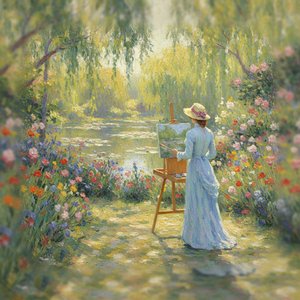
Renoir's Impressionism wasn’t simply about depicting scenes; it was a revolutionary approach to seeing. He sought to portray the ephemeral qualities of light and atmosphere, focusing on the *impression* a scene made upon the eye rather than meticulous detail. This meant embracing visible brushstrokes, open compositions, and a vibrant palette that prioritized pure color over traditional shading techniques. Unlike academic painters who labored in studios, Renoir increasingly favored painting en plein air—outdoors—allowing him to directly observe and capture the shifting nuances of sunlight.
His subject matter reflected the burgeoning leisure culture of Parisian society. He wasn’t interested in grand historical narratives or religious allegories; instead, he focused on everyday life: bustling boulevards, intimate gatherings, and moments of convivial joy. This focus was a deliberate rejection of established norms, celebrating the pleasures of modern existence. The shimmering surfaces and radiant colors weren't merely aesthetic choices; they were attempts to convey the very *feeling* of being present in those sun-drenched Parisian scenes.
Key Masterpieces & Recurring Themes: A Deeper Look at 'Luncheon of the Boating Party,' 'A Box in the Theater des Varietes,' and Beyond
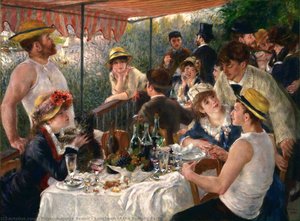
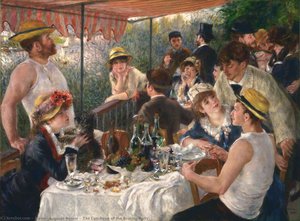 The Luncheon of the Boating Party
Experience Renoir's "Luncheon of the Boating Party" – an Impressionist masterpiece capturing Parisian joy & leisure! Explore its history, symbolism & vibrant beauty. High-quality reproductions available at ArtsDot.
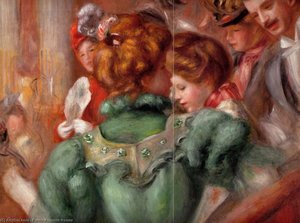
Works like 'The Luncheon of the Boating Party' (1880-81) exemplify Renoir’s mastery. The painting isn’t just a depiction of a social gathering; it’s an explosion of light, color, and movement. The dappled sunlight filtering through the trees, the lively chatter of the figures, and the reflections on the water all contribute to a sense of immersive realism. Similarly, 'A Box in the Theater des Varietes' (1874) captures the elegance and social dynamics of Parisian nightlife. The composition is deliberately asymmetrical, mirroring the spontaneous energy of the theater experience.
Recurring themes emerge throughout Renoir’s oeuvre: the beauty of the female form, the joy of companionship, and the celebration of sensory pleasure. He often depicted women in intimate settings—dancing, dining, or simply enjoying each other's company—with a sensitivity that bordered on reverence. These weren’t idealized representations; they were portraits of real people, imbued with personality and vitality. 'La Promenade' (1872) showcases his ability to capture the subtle nuances of human connection amidst the beauty of nature.
Renoir's Evolving Style: From Snapshots of Modernity to Classical Influences
While initially committed to the core principles of Impressionism, Renoir’s style underwent a significant evolution in the 1880s and beyond. Disillusioned with the limitations of capturing fleeting moments, he began to seek a more solid, enduring form. This led him back to his earlier fascination with classical art, particularly the works of Rubens and Watteau. He embarked on a period of intense study, traveling to Italy to immerse himself in Renaissance masterpieces.
This renewed interest manifested in paintings characterized by monumental figures, smooth surfaces, and a more deliberate compositional structure. While some critics lamented this departure from his earlier style, it’s important to recognize that Renoir wasn't abandoning Impressionism entirely; he was synthesizing it with classical ideals, creating a unique aesthetic that blended spontaneity with form. This later period demonstrates a painter constantly refining his vision, seeking new ways to express beauty and emotion.
The Belle Époque Context: How Parisian Society Shaped Renoir’s Vision
The Belle Époque (French pronunciation: [bɛlepɔk]) or La Belle Époque (French for 'The Beautiful Era') was a period of French and European history that began after the end of the Franco-Prussian War in 1871 and continued until the outbreak of World W...
Renoir's art was inextricably linked to the social and cultural climate of the Belle Époque. This period—roughly from 1871 to 1914—was a time of relative peace, economic prosperity, and technological innovation in France. Paris flourished as a center of artistic and intellectual life, attracting artists, writers, and musicians from around the world. The rise of the bourgeoisie created a new audience for art, one that valued pleasure, leisure, and social refinement.
This atmosphere provided Renoir with both inspiration and patronage. His paintings reflected the optimism and vitality of Parisian society, celebrating its newfound freedoms and indulgences. The theaters, cafes, and boulevards he depicted were not merely settings; they were symbols of a changing world—a world embracing modernity while still cherishing beauty and elegance. The vibrant colors and lively compositions of his work captured the very spirit of the Belle Époque.
Renoir’s Enduring Legacy & Influence on Subsequent Art Movements
Pierre-Auguste Renoir's impact on art history is undeniable. He wasn’t just a painter; he was a celebrator of life, beauty, and human connection. His pioneering techniques revolutionized the way artists approached light, color, and composition, paving the way for subsequent movements like Post-Impressionism and Fauvism. Artists such as Picasso and Matisse acknowledged his profound influence.
Today, Renoir’s paintings continue to captivate audiences with their warmth, sensuality, and emotional resonance. His work reminds us of the power of art to capture not just what we see, but how we *feel*. His legacy extends beyond the canvas; it's a testament to the enduring human desire for beauty, joy, and connection. Explore the world of Renoir further with ArtsDot.com, where high-quality reproductions allow you to bring his masterpieces into your own home.