



The Northern Eye: Defining the German Renaissance Aesthetic
To understand the German Renaissance is to embrace a different kind of vision than that found in the sun-drenched, mathematically balanced studios of Italy. While the Mediterranean masters sought the idealization of form through perspective and grace, the artists of the North turned their gaze inward and downward, finding divinity in the microscopic. This was an era defined by an almost obsessive devotion to the tangible world. The German Renaissance aesthetic is characterized by a profound reverence for texture, a heavy reliance on linear precision, and a psychological depth that refuses to look away from the complexities of human existence.
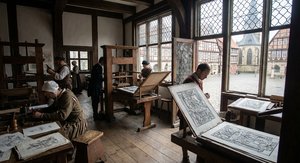
In the workshops of Nuremberg, Augsburg, and beyond, the artist’s task was not merely to represent a subject, but to document its very essence. This required an unparalleled mastery of detail, where the sheen of a silk robe, the rugged bark of an ancient tree, or the subtle glint of light on a gemstone were rendered with such fidelity that the viewer could almost feel the tactile reality of the scene. It was a period where the boundary between observation and devotion blurred, as every meticulously placed line served to celebrate the intricate handiwork of creation itself.
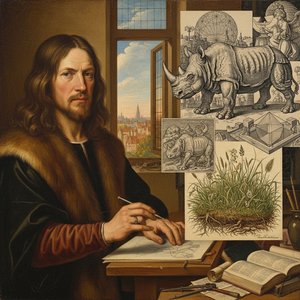
Albrecht Dürer and the Mastery of Line and Texture
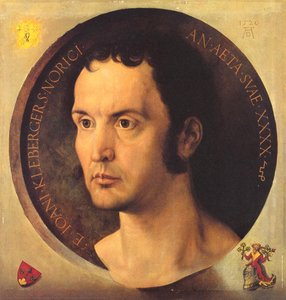
At the heart of this movement stands the titan of German art, Albrecht Dürer. A polymath whose influence stretched across Europe, Dürer bridged the gap between the medieval tradition of craftsmanship and the burgeoning humanism of the Renaissance. His work serves as the ultimate testament to what can be achieved when technical skill meets an unyielding intellectual curiosity. In his graphic works and paintings alike, one finds a rhythmic complexity where line is not merely a boundary, but a carrier of light and shadow.
Consider the profound intimacy found in his portraiture, such as the Portrait of Oswolt Krel. Here, Dürer does not simply paint a man; he constructs a presence through the layered depiction of heavy red robes and the luxurious, tactile weight of fur. Every stroke is intentional, contributing to a sense of dignity and permanence. Similarly, his ability to manipulate texture is evident in works like his Portrait of a Man Holding a Red Ball, where the smooth, spherical perfection of the object contrasts sharply with the detailed rendering of the subject's features. Through Dürer, we learn that true mastery lies in the ability to command the smallest detail to tell the grandest story.
Symbolism in the Shadows: Narrative Depth in German Masterworks
Beyond the surface level of breathtaking realism, German Renaissance art is steeped in a complex language of symbolism. For the contemporary viewer, these works are not merely beautiful objects; they are layered narratives waiting to be decoded. The Northern masters utilized everyday objects as vessels for profound theological and philosophical truths. A single wilted flower, a specific arrangement of fruit, or even the way light falls across a stone wall could signal themes of mortality, purity, or divine presence.
This symbolic depth creates a sense of intellectual engagement that rewards the patient observer. The shadows in these paintings are rarely empty; they are pregnant with meaning, often housing the subtle allegories that defined the era's spiritual landscape. This marriage of extreme realism and deep metaphor allows the art to function as both a window into the physical world and a mirror to the soul. To look upon a German masterpiece is to participate in a silent dialogue between the artist’s hand and the viewer’s intellect, navigating a labyrinth of hidden meanings embedded within the very textures of the paint.
From Landscapes to Portraits: The Evolution of Precision
As the movement progressed, the focus of this precision expanded from the intimate confines of portraiture into the vast, atmospheric realms of the landscape. The German Renaissance landscape is a study in the interconnectedness of nature and humanity. In works such as Linden Tree on a Bastion, we see the artist’s ability to capture the majesty of the natural world against the structured permanence of man-made architecture. The meticulous rendering of the linden tree—its leaves, its branches, its organic chaos—serves to ground the viewer in a specific, palpable moment in time.
This evolution demonstrates that the "German Eye" was capable of applying its rigorous standards to any scale. Whether focusing on the microscopic details of a single leaf or the sweeping vistas of a fortified bastion, the commitment to clarity and texture remained constant. This consistency across genres created a cohesive artistic identity that emphasized the sanctity of all things visible. The movement transformed the landscape from a mere backdrop into a primary protagonist, capable of conveying the same emotional and spiritual weight as the most significant human portrait.
Preserving the Legacy: Bringing Renaissance Detail into Modern Interiors
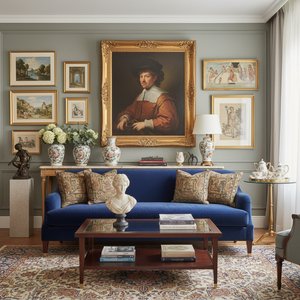
In our contemporary era, the allure of the German Renaissance remains undiminished. The precision and soulful depth of these works offer a profound counterpoint to the often-fleeting nature of modern digital imagery. Integrating the aesthetics of this period into a modern home allows for a sense of historical continuity and intellectual richness. Whether through the acquisition of museum-quality reproductions or the commissioning of custom works that echo these classical techniques, the spirit of the Northern Renaissance can breathe life into any space.
The enduring power of this movement lies in its ability to inspire awe through the celebration of detail. When we surround ourselves with art that honors the tactile reality of the world—the weight of fabric, the grain of wood, the complexity of light—we invite a deeper level of mindfulness into our daily lives. The legacy of Dürer and his contemporaries is not found merely in museums, but in the continued human desire to find beauty in the intricate, the small, and the profoundly real.
At ArtsDot.com, we are dedicated to preserving this legacy of human creativity. Our mission is to make the grandeur of the Old Masters accessible to a global audience through exquisite, hand-painted reproductions. Each of our works is a labor of passion, executed by artists trained in the finest academies, ensuring that the meticulous brushstrokes and deep tonal ranges characteristic of the German Renaissance are captured with absolute reverence. Whether you seek a faithful reproduction of a Dürer masterpiece or wish to transform a personal memory into a classical oil painting, we provide the expertise and craftsmanship to bring historical soul into your modern world.