The Architecture of Dreams: Defining the Surrealist Vision
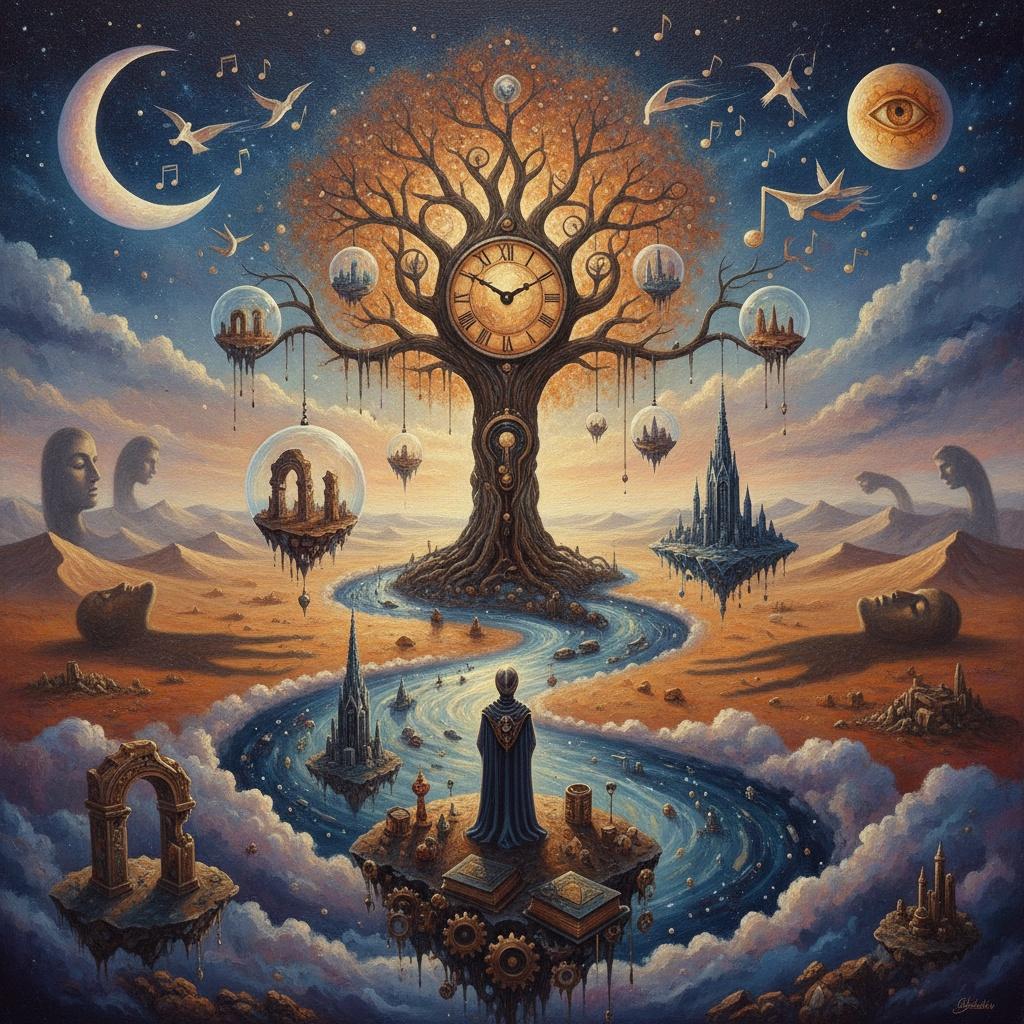
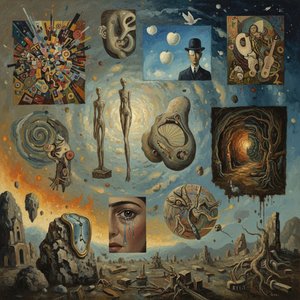
To step into a Surrealist masterpiece is to abandon the rigid constraints of Newtonian physics and enter a realm where the logic of the waking world dissolves into the fluid grace of the subconscious. Surrealism, as an avant-garde movement, was never merely about the depiction of strange objects; it was a profound philosophical endeavor to bridge the gap between the conscious mind and the untamed depths of the id. This movement sought to liberate the human imagination from the shackles of rationalism, utilizing the unexpected juxtaposition of disparate elements to evoke a sense of wonder and psychological tension.
The architecture of these dreamscapes is built upon a foundation of psychic automatism—the practice of allowing the hand to move without the interference of reason or aesthetic preoccupation. In these works, we find a deliberate defiance of gravity, time, and biological permanence. The viewer is invited to navigate landscapes that feel intimately familiar yet fundamentally impossible, where the boundaries between the self and the external world become beautifully blurred. It is an invitation to witness the unfiltered truth of the human psyche, rendered through a lens of poetic distortion.
Unveiling the Subconscious: Symbolic Imagery and Metaphorical Landscapes
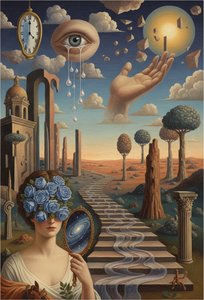
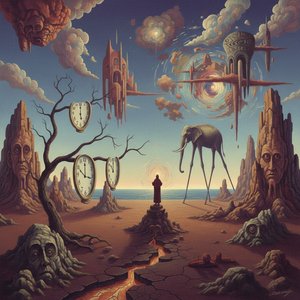
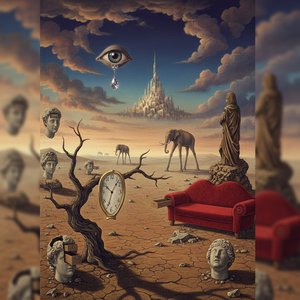
Within the vast expanse of Surrealist canvases, every shadow and silhouette serves as a vessel for profound meaning. The movement masterfully employs symbolic imagery to communicate truths that language often fails to capture. A melting clock is never just a timepiece; it is a meditation on the fluidity of temporal perception. An ant crawling across a desolate plain becomes a metaphor for decay and the relentless passage of life. These symbols act as keys, unlocking layers of meaning that resonate with our deepest, most primal anxieties and desires.
These metaphorical landscapes often feature vast, empty horizons that evoke a sense of existential solitude, punctuated by objects that defy their natural state. The use of scale is particularly striking; a tiny figure may stand before an impossibly large, floating monolith, creating a tension between the infinitesimal human experience and the infinite mysteries of the universe. By manipulating these visual metaphors, Surrealist artists create a dialogue with the viewer's own subconscious, prompting a deeply personal interpretation of the imagery presented.
Masters of the Uncanny: A Study of Dalí’s Distorted Realities
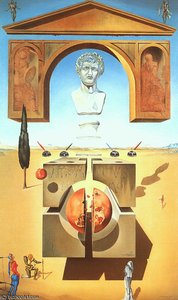
No exploration of Surrealism is complete without an intimate encounter with the works of Salvador Dalí, the movement's most iconic provocateur. Dalí possessed an unparalleled ability to render the impossible with a hyper-realistic precision that made his hallucinations feel tangibly real. In masterpieces such as The Weaning of Furniture Nutrition, he weaves complex, dreamlike landscapes filled with symbolic imagery that challenge our very perception of biological and physical reality. His technique, often referred to as the paranoiac-critical method, allowed him to systematically tap into his subconscious to create images of profound psychological depth.
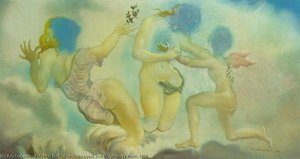
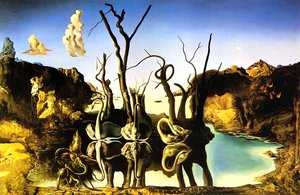
Dalí’s fascination with the distortion of form is perhaps most famously captured in his explorations of religious and classical themes. In The Sacrament of the Last Supper, he reimagines a sacred biblical scene through a lens of surrealist abstraction, utilizing distorted figures and an ethereal atmosphere to evoke a sense of the divine within the uncanny. Even in his more complex, stereoscopic works like The Wash Basin, Dalí utilizes religious iconography and symbolic figures to offer a captivating glimpse into a vision where the spiritual and the subconscious are inextricably linked. His work remains a cornerstone for collectors seeking art that challenges the intellect while mesmerizing the eye.
The Tactile Dream: Capturing Texture and Depth in Surrealist Masterpieces
The true magic of a Surrealist painting lies not only in its subject matter but in its physical execution. To truly appreciate these works, one must look beyond the imagery to the tactile quality of the medium itself. The mastery of light, shadow, and texture is what breathes life into the dreamscape. In high-quality oil reproductions, the visible brushstrokes and the rich, impasto application of paint create a topographical map of the artist's movement, providing a sense of depth that a flat print can never replicate.
The interplay of light within these paintings often mimics the strange, directional glow found in dreams—where shadows may fall in directions that defy a single sun, or where objects seem to emit their own internal luminescence. This manipulation of luminosity is essential for creating the atmospheric tension required for Surrealism. When observing a masterwork, the eye should be able to wander through layers of glaze and thick pigment, discovering how the physical substance of the paint contributes to the illusion of a three-dimensional, albeit impossible, reality.
Curating the Impossible: Integrating Surrealism into Sophisticated Interiors
For the discerning collector, integrating Surrealist art into a modern interior requires a delicate balance of boldness and sophistication. A large-scale Surrealist canvas can serve as a powerful focal point, acting as a window into another dimension that disrupts the conventionality of a room. When designing around such pieces, one might consider multi-panel layouts to expand the dreamscape across a wide wall, creating an immersive architectural experience that feels like a mural of the mind.
The key to successful curation is to treat the artwork as a conversation piece rather than mere decoration. Pairing a surrealist masterpiece with minimalist furniture allows the complexity of the painting to breathe, while more classical elements can create a fascinating dialogue between historical eras. For those looking to create a cohesive aesthetic, selecting works that share a similar color palette or thematic weight can transform a living space into a curated gallery of the extraordinary, where every corner offers a new layer of visual intrigue.
Preserving the Vision: The Art of Collecting and Maintaining Surrealist Works
Acquiring a piece of Surrealist art is an investment in both culture and emotion. Because these works often rely on subtle tonal ranges and intricate textures, their preservation is paramount. Collectors must be mindful of environmental factors; direct sunlight can degrade the delicate pigments that create the dreamlike atmosphere, while extreme humidity can affect the integrity of the canvas and the stability of the oils. Using acid-free matting and high-quality glass is essential for protecting prints, while oil paintings benefit from a protective coat of Damar varnish to shield them from atmospheric pollutants.
As you build your collection, remember that the value of Surrealism lies in its ability to provoke thought and emotion across generations. Whether you are commissioning a custom reproduction that reimagines a personal memory through a surrealist lens or acquiring a high-quality oil painting of a historical master, the goal is longevity. By treating each piece with the reverence it deserves, you ensure that these windows into the subconscious remain vibrant and evocative for decades to come.
At ArtsDot.com, we are dedicated to making this extraordinary world accessible to collectors worldwide. From hand-painted oil reproductions that capture every meticulous brushstroke to custom commissions that transform your own photos into surrealist masterpieces, our mission is to preserve human creativity for a modern audience. Whether you seek an expert consultation to find the perfect piece for your home or require professional appraisal of an inherited treasure, our team of master artists and specialists is here to guide your journey through the infinite possibilities of art.