The Alchemical Revolution: How Oil Painting Unlocked New Dimensions of Light
 The Northern Renaissance: A Masterclass in Hyper-Realism, Oil Innovation, and Symbolic Depth
The Alchemical Revolution: How Oil Painting Transformed the Northern Canvas Mastering Detail: A Guide to the Timeless Beauty and Technical Brilliance of Flemish Painting The Alchemy of Oil: Pioneering Techniques of the Early Netherlandish Masters To ...
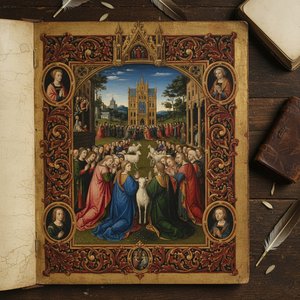
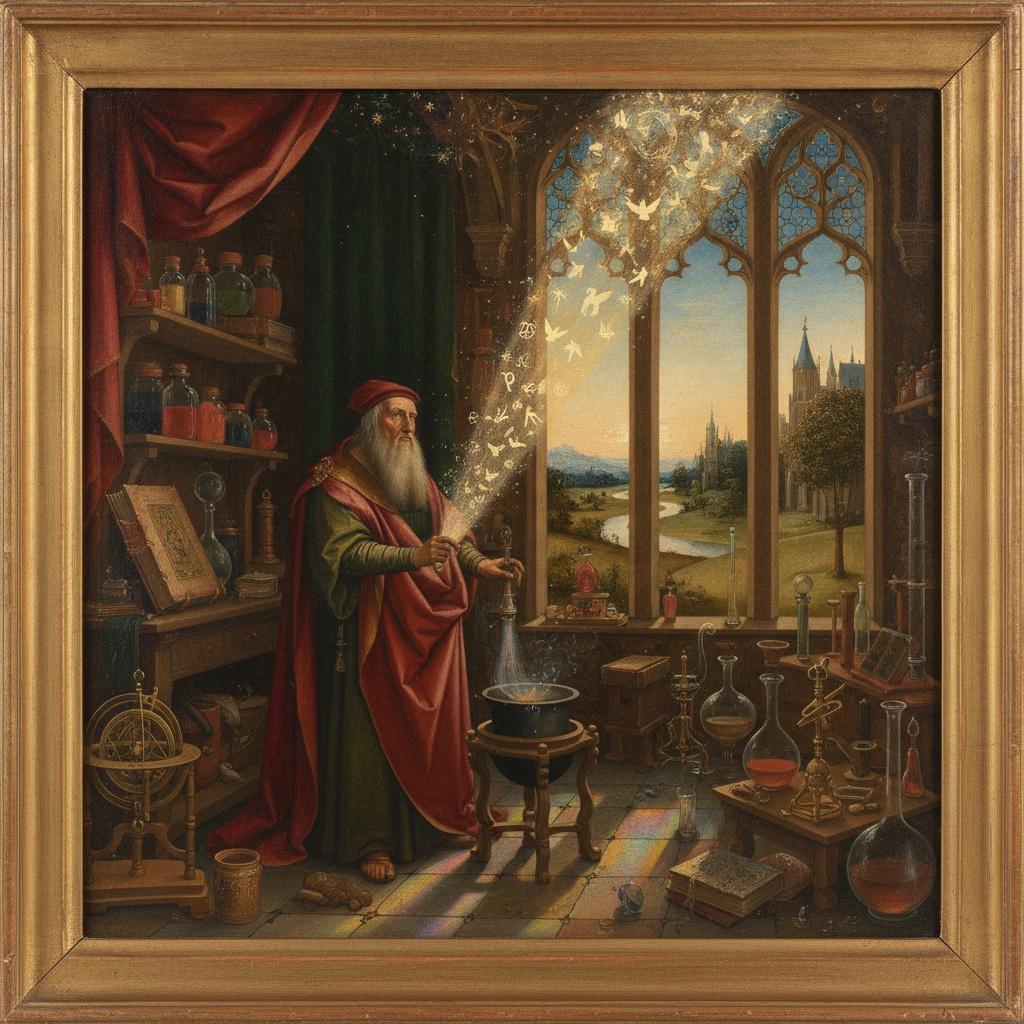
To step into the world of fifteenth-century Flemish art is to witness a profound revolution in the very chemistry of light. Before the masters of the North achieved their legendary status, the visual language of Europe was largely defined by the matte, opaque, and somewhat rigid qualities of egg tempera. While this older medium possessed its own delicate beauty, it lacked the capacity for the slow, luminous transitions that would eventually define the Northern Renaissance. The true transformation occurred through what can only be described as an alchemical mastery over transparency and depth.
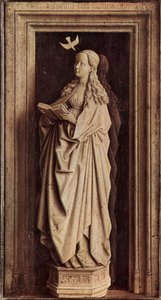
The innovation lay in the refinement of layering thin, translucent glazes of pigment suspended in drying oils, such as walnut or poppy seed. This technique allowed artists to unlock a new dimension of expression, creating a jewel-like brilliance where light would penetrate the surface, catch within the pigment, and refract back to the viewer’s eye. This created a sense of internal radiance that seemed to emanate from within the canvas itself. While the roots of oil painting can be traced much further back to ancient traditions in places like Afghanistan, it was the Early Netherlandish painters who breathed true life into the medium, using its forgiving nature and rich color density to move art away from the symbolic flatness of the Middle Ages toward a breathtakingly tactile reality.
Microscopic Devotion: The Art of Texture and Hyper-Realism
 Oil on Canvas: A Historical & Technical Exploration of a Timeless Artistic Medium
The Origins of Oil Painting: From Ancient Murals to Early European Masters The allure of oil painting—its capacity for luminous depth, its forgiving nature, and the sheer richness of color it allows—has captivated artists for millennia. Yet, tracing ...
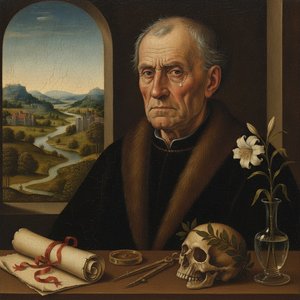
There is a particular kind of magic found in the meticulous observation of the small. In the hands of the Northern masters, the infinitesimal became a gateway to the infinite. This period was defined by a pursuit of a common goal—to make the painted image vividly present and to render the unseen palpable. Through a naturalistic vocabulary that has never been surpassed for subtlety and nuance, these artists investigated the textures of the world with a devotion that borders on the spiritual.
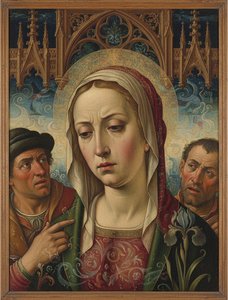
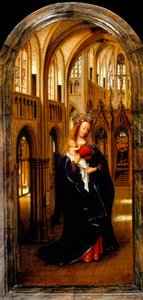
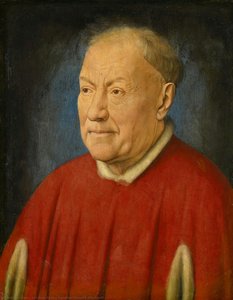
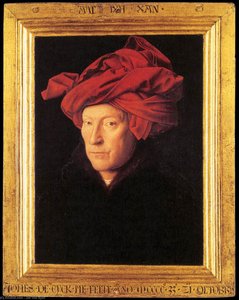
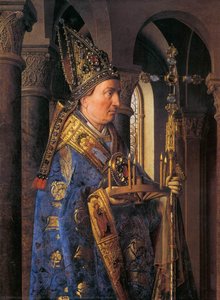
One cannot gaze upon these works without being struck by the sheer technical brilliance of their hyper-realism. The ability to render textures with such precision—the heavy, sculptural folds of velvet; the cold, hard sheen of polished brass; the delicate sparkle in a human eye—allowed for a level of verisimilitude that captivated princes and merchants alike. This was not merely about displaying skill; it was about capturing the essence of existence. Every brushstroke contributed to a dense, layered narrative where the weight of a fabric or the smoothness of a pearl served as a testament to the artist's ability to mirror the physical world with startling accuracy.
Symbolic Landscapes: Finding the Divine within the Earthly Detail
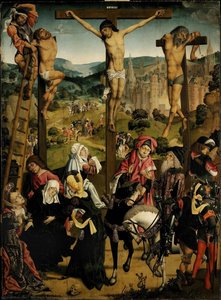 The Crucifixion
A Divine Tragedy in Oil: The Crucifixion In the profound stillness of the late 15th century, a period defined by the meticulous observation of both the divine and the earthly, emerged a masterpiece of spiritual intensity. The Crucifixion , attributed...
In the Early Netherlandish tradition, nothing is ever merely what it seems. The landscape and the objects within it are often imbued with a profound symbolic depth, where the heavens and earth collide in a symphony of meaning. These paintings serve as more than just records of human existence; they are windows into the soul, where every element of the natural world acts as a vessel for divine truth. A single flower or a distant, blue-tinged mountain can carry the weight of theological significance.
This era mastered the art of finding the sacred within the mundane. In works such as those attributed to the masters of the Northern tradition, we see moments of intense spiritual gravity—such as the harrowing sacrifice in depictions of the Crucifixion—interwoven with the grounded reality of the landscape. The inclusion of anatomically precise animals or the atmospheric rendering of distant horizons creates a tension-filled balance between the celestial and the terrestrial. It is a world where the physical environment is a tapestry of devotion, inviting the viewer to look past the surface and contemplate the eternal truths hidden within the very fabric of nature.
Masters of the North: From the Precision of Van Eyck to the Vision of Bruegel
northern netherlandish painterThe Enigmatic Vision of Pieter Bruegel the Elder Pieter Bruegel the Elder, a name synonymous with the late Northern Renaissance, remains one of the most profoundly enigmatic and enduring figures in Western art history. Born around 1525 in what is now...
The lineage of this era is a magnificent progression of visionaries, each building upon the foundations of their predecessors. Jan van Eyck stands as a titan of this period, a figure whose legendary status as a pioneer of oil painting remains unparalleled. His work embodies the pinnacle of technical virtuosity, characterized by an almost supernatural clarity and a mastery of light that seems to defy the limitations of paint. Alongside him, Rogier van der Weyden brought an unmatched expressive power, infusing his compositions with a profound emotional intensity.
As the movement progressed into the later stages of the Northern Renaissance, we encounter figures like Pieter Bruegel the Elder, whose work offers a more complex and layered reflection on human existence. While the early masters focused on the luminous and the divine, Bruegel introduced an enigmatic vision that explored social dynamics and the capricious nature of fortune. His ability to blend the meticulous detail of the Northern tradition with a sophisticated understanding of landscape and human drama ensured that the legacy of the Low Countries would remain profoundly influential, bridging the gap between the spiritual intensity of the fifteenth century and the burgeoning complexities of the sixteenth.
The Enduring Legacy: How Netherlandish Realism Shaped the Western Eye
--- title: Early Netherlandish Painting - The Metropolitan Museum of Art author: Maryan Ainsworth url: https://www.metmuseum.org/essays/early-netherlandish-painting hostname: metmuseum.org description: Whether they were made as objects for veneration...
The impact of Early Netherlandish painting on the trajectory of Western art cannot be overstated. By breaking away from the symbolic flatness of the medieval era, these artists established a new standard for how humanity perceives and represents reality. Their innovations in oil technique, their devotion to microscopic detail, and their ability to weave complex iconography into the natural world provided the blueprint for centuries of artistic achievement.
Today, we continue to be moved by this period of astonishing and uninterrupted achievement. The pursuit of making the painted image vividly present remains a cornerstone of fine art. Whether through the breathtakingly realistic portraits that capture the very essence of character or the expansive landscapes that suggest the infinite, the masters of the North taught us how to see. Their legacy lives on in every brushstroke that seeks to capture light, texture, and the profound beauty of the world around us, reminding us that even in the smallest detail, there is a universe waiting to be discovered.
At ArtsDot.com, we share this lifelong passion for the masters. Our mission is to make the profound beauty of fine art accessible to everyone through authentic, hand-painted reproductions. Each of our works is a labor of passion, meticulously crafted by artists holding degrees from prestigious academies, ensuring that the luminous depth and visible brushstrokes of the Old Masters are preserved on 100% cotton canvas. Whether you wish to transform a personal memory into a masterpiece via our Custom Painting service or explore our vast library of historical treasures, we invite you to bring the magic of art history into your own home.