

The Rejection of Idealism: From Romanticism to the Unvarnished Truth
 The Poetic Truth of Observation: Exploring 19th-Century Realism in Painting
The Rise of Realism: A Rejection of Idealism Wikipedia: Realism (art movement) Realism was an artistic movement that emerged in France in the 1840s. Realists rejected Romanticism, which had dominated French literature and art since the early 19th cen...
To understand the profound weight of Social Realism, one must first recall the era it sought to dismantle. For much of the early 19th century, the art world was held captive by the ethereal whispers of Romanticism and the rigid, polished perfection of Neoclassicism. These movements, while undeniably beautiful, often retreated into a sanctuary of myth, legend, and exaggerated emotion, presenting a world that was far more polished than the one inhabited by the common man. There was a certain comfort in the exotic locales and the heroic allegories; they offered an escape from the soot-driven reality of a changing Europe.
However, as the mid-19th century approached, a seismic shift began to stir within the hearts of a new generation of observers. The relentless march of industrialization was reshaping the landscape, bringing with it both unprecedented progress and harrowing inequality. A group of defiant souls looked upon the gilded canvases of the Academy and found them wanting. They sought not to paint the divine or the mythological, but to capture the tangible, the gritty, and the immediate. This was the birth of a rebellion—a movement that refused to look away from the shadows, choosing instead to find a poetic truth in the very things the establishment deemed unworthy of fine art.
This transition was not merely a change in subject matter, but a fundamental shift in the philosophy of sight. It was a move from the idealized to the observed. Where the Romantics sought to evoke a sense of wonder through the supernatural, the early Realists sought to evoke empathy through the unmistakable presence of the present moment. They stripped away the artifice, demanding that the viewer confront the world exactly as it appeared to the eye, unadorned and unapologetic.
The Pulse of the People: Defining the Socio-Political Heart of Social Realism
--- title: Social Realism | MoMA author: Leah Dickerman url: https://www.moma.org/collection/terms/social-realism hostname: moma.org sitename: The Museum of Modern Art date: 2021-05-07 --- A movement that flourished between the two World Wars in resp...
While the broader Realist movement focused on the objective truth of sight, Social Realism emerged with a more pointed, more urgent heartbeat. It was an art form that did not merely observe the world but interrogated it. If traditional Realism was about the what, Social Realism was deeply concerned with the why. This movement, which flourished particularly between the two World Wars, utilized the canvas as a mirror to reflect the socio-political struggles of the working class, turning the brush into a tool for critique and social awareness.
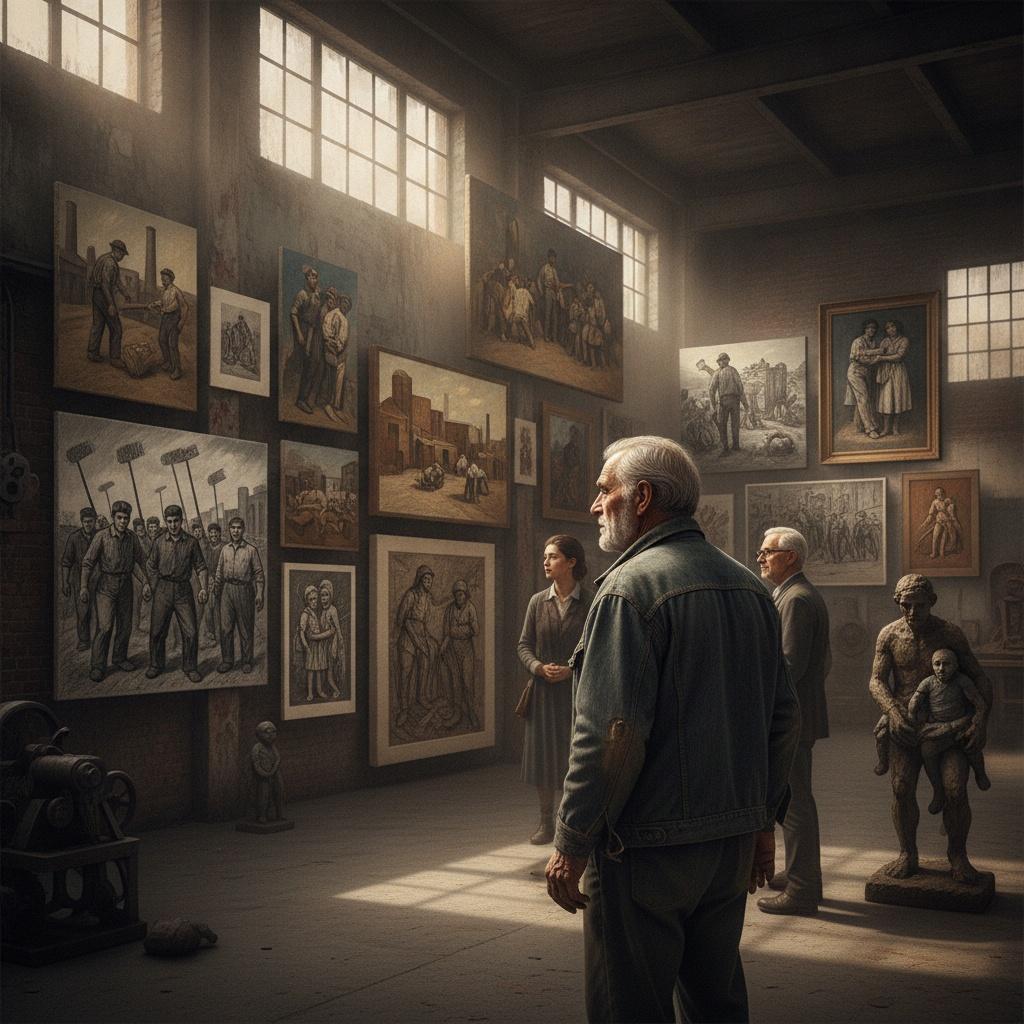
The essence of Social Realism lies in its commitment to the dignity of the anonymous. It sought to draw attention to the harsh conditions of labor, the inequities of power, and the resilience of those caught in the gears of industrial and political upheaval. Unlike the more passive documentation of daily life, Social Realative works often highlighted the tension between opposing forces—the laborer and the machine, the impoverished and the powerful, the struggle for rights against the weight of tradition. It was a movement that found its strength in the "typical character under typical circumstances," as described by those who saw art as a vehicle for historical truth.
This period of art was deeply intertwined with the global currents of class consciousness and political reform. Whether it was responding to the Great Crash in America or the shifting landscapes of Europe, artists used their medium to make the struggles of the proletariat legible to the wider public. By portraying everyday workers as heroic symbols of persistence, they did more than just record history; they participated in it, attempting to hold existing social systems accountable through the sheer, undeniable power of visual testimony.
Masters of the Mundane: Analyzing Key Figures and Their Visual Narratives
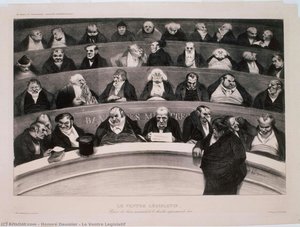 Le Ventre Legislatif
A Satirical Mirror of Power In the shadowy, monochromatic depths of Honoré Daumier’s 1834 masterpiece, Le Ventre Legislatif (The Legislative Belly), we are invited into a space that feels less like a formal assembly and more like a claustrophobic the...
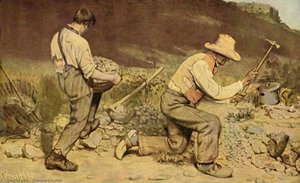
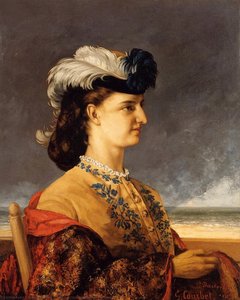
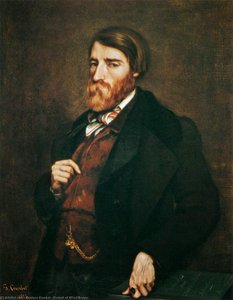
To walk through the gallery of Social Realism is to encounter figures who stood as sentinels for the truth. We cannot speak of this movement without bowing to Gustave Courbet, the formidable progenitor of Realism. His work was a deliberate provocation against the Salon; in masterpieces like The Stone Breakers, he refused to offer the viewer the comfort of beauty. Instead, he presented the raw, exhausting reality of manual labor with a monumental scale usually reserved for kings and gods. In doing so, Courbet elevated the mundane to the level of the epic, forcing the elite to acknowledge the very hands that built their world.
In the shadows of the urban landscape, we find the biting wit and profound empathy of Honoré Daumier. His works, often steeped in the monochromatic depths of lithography, captured the claustrophobia of political life and the plight of the urban poor. In pieces such as Le Ventre Legislatif, Daumier used light and shadow not to beautify, but to expose the inertia and frailty of power. His gaze was both satirical and deeply human, finding the tragedy within the comedy of the human condition.
The narrative of Social Realism is also one of global echoes. From the profound social commentaries found in the works of American artists during the interwar period to the complex layers of meaning in various international traditions, these masters shared a common language of observation. They each brought a unique texture to the movement—some through the lens of gritty documentary, others through a more symbolic, yet still grounded, portrayal of strength and adversity. Together, they wove a tapestry of human experience that remains as hauntingly relevant today as it was in the 19th century.
Beyond the Canvas: The Enduring Legacy of Art as Social Critique
 Echoes of Society: Exploring Social Realism's Enduring Legacy in Art
The Roots of Representation: Realism's Emergence as Social Commentary The Enduring Legacy of 19th-Century Realism: A Reflection of Society & Artistic Innovation Explore the captivating world of 19th-century Realism! Discover key artists, masterpieces...
The legacy of Social Realism extends far beyond the frames of the paintings themselves. It fundamentally altered the DNA of modern art, breaking the monopoly of the "beautiful" and expanding the boundaries of what is considered a legitimate subject for artistic inquiry. By validating the struggles of the common person, the movement paved the way for subsequent generations of artists to use their work as a platform for social justice, documentary photography, and political activism.
We see its echoes in the way we consume media today—in the hunger for authenticity and the refusal to accept sanitized versions of reality. The movement taught us that art possesses a unique capacity to act as a witness. It proved that a single image, if captured with enough truth and conviction, can resonate across decades, prompting reflection and even inciting change. The "social" in Social Realism is not just a subject; it is a responsibility that continues to inspire artists who seek to give voice to the voiceless.
Even as art movements continue to evolve into more abstract or digital realms, the foundational impulse of Social Realism remains. The desire to use visual language to critique power structures and to celebrate the resilience of the human spirit is a thread that runs through the very fabric of our cultural history. It reminds us that art is never truly neutral; it is a living, breathing participant in the ongoing dialogue of humanity.
The Texture of Reality: How Technique Serves the Subject in Social Realist Works
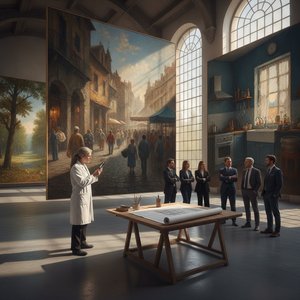 Realism in Art: A Professional Guide to Authentic Detail and Lifelike Masterpieces for Large-Scale Interior Projects
Defining Realism: The Shift from Idealized Classicism to Objective Truth The Poetic Truth of Observation: Exploring 19th-Century Realism in Painting The Rise of Realism: A Rejection of Idealism Wikipedia: Realism (art movement) Realism was an artisti...
In Social Realism, technique is never merely decorative; it is an essential component of the message. The artists of this movement understood that to convey the weight of poverty or the grit of labor, the very texture of the paint had to reflect that reality. There was a deliberate move away from the smooth, porcelain-like finishes of Neoclassicism toward more tactile, visceral applications of medium. The visible brushstroke became a symbol of the human hand, mirroring the manual labor depicted on the canvas.
The use of light and shadow—chiaroscuro—was repurposed from its traditional role in creating drama to one of revelation. In the hands of a master like Daumier, light does not just illuminate; it exposes. It carves out the weary lines of a face or the heavy slumped shoulders of a worker, adding a sense of physical weight and psychological depth to the subject. The color palettes, too, often leaned toward the earthy, the muted, and the somber, grounding the works in the natural, unvarnished tones of the earth and the industrial landscape.
This commitment to "truthful reproduction" meant that every element of the composition was scrutinized for its ability to convey meaning. The heaviness of a figure's clothing, the dust on a path, the starkness of an empty room—these were not mere details, but vital components of a larger narrative of condition and struggle. In Social Realism, the medium is the message, and the texture of the paint serves as the very skin of reality itself.
At ArtsDot.com, we hold a profound reverence for the masters who dared to show the world as it truly is. Our mission is to bring the soul of these historical movements into the modern home through exquisite, hand-painted oil reproductions. Whether you are drawn to the monumental truth of Courbet or the emotive shadows of the Realists, our artists specialize in capturing the authentic brushwork and deep tonal ranges that define these masterpieces. We invite you to explore our collection and perhaps find a piece of history that speaks to your own truth.