

The Primal Mark: Tracing Charcoal from Prehistoric Caves to the Renaissance
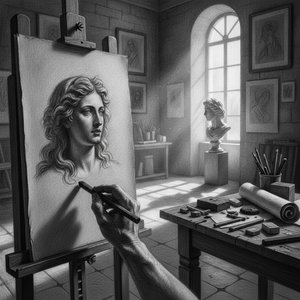 Mastering Charcoal: The History, Technique, and Chiaroscuro Power of Black and White Art
The Primal Mark: A History of Charcoal from Prehistoric Caves to the Renaissance The Lion of St Mark Discover Vittore Carpaccio’s ‘The Lion of St Mark,’ a stunning Renaissance tempera painting showcasing Venetian grandeur & symbolism. Explore its ric...
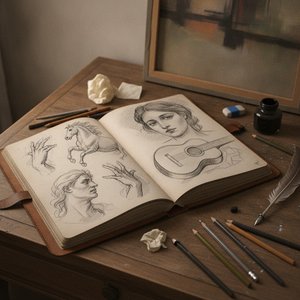
To touch charcoal is to engage with the very dawn of human consciousness. Long before the refinement of oils or the delicate complexity of Impressionist pigments, our ancestors sought to capture the essence of their world through the soot-stained walls of prehistoric caverns. This medium, born of fire and wood, represents one of the most ancient and primal forms of human expression, a direct lineage that connects the first charcoal sketches in deep, silent earth to the sophisticated studies found in the great museums of Europe today. There is an almost mystical gravity to this material; it carries the weight of millennia within its blackened, carbonized remains, acting as a bridge between the primitive impulse and the academic mastery of later eras.
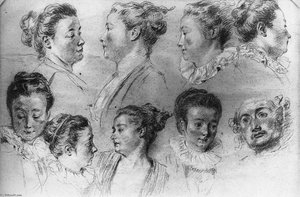
As civilization progressed, the use of charcoal evolved from mere cave markings into a vital preparatory tool for the masters of the Renaissance. During this transformative era, artists did not merely utilize charcoal for finished works but relied upon it to develop initial ideas, create preliminary outlines, and establish the foundational shadows of their compositions. It served as the skeletal structure upon which the flesh of oil painting was later draped. This historical transition from a primitive tool to a sophisticated academic instrument allowed for the development of complex spatial depth, setting the stage for the dramatic innovations that would eventually define Western art history and provide the structural groundwork for the light-drenched landscapes we adore.
The Alchemy of Carbon: Exploring Willow, Vine, and Compressed Textures
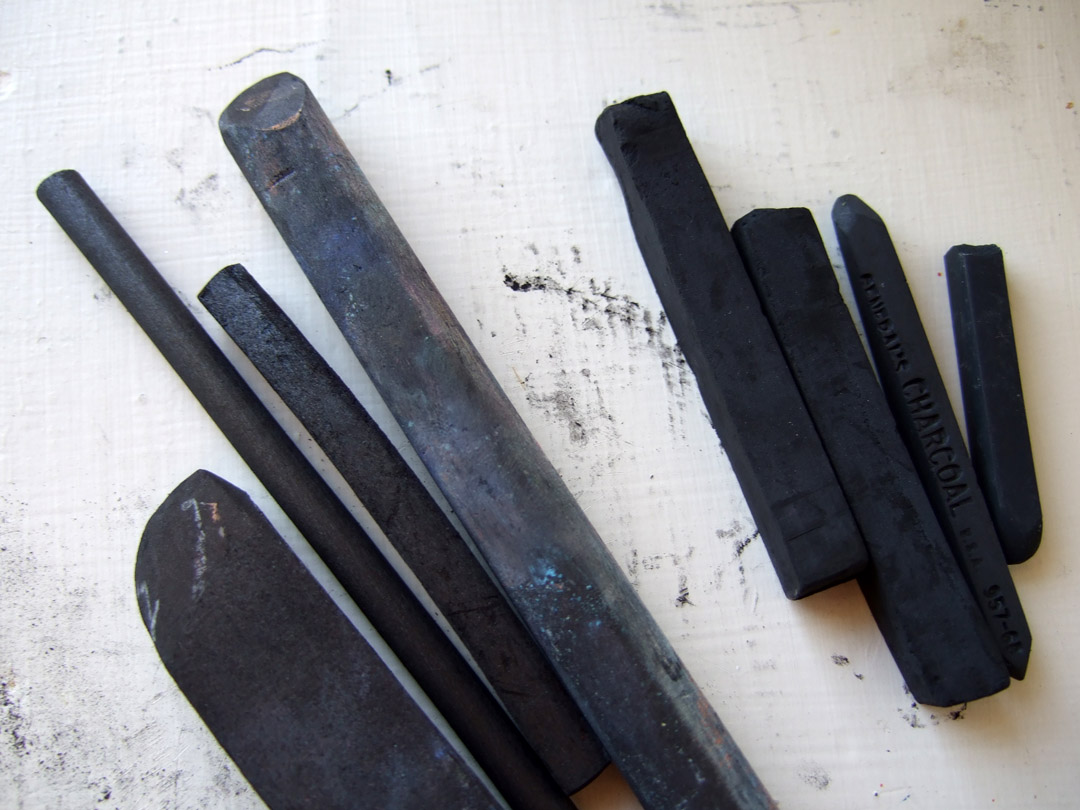 Charcoal (art)
Artists' charcoal is charcoal used as a dry art medium. Both compressed charcoal (held together by a gum or wax binder) and charcoal sticks (wooden sticks burned in a kiln without air) are used. The marks it leaves behind on paper are much less perma...
For the dedicated collector and student of fine art, mastering the shadows requires an intimate understanding of charcoal’s chemical and physical variations. The medium is far from a monolith; rather, it is a spectrum of textures and densities that demands respect. At the most delicate end of this spectrum lies Willow and Vine charcoal. Produced by lightly charring wooden sticks in an enclosed vessel, these materials are incredibly ethereal and easy to erase, making them perfect for those initial, ghostly sketches that establish the soul of a composition. They offer a soft, greyish whisper upon the page, ideal for capturing the fleeting light of a morning mist.
In stark contrast, we find the intensity of Compressed charcoal. Held together with a gum or wax binder, this variety is shaped into blocks or sticks to create a much darker, more permanent, and intensely black mark. It possesses a certain unruly freedom, capable of producing deep, velvety voids that anchor a composition. For those seeking fine detail within this darkness, charcoal pencils offer a way to harness this intensity through a controlled tip. Whether applied to smooth Bristol paper for seamless blending or onto heavily textured rag paper to catch the rich dust of the medium, the choice of charcoal is an act of artistic alchemy, determining whether the final work will breathe with light or resonate with profound depth.
Chiaroscuro and the Mastery of Light: The Dramatic Power of Contrast
 Chiaroscuro
In art, chiaroscuro (English: kee-AR-ə-SKOOR-oh, -SKURE-, Italian: [ˌkjaroˈskuːro]; lit. 'light-dark') is the use of strong contrasts between light and dark, usually bold contrasts affecting a whole composition. It is also a technical term used by a...
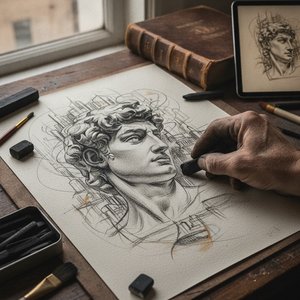
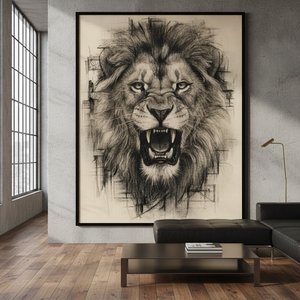
There is a profound drama found in the concept of chiaroscuro—the Italian term for "light-dark." This technique, which utilizes strong contrasts between light and dark to achieve a sense of volume and three-dimensional modeling, finds its most potent expression through charcoal. The medium deals fundamentally with the extremes of creation: the deep, velvety void of black against the stark, unblemated light of the page. When an artist masters this balance, they do more than just draw; they sculpt with shadow, using the darkness to pull figures and forms out of the nothingness.
This interplay of light and shadow is what gives charcoal its unique ability to focus the viewer's attention intensely upon a subject. By manipulating these bold contrasts, an artist can direct the eye through a composition, creating a sense of movement and emotional weight. This mastery of contrast is not merely a technical feat but a psychological one, as it allows for the exploration of mood, from the somber and introspective to the brilliant and triumphant. In the hands of a master, charcoal becomes a tool of illumination, where the shadow itself serves to define the radiance of the light.
Subtractive Elegance: The Art of Erasing to Reveal Form and Radiance
 Subtractive drawing
Subtractive drawing is a technique in which the drawing surface is covered with graphite or charcoal marks and then erased to make the image. This technique is often used to add texture, establish tonal shapes, or create the appearance of reflected l...
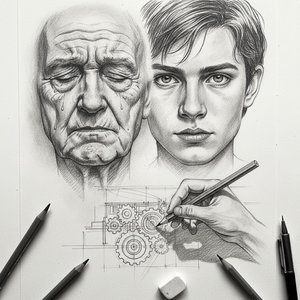
While we often think of drawing as an additive process—the act of placing marks upon a surface—charcoal offers a unique, almost sculptural technique known as subtractive drawing. In this method, the artist begins by covering the drawing surface with charcoal marks, creating a dark, atmospheric field. The image is then "drawn" by erasing the pigment away. This technique is often used to add texture, establish tonal shapes, and most importantly, to create the appearance of reflected light within a composition.
Using tools such as kneaded or putty erasers, which can be manipulated into fine tips to absorb pigment with precision, the artist acts as a sculptor of light. This process allows for the emergence of highlights that feel as though they are glowing from within the paper itself. It is a beautiful, rhythmic dance between presence and absence, where the act of removal is just as vital as the act of application. This method brings a certain dynamism to the work, reflecting a state of constant refinement and an embrace of the beautiful chaos inherent in such a reactive medium.
The Modern Collector’s Perspective: Preserving the Ephemeral Beauty of Charcoal
For the discerning collector, acquiring charcoal art is an engagement with a medium that is inherently ephemeral. Because the marks left by charcoal are much less permanent than those of graphite, they require a specialized approach to preservation. To ensure that these delicate layers of carbon and light endure for generations, the use of fixatives is essential. A professional-grade fixative solidifies the position of the charcoal dust, preventing it from rubbing off or fading over time, thus protecting the artist's original intent.
When integrating such works into a collection, one must also consider the environment. To protect your investment, it is wise to avoid direct sunlight and utilize acid-free matting to create an air gap between the artwork and the glass, preventing moisture damage that could compromise the pigments. Whether you are drawn to the monumental, architectonic drawings of contemporary masters or the delicate, light-filled studies reminiscent of the Impressionist era, treating charcoal with the reverence its fragile nature demands ensures that its soul remains vibrant and its shadows remain deep for decades to come.