The Quiet Power of One: Defining the Monochromatic Essence
 10 Stunning Artworks That Define Minimalist Perfection
Introduction There is a profound, quiet power in the absence of excess. To step into a room defined by minimalism is not to encounter emptiness, but rather to experience a deliberate curation of breath, light, and intention. In the world of fine art,...
There is a profound, almost sacred silence that descends upon a room when one encounters a truly masterful monochromatic work. To the untrained eye, it may appear as a mere absence of color, but to those of us who have spent decades wandering through the hallowed halls of the great museums, it is an invitation to look deeper. Monochromatic art is not about what is missing; it is about the intense, concentrated presence of what remains. By stripping away the vibrant distractions of a full spectrum, the artist forces us to confront the very heartbeat of the medium. It is a deliberate curation of breath and intention, where a single hue becomes a vessel for infinite nuance.
In these singular landscapes of color, we find that the eye no longer wanders restingly across a rainbow of competing stimuli. Instead, it begins to dance within the subtle shifts of a single tone. This reduction serves as a sophisticated rebellion against the noise of the external world, offering a sanctuary of focus. Whether it is the stark, intellectual gravity of a black study or the ethereal, light-drenched whispers of a white composition, the monochrome captures a singular, resonant note that lingers in the mind long after one has left the gallery. It is the art of finding the universe within a single drop of pigment.
Beyond the Spectrum: Exploring Texture, Value, and Light
When the palette is limited, the artist’s technical mastery must ascend to new heights. Without the crutch of contrasting colors to define form, the work must rely entirely on the interplay of value, texture, and light. This is where the true soul of the painting resides—in the way a heavy impasto stroke catches a stray beam of sunlight, or how a delicate glaze creates a sense of translucent depth. In monochromatic works, we witness a visual investigation into the inherent properties of paint itself. We see the physical topography of the canvas, where ridges of oil and shadows of crevice create a three-dimensional dialogue between the viewer and the surface.
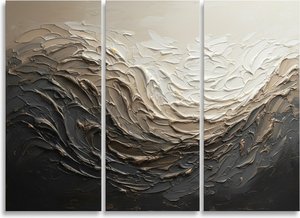
Consider the breathtaking complexity found in tonal studies, where the difference between a shadow and a highlight is measured only by the slightest variation in saturation. In works like
Monolithic Echoes in Tonal Impasto, we see how texture can substitute for color to provide weight and presence. The artist uses rhythmic, tactile ridges to suggest organic symmetry and ancient permanence. It is through this mastery of light and shadow—the chiaroscroll of a single hue—that the painting achieves its emotional resonance. The texture becomes the subject, inviting us to touch the art with our eyes and feel the very grit and grace of the creation.
From Tonalism to Minimalism: A Journey Through Art History
 Monochrome painting
Monochromatic painting has played an extreme role in modern and contemporary Western visual art, originating with the early 20th-century European avant-gardes. Artists have explored the non-representational potential of a single color, investigating ...
The lineage of monochromatic expression is a rich tapestry woven through the centuries, evolving from subtle atmospheric moods to radical conceptual statements. We find its roots in the delicate, gauzy landscapes of Tonalism, where artists like James Abbott McNeill Whistler utilized a limited range of colors to evoke a sense of harmony and misty, nocturnal beauty. These works were not mere depictions of scenery; they were studies in mood, using soft, indistinct edges to capture the ephemeral quality of twilight or dawn. This approach paved the way for a more profound exploration of the essence of light.
As we move into the early 20th century, the monochrome underwent a radical transformation through the European avant-garde. The movement shifted from the atmospheric toward the purely non-representational. We see this in the daring experiments of the Suprematists, such as Kazimir Malevich’s iconic
White on White, which pushed the boundaries of perception to their absolute limit. This era turned the monochromatic painting into a conceptual tool, investigating the very nature of flatness and the void. From the early 1882 provocations in Paris to the geometric abstractions of the modern era, the single color has remained a powerful instrument for challenging our understanding of reality and space.
The Meditative Canvas: Finding Stillness in Single-Hue Masterpieces
In our increasingly fragmented and loud modern existence, there is a growing hunger for the stillness that monochromatic art provides. There is a meditative quality to a painting that does not demand attention through spectacle, but rather earns it through subtlety. To stand before a piece like
Ethereal Flow—a diptych of serene organic movement—is to enter a state of hypnotic calm. The rhythmic interplay of charcoal masses and sweeping white strokes creates a continuous, breathing experience that encourages the viewer to slow down, to exhale, and to find resonance in the space between objects.
This stillness is not emptiness; it is a deliberate presence. It allows for a deeper level of contemplation, where one can observe the subtle nuances of a single tone as if observing the shifting tides of the sea. For the collector, such works offer more than decoration; they offer an emotional anchor. They provide a window into a world of minimalist harmony, where the absence of excess reveals the essential truth beneath. In the quietude of a monochromatic landscape, we find the space to reflect, making these pieces perfect companions for a life lived with intention and grace.
Modern Echoes: How Monochrome Inspires Contemporary Impressionism
Tonal ImpressionismTonal Impressionism was an artistic style of "mood" paintings with simplified compositions, done in a limited range of colors, as with Tonalist works, but using the brighter, more chromatic palette of Impressionism. An exhibition titled "Tonal Impres...
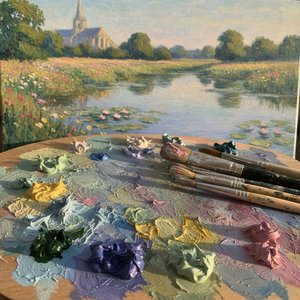
While we often associate Impressionism with a vibrant, broken palette of sun-drenched colors, the movement’s true essence lies in its pursuit of the ephemeral—the fleeting flicker of light before it dissolves into memory. This spirit lives on vibrantly within the realm of Tonal Impressionism. This beautiful hybrid style utilizes the brighter, more chromatic palette of the Impressionists but applies it to a much more controlled and limited range of tones. It is a way of capturing the "mood" of a moment—the heavy moisture in the air at dawn or the hazy warmth of a summer afternoon—without the overwhelming complexity of a full spectrum.
Today, we see this influence reflected in contemporary works that seek to bridge the gap between classical beauty and modern abstraction. Artists are once again using monochromatic or near-monochromatic approaches to explore organic movement and light, much like Renoir’s delicate sketches or Monet’s atmospheric studies. By focusing on tonal values rather than color competition, these modern masters can evoke a sense of intimacy and subjectivity that feels both timeless and fresh. It is a testament to the enduring power of the single hue: it remains our most potent tool for capturing the very soul of a moment.
At ArtsDot.com, we celebrate this profound beauty through our curated collection of hand-painted oil reproductions and bespoke commissions. Whether you seek the textured depth of an impasto masterpiece or a custom "remix" of a historical favorite, our artists bring the soul of the masters to your home.



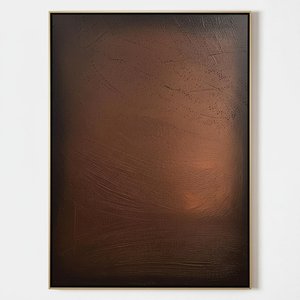
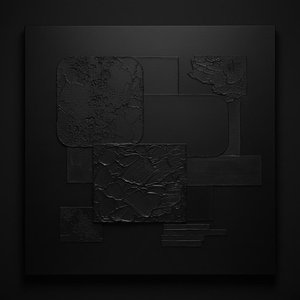
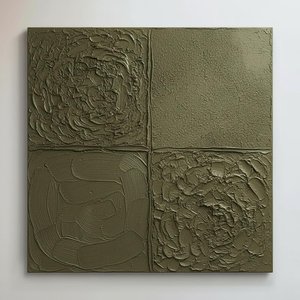
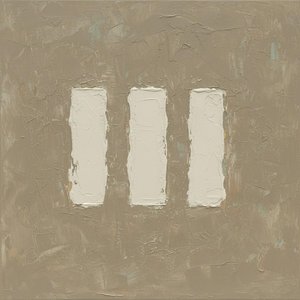 Monolithic Echoes in Tonal Impasto: A Meditative Study of Organic Symmetry
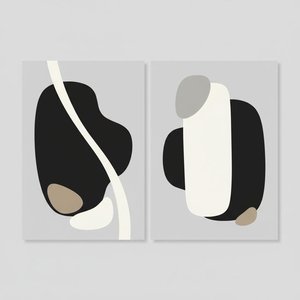 Ethereal Flow: A Monochromatic Diptych of Serene Organic Movement and Minimalist Harmony