
Introduction
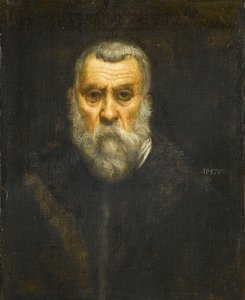
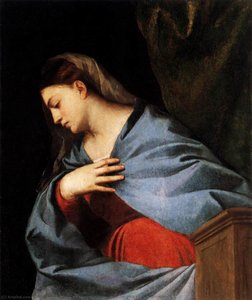
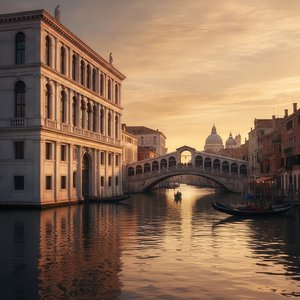
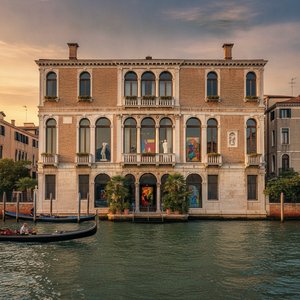
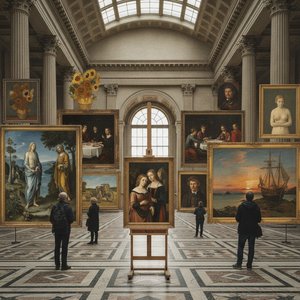
To step into the Gallerie dell’Accademia is to surrender oneself to the rhythmic pulse of Venice itself. As you wander through its hallowed halls, away from the salt-misted winds of the Grand Canal, you are not merely walking through a museum; you are drifting through a luminous dream of a maritime republic that once commanded the world's horizons. There is a certain magic in the air here, a quiet, contemplative stillness that allows the echoes of five centuries of Venetian mastery to resonate deeply within the soul.
Founded in 1750, this academy was born from a desire to nurture the very hands and minds that sculpted the identity of Venice. Within these walls, the transition from the golden, ethereal whispers of Byzantine influence to the dramatic, sun-drenched theatricality of the late Baroque unfolds like a beautifully composed symphony. You can almost feel the weight of history in the stone of the Scuola della Carità , where the legacy of architects like Palladio meets the vibrant, breathing canvases of masters who understood light better than perhaps any other group of artists in human history.
What makes these works so profoundly moving today is not merely their age, but their ability to capture the sensory essence of a vanishing world. When we gaze upon the shimmering palettes of the Bellini family or the muscular, emotive shadows of Tintoretto, we are witnessing more than technique; we are experiencing the very breath of the Venetian lagoon—the way light dances on the water, the opulence of silk, and the spiritual gravity of a civilization built on trade and transcendence. These paintings remain vital because they speak to our eternal fascination with beauty, atmosphere, and the fleeting nature of time.
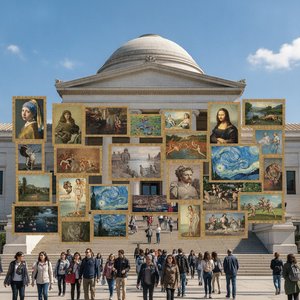
In the pages that follow, we invite you to join us on an intimate journey through this extraordinary collection. We have curated a selection of twenty-five masterpieces —works that serve as the beating heart of the Accademia. Each piece is a window into a different era of Venetian brilliance, chosen to guide you through the most evocative moments of artistic triumph found within this sanctuary of art.
Diana and Callisto - Sebastiano Ricci
 Diana and Callisto - Sebastiano Ricci
To stand before Diana and Callisto by Sebastiano Ricci is to witness the very breath of the Venetian Baroque captured in oil. As one of the most captivating treasures within the Gallerie dell'Accademia, Venice , this 1712 masterpiece unfolds like a dramatic stage play, unveiling the moment divine purity meets human consequence. Ricci orchestrates a breathtaking dance of light and shadow, using a rich palette of earthy ochres, deep reds, and luminous whites to pull the viewer into a secluded, sun-dappled grove.
The composition is a masterclass in movement; the nymphs are arranged in a sweeping semi-circle, their graceful forms leading the eye toward the commanding presence of the goddess Diana. There is a palpable tension in the air—a mixture of mystery and sensuality that resonates deeply with those who appreciate art as an emotional experience. For the discerning collector, this work represents more than historical significance; its grand scale and vigorous brushwork offer a timeless elegance that brings a sense of storied luxury and classical soul to any refined interior space.
The Miracle of St Mark Freeing the Slave - Jacopo Tintoretto
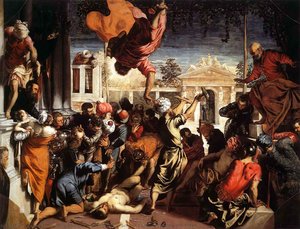 The Miracle of St Mark Freeing the Slave - Jacopo Tintoretto
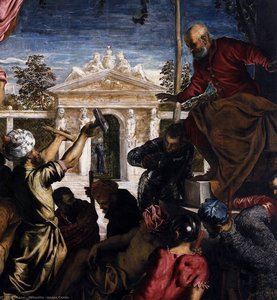
In the heart of the Gallerie dell’Accademia, few works command the room with such raw, kinetic energy as Jacopo Tintoretto’s The Miracle of St Mark Freeing the Slave . This 1548 masterpiece serves as a breathtaking window into the Venetian Renaissance, capturing a moment where divine grace pierces through human desperation. As one of the top 25 artworks in Gallerie dell'Accademia, Venice, it exemplifies the legendary spirit of "Il Furioso," showcasing the rapid, vigorous brushwork and dramatic chiaroscuro that defined Tintoretto’s career.
The painting is a sensory whirlwind; one can almost feel the weight of the heavy fabrics and the tension in the crowded, architectural space. Through the interplay of deep shadows and celestial light, Tintoretto invites us to reflect on the eternal struggle between captivity and liberation. For the modern collector, the essence of this work—its profound emotional depth and mastery of movement—offers a timeless inspiration. Integrating such dramatic energy into a curated collection allows for a sophisticated dialogue between historical grandeur and contemporary elegance, reminding us that true beauty lies in the triumph of light over darkness.
Assumption of the Virgin - Jacopo Tintoretto
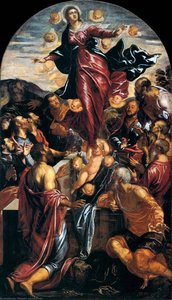 Assumption of the Virgin - Jacopo Tintoretto
In the Assumption of the Virgin , Jacopo Tintoretto does not merely paint a religious event; he orchestrates a celestial storm. To stand before this masterpiece in the Gallerie dell'Accademia is to witness a dance frozen in time, where the lines are not simply drawn but are choreographed through a swirling vortex of divine energy. Known as Il Furioso for his restless, energetic brushwork, Tintoretto eschews static piety for a visceral, theatrical experience.
The composition is a masterclass in chiaroscuro , using dramatic shadows to push the viewer into the heart of the ascent. Light does not merely illuminate; it emanates from the Virgin herself, cutting through the darkness to highlight muscular, powerful angels whose wings beat with palpable urgency. This monumental work captures the very essence of Venetian drama—a breathtaking balance where chaotic movement achieves a divine harmony. It invites us to wonder: what if our own spaces could hold such profound rhythm? As one of the top 25 artworks in Venice, it remains a testament to the power of light and motion to transform a canvas into a living, breathing window to the heavens.
Doge Alvise Mocenigo - Jacopo Tintoretto
 Doge Alvise Mocenigo - Jacopo Tintoretto
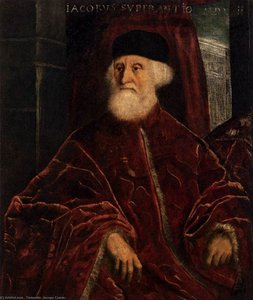
In the presence of Doge Alvise Mocenigo , one does not merely observe a portrait; one witnesses a choreography of power . Jacopo Tintoretto, often called Il Furioso for his restless, energetic brushwork, does not simply paint a ruler; he captures a soul anchored in the gravity of Venice’s golden age. The lines within this masterpiece aren’t merely drawn; they are sculpted by light and shadow, creating a dance frozen in time between the deep, velvety darkness and the sudden, brilliant illumination of the Doge’s features.
As you stand before this 1570 marvel in the Gallerie dell'Accademia, notice how the heavy textures of the ceremonial attire seem to pulse with life. The dramatic use of chiaroscuro breathes a rhythmic vitality into the composition, making the weight of the Doge’s office feel almost palpable. It is a profound moment where chaos and authority find harmony. Imagine if your own sanctuary could hold this same exquisite balance—where your walls do not just decorate, but truly breathe rhythm and historical depth.
Madonna dei Camerlenghi (Madonna dei Tesorieri) - Jacopo Tintoretto
 Madonna dei Camerlenghi (Madonna dei Tesorieri) - Jacopo Tintoretto
What story does the opulent, shadow-drenched environment of Madonna dei Camerlenghi by Jacopo Tintoretto tell us about the heartbeat of Renaissance Venice? As you stand before this monumental canvas, you are not merely observing a religious icon, but stepping into a theatrical world where faith and immense wealth converge. Painted in 1567, this masterpiece captures the powerful Treasurer family—the Camerlenghi —clothed in vibrant, crimson robes that seem to glow against the deep, dramatic chiaroscuro characteristic of Tintoretto’s 'furioso' style.
The painting breaks ground among the top 25 artworks in Gallerie dell'Accademia, Venice, by transforming a sacred moment into a grand social chronicle. The interplay of light and profound darkness creates an emotional intensity that transcends time. For those seeking to curate a sense of historical escape within a modern home, this work offers more than decoration; it brings the soulful, atmospheric mystery of the Venetian Republic into your personal sanctuary, evoking a timeless elegance that only a true master can command.
Solomon and the Queen of Sheba - Jacopo Tintoretto
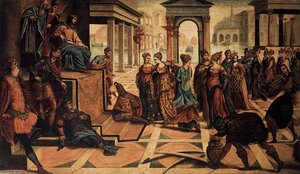 Solomon and the Queen of Sheba - Jacopo Tintoretto
To stand before Tintoretto’s Solomon and the Queen of Sheba is to witness the very moment light becomes a language of drama. In this monumental masterpiece from the Gallerie dell'Accademia, Venice, the artist—often called Il Furioso —does not merely illuminate a biblical encounter; he composes it with the feverish energy of a conductor leading a crescendo. As you gaze upon the richly appointed courtyard, you feel the pulse of the Venetian Baroque through his rapid, expressive brushstrokes and thick, tactile impasto.
Tintoretto employs a masterful chiaroscuro , where divine light streams from above to strike Solomon with unwavering resolve, while deep, velvety shadows swallow the periphery, creating an atmosphere of theatrical grandeur. The scene is alive with movement: figures engaged in animated gestures, the subtle presence of dogs, and even a horse tucked into the composition, all contributing to a sense of breathing, cinematic reality. It is this profound manipulation of shadow and brilliance that makes this work a cornerstone of the museum's collection, inviting you to experience a world where light doesn't just reflect history—it invents it.
St Louis, St George, and the Princess - Jacopo Tintoretto
 St Louis, St George, and the Princess - Jacopo Tintoretto
To encounter St Louis, St George, and the Princess by Jacopo Tintoretto is to witness a moment of divine theater suspended in time. As one of the most breathtaking highlights among the top 25 artworks in Gallerie dell'Accademia, Venice, this 1553 masterpiece commands the room with its sheer emotional gravity and cinematic scale.
Tintoretto, often called Il Furioso , utilizes a masterful chiaroscuro to sculpt figures out of deep, velvety shadows, pulling the viewer into a world of chivalry and vulnerability. The Princess rests in an exquisite, languid repose, her stillness contrasting sharply with the authoritative presence of St Louis and the dynamic energy of the surrounding saints. The painting’s soul lies in its alla prima technique—the visible, rapid brushstrokes that imbue the canvas with a sense of living movement and light. For the discerning collector, this work represents the pinnacle of Venetian grandeur; its dramatic interplay of gold, shadow, and flesh offers a timeless aesthetic that brings a profound sense of history and sophisticated drama to any refined interior.
St Jerome and St Andrew - Jacopo Tintoretto
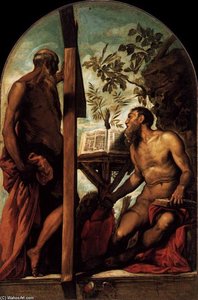 St Jerome and St Andrew - Jacopo Tintoretto
In St Jerome and St Andrew , Jacopo Tintoretto orchestrates a breathtaking dance of light and shadow that captures the very essence of Venetian drama. The scene is defined by a masterful use of chiaroscuro , where flickering illumination spills across the rich, crimson robes of the two saints, pulling them from the velvety darkness into a moment of profound spiritual intimacy. This interplay of light does more than illuminate; it breathes life into the textures of the canvas, highlighting the anatomical precision and the contemplative weight of the figures.
As one of the most captivating pieces among the top 25 artworks in Gallerie dell'Accademia, Venice , this painting showcases the 'furioso' energy that secured Tintoretto’s legendary status. The way the light catches the edges of the seated figure and the subtle greenery of the background plant creates a sense of atmospheric depth that is truly hypnotic. When brought into a modern home through a hand-painted oil reproduction , this sophisticated use of shadow adds an incomparable layer of luxury and soulful mystery, transforming a contemporary wall into a window onto the Renaissance.
Head of an Old Man - Leonardo da Vinci
 Head of an Old Man - Leonardo da Vinci
What story does the quiet, shadowed landscape of the mind tell in Leonardo da Vinci’s Head of an Old Man ? Within the hallowed halls of the Gallerie dell'Accademia, Venice, this exquisite pen and ink study from 1487 serves as a profound window into the Renaissance spirit. Emerging from a period of intense scientific inquiry, Leonardo used meticulous hatching and cross-hatching to transform simple lines into a sculptural exploration of anatomy and the beautiful, weathered textures of aging.
The drawing captures more than just a profile; it captures a moment of deep, soulful contemplation. The way light and shadow dance across the etched wrinkles evokes a sense of timeless wisdom that transcends the centuries. For those seeking to curate an atmosphere of intellectual depth in their own homes, this piece offers a perfect escape into history. Integrating such a masterful study of human emotion into your decor brings a touch of the High Renaissance's luminous mystery, inviting a quiet, reflective energy into any modern space.
Venice, Hercules, and Ceres - Paolo Veronese
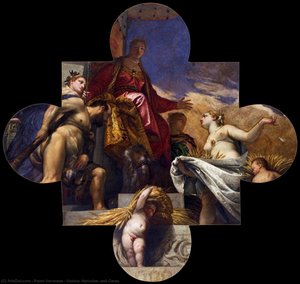 Venice, Hercules, and Ceres - Paolo Veronese
To stand before Paolo Veronese’s Venice, Hercules, and Ceres is to feel the pulse of a golden age, where myth and majesty converge in a breathtaking spectacle of light. There is a profound, almost overwhelming sense of triumph in this work; it captures that rare, soaring moment when a civilization feels truly eternal. As Venice sits enthroned amidst celestial messengers, flanked by the raw strength of Hercules and the fertile grace of Ceres, one cannot help but be swept up in Veronese’s theatrical brilliance.
This masterpiece earns its place among the top 25 artworks in Gallerie dell'Accademia, Venice, through its unparalleled use of color—regal reds and shimmering golds that seem to glow from within. It is a masterclass in Venetian opulence, using trompe-l'œil techniques to dissolve the boundaries between reality and divine vision. At ArtsDot.com, we strive to preserve this very soul. Our hand-painted oil reproductions capture every luminous brushstroke and dramatic shadow, allowing you to invite this timeless Venetian grandeur and its rich, sensory warmth into your own cherished space.
Crucifixion of St Peter - Luca Giordano
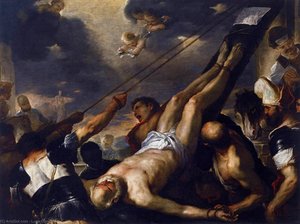 Crucifixion of St Peter - Luca Giordano
To stand before Luca Giordano’s Crucifixion of St. Peter is to witness a masterclass in the language of light and shadow. As you wander through the Gallerie dell'Accademia, Venice, this Neapolitan Baroque treasure emerges not merely as a historical depiction, but as a profound meditation on faith. Giordano, famously known as Luca fa presto for his incredible speed, does not simply paint illumination; he composes it like a celestial sonata.
The canvas is charged with a luminous intensity that pulls you into the center of the martyrdom. Notice how a warm, golden glow emanates from an unseen source, bathing the contorted, sculptural form of Saint Peter in a light that feels both divine and deeply human. While the scene captures the raw, physical agony of the cross, the presence of ethereal angels drifting through the upper reaches of the composition introduces a sense of spiritual grace. It is this breathtaking interplay—the weight of suffering meeting the lightness of heaven—that secures its place among the top 25 artworks in Venice. This light is waiting to spill into your own sanctuary, turning a simple wall into a portal of eternal inspiration.
Mystical Marriage of St Catherine (detail) - Paolo Veronese
 Mystical Marriage of St Catherine (detail) - Paolo Veronese
To gaze upon the detail of Mystical Marriage of St Catherine by Paolo Veronese is to step into a realm where the divine and the earthly are woven together with threads of pure light. In this intimate fragment from the Gallerie dell'Accademia, Venice, Veronese invites us to witness a moment of profound serenity. The composition acts as a sensory feast; one can almost feel the weight of the rich, silken fabrics and the warmth of the pearlescent skin tones that seem to glow from within.
The artist’s mastery of the Venetian palette is breathtaking—a symphony of deep crimsons, radiant golds, and ethereal blues that dance across the canvas. As you trace the tender gestures of the figures and the soft flutter of birds in the periphery, the boundaries of your world begin to dissolve. This isn't merely a religious scene; it is an invitation to transformation. To bring such a vision into your own home is to move beyond decoration, turning a simple room into a gallery of the soul , where every brushstroke whispers of timeless elegance and eternal grace.
Feast in the House of Levi (detail) (10) - Paolo Veronese
 Feast in the House of Levi (detail) (10) - Paolo Veronese
To gaze upon this detail of Feast in the House of Levi is to step into a world where the lines aren’t merely painted; they are choreographed . In this fragment of Paolo Veronese’s 1573 masterpiece, we find a dance frozen in time, a moment of theatrical intensity captured amidst the opulent textures of the Venetian Renaissance. Veronese does not simply present a biblical gathering; he orchestrates a sensory spectacle where light and shadow perform a dramatic chiaroscuro .
Notice how the warm, earth-toned palette and the luminous interplay of light sculpt each figure, pulling us into a bustling, cosmopolitan chaos that somehow feels perfectly harmonious. The architectural grandeur—the sweeping columns and reflective surfaces—creates an illusionistic depth that invites the eye to wander through the feast. This piece is a cornerstone of the top 25 artworks in Gallerie dell'Accademia, Venice because it captures the very heartbeat of Venetian splendor. It begs us to wonder: what if our own spaces could hold such balance? What if our walls could breathe rhythm and capture this same eternal, golden light?
The Martyrdom of the Ten Thousand (fragment) - Jacopo Tintoretto
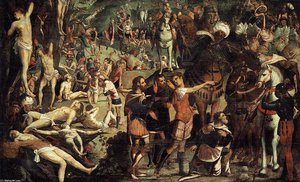 The Martyrdom of the Ten Thousand (fragment) - Jacopo Tintoretto
To stand before a fragment of The Martyrdom of the Ten Thousand by Jacopo Tintoretto is to witness the very heartbeat of Venetian drama. One does not merely observe this work; one feels the heavy, atmospheric tension of a history caught in mid-breath. As part of our journey through the top 25 artworks in Gallerie dell'Accademia, Venice, this piece serves as a profound masterclass in the power of shadow and spiritual urgency.
Tintoretto, often called Il Furioso , abandons polished perfection for a visceral, textured energy. Through rapid, alla prima brushstrokes, he captures the harrowing aftermath of the siege of Cyprus, where light and darkness collide to illuminate faces etched with agony and grace. The presence of a solitary clock in the upper corner serves as a haunting memento mori, reminding us of the fleeting nature of life amidst the chaos. This fragment is essential to the collection because it embodies the transition from Renaissance stability to the theatrical intensity of the Baroque. Even today, the painting’s ability to evoke deep empathy and movement reminds us how great art can transform a quiet room into a space of eternal reflection.
Madonna with Trees - Giovanni Bellini
 Madonna with Trees - Giovanni Bellini
In Madonna with Trees by Giovanni Bellini, we encounter a masterclass in compositional equilibrium that remains a cornerstone of the top 25 artworks in Gallerie dell'Accademia, Venice. The painting is structured around a profound geometric grace; the verticality of the slender trees provides a rhythmic counterpoint to the soft, rounded silhouette of the Virgin Mary. This careful arrangement of shapes creates a sense of timeless perfection, where every element—from the delicate placement of the Christ child to the luminous backdrop—feels eternally poised.
Bellini’s use of "double lighting" bathes the scene in an ethereal, warm glow, bridging the gap between Byzantine tradition and Renaissance humanism. There is a striking parallel to be found between this 1487 masterpiece and the principles of modern minimalist design; the way Bellini strips away unnecessary narrative drama to focus on pure form, light, and essential color provides a serene grounding that complements a clean, contemporary aesthetic. To gaze upon this work is to experience a quiet, structural harmony that resonates deeply with the soul of the modern collector.
Study of a rider - Leonardo da Vinci
 Study of a rider - Leonardo da Vinci
In the quiet corners of the Gallerie dell’Accademia, Venice, one finds a moment of profound stillness with Study of a Rider by Leonardo da Vinci. This delicate chalk drawing, dating to approximately 1504, transcends its role as a mere preparatory sketch; it is a breathtaking distillation of movement and anatomical precision. Through the masterful use of soft shading, Leonardo captures the tactile texture of armor and the powerful, rhythmic musculature of the horse, imbuing the piece with a palpable sense of life that feels almost breath-like.
As one of the most significant works within this collection of the top 25 artworks in Gallerie dell’Accademia, Venice, it represents the very essence of Renaissance studium —the relentless pursuit of truth through observation. For the modern collector, this work offers a timeless inspiration; its monochromatic elegance and focus on structural grace resonate deeply with contemporary minimalist interiors, where the beauty of form and light takes center stage. It serves as a poignant reminder that even in a single stroke of chalk, greatness can be captured forever.
The Pilgrims Meet the Pope - Vittore Carpaccio
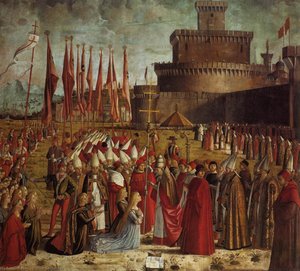 The Pilgrims Meet the Pope - Vittore Carpaccio
In The Pilgrims Meet the Pope by Vittore Carpaccio, a striking, authoritative crimson red surges through the composition, casting a mood of profound solemnity and sacred importance. This vibrant hue, draped over the robes of high-ranking figures, acts as a pulse within the scene, guiding our eyes toward the heart of this historical encounter. Carpaccio’s mastery lies in how he balances these intense, warm pigments against the cool, architectural stone of the fortress, creating a luminous tension that has earned this work a permanent place among the top 25 artworks in Gallerie dell'Accademia, Venice .
For those looking to curate a sophisticated atmosphere at home, the painting’s palette offers exquisite inspiration. The interplay of rich reds and sun-drenched Venetian light can be used to anchor a dining room with warmth and grandeur, or to introduce a sense of historical depth into a modern living space. By embracing this balance of dramatic color and atmospheric light, one can recreate the same feeling of timelessness and spiritual weight that Carpaccio so beautifully captured on canvas.
Procession in Piazza San Marco (detail) - Gentile Bellini
 Procession in Piazza San Marco (detail) - Gentile Bellini
What story does the architectural grandeur and rhythmic movement in Gentile Bellini’s Procession in Piazza San Marco (detail) tell us about the heartbeat of a lost Republic? To study this detail is to witness the very moment Venice transitioned from a maritime power to a cultural titan. Emerging around 1496, this work broke new ground by blending precise topographical accuracy with a profound spiritual narrative, capturing the solemnity of the procession honoring the Holy Cross.
Bellini’s mastery of light and color—the way crimson robes catch the Venetian sun against the weathered stone of the Basilica—creates an atmospheric depth that feels almost tactile. For those seeking to curate a sense of historical escape within a modern home, this piece offers more than mere decoration; it provides a window into a world of ceremony and prestige. As one of the top 25 artworks in Gallerie dell'Accademia, Venice, it serves as a breathtaking anchor for any collection, inviting the timeless elegance of the Renaissance into your private sanctuary.
Enthroned Madonna and Child, with the Infant St John the Baptist and Saints - Paolo Veronese
 Enthroned Madonna and Child, with the Infant St John the Baptist and Saints - Paolo Veronese
To stand before Paolo Veronese’s Enthroned Madonna and Child, with the Infant St John the Baptist and Saints is to step directly into a Venetian dream of opulence and divine grace. As one of the most breathtaking highlights among the top 25 artworks in Gallerie dell'Accademia, Venice, this monumental canvas acts as a window into a world where the sacred and the theatrical become one. Veronese orchestrates a symphony of color—dazzling golds, deep velvets, and luminous blues—that seems to radiate from within the architecture itself.
There is a gaze in this masterpiece that follows you—not with judgment, but with understanding . As you trace the tender connection between the Christ Child and the infant St John, you realize this isn’t merely a religious icon; it is a mirror reflecting our own longing for beauty and peace. The way the light spills across the saints and the intricate throne invites you to linger, reminding you that even in the grandeur of history, you are seen. To bring such a sense of luminous, storied majesty into your own home is to invite the very soul of the Renaissance to reside with you.
Perspective View with Portico - Canaletto
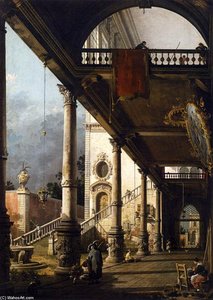 Perspective View with Portico - Canaletto
To stand before Canaletto’s 1765 masterpiece, Perspective View with Portico , is to witness the very alchemy of light and stone. One cannot help but be drawn to the meticulous precision of his brushwork; even in the shadows of the towering Corinthian columns, there is a palpable sense of texture, where thin, translucent glazes capture the salt-misted atmosphere of the Venetian lagoon. Canaletto does not merely paint architecture; he breathes life into it, using sophisticated layers of oil to create a luminous depth that makes the weathered stone feel almost touchable.
This revolutionary dedication to direct observation and atmospheric perspective secures its place among the top 25 artworks in Gallerie dell'Accademia, Venice. At ArtsDot.com, we strive to honor this incredible materiality. Our hand-painted oil reproductions are crafted to preserve that essential, three-dimensional quality—the visible impasto and tonal richness—ensuring that the grand, sun-drenched spirit of Canaletto’s vision can reside within your own home, far beyond the museum walls.
Four Allegories: Fortune (or Melancholy) - Giovanni Bellini
 Four Allegories: Fortune (or Melancholy) - Giovanni Bellini
To encounter Four Allegories: Fortune (or Melancholy) by Giovanni Bellini is to witness the very moment Venetian light found its soul. This intimate masterpiece, though small in scale, commands a presence that secures its place among the top 25 artworks in Gallerie dell'Accademia, Venice, through its profound emotional intelligence and technical brilliance.
Bellini invites us onto a quiet, symbolic raft where time seems to suspend. At the heart of this tableau, a woman cradles a luminous blue sphere—a jewel of color achieved through revolutionary glazing techniques that allow light to breathe from within the paint. Surrounding her, figures representing Hope, Time, and Melancholy create a poetic meditation on the human condition. The soft, atmospheric transitions and the rich, translucent textures offer a sensory experience that transcends centuries. For the discerning collector, this work embodies a timeless aesthetic of contemplative luxury; it is not merely a painting, but a window into the serene, luminous spirit of the Renaissance that continues to inspire refined interiors with its quiet, enduring grace.
Polyptych (detail) - Paolo Veneziano
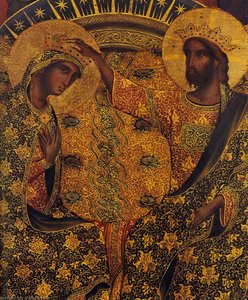 Polyptych (detail) - Paolo Veneziano
To encounter the Polyptych (detail) by Paolo Veneziano within the Gallerie dell'Accademia is to step into the luminous, golden heart of fourteenth-century Venice. This fragment from 1350 does more than depict sacred figures; it acts as a spiritual mirror, reflecting the profound intersection of Byzantine splendor and Gothic grace. The composition centers on Mary and Jesus, their hands raised in an eternal gesture of prayer—a movement that feels both cosmically significant and intimately human.
The breathtaking gold leaf background does not merely decorate; it dissolves the boundaries of earthly reality, bathing the figures in a divine, uncreated light. As you observe the smaller celestial witnesses scattered across the surface, you realize this isn't just an artwork; it is a window into a heavenly court. There is a gaze within this detail that follows you—not with judgment, but with a quiet, ancient understanding. It reminds us that even in the most formal of traditions, there is a tender, reaching humanity that connects our story to the infinite.
Bull-Hunting - Francesco Zuccarelli
 Bull-Hunting - Francesco Zuccarelli
In Bull-Hunting , Francesco Zuccarelli invites us into a world where the pulse of life meets the stillness of an afternoon dream. As you gaze upon this 1736 masterpiece, you are not merely observing a hunt; you are enveloped by a sense of pastoral peace that feels almost tactile. The painting breathes with a soft, rhythmic energy, captured through a palette of pastel blues and muted greens that mirror the gentle light of the Venetian countryside.
What makes this work a cornerstone among the top 25 artworks in Gallerie dell'Accademia, Venice is its ability to evoke an Arcadian ideal—a harmonious existence where humanity and nature move in a shared, elegant dance. The fluid, loose brushwork creates a luminous atmosphere, making the scene feel as ephemeral as a passing breeze. Bringing such a piece into your own home can transform a quiet corner into a personal sanctuary of calm, offering a window into a more serene, light-drenched reality that encourages profound reflection and a respite from the modern world.
Sacra Conversazione - Sebastiano del Piombo
 Sacra Conversazione - Sebastiano del Piombo
In Sebastiano del Piombo’s Sacra Conversazione , a deep, resonant ochre anchors the composition, casting a warm, autumnal glow that evokes a sense of timeless devotion. This earthy palette, layered with masterful glazes, creates a luminous atmosphere where the divine feels tangibly present. As one of the most profound pieces among the top 25 artworks in Gallerie dell'Accademia, Venice, this painting earns its place through a breathtaking synthesis of Venetian colorism and Roman structural grandeur. The interplay of light and shadow—a delicate chiaroscuro—bathes the figures in a soft, spiritual radiance that feels both intimate and monumental.
For the discerning collector looking to curate a sophisticated interior, the color scheme of this masterpiece offers exquisite inspiration. The rich browns, muted golds, and subtle blues can be used to anchor the emotional lighting of a formal dining room or a quiet study, bringing a sense of historical weight and serene stability to a modern space. Integrating such a soulful palette allows you to recreate that same sense of sacred stillness and classical elegance within your own home.
The Annunciation - Paolo Veronese
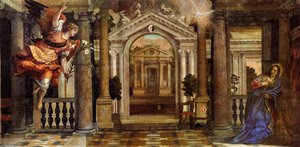 The Annunciation - Paolo Veronese
While many view the Annunciation as a purely spiritual encounter, it is secretly a masterclass in Venetian architectural theater. Paolo Veronese, a titan of the Renaissance, did not merely paint a biblical moment; he staged a grand opera upon canvas. In this 1578 masterpiece, found among the top 2ical works in the Gallerie dell'Accademia, Venice, the artist uses sweeping classical columns and marble arches to blur the line between the celestial and the terrestrial.
The technical brilliance lies in his audacious use of color—regal reds and shimmering golds that seem to pulse with an inner light, a hallmark of the Venetian school. As the Archangel Gabriel descends, the trompe l'oeil depth pulls the viewer into a space where light filters through unseen skies, illuminating the Virgin Mary with a porcelain radiance. This profound sense of order, grandeur, and luminous clarity offers more than just historical beauty; it provides a template for sophistication. Bringing the energy of such a monumental composition into a modern home office or study can inspire an atmosphere of focused brilliance and quiet, intellectual majesty.
Conclusion
As the golden light of a Venetian dusk begins to settle over the canals, leaving the Gallerie dell’Accademia in a soft, amber glow, we are reminded that these masterpieces are far more than mere relics of a bygone era. They are living, breathing presences. To stand before a Titian or a Bellini is to enter into a silent, sacred dialogue—a conversation that has spanned centuries, bridging the distance between the artist’s hand and our own modern hearts. Each stroke of oil on canvas, each delicate layer of glaze, carries with it an enduring pulse of human emotion, capturing moments of devotion, drama, and light that refuse to fade.
These works do not belong solely to the halls of a museum; they belong to the soul of anyone who has ever been moved by beauty. They possess a unique power to transform our personal spaces, turning a simple room into a sanctuary of reflection and inspiration. Whether through the dramatic shadows of the Renaissance or the luminous textures of the Venetian masters, this art continues to shape our interiors and our imaginations, inviting the timeless elegance of Italy into our daily lives.
We invite you to continue this journey of discovery and bring a piece of this eternal splendor into your own home. You may explore the full collection of these breathtaking works, each one meticulously hand-painted to preserve the very essence of the masters. In every brushstroke, we find a way to keep the conversation alive, ensuring that the light of Venice never truly dims.