
The Baroque Rebellion: Artemisia Gentileschi and the Power of Chiaroscuro
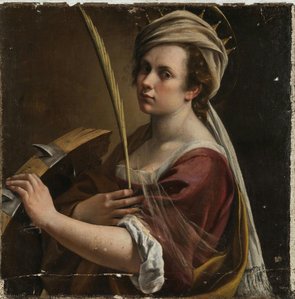
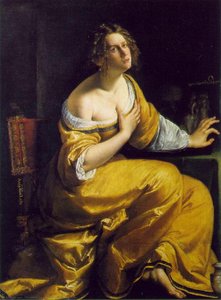
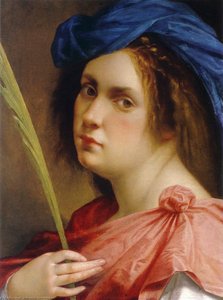
To step into the world of the Italian Baroque is to enter a realm where light does not merely illuminate, but actively contends with the darkness. At the heart of this dramatic struggle stands Artemisia Gentileschi, a painter whose brush possessed the rare ability to translate human resilience into pigment. Unlike many of her contemporaries who sought only to decorate, Artemisia utilized the technique of chiaroscary—the profound contrast between light and shadow—to carve out a space for female agency within the canon of art history. Her work is not merely a display of technical prowess; it is a visceral exploration of courage and vulnerability.
In masterpieces such as Susanna and the Elders, we witness a departure from the passive, idealized female figures common in the 17th century. Through her mastery of dramatic realism, Artemisia imbues her subjects with a palpable psychological depth. The shadows are not empty voids; they are heavy with tension, pressing against the light to emphasize the physical and emotional weight of her narratives. This use of shadow serves as a metaphor for the societal constraints of her era, making her triumph through art all the more profound. Her ability to manipulate texture and tone allows the viewer to feel the very pulse of the drama unfolding upon the canvas.
Ultimately, Artemisia’s legacy is one of defiance. By reclaiming the narrative of the female experience through the lens of Baroque intensity, she forced the art world to acknowledge a perspective that had long been relegated to the periphery. Her works remain essential for any collector who seeks art that speaks with authority and unyielding truth.
Impressionist Intimacy: Berthe Morisot and the Poetics of Light
As we transition from the heavy, dramatic shadows of the Baroque to the luminous, ephemeral atmosphere of the late 19th century, we encounter the delicate brilliance of Berthe Morisot. If Artemisia’s world is defined by the struggle of light against dark, Morisot’s world is one where light is the very substance of existence. As a central figure in the Impressionist movement, Morisot mastered the art of capturing the fleeting moment—the way sunlight filters through a garden or the soft glow of a domestic afternoon.
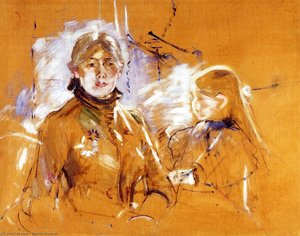
< p>Her technique is characterized by a breathtakingly fluid brushstroke, often utilizing pastel hues and watercolor-like lightness even when working in oil. In works such as Lady with a Parasol Sitting in a Park, one can almost feel the gentle breeze and the warmth of the sun. There is no rigid outline to contain her subjects; instead, they emerge from a sea of light and color, blending seamlessly with their environment. This approach creates an atmosphere of profound serenity and grace, inviting the viewer into a private, quiet moment of leisure.Morisot’s genius lay in her ability to find the extraordinary within the ordinary. Whether she was painting Children at the Basin or capturing the tender bond in The Artist's Sister Edma with Her Daughter Jeanne, her focus remained on the intimacy of domestic life. She transformed the mundane rituals of motherhood and family into poetic meditations on light and movement, proving that the most profound beauty often resides in the softest whispers of daily existence.
A Shared Legacy: Breaking the Canon through Narrative and Domesticity
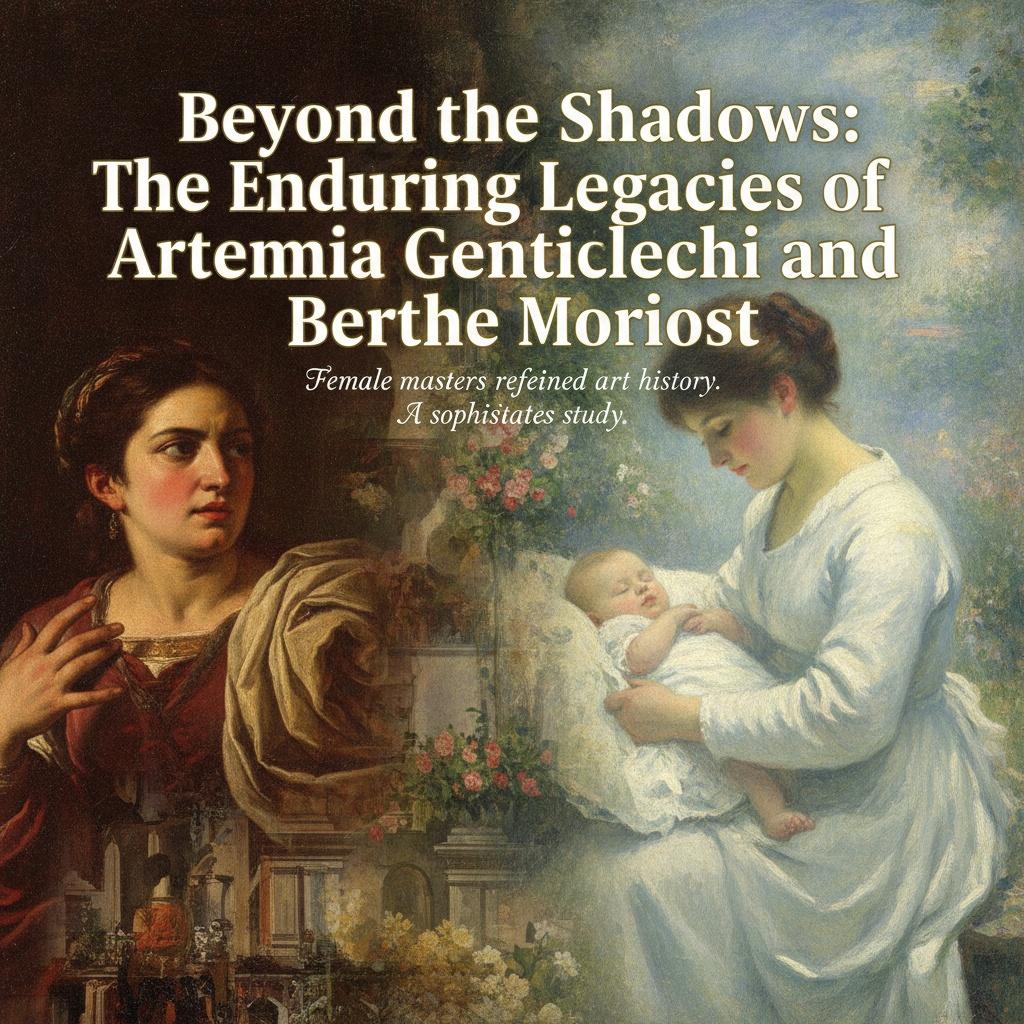
Though separated by two centuries and vastly different aesthetic philosophies, Artemisia Gentileschi and Berthe Morisot are united by a singular, revolutionary purpose: the reclamation of the female gaze. Both artists navigated patriarchal structures to establish a visual language that prioritized the internal reality of women. While Artemisia utilized the epic and the dramatic to assert strength, Morisot used the intimate and the atmospheric to assert presence.
This shared legacy is found in their refusal to adhere to the male-centric archetypes of their respective eras. For Artemisia, this meant moving away from the "damsel in distress" trope toward figures of immense psychological complexity and physical fortitude. For Morisot, it meant elevating the domestic sphere—often dismissed as "feminine" or "minor"—to the status of high art, imbuing the home and the garden with a monumental significance through her light-drenched compositions.
Their work together creates a dialogue across time, suggesting that the act of seeing is itself an act of power. By documenting their worlds—be they the turbulent streets of Rome or the sunlit parks of Paris—they expanded the boundaries of what art could represent, ensuring that the female experience would forever be etched into the fabric of art history.
Technique and Texture: The Artistic Mastery of the Female Gaze
The enduring impact of these masters is deeply rooted in their technical innovations. To appreciate their work is to appreciate the physical chemistry of paint on canvas. In the Baroque tradition, the mastery of impasto and tonal range allowed Artemisia to create a sense of three-dimensional weight. The way her pigments catch the light creates a tactile experience, where the viewer can almost sense the tension in a muscle or the softness of fabric through the visible, deliberate application of oil.
Conversely, Morisot’s mastery lies in the ethereal. Her ability to use broken brushstrokes and a luminous palette allows for a sense of movement that is almost hypnotic. In her hands, the canvas becomes a surface of light refraction. The texture of her work is less about weight and more about vibration, capturing the "impression" of a moment before it vanishes. This technical dexterity—the ability to command both the heavy shadow and the weightless light—is what distinguishes these women as true masters of their craft.
For the discerning collector, these techniques offer more than mere decoration; they offer an emotional resonance that only authentic, master-level brushwork can provide. The depth of color and the nuance of texture in such works provide a sensory richness that mass-produced prints simply cannot replicate.
The Modern Renaissance: Why These Masters Command Contemporary Collections
In the contemporary era, we are witnessing a profound resurgence of interest in these female masters. As our understanding of art history evolves to be more inclusive and nuanced, the works of Gentileschi and Morisot are being re-evaluated not just as "notable women," but as foundational pillars of Western art. Their ability to communicate universal human truths—resilience, intimacy, joy, and sorrow—makes their work timelessly relevant to modern sensibilities.
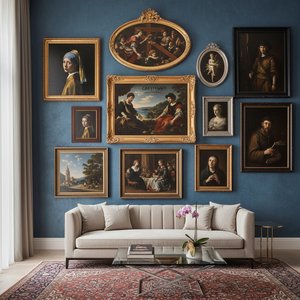
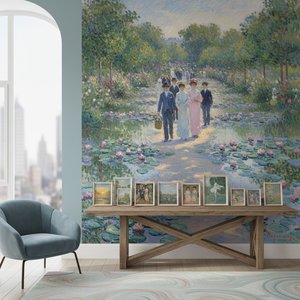
For the sophisticated homeowner or the professional interior designer, integrating these themes into a space offers a way to bridge the gap between historical grandeur and modern elegance. A powerful, dark-toned reproduction of an Artemisia piece can serve as a dramatic anchor in a contemporary study, while the light-filled softness of a Morisot painting can bring a sense of tranquility and breath to a bright, airy living space.
At ArtsDot.com, we celebrate this enduring legacy by providing access to museum-quality reproductions that honor the original spirit of these masters. Our mission is to preserve the soul of human creativity through meticulous, hand-painted oil recreations on fine cotton canvas. Whether you are seeking a bold statement of Baroque strength or an Impressionist moment of peace, our collection allows you to bring the profound narratives of Gentileschi and Morisot into your own curated environment, backed by our commitment to authenticity, craftsmanship, and a 100% satisfaction guarantee.