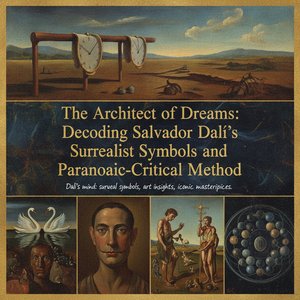
The Architecture of Dreams: Defining the Surrealist Movement
To step into a Surrealist painting is to abandon the safety of the waking world and surrender to the logic of the slumbering mind. Emerging from the ashes of the First World War, Surrealism was far more than a mere aesthetic trend; it was a profound philosophical revolt against the constraints of rationalism and the suffocating structures of bourgeois society. The movement sought to bridge the gap between the conscious and the unconscious, creating a "surreality" where the boundaries between dream and reality dissolve into a singular, potent experience. It was an era defined by the desire to liberate the human spirit from the tyranny of logic, allowing the wild, untamed imagery of our deepest thoughts to take center stage on the canvas.
This movement did not merely seek to depict strange objects; it aimed to reconstruct the very fabric of perception. By juxtaposing unrelated elements—a sewing machine and an umbrella on a dissecting table, for instance—Surrealist artists forced the viewer to confront the uncanny. This architectural approach to dreaming relied on a deliberate destabilization of space and time, creating landscapes that felt both intimately familiar and hauntingly alien. It was an invitation to look beneath the surface of the visible world and find meaning in the unexpected, the distorted, and the marvelous.
Unlocking the Subconscious: Symbolic Language and Freudian Influence
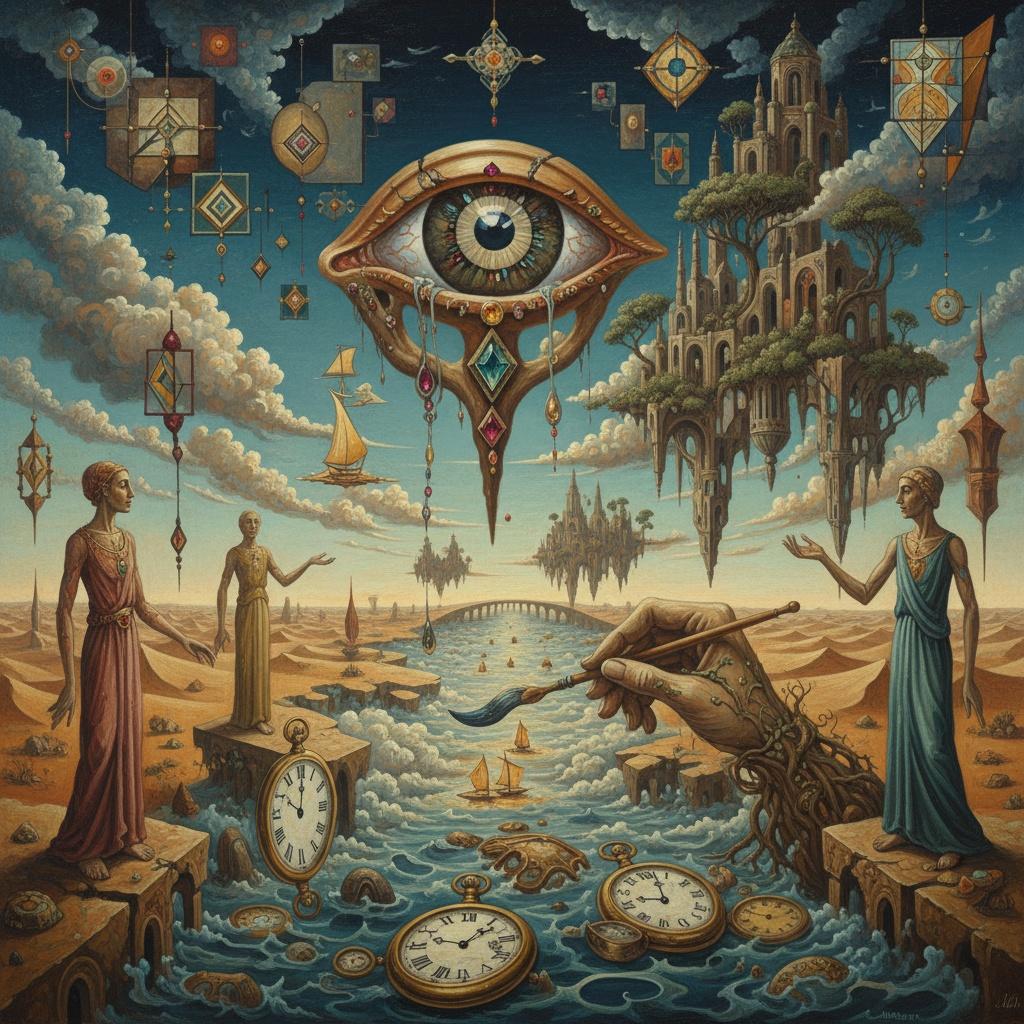
The heartbeat of Surrealism is found within the depths of the subconscious, a realm heavily influenced by the burgeoning field of psychoanalysis. The theories of Sigmund Freud provided the movement with its intellectual scaffolding, particularly the concept that our true desires, fears, and traumas reside in the repressed layers of the mind. Artists became explorers of this internal topography, utilizing symbols as keys to unlock hidden truths. In the Surrealist lexicon, a melting clock is not merely a broken timepiece but a symbol of the fluidity of time and the decay of the material world; an ant might represent mortality or the creeping anxiety of the flesh.
This symbolic language creates a profound dialogue between the artwork and the observer. As we gaze upon these dreamscapes, we are prompted to engage in a process of psychological excavation. The imagery often functions as a Rorschach test, where the viewer's own subconscious projections complete the narrative. This interplay ensures that no two encounters with a Surrealist masterpiece are identical; the painting becomes a mirror, reflecting the hidden architecture of our own psyches through its use of metaphor and cryptic iconography.
Masters of the Uncanny: An Analysis of Dalí and the Surrealist Vision
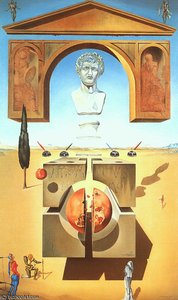
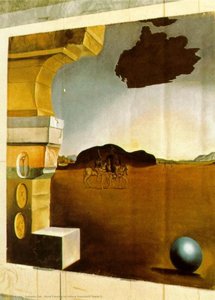
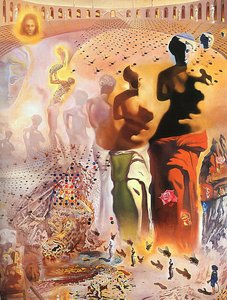
No name resonates more powerfully within this movement than Salvador Dalí, the quintessential virtuoso of the uncanny. Dalí possessed an unparalleled ability to render the most irrational visions with a hyper-realistic precision that made the impossible feel tangibly present. His "paranoiac-critical method"—a technique of inducing a state of controlled hallucination—allowed him to capture the fleeting, distorted images of the dream state with academic rigor. In works such as The Sacrament of the Last Supper, he masterfully blends sacred biblical themes with his signature surrealist motifs, creating a tension between the eternal and the ephemeral.
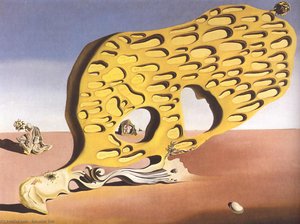
Dalí’s oeuvre is a labyrinth of symbolic complexity, where landscapes appear to stretch into infinity and objects undergo bizarre transformations. Whether exploring the visceral textures in The Weaning of Furniture Nutrition or the stereoscopic depths of The Wash Basin, his work challenges the viewer's grasp on physical reality. He utilized the precision of the Old Masters to lend credibility to his delusions, making the melting watches and distorted figures not just mere fantasies, but profound meditations on the fragility of human existence and the persistence of memory.
Techniques of Illusion: From Hyper-Realism to Automatism
The technical execution of Surrealist painting often oscillated between two extremes: the meticulous control of hyper-realism and the spontaneous liberation of automatism. On one hand, artists like Dalí and Magritte employed a highly disciplined, almost photographic technique. By using fine brushes and smooth glazes, they achieved a level of clarity that made the impossible seem undeniably real. This "hand-painted" precision was essential; for the illusion of a dream to hold power, the objects within it must possess a convincing weight, texture, and light, much like the way a vivid dream can feel startlingly tactile upon waking.
Conversely, the technique of automatism sought to bypass the conscious mind entirely. This method involved allowing the hand to move across the canvas without premeditated design, hoping to capture the raw, uninhibited flow of the unconscious. This approach favored texture and gesture over representational accuracy, paving the way for more abstract expressions within the movement. Both techniques, however, shared a singular goal: to disrupt the viewer's expectation of reality. Whether through the startling clarity of a dream-object or the rhythmic chaos of an automatic line, the artist’s hand served as a conduit for the unseen.
Surrealism in the Modern Interior: Curating the Dreamlike Aesthetic
In the contemporary home, integrating Surrealist art offers a sophisticated way to inject narrative depth and intellectual intrigue into an interior design scheme. A single, well-placed Surrealist reproduction can act as a profound focal point, transforming a standard room into a space of contemplation and wonder. The beauty of this aesthetic lies in its ability to contrast with the clean lines of modern minimalism. The unexpected curves, symbolic shadows, and dreamlike vistas of a Surrealist piece provide a necessary tension against the structured geometry of modern architecture.
When curating such a collection, one must consider the interplay of color and texture. A large-scale oil reproduction, with its visible, tactile brushstrokes and rich impasto, brings a "living" quality to a wall that flat prints simply cannot replicate. For those looking to expand this vision, multi-panel layouts or even custom murals can recreate the immersive experience of a Surrealist landscape across an entire room. By treating art not merely as decoration but as a window into another dimension, collectors can create environments that are as intellectually stimulating as they are aesthetically breathtaking.
At ArtsDot.com, we celebrate this enduring legacy of human creativity. As specialists in the reproduction of fine art, our mission is to make the profound beauty of the masters accessible to the modern connoisseur. From meticulously hand-painted oil recreations that capture every nuance of Dalí’s vision to high-fidelity Giclée prints for the discerning decorator, we provide the tools to bring the extraordinary into your personal space. Whether you seek a custom commission to transform a personal memory or an expert consultation to curate a gallery-worthy collection, ArtsDot stands as your partner in the pursuit of the sublime.