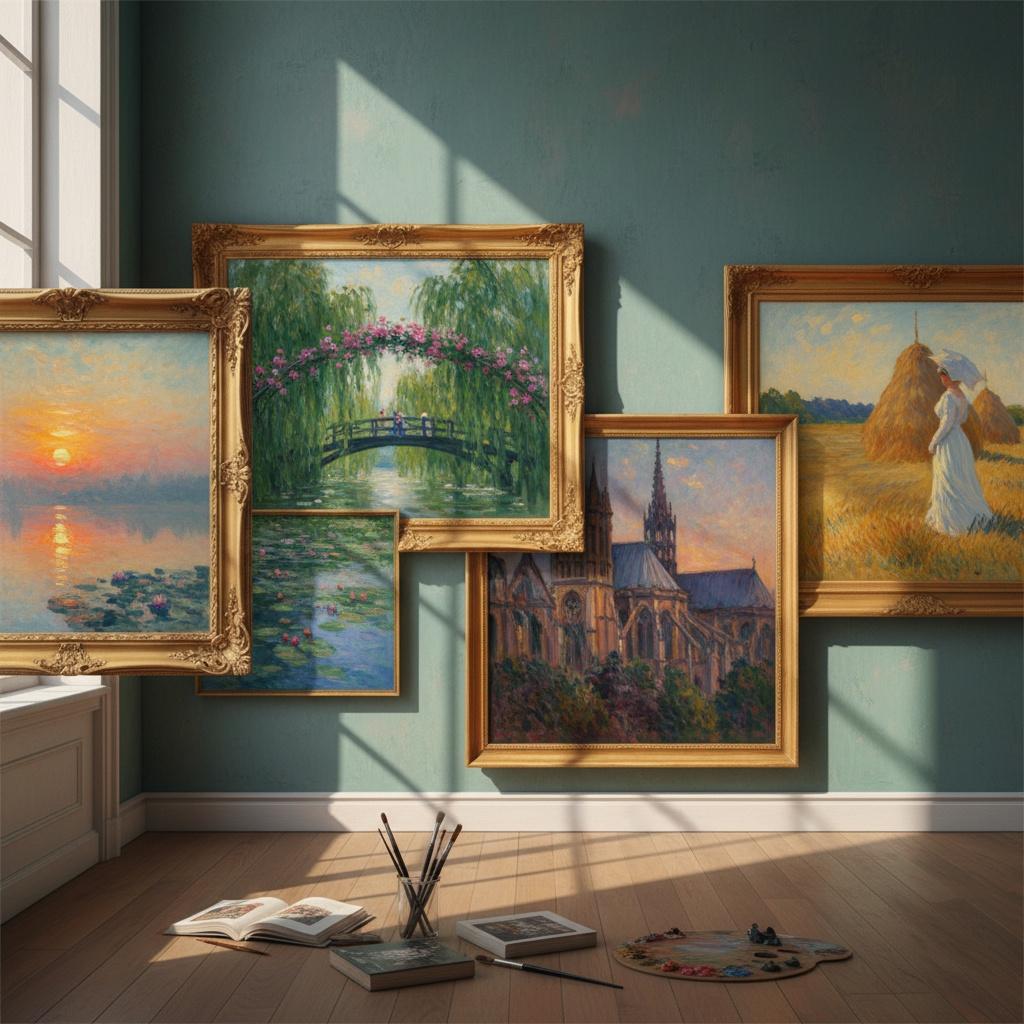
The Impressionist Vision: Monet’s Obsession with Fleeting Light
To understand the essence of Claude Monet is to understand a lifelong pursuit of the ephemeral. He did not merely paint landscapes; he painted the very air that danced between the viewer and the subject. For the true art enthusiast, Monet’s work represents a profound shift in human perception, moving away from the rigid, structured realism of the Academy toward a more visceral, sensory experience. His obsession lay in the way light transforms a scene from moment to moment—how a single haystack or a cathedral facade can appear gold at dawn, silver at noon, and violet at dusk.
This pursuit required a revolutionary approach to color and form. Rather than using black to denote shadow, Monet utilized complementary colors, allowing the shadows to vibrate with reflected light. This technique created a sense of luminosity that seemed to emanate from within the canvas itself. When we gaze upon his works, we are not looking at static objects, but at a captured heartbeat of time, where the boundaries between water, sky, and earth begin to dissolve into a singular, shimmering atmosphere.
En Plein Air: Capturing the Serenity of the French Landscape
The practice of en plein air—painting outdoors—was the crucible in which Monet’s genius was forged. By stepping out of the dim studio and into the unpredictable elements of the French countryside, he embraced the chaos of nature to find its true rhythm. In works such as Lavacourt, we see this mastery on full display. The landscape near Paris is rendered not as a collection of trees and riverbanks, but as a tranquil tapestry of light and movement, where the stillness of the water reflects the quietude of the earth.
This connection to the outdoors allowed Monet to document the subtle shifts in weather and season with unparalleled accuracy. Whether it was the soft mist of an early morning or the harsh, brilliant glare of a summer afternoon, his brush captured the emotional weight of these environmental changes. There is a profound sense of peace found in these landscapes, a reminder that beauty exists in the transient, much like the very light he sought to immortalize. Through his eyes, the landscape becomes a living, breathing entity, constantly reinventing itself through the lens of atmospheric change.
A Symphony of Color: The Vibrancy of Flora and Water Lilies
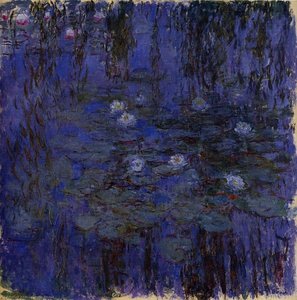
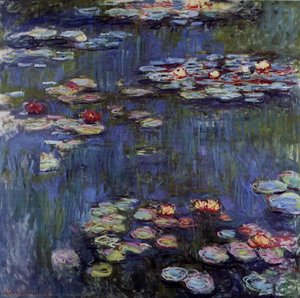
As Monet’s career progressed, his focus shifted inward toward the intimate ecosystems he cultivated at Giverny. Here, the world became a symphony of botanical color. His studies of Chrysanthemums demonstrate an incredible ability to balance intense, saturated hues with delicate textures, turning floral subjects into explosions of light and life. The flowers are not merely specimens; they are vessels for color, vibrating against the canvas with an energy that feels almost tactile.
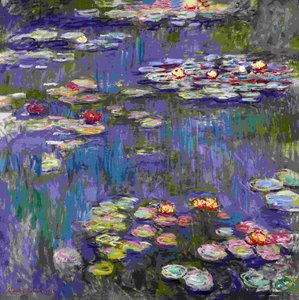
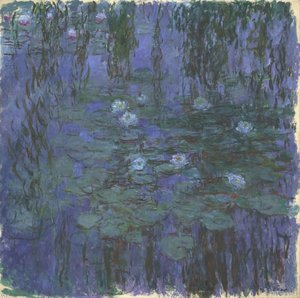
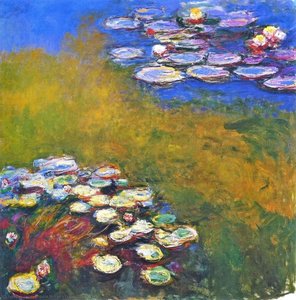
Nowhere is this more evident than in his legendary Water Lilies series. In these late masterpieces, Monet moved toward a near-abstraction, where the horizon line disappears and the viewer is submerged within the pond itself. The reflections of clouds and weeping willows merge with the surface of the water, creating a dreamlike state of being. It is a profound exploration of depth and surface, where the layers of paint mimic the depth of the water, inviting the observer to lose themselves in a meditative, aquatic world of pure color.
The Evolution of Technique: From Realism to Atmospheric Abstraction
The journey from Monet’s early, more structured landscapes to his late, immersive abstractions is one of the most significant evolutions in art history. In his earlier works, such as Infantry Guards Wandering Along the River, there remains a discernible sense of movement and figure within a landscape, providing a narrative anchor for the viewer. One can still trace the paths of the soldiers and the flow of the river with a certain structural clarity.
However, as his obsession with light intensified, the subject matter began to recede, leaving only the impression of light itself. His brushstrokes became broader, more rhythmic, and increasingly layered. This transition toward abstraction was not a loss of detail, but an increase in emotional depth. He moved beyond the what of the landscape to the how—how it feels to stand before the beauty of nature. This evolution paved the way for modern art, proving that the essence of reality can be found not in precise lines, but in the evocative power of color and texture.
Bringing the Masterpiece Home: Preserving the Impressionist Spirit
For the modern collector, owning a piece of this legacy is about more than mere decoration; it is about inviting a specific way of seeing into one's personal sanctuary. The magic of Monet lies in his ability to evoke tranquility, wonder, and a deep connection to the natural world. To preserve this spirit, one must look for reproductions that honor the tactile soul of the original works—pieces where the impasto texture and the visible, energetic brushstrokes are preserved.
Whether through high-quality Giclée prints that capture every subtle hue or bespoke, hand-painted oil recreations that replicate the three-dimensional depth of the master’s touch, bringing Impressionism into a contemporary space allows for a continuous dialogue with history. By selecting works that emphasize the luminosity and movement characteristic of Monet, you ensure that your home becomes a gallery of light, reflecting the timeless elegance of an era that taught us to find beauty in the fleeting moments of life.
At ArtsDot.com, we specialize in bridging the gap between museum-grade history and modern living. From meticulously handcrafted oil reproductions to exquisite fine art prints, our mission is to provide collectors with authentic, high-quality tributes to the masters, ensuring that the light of Monet continues to shine in homes across the globe.