The Spirit of the Thoroughbred: An Introduction to Munnings’ Equestrian Vision
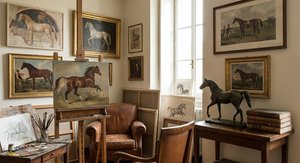
To gaze upon a canvas by Sir Alfred James Munnings is to witness more than mere paint meeting fabric; it is to encounter the very heartbeat of the equine spirit. For the true connoisseur, Munnings represents the pinnacle of twentieth-century equestrian excellence, a master who did not merely observe the horse but understood its rhythmic soul. His work serves as a profound window into an era defined by the grace of the Thoroughbred and the unyielding dignity of the hunt. Through his eyes, we are transported to a world where the bond between rider and steed is etched in every vigorous stroke, capturing a sense of nobility that transcends the passage of time.
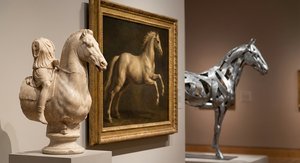
The essence of his vision lies in his ability to balance the raw power of the animal with an almost ethereal lightness of touch. He possessed an unparalleled knack for portraying the musculature in motion, the flared nostril, and the focused eye of a hunter mid-stride. This was not merely about anatomical accuracy, though his precision was formidable; it was about capturing the intangible energy—the élan—that defines the equestrian experience. In his hands, the horse becomes a symbol of freedom and aristocratic tradition, making his oeuvre an essential study for anyone captivated by the intersection of animal grace and human heritage.
Impressionistic Motion: The Mastery of Loose Brushwork and Light
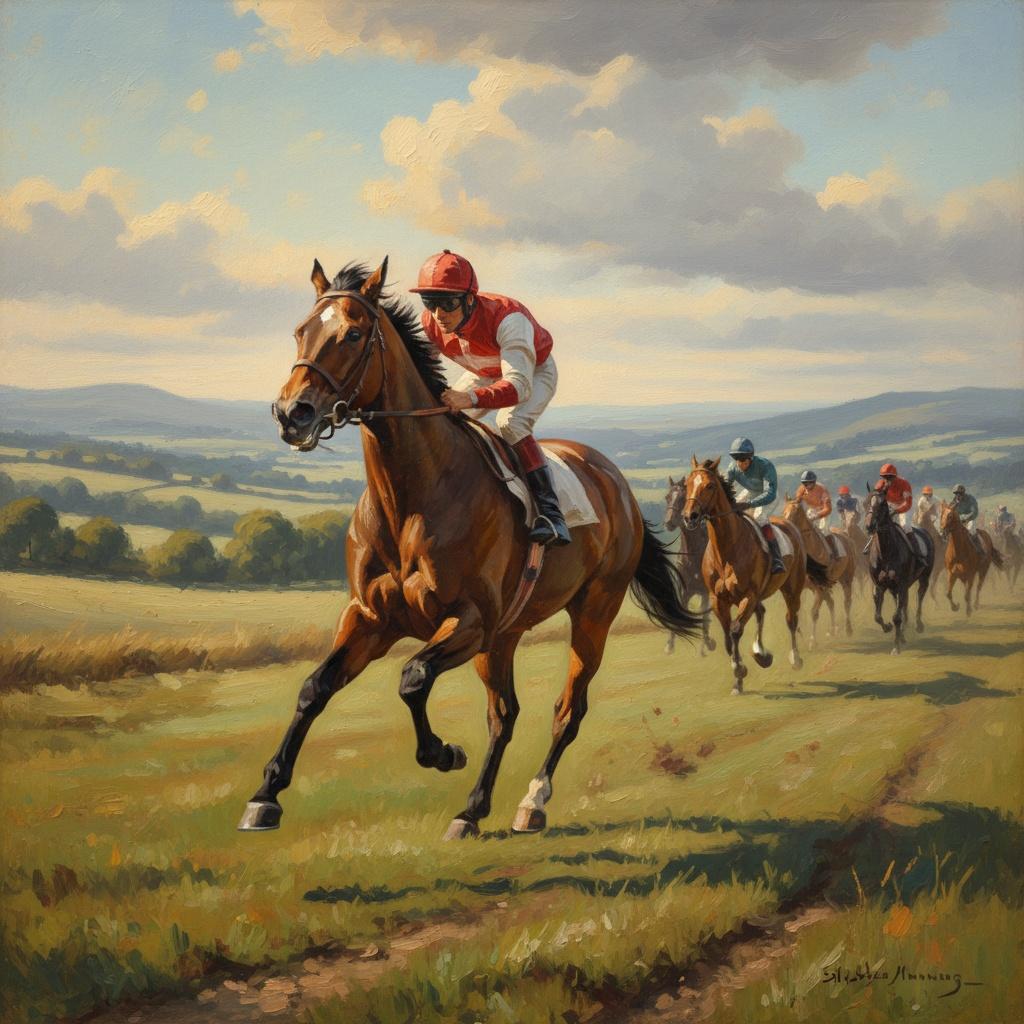
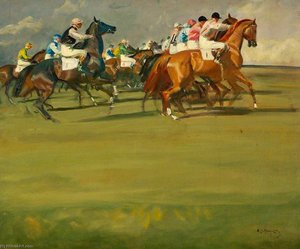
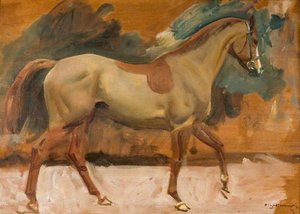
The true magic of Munnings’ technique resides in his sophisticated use of Impressionistic principles to convey kinetic energy. While some artists might struggle with the static nature of oil paint, Munnings utilized loose, confident brushstrokes to simulate the blurring effect of speed. When observing works such as Lady Munnings on a Grey Hunter, one perceives a luminous quality where light seems to dance across the horse's coat. He employed a palette that celebrated the interplay of sunlight and shadow, using vibrant colors and broken strokes to suggest the flickering movement of wind through mane and tail.
This mastery of light serves a dual purpose: it provides structural form while simultaneously dissolving rigid boundaries, allowing the subject to breathe within its environment. His ability to manipulate impasto—the thick, textured application of paint—adds a tactile dimension to the works, where the physical ridges of the pigment catch the light just as the sweat might glisten on a galloping horse. This technique ensures that the viewer does not merely see a finished image but feels the atmospheric pressure and the fleeting moment of a gallop captured in amber. It is this rhythmic application of paint that breathes life into his compositions, turning a still canvas into a cinematic experience of motion.
Rural Elegance: Exploring the Romanticism of the English Countryside
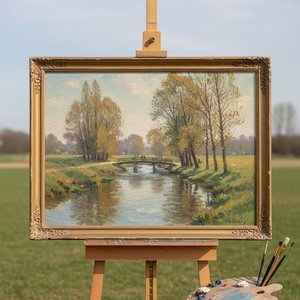
Beyond the magnificent subjects of horses and riders, Munnings’ work acts as a romanticized chronicle of the English countryside. His paintings are steeped in the atmosphere of late 19th and early 20th-century rural life, evoking a sense of nostalgia for a landscape shaped by tradition and seasonal ritual. Through his depictions, we encounter the quiet dignity of the hunt, the soft textures of the meadow, and the atmospheric haze of an English morning. There is a profound sense of place in his art; one can almost smell the damp earth and hear the distant call of the hounds.
This romanticism is not achieved through sentimentality, but through an authentic engagement with the landscape's character. In studies such as those featuring huntsmen and their mounts, he captures the rugged beauty of the terrain alongside the refined elegance of the sporting life. He portrays a world where the boundaries between man, animal, and nature are beautifully blurred. For the collector, these works offer more than aesthetic pleasure; they provide an emotional sanctuary, inviting us to reconnect with a slower, more deliberate era of pastoral splendor and aristocratic grace.
A Legacy in Detail: Analyzing Key Works from the Munnings Collection
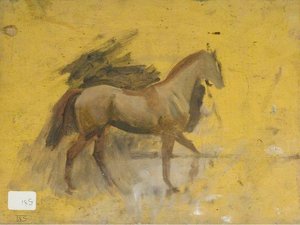
To truly appreciate the breadth of his genius, one must delve into the specific nuances of his most celebrated compositions. Consider the profound intimacy found in his studies, such as Study of Lady Munnings for 'Our Mutual Friend the Horse'. Here, the artist moves away from the grand scale of the hunt to focus on a more contemplative, almost sculptural exploration of form and attire. The way he renders Victorian textures—the heavy fabrics of riding habit contrasted against the sleekness of the horse—demonstrates an incredible range of tonal control.
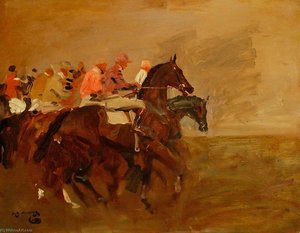
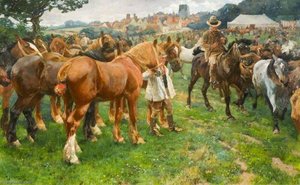
Furthermore, his larger-scale works, like Studies Of A Huntsman And His Horse, showcase his ability to command a composition with dynamic energy. In these pieces, the interplay of vibrant color and vigorous movement creates a sense of drama that is both overwhelming and exquisitely controlled. Each work in his collection serves as a building block in a larger narrative of equestrian life, where every study and every masterpiece contributes to a cohesive celebration of movement, light, and the enduring legacy of the English sporting tradition.
Preserving the Gallop: Bringing Equestrian Masterpieces into the Modern Home
In an age dominated by the ephemeral nature of digital imagery, there remains an insatiable desire for the permanence and tactile depth offered by fine art. Integrating a piece inspired by Munnings into a contemporary interior is an act of preserving history. Whether through a large-scale oil reproduction that serves as a focal point in a grand hall or a multi-panel set that wraps around a modern architectural space, these works bring a sense of storied elegance to any environment. The visible brushstrokes and rich tonal ranges of hand-painted oils provide a soulfulness that mass-produced prints simply cannot replicate.
For the discerning enthusiast, the journey of acquiring such art is as much about craftsmanship as it is about subject matter. At ArtsDot.com, we honor this legacy by providing access to master artists who specialize in these very styles. Our mission is to bridge the gap between the Old Masters and the modern collector, offering bespoke, hand-painted reproductions on 100% cotton canvas that capture the true essence of Munnings' light and motion. Through meticulous attention to detail—from the initial digital mockup to the final application of protective varnish—we ensure that the spirit of the gallop is preserved for generations to come, allowing the timeless beauty of equestrian art to reside within your own walls.