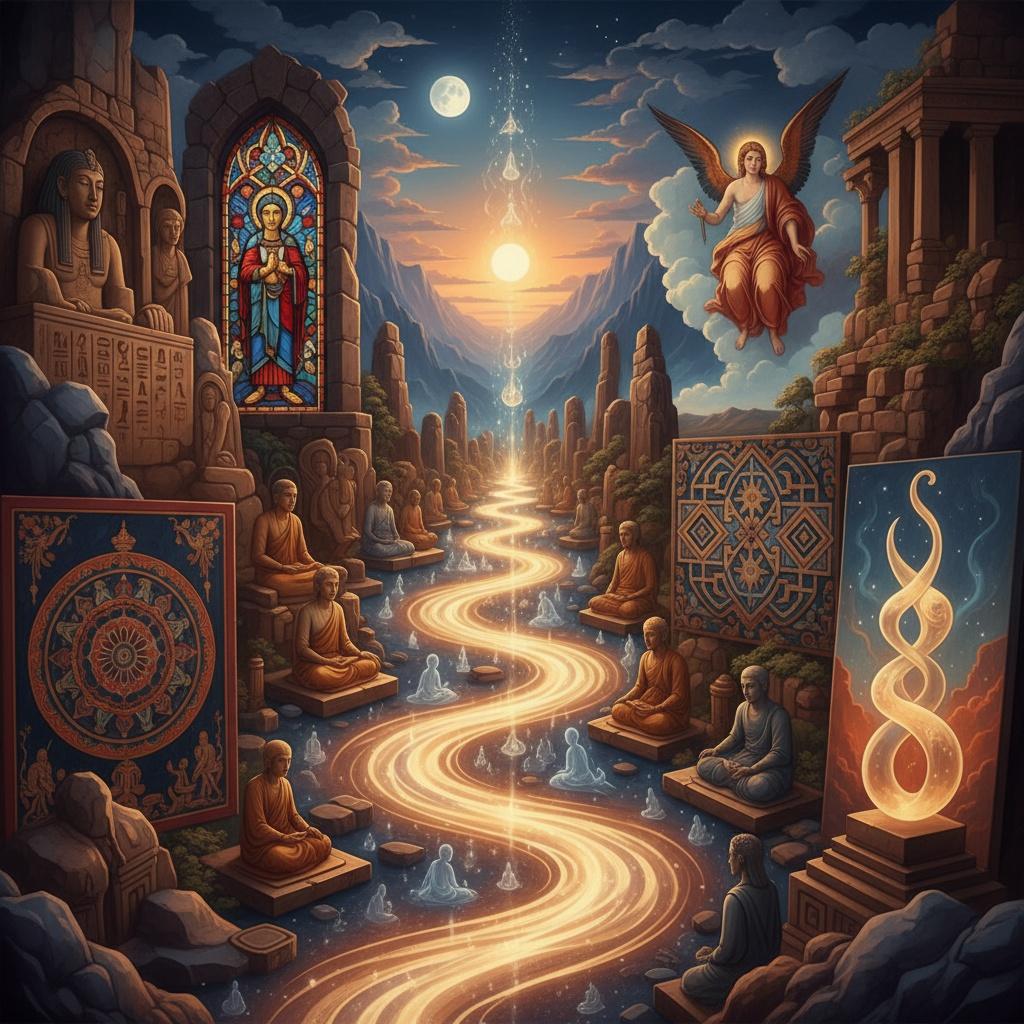
The Sacred Canvas: Defining the Essence of Spiritual Artistry
To gaze upon a piece of spiritual art is to engage in a silent dialogue with the infinite. Beyond the mere application of pigment to canvas or the carving of stone, spiritual artistry serves as a bridge between the terrestrial and the transcendent. It is an endeavor that seeks to capture the intangible—the flicker of a divine presence, the weight of a soul's devotion, or the profound mystery of the unseen. For the true connoisseur, these works are not merely decorative; they are windows into the collective consciousness of humanity, reflecting our eternal quest for meaning and connection to something greater than ourselves.
The essence of this genre lies in its ability to evoke sublimity. Whether through the meticulous detail of a religious icon or the sweeping drama of a cathedral fresco, spiritual art utilizes a specialized vocabulary of form and color to communicate truths that words often fail to grasp. This artistry demands a unique mastery of medium, where every brushstroke is an act of meditation and every shadow a vessel for mystery. It is within this sacred space that the artist ceases to be a mere craftsman and becomes a visionary, translating the whispers of the divine into a visual language accessible to all generations.
Echoes of the Divine: Symbolism and Narrative in Renaissance Masterpieces
The Renaissance era marked a profound evolution in how the divine was depicted, moving from the stylized, symbolic rigidity of the Middle Ages toward a more humanistic, yet deeply spiritual, naturalism. Artists of this period did not merely illustrate scripture; they breathed life into sacred narratives, grounding them in a palpable reality that resonated with the viewer's own lived experience. In works such as Duccio di Buoninsegna’s Maestà, we witness the dawn of a new era where vibrant colors and intricate symbolism began to weave complex theological stories. The central panels of such masterpieces often serve as much more than historical records; they are carefully constructed allegories where every gesture and liturgical object carries profound weight.
Consider the poignant depiction of Pontius Pilate washing his hands within the back panels of early Renaissance altarpieces. Here, the act is not merely a political moment but a symbolic representation of moral ambiguity and the human struggle with conscience. The use of light and the careful arrangement of figures create a sense of sacred geometry, guiding the eye through a narrative of guilt, redemption, and divine judgment. This era taught us that by perfecting the depiction of the physical world—the texture of fabric, the anatomy of a saint, the depth of a landscape—we could more effectively illuminate the spiritual truths hidden within it.
Sculpting the Infinite: The Emotional Depth of Baroque Religious Works
If the Renaissance sought to harmonize the human and the divine through balance, the Baroque period sought to overwhelm the senses through drama. This was an era of chiaroscuro and intense movement, where the boundaries between the viewer's space and the sacred scene were intentionally blurred. In the hands of masters like Giuseppe Cino, religious sculpture achieved a breathtaking level of emotional immediacy. His exquisite wooden statues, particularly those featuring Christ and Mary Magdalene, utilize the dramatic interplay of light and shadow to evoke a visceral response, pulling the observer into a state of profound empathy and awe.
The Baroque aesthetic is characterized by its theatricality—a deliberate use of tension and release to mirror the spiritual struggles of the faithful. The tactile quality of carved wood or marble allows for a sense of physical presence that makes the divine feel tangibly near. In these works, we see the musculature of saints strained by devotion and the soft folds of drapery caught in moments of divine intervention. This period reminds us that spirituality is not always a quiet, contemplative state; it can be a tempestuous, overwhelming force that reshapes our very understanding of existence through the sheer power of artistic expression.
Light, Shadow, and Spirit: Exploring Mysticism through Impressionist and Nabis Perspectives
As art history progressed toward modernity, the depiction of the spiritual underwent another metamorphosis. The focus shifted from overt religious iconography to a more subtle, atmospheric mysticism. The Nabis movement, for instance, introduced a deeply symbolic approach to painting, where color and form were used to evoke emotional and spiritual depths rather than literal representations. In works like those by Denis Maurice, we encounter scenes that are steeped in a quiet, poignant spirituality, where the boundaries of reality seem to dissolve into a dreamlike state of symbolic significance.
This era of art explored the spiritual essence of light itself. The Impressionists and their successors understood that light is not merely a physical phenomenon but a medium of perception that can alter the perceived sanctity of a landscape or a moment. By capturing the fleeting, ephemeral qualities of atmosphere, these artists invited viewers to find the divine in the everyday—in the shimmer of water, the glow of a sunset, or the soft haze of a morning mist. It was a democratization of the sacred, suggesting that the transcendent is not found only in cathedulations or icons, but in the very light that illuminates our world.
The Eternal Legacy: How Spiritual Art Shapes Contemporary Cultural Identity
The legacy of spiritual art continues to resonate within our contemporary cultural landscape, serving as a foundational pillar of our shared heritage. While the specific religious contexts of the past may have evolved, the fundamental human impulse to create art that touches upon the eternal remains unchanged. Today, we see this influence in the way we value authenticity, craftsmanship, and the emotional depth of classical aesthetics. The techniques developed by the Old Masters—the layering of oils, the mastery of light, the use of symbolic narrative—continue to inspire new generations of artists and collectors alike.
In an increasingly digital and fragmented world, the enduring power of these spiritual masterpieces offers a sense of continuity and profound reflection. They remind us of our capacity for reverence and our ability to find beauty in the complex mysteries of life. Whether through the preservation of historical techniques or the reimagining of classical themes in modern media, the dialogue between the human spirit and the artistic medium remains one of the most vital and transformative forces in human history. To study spiritual art is to study ourselves, ensuring that the visions of the past continue to illuminate our path toward the future.
At ArtsDot.com, we are dedicated to preserving this profound legacy. Since 2004, our mission has been to make the beauty of fine art accessible to a global audience. We specialize in creating museum-quality, hand-painted oil reproductions that capture the soul, texture, and emotional depth of history's greatest spiritual masterpieces. From the dramatic shadows of the Baroque to the symbolic light of the Renaissance, our master artists bring the transcendent onto your walls, ensuring that the divine visions of the past continue to inspire the homes of today.