The Aesthetics of Chaos: Capturing Motion and Destruction in Naval Art
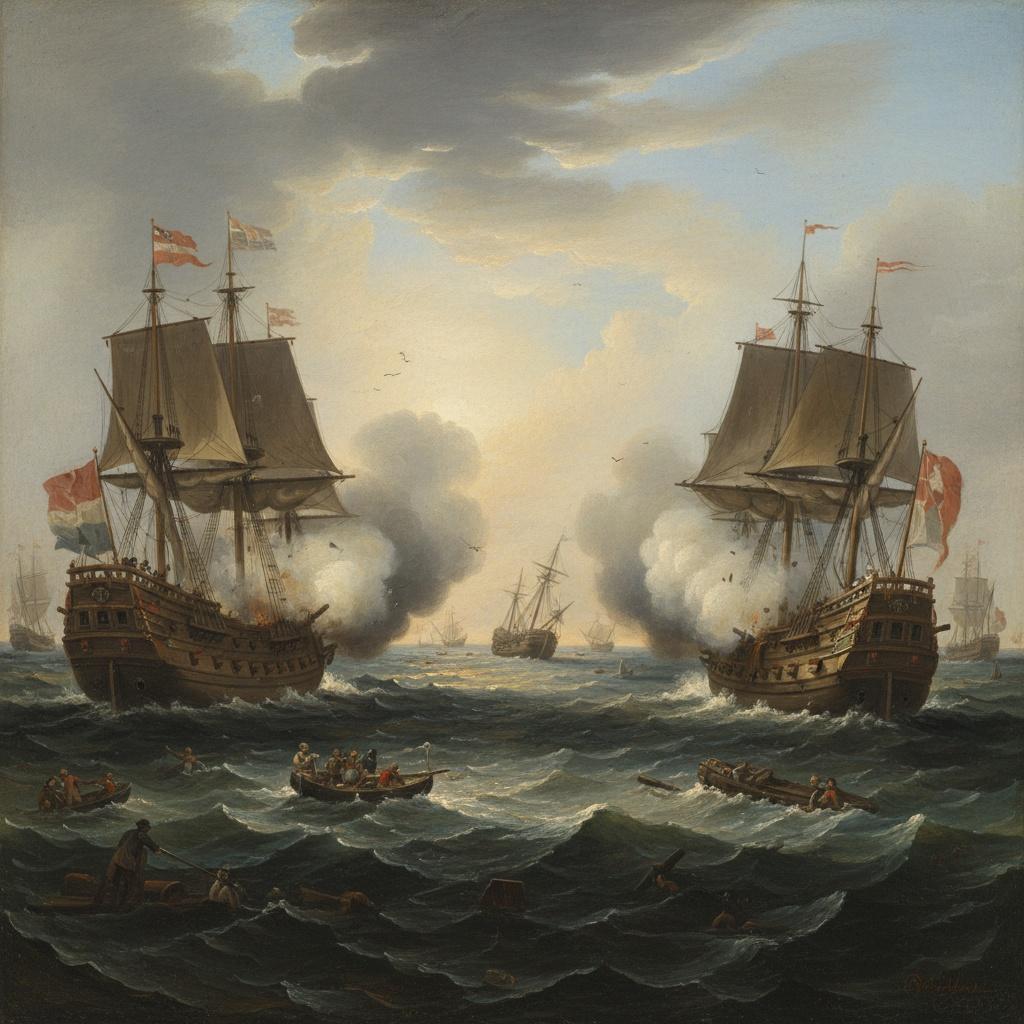
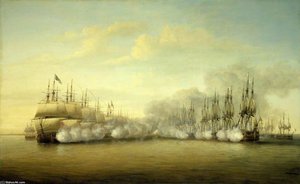
To witness a maritime battle through the eyes of a master painter is to experience a controlled descent into madness. Unlike the static portraits of nobility, naval combat paintings demand a mastery of movement, where the boundary between the sea and the sky dissolves into a singular, violent event. The artist does not merely depict ships; they capture the very essence of kinetic energy. One can almost feel the shuddering impact of cannon fire and the splintering of oak as the composition guides the eye through a labyrinth of wreckage and spray.
The true challenge for the maritime specialist lies in the depiction of fluid dynamics—the way a heavy swell lifts a wounded man-of-war or how the white foam of a breaking wave mirrors the smoke of a broadside. There is a profound tension in these works, a delicate balance between the structural rigidity of the vessels and the unpredictable, swirling chaos of the elements. By manipulating texture and rhythm, these artists transform a scene of historical carnage into a sublime study of motion, ensuring that the viewer remains suspended in that breathless moment before the final sinking.
Romanticism and the Sea: The Dramatic Flare of 18th-Century Battle Scenes
As the 18th century transitioned into the era of Romanticism, the focus of naval art shifted from mere topographical documentation to an exploration of raw, human emotion and the overwhelming power of nature. This period embraced the concept of the Sublime—the aesthetic quality of greatness, whether physical, moral, or intellectual, that is so vast it inspires both awe and terror. In the context of sea battles, this meant moving away from clean lines toward a more visceral, atmospheric approach.
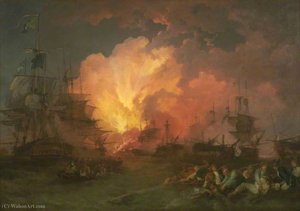
Consider the dramatic intensity found in works such as George Arnald’s The Destruction of L’Orient at the Battle of the Nile. Here, the painting serves as more than a record of the 1798 battle; it is an epic poem in oil. The fiery explosion of the French flagship becomes a central protagonist, casting a hellish glow across the water and symbolizing the catastrophic scale of imperial conflict. This era of art sought to evoke the heartbeat of the sailor caught between the fury of man-made gunpowder and the indomitable spirit of the ocean, creating a legacy of drama that continues to captivate the modern historian.
Techniques of Tension: Light, Smoke, and Shadow in Maritime Masterpieces
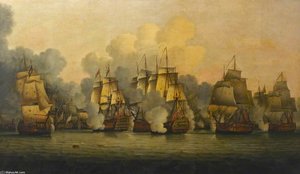
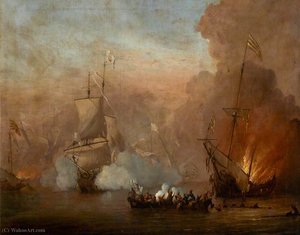
The technical brilliance of maritime masters is often hidden within the layers of smoke and shadow. To paint a naval engagement is to paint with obscurity. The thick, sulfurous clouds produced by black powder cannons serve as a brilliant tool for chiaroscuro, allowing artists to sculpt light through the haze. These plumes of smoke are not merely atmospheric; they act as compositional anchors, directing the viewer’s gaze toward the focal points of conflict—a tattered flag, a breaching hull, or a desperate boarding party.
Shadow plays an equally vital role in establishing depth and dread. By utilizing deep, murky tones in the troughs of waves, painters create a sense of immense weight and hidden danger. The interplay between the brilliant, reflected light on the crest of a wave and the dark, impenetrable depths below creates a rhythmic pulse within the painting. This mastery of value ensures that even in the most crowded compositions, such as John Thomas Serres’ The Battle of Copenhagen, there is a clear hierarchy of importance, allowing the viewer to navigate the complex geometry of masts, rigging, and wreckage without losing the sense of atmospheric unity.
Chronicles of Conflict: Historical Significance of Iconic Naval Paintings
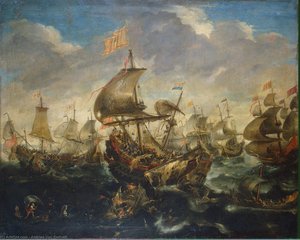
Beyond their aesthetic merits, these paintings serve as vital historical documents, preserving the memory of geopolitical shifts that shaped our world. A single canvas can encapsulate the rise and fall of empires. For instance, the Dutch-Spanish naval clashes depicted by Simon de Vlieger in works like The Battle on the Slaak offer a window into the maritime supremacy struggles of the 17th century. These are not just scenes of combat; they are visual chronicles of trade routes, colonial ambitions, and the technological evolution of naval architecture.
Each brushstroke carries the weight of historical truth. To study these works is to engage in a dialogue with the past, understanding how the outcome of a single afternoon on the high seas could alter the course of centuries. The meticulous detail in the rigging, the specific design of the hulls, and the accurate depiction of signal flags allow historians to reconstruct the tactical realities of bygone eras. In this sense, maritime art is an essential pillar of naval historiography, providing a sensory dimension to the dry facts found in traditional archives.
The Artist's Eye: Preserving the Legacy of Maritime Warfare for Modern Collectors
For the contemporary collector and history enthusiast, the pursuit of maritime art is an act of preservation. The passion required to recreate these works—whether through original oil paintings or high-fidelity reproductions—ensures that the heroism and tragedy of naval history remain accessible to a global audience. Collecting such pieces allows for the curation of a personal museum, where the grandeur of the Age of Sail can be brought into a modern architectural context.
At ArtsDot.com, we honor this legacy by bridging the gap between historical mastery and modern accessibility. Our studio specializes in the meticulous recreation of these maritime treasures, employing artists trained in the rigorous traditions of fine art academies. Through our professional services—ranging from hand-painted oil reproductions that capture the tactile impasto of the masters to sophisticated Giclée prints for larger installations—we ensure that the intensity of the sea and the drama of combat continue to inspire generations. Whether you are seeking a custom commission or a museum-quality reproduction, we provide the expertise to bring the epic scale of naval warfare into your private collection.