




The Essence of Neoclassicism: Reclaiming the Grandeur of Antiquity
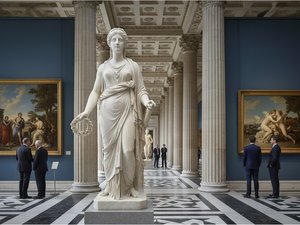
To understand the profound impact of Neoclassicism, one must first envision a world seeking respite from the ornate excesses of the Rococo era. As the eighteenth century drew to a close, a powerful intellectual movement began to stir, fueled by the rediscovered whispers of ancient Greece and Rome. This was not merely a stylistic shift but a profound cultural reclamation—a desire to return to the perceived purity, moral clarity, and structural integrity of classical antiquity. The movement emerged as a visual manifestation of the Enlightenment, where reason, logic, and the pursuit of truth were held as the highest virtues.
This era was characterized by an intense fascination with archaeology and the tangible remnants of the past. The excavation of sites like Pompeii breathed new life into the imaginations of artists and thinkers alike, providing a direct connection to a lost world of heroic proportions and stoic grace. Neoclassicism sought to strip away the frivolous flourishes of previous decades, replacing them with a visual language that emphasized clarity and permanence. It was an era where art served as a vessel for civic virtue, aiming to inspire awe through the depiction of legendary heroism and the quiet dignity of the human form.
Ultimately, this return to antiquity was about more than just aesthetics; it was about establishing a foundation of stability in a changing world. By looking backward to the classical masters, Neoclassical artists found a way to move forward, creating a timeless aesthetic that transcended the fleeting trends of their own time.
Principles of Order: Symmetry, Proportion, and the Pursuit of Perfection
At the very heart of the Neoclassical soul lies an unwavering devotion to order. Unlike the swirling, asymmetrical compositions of the preceding Baroque and Rococo periods, Neoclassical works are anchored by a rigorous adherence to symmetry and mathematical proportion. Every line, every shadow, and every figure is placed with deliberate intention, creating a sense of equilibrium that suggests a universe governed by rational laws. This pursuit of perfection was not merely about beauty, but about reflecting the divine order found in nature and mathematics.
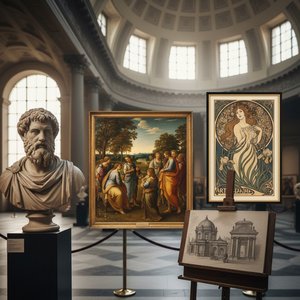
The use of linear perspective became a vital tool for achieving this structural clarity. Artists utilized precise line work to create deep, architectural spaces that felt both vast and controlled. In the realm of architecture, this is perhaps most evident in the works of masters like Karl Friedrich Schinkel, whose drawings of the Berlin Bauakademie showcase a masterful command of verticality and balanced bays. Such precision in design ensures that the eye is never lost in chaos but is instead guided through a harmonious composition where every element supports the whole.
This emphasis on structural integrity extends to the very texture of the art itself. In Neoclassical painting, the brushwork often strives for a smooth, almost porcelain-like finish, minimizing visible strokes to maintain the illusion of an unblemished reality. This technique reinforces the sense of stillness and permanence, as if the scene captured is frozen in a moment of eternal, balanced perfection. Through these disciplined principles, Neoclassicism achieved a level of formal elegance that remains a benchmark for artistic excellence.
Masterworks of the Era: From Sculptural Precision to Architectural Majesty
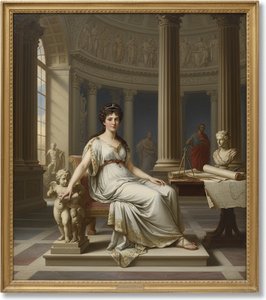
The brilliance of Neoclassicism is most vividly realized in its most iconic masterpieces, where the boundaries between painting, sculpture, and architecture often blur into a singular vision of grandeur. In the realm of painting, Jacques-Louis David stands as a titan, his works such as Telemachus and Eucharis embodying the era's ability to infuse mythological narratives with profound emotional depth and sculptural clarity. His compositions are characterized by a dramatic yet controlled use of light, highlighting the heroic anatomy of his subjects against stark, theatrical backgrounds.
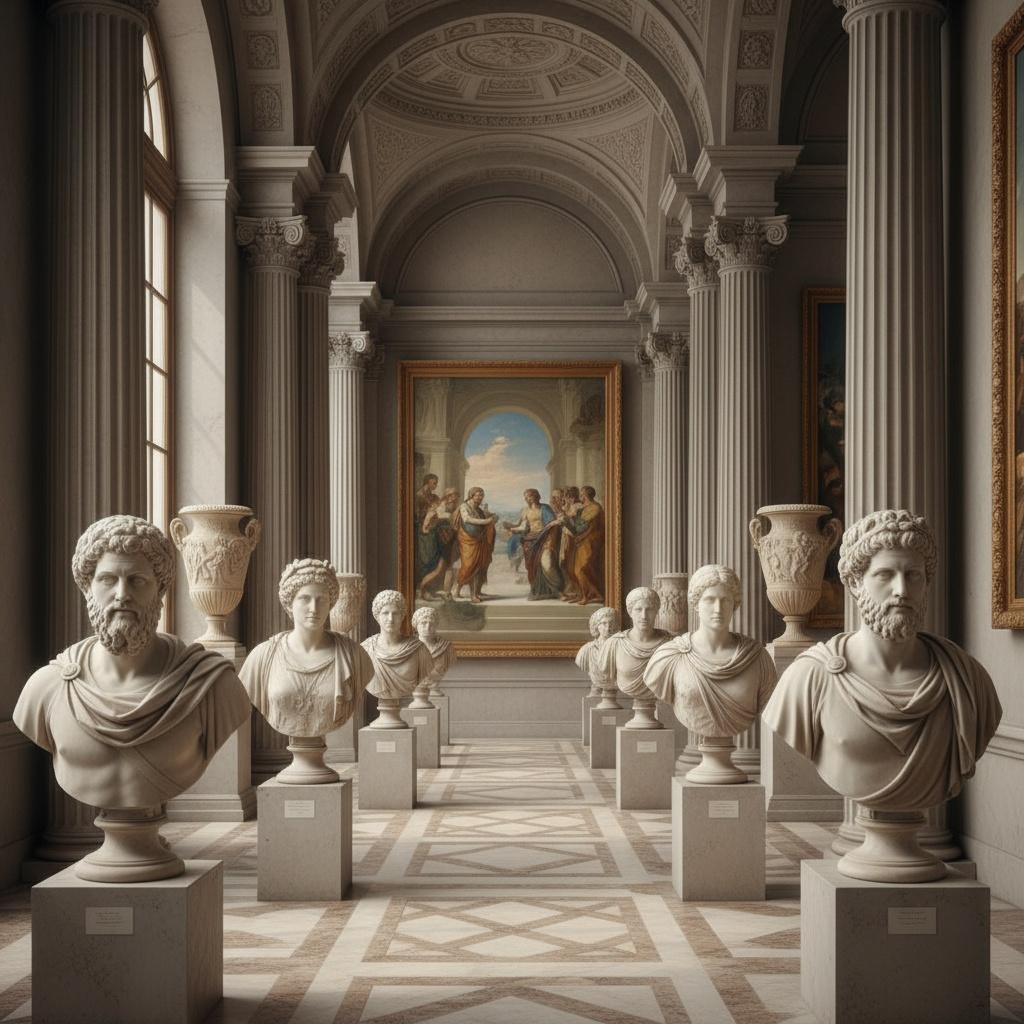
Sculpture during this period reached new heights of anatomical accuracy and emotive restraint. The works of Fedot Ivanovich Shubin, particularly his evocative busts like that of A. M. Golitzin, demonstrate how Neoclassical artists could capture the psychological essence of a subject through the meticulous rendering of marble. These sculptures do not merely represent a person; they embody an idealized version of humanity, stripped of transient emotion to reveal a core of stoic dignity and classical grace.
Furthermore, the movement’s architectural legacy continues to define the landscapes of Europe's most prestigious cities. From the stately villas of Italy, such as the stunning Villa Cagnola in Lombardy—which houses works by Bernardo Bellotto—to the monumental civic buildings of Germany and France, Neoclassical architecture provides a sense of enduring authority. These structures, with their grand columns, pediments, and symmetrical facades, serve as permanent monuments to the era's belief in the lasting power of classical ideals.
Neoclassical Influence in Modern Interiors: Achieving Timeless Sophistication
In the contemporary design landscape, the spirit of Neoclassicism offers a sanctuary of sophistication for those seeking to move away from the transient nature of modern minimalism. Integrating Neoclassical elements into a modern home is not about mere imitation, but about adopting its core philosophy: the celebration of balance and refined elegance. A single, well-placed reproduction of a classical landscape or a structured bust can serve as a powerful focal point, grounding a room with historical weight and artistic depth.
- Symmetrical Layouts: Arranging furniture and decor in balanced pairs to mirror the classical emphasis on equilibrium.
- Neutral Palettes with Rich Accents: Utilizing creams, golds, and deep marbles to evoke the textures of ancient stone and precious metals.
- Architectural Details: Incorporating crown moldings, wainscoting, or even large-scale murals that mimic the grandeur of historical villas.
- Textural Contrast: Pairing smooth, polished surfaces with heavy, tactile fabrics like velvet to create a sense of layered luxury.
By thoughtfully blending these classical principles with modern comforts, one can create an interior that feels both curated and timeless. The goal is to foster an environment where the order of the past meets the fluidity of the present, resulting in a space that exudes quiet confidence and enduring taste.
The Enduring Legacy: How Neoclassicism Shapes Contemporary Aesthetic Values
As we look toward the future of art and design, the legacy of Neoclassicism remains an inescapable force. Its fundamental principles—the appreciation for proportion, the reverence for historical continuity, and the pursuit of structural truth—continue to underpin much of what we define as "high art" today. Even in our digital age, where trends shift with unprecedented speed, the human psyche continues to find comfort in the stability and clarity that Neoclassical aesthetics provide.
This enduring influence can be seen in everything from modern branding and typography to the grand architectural gestures of contemporary civic centers. The movement taught us that beauty is not merely a matter of decoration, but a product of logic and intention. It instilled a respect for the "Old Masters" that allows us to appreciate the technical mastery required to capture the human spirit on canvas or in stone.
At ArtsDot.com, we celebrate this eternal return to excellence. Our mission is to keep the flame of classical artistry alive by offering meticulously handcrafted oil reproductions and museum-quality prints that bring the grandeur of history into the modern home. Whether you are seeking a bespoke commission that reimagines a personal memory through a historical lens or a stunning Giclée print to anchor your living space, we provide the bridge between the timelessness of the past and the vibrancy of the present. Through our dedication to academic precision and artistic passion, we ensure that the elegance of Neoclassicism remains a living, breathing part of your world.