

The Genesis of Grandeur: Art, Power, and the Counter-Reformation
 The Dramatic Flourish: Exploring the Baroque Movement's Enduring Legacy in Art History
The Genesis of Grandeur: Historical Context & The Counter-Reformation Wikipedia: Counter-Reformation The Counter-Reformation (Latin: Contrareformatio), also sometimes called the Catholic Revival, was the period of Catholic resurgence that was initiat...
To gaze upon the masterpieces of the Baroque era is to step into a world ablaze with drama, emotion, and an almost overwhelming sense of grandeur. This was not merely a stylistic shift; it was a cultural earthquake that reshaped the very foundations of art, architecture, and philosophy during the 17th and early 18th centuries. Emerging from the heart of Rome as a profound response to the Protestant Reformation, the Baroque movement served as a visual counter-offensive for the Catholic Church. While the Renaissance had championed a restrained elegance characterized by balance and harmony, the Counter-Reformation demanded an aesthetic that could speak directly to the senses, intended to inspire awe, devotion, and an unyielding sense of authority.
This era of religious fervor and political power birted a style defined by theatricality and movement. As the Church sought to reassert its dominance, it commissioned works that were not simply beautiful, but emotionally charged and persuasively magnificent. This period saw the rise of absolute monarchies, where rulers like Louis XIV embraced the Baroque's opulent language to project divine right and earthly glory. The result was a landscape of art that moved away from the static and toward the dynamic, creating an immersive experience where the boundaries between the viewer and the divine began to blur.
Architectural Choreography: The Dramatic Interplay of Light and Space
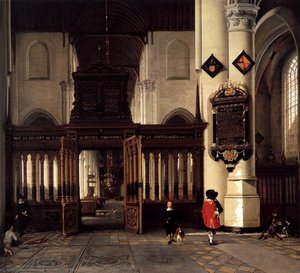
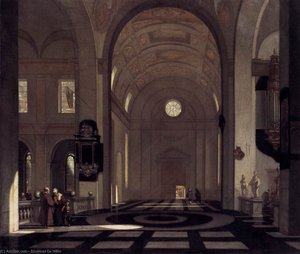 Interior of a Baroque Church
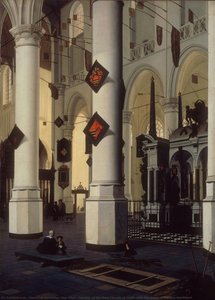
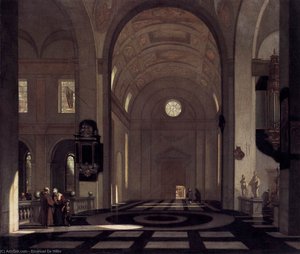
A Window Into Sacred Space: Emanuel de Witte’s Interior of the Oude Kerk Emanuel de Witte stands apart from his contemporaries in Delft and Amsterdam, not merely as a painter but as an explorer of perception itself. While Pieter Saenredam meticulousl...
The true essence of sacred architecture lies in its ability to manipulate perception, turning stone and mortar into a stage for spiritual encounter. Baroque architecture, characterized by its highly decorative and theatrical nature, mastered the art of architectural choreography. Architects utilized soaring ceilings, monumental columns, and complex floor plans to guide the eye upward, channeling a sense of perpetual movement. The use of deep shadows and brilliant highlights—the technique known as chiaroscuro—created a tension that is both unsettling and deeply captivating.
In the hands of masters like Emanuel de Witte, we see this mastery taken to its zenith. In his profound meditations on spaces such as the Oude Kerk, De Witte eschewed mere architectural accuracy in favor of capturing the very soul of the building. He utilized a sophisticated interplay of color and shadow to create an illusion of depth, where light filtering through unseen sources seems to breathe life into the stillness of the nave. This manipulation of atmospheric perspective allows the viewer to feel the husance of reverence and the subtle drama of a sanctuary illuminated by the divine.
A Canvas of Faith: Exploring the Mastery of Baroque Frescoes and Altarpieces
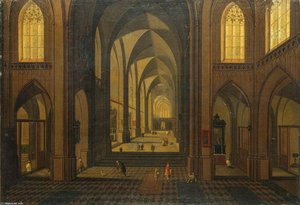
 Minorite Church
A Baroque Jewel in Eger’s Heart The Minorite Church of Eger stands as a testament to Hungary's artistic heritage and a captivating glimpse into the Baroque era. Located in Dobó Square, this magnificent edifice draws visitors with its intricate fresco...
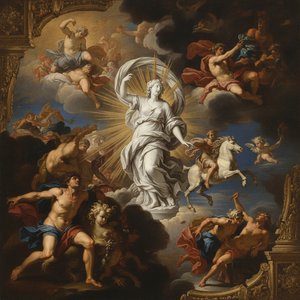
Beyond the structural bones of the church lies its skin: a vibrant, breathing tapestry of frescoes and altarpieces that recount the sacred narratives of history. The interior of the Minorite Church in Eger serves as a breathtaking example, where the collaborative genius of artists like Martin Reindl transformed ceilings into celestial visions. These frescoes do not merely decorate; they animate the space, with depictions of saints and divine visions—such as Mary floating upon clouds—designed to transport the faithful into a realm of spiritual ecstasy.
This tradition of excellence extended to the most prestigious religious orders. The Jesuit Church in Mannheim stands as a testament to this artistic fervor, showcasing breathtaking frescoes by Egid Quirin Asam and his workshop. These works prioritize a sensory experience, using gilded stucco and expansive imagery to bathe the interior in an ethereal light. Such altarpieces and wall paintings were essential tools of the era, translating complex theological concepts into visceral, visual experiences that could be understood by all, regardless of literacy, through the sheer power of color, texture, and emotion.
Sacred Geometry and Symbolism: The Divine Language of Religious Architecture
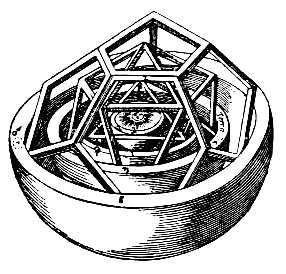 Sacred geometry
Sacred geometry ascribes symbolic and sacred meanings to certain geometric shapes and certain geometric proportions. It is associated with the belief of a divine creator of the universal geometer. The geometry used in the design and construction of r...
Beneath the visible opulence of the Baroque lies a hidden, more profound structure: the language of sacred geometry. Throughout history, the design of religious spaces has been governed by the belief in a divine creator—a universal geometer. The use of specific geometric shapes and proportions was never accidental; it was a deliberate attempt to mirror the order of the cosmos within the earthly realm. From the precise placement of altars to the mathematical symmetry of domes and colonnades, every element served as a symbol of a higher, immutable truth.
This architectural practice sought to make the boundary between matter and spirit transparent. The use of sophisticated semiotics—signs, symbols, and religious motifs—embedded within the very fabric of the building allowed the architecture itself to act as a form of prayer. Whether through the intricate patterns of a mosaic or the symbolic height of a spire, sacred architecture utilizes mathematical precision to evoke a sense of the infinite, grounding the ephemeral human experience in the permanent and the monumental.
Curating the Sublime: Integrating Historical Majesty into Contemporary Luxury Spaces
 Baroque Drama: Bringing Opulence & Emotion into Contemporary Interiors
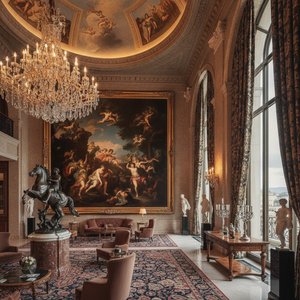
The Allure of Baroque: A Historical Overview The 17th and 18th centuries witnessed a dramatic shift in artistic expression, one that moved away from the restrained elegance of the Renaissance towards an aesthetic of grandeur, emotion, and theatricali...
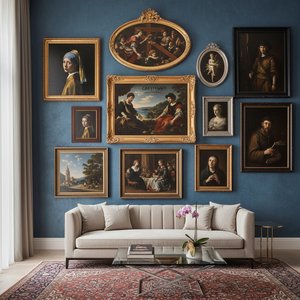
For the modern connoisseur, the challenge lies in how to invite this historical majesty into the contemporary home or hospitality environment without overwhelming the modern aesthetic. The key is not mere imitation, but curated integration. One might introduce a large-format mural inspired by Baroque ceiling frescoes to create a focal point of profound depth, or utilize multi-panel group paintings to transform a wide gallery wall into a cinematic experience of light and shadow.
At ArtsDot.com, we specialize in bridging the gap between the Old Masters and modern luxury. We offer an unparalleled service for those seeking to possess the sublime through hand-painted oil reproductions. Our artists, holding degrees from prestigious Fine Arts academies, do not simply print images; they recreate the very soul of these masterpieces on 100% cotton canvas. Through our meticulous six-step process, we allow you to "remix" art history—whether by requesting a custom color palette to match your interior or by utilizing our Professional Digital Mockup Service to see a composition before the first brushstroke is ever applied.
Our commitment to authenticity and craftsmanship ensures that every piece is a lasting investment. We offer:
- Authentic Texture: Unlike flat prints, our oil reproductions feature visible brushstrokes and a rich, tactile depth that captures the true essence of the Baroque era.
- Bespoke Customization: From "Period Shifts"—transforming modern imagery into a 17th-century masterpiece—to custom sizing for architectural murals, we tailor art to your vision.
- Museum-Grade Preservation: Every painting is finished with a protective coat of Damar varnish and prepared with high-quality materials to ensure longevity for generations.
Whether you are an interior designer sourcing for a luxury hotel or a private collector seeking a centerpiece, ArtsDot.com provides the expertise and the artistry to bring the grandeur of the past into the elegance of your present. We invite you to explore our collection and discover how the timeless majesty of sacred art can redefine your space.