The Alchemy of Carbon: Understanding Graphite's Versatility
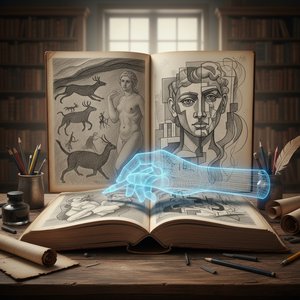
To hold a piece of graphite is to hold a fragment of the earth’s ancient history, a concentrated essence of carbon that possesses the unique ability to bridge the gap between a mere mark and a profound statement. Unlike the heavy, dramatic presence of charcoal or the permanent authority of ink, graphite offers a subtle, silvery spectrum that invites the artist into a delicate dance of light and shadow. This medium is not merely about drawing; it is an exercise in alchemy, where the pressure of a hand against paper transforms raw mineral into a window of perception. The versatility of graphite lies in its range, from the hardest, most ethereal lines that whisper across the grain to the softest, darkest depths that anchor a composition with weight and gravity.
The true magic of this medium is found in its capacity for nuance. An artist working with graphite does not simply apply pigment; they manipulate light itself. Through varying degrees of hardness, one can achieve a translucent glaze or a dense, opaque shadow, allowing for a seamless transition between the seen and the unseen. This fluidity makes graphite an indispensable tool for those seeking to capture the ephemeral qualities of atmosphere and the subtle gradations of skin, stone, or silk. It is a medium of infinite patience, rewarding the disciplined hand with a level of precision that few other materials can replicate.
From Line to Form: Techniques for Creating Dimensional Depth
The transition from a two-dimensional sketch to a three-dimensional illusion requires more than just skill; it requires an intimate understanding of how light interacts with volume. In the realm of graphite, depth is achieved through the masterful application of value scales and the careful orchestration of edges. To create form, one must move beyond the simple outline, employing techniques such as hatching, cross-hatching, and smooth blending to suggest the curvature of a limb or the protrusion of a cheekbone. It is in the subtle gradation of tones—the way a shadow softly dissolves into a highlight—that the illusion of life begins to emerge from the flat surface of the paper.
Consider the importance of the "lost and found" edge, a technique where certain contours are sharply defined while others are allowed to recede into the background shadows. This creates a sense of atmospheric perspective, pulling the viewer’s eye through the composition and establishing a hierarchy of importance. By manipulating the contrast between the brightest highlights and the deepest recesses, an artist can sculpt with light, giving weight to objects and presence to space. This sculptural approach to drawing ensures that every figure and object possesses a tangible, physical reality, inviting the observer to feel the very dimensions they are witnessing.
The Art of Observation: Capturing Texture and Fine Detail
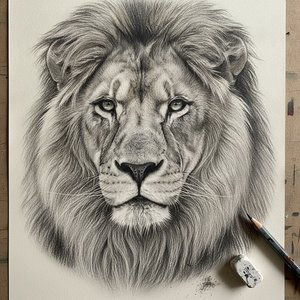
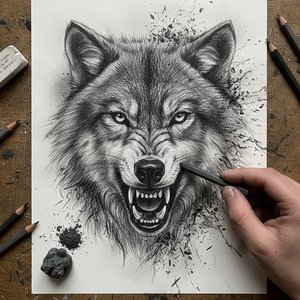
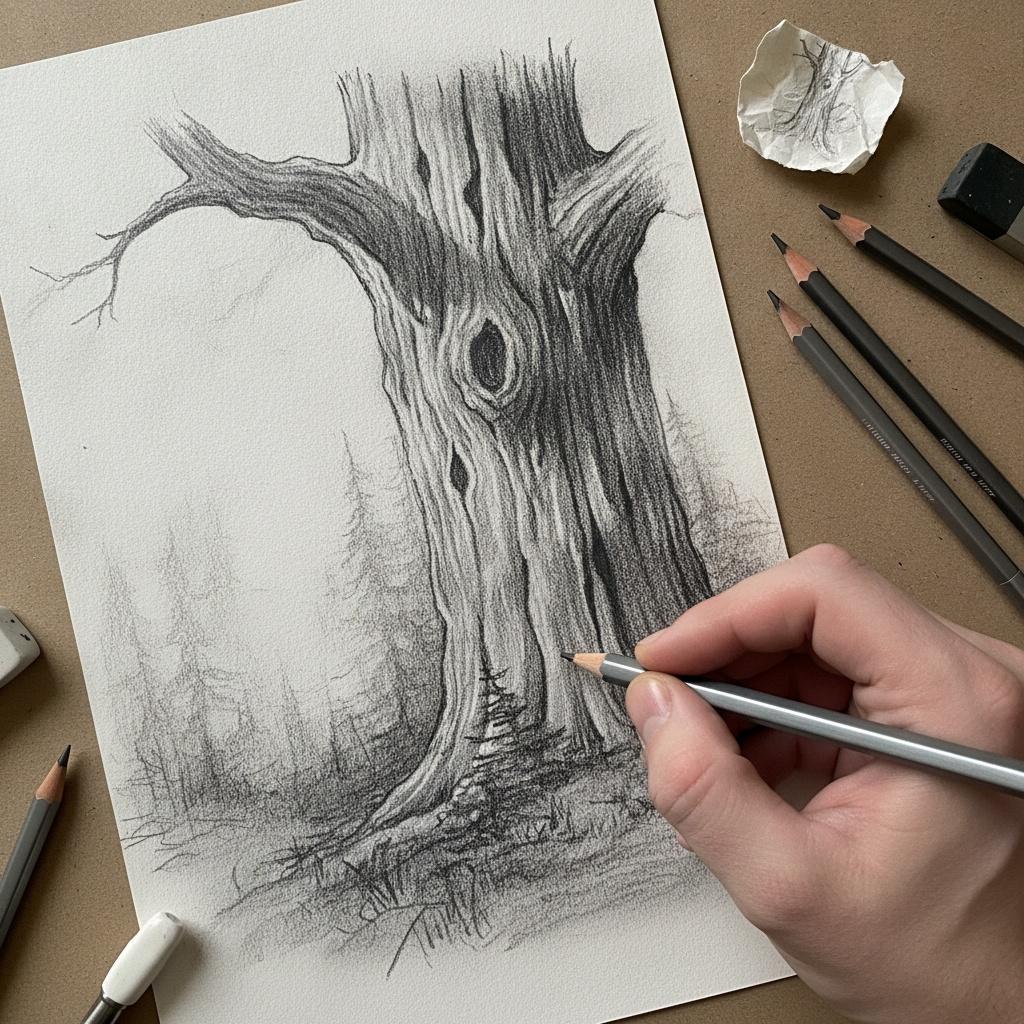
At its most exquisite, graphite art becomes a study in hyper-realism, where the texture of a weathered stone or the delicate fuzz on a peach is rendered with breathtaking clarity. This level of detail demands an intense, almost meditative state of observation. The artist must look past the object itself to see the microscopic patterns of light and shadow that define its surface. Achieving such precision requires a disciplined control over the pencil tip, using the sharpest grades to etch fine lines and softer leads to build up the underlying textures.
Texture in graphite is often a play of contrast. To render the roughness of bark, one might use erratic, broken strokes that mimic the natural fissures of the wood. Conversely, to capture the smoothness of polished marble, the artist must employ meticulous blending, erasing away any trace of individual strokes to create an unbroken, luminous surface. This interplay between the tactile and the visual is what gives a drawing its "soul." When done correctly, the viewer no longer sees graphite on paper; they see the grit, the softness, and the very essence of the subject matter, brought to life through the sheer power of detail.
Historical Echoes: Masterworks that Defined the Pencil Medium
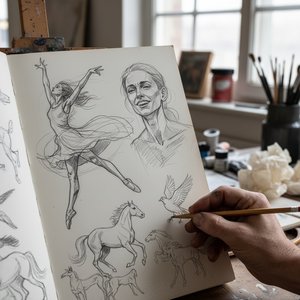
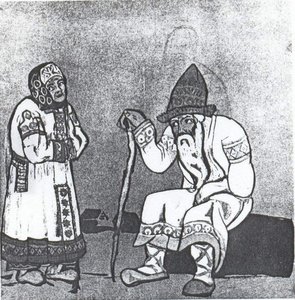
The lineage of graphite drawing is woven into the very fabric of art history, serving as the foundational language for many of the Old Masters. Throughout the centuries, the sketch has been viewed not merely as a preparatory stage, but as a vital expression of an artist's raw, unadultered thought. We see this in the loose, energetic studies of George Romney, where the movement of figures is captured with a kinetic energy that feels immediate and alive. Similarly, the works of Penry Williams demonstrate how a simple pencil sketch can capture the profound dignity of daily life through understated observation and textural charm.
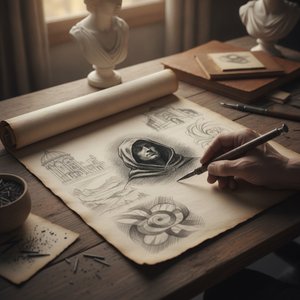
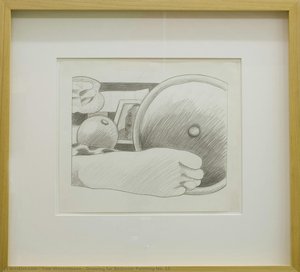
The medium has also allowed for unique explorations of space and repetition, as seen in the contemporary textured line drawings of Pyoun Dae Sik, which push the boundaries of what graphite can achieve in a modern context. From the intricate costume studies found in historical sketchbooks to the monumental drawings that predate great oil paintings, graphite has always been the medium of discovery. It is the laboratory of the artist, where ideas are tested, forms are refined, and the fundamental truths of light and shadow are first uncovered before being translated into more permanent, colorful masterpieces.
The Artist's Toolkit: Selecting Grades, Paper, and Erasers
To master the power of graphite, one must respect the chemistry and physics of their tools. The selection of pencil grades—ranging from the hard 9H to the soft 9B—is the most critical decision in the drawing process. A hard pencil provides the precision necessary for initial layouts and fine details, while a soft pencil offers the rich, velvety blacks required for deep shadows. An artist must learn to navigate this spectrum, understanding how each grade interacts with the tooth of the paper.
The paper itself acts as the foundation of the work; its texture, or "tooth," determines how much graphite can be held and how smoothly it can be blended. A smooth Bristol board is ideal for technical precision, whereas a heavy-weight, textured rag paper allows for more expressive, layered work. Furthermore, the eraser should not be viewed merely as a tool for correcting mistakes, but as a drawing instrument in its own right. Kneaded erasers can lift pigment to create soft highlights, while precision erasers can carve out sharp, brilliant glints of light. A true master treats their entire toolkit as an extension of their vision.
Preserving the Sketch: Archival Care for Graphite Works
Because graphite is a surface-applied medium, it possesses a certain vulnerability to the elements. The very qualities that make it beautiful—its delicate dust and smooth gradients—also make it susceptible to smudging and environmental degradation. To ensure that a drawing survives for generations, archival preservation is paramount. This begins with the use of acid-free, pH-neutral papers and mounting techniques that prevent the paper from yellowing or becoming brittle over time.
When displaying graphite works, protection from direct sunlight is essential to prevent the fading of subtle tones and the structural damage caused by UV rays. Framing should involve the use of UV-protective glass and an acid-free mat to create a necessary air gap between the artwork and the glazing, preventing moisture buildup and smudging. For collectors and enthusiasts alike, treating a graphite drawing with the same reverence as an oil painting ensures that the artist's meticulous labor remains vibrant, clear, and evocative for decades to come.
At ArtsDot.com, we celebrate the profound legacy of all artistic mediums. Whether you are drawn to the textured impasto of a handmade oil reproduction or the delicate precision of a classical sketch, our mission is to connect you with the highest standards of fine art. From custom portrait commissions that transform your personal memories into masterpieces to expert consultations for your home collection, we provide a gateway to authentic, museum-quality artistry.