
The Genesis of Feeling: Societal Turmoil and the Birth of Expressionism
 The Raw Emotion of Expressionism: A Deep Dive into its History, Characteristics & Enduring Influence
The Genesis of Feeling: Expressionism’s Roots in Societal Turmoil Wikipedia: Expressionism Expressionism is a modernist movement, initially in poetry and painting, originating in Northern Europe around the beginning of the 20th century. Its typical t...
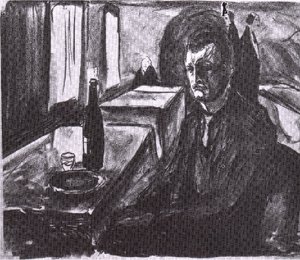
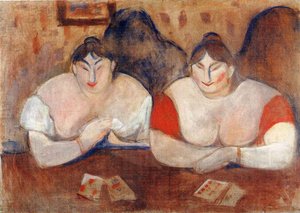
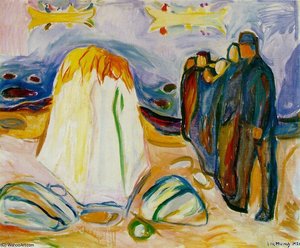
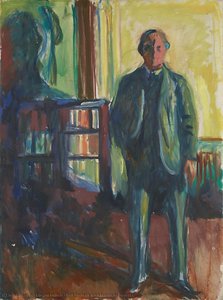
To gaze upon the canvases born from the heart of Expressionism is to encounter a raw, visceral echo of a world on the brink. The dawn of the 20th century was not an era of universal optimism; beneath the polished veneer of industrial progress and technological innovation lay a simmering unease, a profound sense of alienation that would irrevocably alter the course of artistic expression. As rapid urbanization and political instability reshaped Northern Europe, the comfortable certainties of the Victorian era began to crumble, replaced by a fragmented world where traditional values felt increasingly inadequate. This was the crucible in which Expressionism was forged—not merely as a stylistic shift, but as a fundamental revolt against the objective gaze.
The movement emerged from a collective anxiety, a response to the psychological toll of modernity and the burgeoning field of psychoanalysis pioneered by figures such as Sigmund Freud. Artists found themselves increasingly disconnected from an external reality that felt chaotic and often hostile. Consequently, they turned inward, seeking to articulate the hidden depths of the human psyche—the dreams, the repressed traumas, and the spiritual longings that conventional naturalism could not capture. This era witnessed a seismic shift in artistic priorities, where the goal was no longer to document what the eye saw, but to seize the enduring essence of what the soul felt.
Distorting Reality: The Aesthetic Language of Subjective Truth
--- title: Expressionism | Tate url: https://www.tate.org.uk/art/art-terms/e/expressionism hostname: tate.org.uk description: Tate glossary definition for expressionism: Refers to art in which the image of reality is distorted in order to make it exp...
Expressionism is defined by its radical departure from the mimetic traditions of the past. While the Impressionists had sought to capture the fleeting nuances of light and atmosphere, the Expressionists aimed for something far more permanent and profound: the subjective reality. This was achieved through a deliberate distortion of form and a jarring use of color, where the image of reality is manipulated specifically to evoke intense moods or ideas. In these works, colors may appear intensely non-naturalistic, and forms become elongated or fractured, serving as visual metaphors for internal states of being.
This aesthetic language relies heavily on the power of exaggeration and the rejection of academic precision. The brushwork is typically free, energetic, and often thick with texture, allowing the physical movement of the artist to remain visible on the canvas. By abandoning objective accuracy, the artist gains the freedom to use chromatic intensity as a tool for emotional impact. A sky might turn a bruised purple to signal mourning, or a face might be rendered in sickly greens to convey decay and anxiety. It is through this intentional distortion that the movement achieves its most potent effect, forcing the viewer into a direct, often uncomfortable, confrontation with the artist's inner truth.
Masters of the Inner Landscape: From Munch to Kokoschka
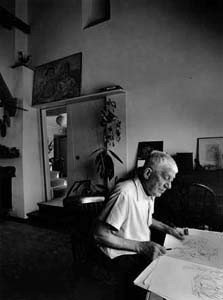 Oskar Kokoschka
A Life Etched in Expression: The World of Oskar Kokoschka Oskar Kokoschka, born on March 1, 1886, in Pöchlarn, Austria, was a figurehead of early Expressionism, an artist whose work pulsed with the anxieties and passions of a rapidly changing world. ...
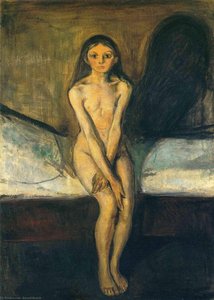
The lineage of Expressionism is woven from the lives and passions of artists whose personal dramas were inextricably linked to their creative output. One cannot discuss this movement without acknowledging the profound influence of Edvard Munch, whose work serves as a bridge between late 19th-century symbolism and true Expressionist intensity. In masterpieces such as The Scream, we see the quintessential expressionist motif: the external world warping in response to an internal psychic crisis. His ability to translate existential dread into sweeping, rhythmic lines set the stage for a generation of artists to explore the darker recesses of human experience.
In the vibrant, often turbulent atmosphere of Vienna, figures like Oskar Kokoschka emerged as pivotal architects of this psychological portraiture. Kokoschka’s work pulsed with the anxieties and passions of a rapidly changing world, characterized by a willingness to challenge artistic norms through unsettling and confrontational imagery. His portraits did not aim for mere likeness; instead, they sought to reveal the vulnerabilities and hidden depths of his sitters, reflecting the era's fascination with the subconscious. Alongside groups such as Die Brücke in Dresden and Der Blaue Reiter in Munich, these masters created a chorus of voices that transformed the canvas into a window onto the tumultuous inner landscape of a generation.
The Resurgence of Intensity: Understanding Neo-Expressionism
Neo-expressionism is a style of late modernist or early-postmodern painting and sculpture that emerged in the late 1970s. Neo-expressionists were sometimes called Transavantgarde, Junge Wilde or Neue Wilden ('The new wild ones'; 'New Fauves' would be...
As the decades progressed, the spirit of Expressionism underwent a powerful revival in the late 1970s through the emergence of Neo-Expressionism. This movement arose as a vigorous reaction against the perceived sterility of Conceptual and Minimal art, which had dominated the previous era. The Neo-Expressionists—often referred to as the Neue Wilden or "New Wild Ones"—returned to the fundamental importance of recognizable objects, the human body, and the raw handling of materials. They embraced a style characterized by intense subjectivity and a much more aggressive, tactile application of paint.
This late-modernist resurgence drew direct inspiration from the titans of the early movement, such as Emil Nolde and Max Beckmann. Artists like Christopher Robert Browning exemplify this era's ability to grapple with themes of spirituality, mythology, and primal emotion through visceral paintings and prints. The Neo-Expressionist canvas is often a site of struggle, where thick impasto and vivid, often abrasive color palettes create a sense of physical presence. It represents a triumphant return to the idea that art should be a medium for unfiltered human experience, proving that the hunger for emotional resonance remains an eternal constant in the evolution of fine art.
Curating Emotion: Integrating Expressionist Masterpieces into Modern Interiors
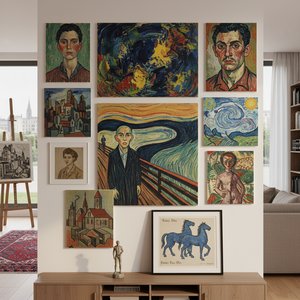 Expressionism's Soul: 10 Masterpieces for Your Home |
Introduction To gaze upon these ten masterpieces is to step into a world ablaze with inner turmoil, raw emotion, and a profound questioning of the human condition. They are not merely paintings; they are visceral cries from a generation grappling wit...
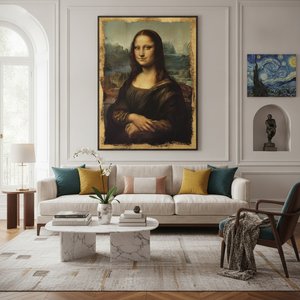
For the discerning collector and interior designer, integrating Expressionist works into a contemporary space offers an unparalleled opportunity to imbue a room with character, depth, and intellectual gravity. These paintings are not merely decorative; they are conversational anchors that demand attention and provoke thought. In a modern architectural setting—characterized by clean lines and neutral palettes—the bold, emotive strokes of an Expressionist piece can provide a necessary visceral counterpoint, breaking the stillness with much-needed energy and soul.
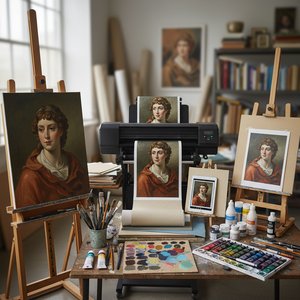
When curating such a collection, one must consider the interplay between the artwork's intensity and the surrounding environment. A large-scale, multi-panel Expressionist installation can transform a wide hallway or a grand staircase into a dramatic gallery experience, where colors flow seamlessly across multiple canvases to create a cohesive, modern aesthetic. Whether through a bespoke oil reproduction that captures the textured impasto of a master or a carefully selected print that highlights the movement's graphic power, the goal is to create a space that reflects the complexity of the human condition. By selecting works that resonate with personal emotion, collectors can curate environments that are not only aesthetically magnificent but also deeply evocative and timeless.
At ArtsDot.com, we specialize in preserving this legacy of human creativity. As a global leader in fine art reproductions, we offer the opportunity to bring these emotive masterpieces into your home through meticulous, hand-painted oil works on 100% cotton canvas. Our master artists, selected from the world's most prestigious academies, possess the technical expertise to recreate the thick textures and vibrant palettes essential to the Expressionist style. From custom portrait commissions that transform personal memories into historical triumphs to large-format murals for luxury hospitality projects, ArtsDot provides a seamless, professional service backed by a 100% satisfaction guarantee. We invite you to explore our vast library of over 465,000 paintings and discover the profound power of art that speaks directly to the soul.