


The Essence of Art Deco: Defining an Era of Opulence and Geometric Precision
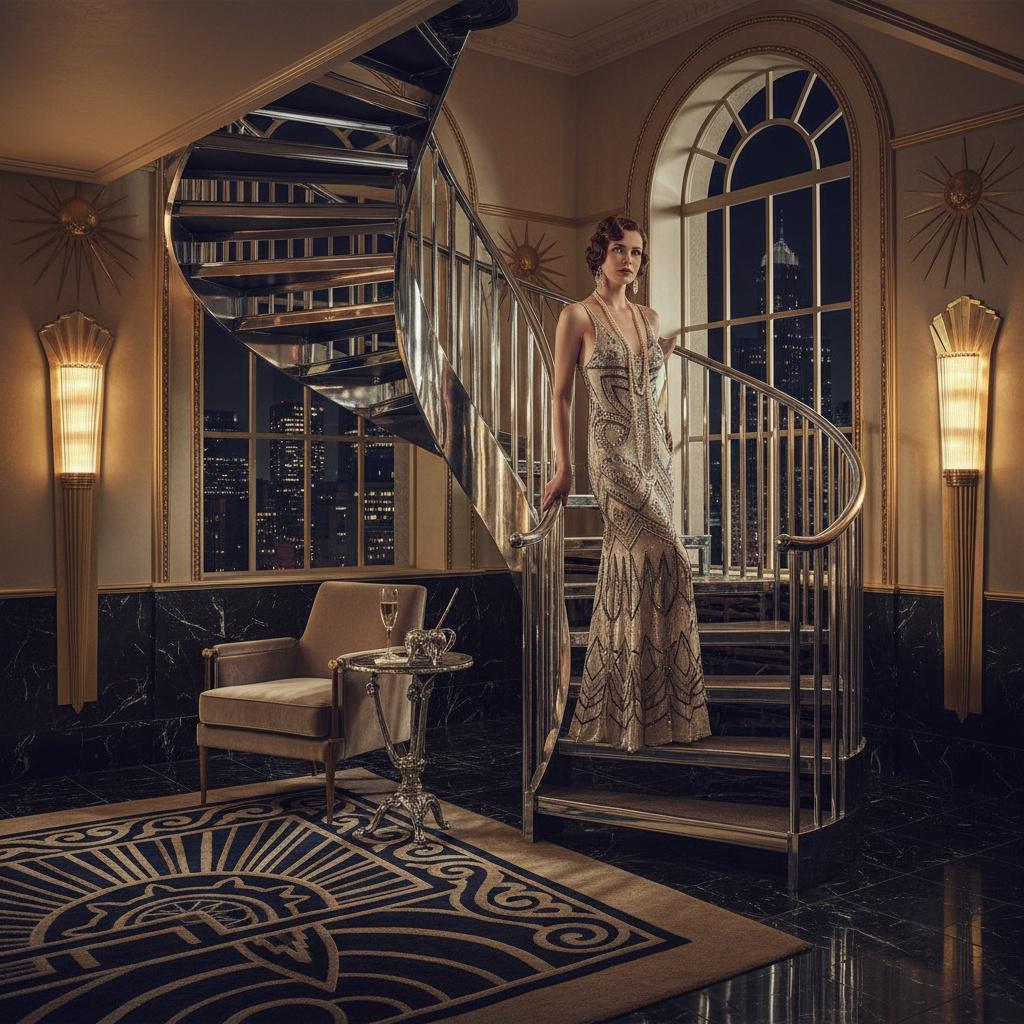
To step into the world of Art Deco is to enter a realm where modernity meets majesty, a period defined by an unyielding pursuit of glamour and a celebration of the machine age. Emerging in the wake of the Great War, this movement transcended mere decoration to become a total lifestyle, an aesthetic language that spoke of progress, speed, and unparalleled luxury. Unlike the flowing, organic whimsy of Art Nouveau, Art Deco embraced the structured beauty of geometry. It found its soul in the sharp lines of skyscrapers, the streamlined curves of locomotives, and the rhythmic repetition of zigzical patterns. This was an era that looked toward the future with confidence, utilizing symmetry and bold silhouettes to create a sense of order amidst the burgeoning chaos of the twentieth century.
The true allure of Art Deco lies in its ability to balance strength with grace. It is a style that does not whisper; it commands attention through deliberate composition and a sense of architectural permanence. Every element, from the smallest motif to the grandest mural, serves to reinforce a narrative of sophistication. When we contemplate this era, we are not merely looking at shapes, but at a profound expression of human aspiration—a desire to wrap the world in a veneer of polished chrome, exotic woods, and shimmering light. It remains a timeless standard for those who seek to infuse their surroundings with an air of curated excellence.
Mastering the Palette: Sophisticated Color Schemes for a Glamorous Interior
Color in Art Deco serves as the emotional heartbeat of the design, providing the necessary depth to support its heavy geometric structures. To capture this aesthetic, one must move beyond the mundane and embrace a palette that suggests both drama and decadence. The foundation often rests upon high-contrast pairings: the stark, commanding elegance of black and white, punctuated by the brilliance of metallic gold or silver. These monochromatic bases allow for a sense of infinite space while providing a stage for more daring accents to perform.
For a truly luxurious atmosphere, consider the introduction of jewel tones—deep emerald greens, rich sapphires, and sultry rubies. These colors, when applied to velvet textures or heavy silks, evoke the nocturnal splendor of a high-society gala. Alternatively, a more muted approach can achieve a sense of "quiet luxury" through the use of champagne, cream, and soft taupe, layered with bronze accents to maintain warmth. The key is the interplay of light; colors must be chosen with an awareness of how they will reflect off polished surfaces, ensuring that the room feels vibrant and multidimensional rather than flat or static.
Iconic Influences: From the Illustrative Grace of Erté to the Sculptural Innovation of Jean Dunand
The visual vocabulary of Art Deco was written by masters who understood the delicate dance between fashion and form. Perhaps no figure embodies the era's sartorial elegance more profoundly than Erté. His illustrations, such as the mesmerizing Alphabet A or the evocative After the Rain, captured a sense of movement and theatricality that defined the modern woman. Through his work, we see the fusion of organic grace with stylized, geometric silhouettes, where every line of a gown tells a story of rhythmic beauty. His ability to depict the human form amidst blossoming spheres and intricate drapery remains a pinnacle of Art Deco illustration.
While Erté mastered the ethereal, artists like Jean Dunand brought a tactile, sculptural dimension to the movement. A titan of design, Dunand’s mastery over lacquer and bronze introduced a sense of permanence and weight to the aesthetic. His innovative use of materials allowed for surfaces that were as much about texture as they were about pattern, creating works like the Grand Paon screen that felt both ancient and avant-garde. Together, these artists represent the dual nature of Art Deco: the dreamlike allure of fashion and the enduring strength of fine craftsmanship. Their legacies remind us that true glamour is found in the meticulous attention to detail and the seamless integration of art into the very fabric of life.
Curating the Space: Integrating Art Deco Masterpieces into Modern Luxury Living
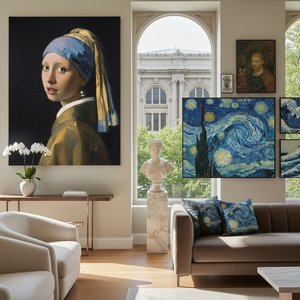
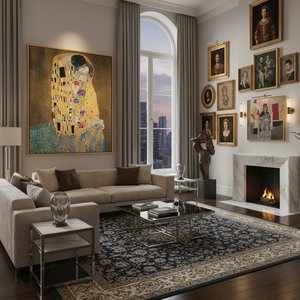
Integrating the grandeur of the 1920s into a contemporary home requires a delicate hand, an approach that avoids the pitfalls of mere imitation in favor of thoughtful curation. The modern collector does not seek to recreate a museum period piece, but rather to use Art Deco elements as anchors of sophistication within a modern context. A single, large-scale reproduction of an Erté masterpiece can serve as a breathtaking focal point in a minimalist living room, its intricate details providing a necessary counterpoint to clean, contemporary lines.
The secret to success lies in the concept of "the accent." One might pair a sleek, mid-century modern sofa with a multi-panel Art Deco painting that spans three or four sections, creating a sense of architectural movement across a wide wall. By mixing eras, you create a layered, lived-in luxury that feels curated over time rather than bought from a catalog. The goal is to allow the bold geometry and rich textures of the Art Deco era to breathe within the openness of modern architecture, fostering a dialogue between the historical weight of the past and the airy freedom of the present.
The Art of Detail: Incorporating Metallic Accents, Symmetry, and Textural Depth
To achieve the final layer of Art Deco perfection, one must attend to the nuances of texture and symmetry. This movement is fundamentally rooted in the concept of balance; an asymmetrical arrangement often feels unsettled in an Art Deco context. Instead, seek out compositions that utilize mirrored elements or centered motifs to create a sense of equilibrium. This structural stability provides the necessary foundation for the more sensory aspects of the style: the tactile richness of materials.
Metallic accents are indispensable. Whether it is the subtle glint of a gold-leaf frame or the bold presence of a bronze sculpture, metals provide the "light" within the design. When these are paired with deep textures—such as the heavy impasto brushstrokes found in high-quality oil reproductions or the smooth, reflective surface of lacquer—the result is a sensory experience that transcends sight. It is this interplay of light, shadow, and touch that creates the true essence of Art Deco glamour, turning a mere room into an immersive sanctuary of timeless elegance.
At ArtsDot.com, we are dedicated to preserving this legacy of human creativity. Our mission is to make the grandeur of the Old Masters and the elegance of the Art Deco era accessible to collectors worldwide. From hand-painted oil reproductions that capture every meticulous brushstroke to custom commissions that transform your personal memories into historical masterpieces, we provide the tools to curate a life of unparalleled beauty. Whether you are seeking a bespoke portrait or an architectural mural, our master artists bring academic excellence to every canvas, ensuring that your passion for fine art is met with uncompromising quality.