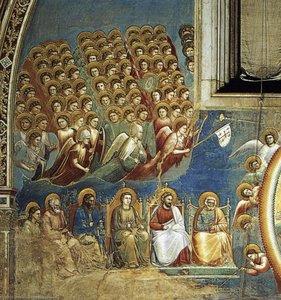
![Scrovegni - Last Judgment (detail) [03] — Giotto Di Bondone](/media/artworks/images-thumb/7d/a9/7da93e3737abc9f37453cee26f9f9796.jpg)
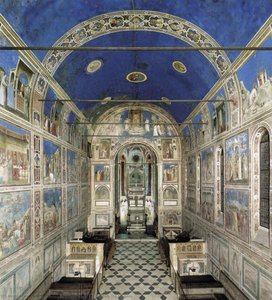
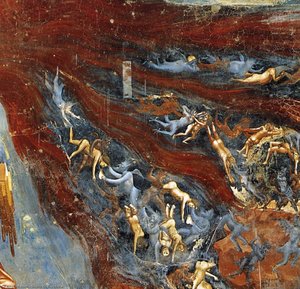
![Scrovegni - Last Judgment (detail) [04] — Giotto Di Bondone](/media/artworks/images-thumb/2c/cc/2cccbf5d66de604df5c3cc5658637344.jpg)
Introduction
To step into the world of Giotto di Bondone is to witness the very moment art learned to breathe. Before his revolutionary hand touched the fresco and the panel, the artistic landscape was a realm of gilded stillness—a Byzantine tradition where figures floated in eternal, golden voids, distant and divine. But Giotto, the legendary shepherd boy from the Florentine hills, brought the heavens down to earth. He replaced the ethereal with the anatomical, the symbolic with the visceral, and the flat with the profound.
In this curated exploration of his top twenty-five masterpieces , we trace the lineage of a revolution. We journey through the transition from the rigid, stylized icons of the Middle Ages to a new era of naturalism, where light and shadow began to sculpt form and depth. From the quiet, rhythmic grace of his early works to the breathtaking emotional crescendo found within the walls of the Scrovegni Chapel, Giotto’s evolution is the story of Western art finding its pulse. He did not merely paint scenes; he granted his subjects weight, volume, and—most importantly—a soul.
These works remain as vital today as they were in the fourteenth century because they mark the birth of modern visual storytelling. Giotto introduced a sense of humanity that had been absent for centuries, allowing us to recognize ourselves in the grief of a slumped shoulder or the tenderness of a shared glance. As we navigate this collection, prepare to encounter the foundational stones of the Renaissance—works that transformed static symbols into the living, breathing protagonists of our shared human history.
Last Judgment (detail 3) (Cappella Scrovegni (Arena Chapel), Padua) - Giotto di Bondone
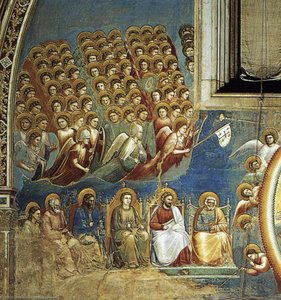 Last Judgment (detail 3) (Cappella Scrovegni (Arena Chapel), Padua) - Giotto di Bondone
To contemplate the Last Judgment (detail 3) from the Scrovegni Chapel is to witness the precise moment art transitioned from the ethereal Byzantine style into the profound naturalism of the Renaissance. For the discerning collector, this work by Giotto di Bondone represents more than a historical milestone; it is an investment in the very foundation of Western visual language.
Within this celestial composition, Giotto breaks through the flatness of his era, using light and shadow to sculpt divine figures with unprecedented weight and emotional resonance. The interplay of deep, heavenly blues and luminous gold halos creates a dramatic tension that has captivated scholars for centuries. As a cornerstone of the top 25 artworks of Giotto di Bondone , its influence on the trajectory of art history is immeasurable, securing its status as a high-value masterpiece of the Proto-Renaissance.
In contemporary luxury interiors, this profound sense of divine drama provides a commanding focal point. A museum-grade oil reproduction allows the decorator to infuse a space with this same historical authority and timeless spiritual grandeur.
Stigmatization of St Francis - Giotto di Bondone
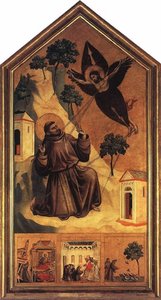 Stigmatization of St Francis - Giotto di Bondone
To encounter the Stigmatization of St Francis is to witness the very moment art began to breathe with human emotion. This profound work earns its place among Giotto di Bondone’s greatest masterpieces by shattering the rigid, golden stillness of the Byzantine era, replacing it with a revolutionary sense of volume and visceral reality. In this sacred scene, we see not just an icon, but a man—imbued with weight, shadow, and a palpable spiritual gravity that resonates through the centuries. The delicate interplay of light upon the fabric and the tender, almost sculptural presence of the figures invite a deep, meditative connection. For the refined collector or the curator of sophisticated spaces, this painting offers more than historical significance; it provides an anchor of timeless beauty and emotional intelligence, bringing a sense of profound legacy and quiet, commanding grace to any curated collection.
No. 19 Scenes from the Life of Christ: 3. Presentation of Christ at the Temple - Giotto di Bondone
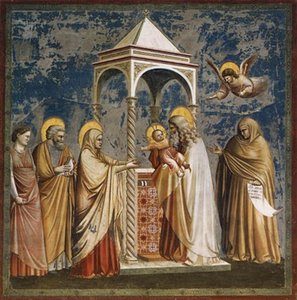 No. 19 Scenes from the Life of Christ: 3. Presentation of Christ at the Temple - Giotto di Bondone
In Presentation of Christ at the Temple , Giotto di Bondone transcends the rigid, golden flatness of the Byzantine era to offer something profoundly human. As a cornerstone of his most significant achievements within this collection of Giotto’s top 25 artworks, this fresco from the Scrovegni Chapel captures a sacred intimacy through an unprecedented use of volume and light. One can almost feel the physical weight of the figures and the solemnity of the moment as Mary presents the infant Christ amidst a landscape of deep ochre and warm earth tones.
The mastery of chiaroscuro —the interplay of shadow and light—allows Giotto to sculpt forms that possess a tangible, architectural presence. This revolutionary naturalism provides a timeless blueprint for modern interior aesthetics; the piece’s grounded palette and sculptural depth offer an unparalleled sense of permanence and soul, making it a profound inspiration for those seeking to infuse contemporary spaces with historical gravity and emotional resonance.
The Stefaneschi Triptych (recto) - Giotto di Bondone
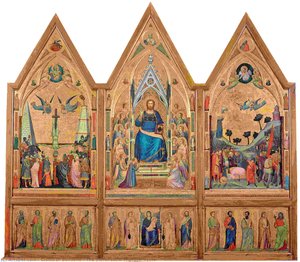 The Stefaneschi Triptych (recto) - Giotto di Bondone
Imagine the moment Giotto di Bondone first applied pigment to the shimmering gold leaf of the Stefaneschi Triptych , breaking a centuries-old silence of flat, ethereal icons. In this 1330 masterpiece, Giotto achieved a profound conceptual leap that forever altered the trajectory of Western art. Moving beyond the rigid Byzantine tradition, he introduced the weight of human reality through the masterful use of chiaroscuro . By sculpting figures with light and shadow, he granted the saints a tangible, three-dimensional presence, where the heavy folds of fabric and expressive gestures invite a visceral connection to the divine.
The interplay of celestial gold and earthy tones creates a rhythmic, liturgical flow that commands reverence. For the discerning collector, this sense of monumental gravity offers more than mere decoration; it provides a profound anchor for a modern home office or study. To surround oneself with such revolutionary naturalism is to cultivate an atmosphere of focused intellect and timeless sophistication.
Ognissanti Madonna (detail) - Giotto di Bondone
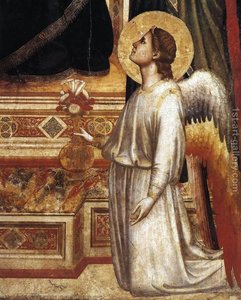 Ognissanti Madonna (detail) - Giotto di Bondone
The vibrant, commanding red that defines the Ognissanti Madonna (detail) immediately commands the viewer's attention, setting a mood of profound intensity and sacred warmth. In this pivotal work, Giotto di Bondone moves away from the flat, gilded backgrounds of the Byzantine era, instead utilizing a deep, saturated crimson to anchor his figures in a tangible, emotional reality. This mastery of color—creating a dramatic foil for the luminous flesh tones of the Virgin and Child—is precisely why this piece earns its place among the top 25 artworks of Giotto di Bondone . For the discerning interior designer or homeowner, this specific palette offers unparalleled inspiration; one might evoke this same sense of regal drama in a formal dining room by incorporating rich jewel tones or using the painting's high-contrast light to guide the emotional atmosphere of a sophisticated lounge. It is not merely a religious icon, but a masterclass in using color to sculpt presence and depth within a space.
Descent into Limbo - Giotto di Bondone
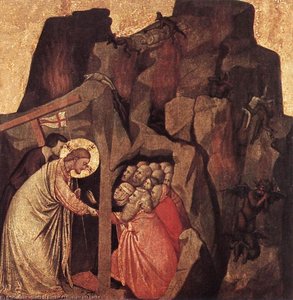 Descent into Limbo - Giotto di Bondone
In Descent into Limbo , one is immediately struck by the profound, heavy solemnity etched into the faces of those witnessing Christ’s descent. There is a palpable weight here—not just in the physical lowering of the cross, but in the spiritual gravity of the moment. Giotto captures a sacred transition, where the divine meets the earthly through the tender movements of angels and the reverent, quiet stillness of the figures gathered below.
As one of the most poignant pieces within the top 25 artworks of Giotto di Bondone , this painting serves as a universal mirror to the human experience of loss, hope, and ultimate liberation. The subtle presence of birds amidst the rugged, rocky landscape adds an ethereal lightness to the somber scene. For the discerning collector, placing such a masterpiece in a private study or a quiet corner of a home can transform a mere room into a sanctuary for profound reflection, inviting a sense of timeless calm and spiritual depth into your personal space.
St. Paul - Giotto di Bondone
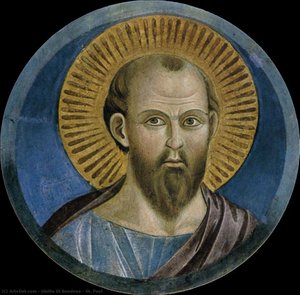 St. Paul - Giotto di Bondone
In St. Paul , Giotto di Bondone achieves a profound structural harmony that anchors this piece within the top 25 artworks of his legendary career. The composition is masterfully balanced; the central, heavy presence of the Apostle’s face is flanked by delicate, celestial figures, creating a geometric stability that feels both eternal and grounded. There is a striking economy of form here—a focus on essential lines and a rhythmic interplay between the deep, lapis-like blue background and the luminous gold accents.
This deliberate reduction of complexity mirrors the principles of modern minimalist design, where strength is found in clarity rather than ornamentation. For the contemporary collector, this piece offers more than historical significance; it provides a serene, architectural focal point that integrates seamlessly into a clean, sophisticated aesthetic. Giotto’s ability to use subtle shading to sculpt volume from a flat plane ensures that St. Paul remains an enduring masterpiece of emotional and visual equilibrium.
Navicella (mosaic fragment) - Giotto di Bondone
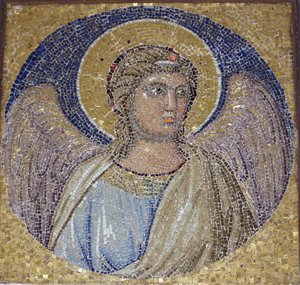 Navicella (mosaic fragment) - Giotto di Bondone
In the hallowed, quiet shadows of the Vatican Grotto, the Navicella (mosaic fragment) whispers secrets of a lost era. This fragment is far more than a mere remnant; it is a profound testament to Giotto di Bondone’s revolutionary vision, capturing the precise moment when art began to breathe with human emotion. The figure—widely interpreted as the Virgin Mary—commands the viewer with a resolute, direct gaze, her blue and gold attire shimmering with a celestial weight that defies the rigid flatness of the preceding Byzantine tradition.
As one of the top 25 artworks by Giotto , this piece embodies the essential bridge between medieval symbolism and Renaissance naturalism. In contemporary curated spaces, where discerning collectors seek powerful visual anchors, the Navicella remains a striking talking point. Its ability to weave sacred motifs, such as the delicate bird of peace, into an emerging three-dimensional reality offers a timeless lesson in how texture and gaze can transform a room with historical gravity.
Badia Polyptych - Giotto di Bondone
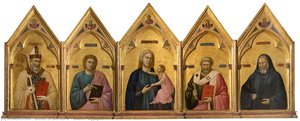 Badia Polyptych - Giotto di Bondone
The Badia Polyptych serves as a profound threshold, marking the moment where the ethereal gold of the Byzantine era began to yield to the tangible weight of human emotion. Within this masterful arrangement, Giotto di Bondone orchestrates a sacred dialogue between the divine and the earthly. As one of the most significant works among his top 25 masterpieces, it transcends mere religious iconography; it introduces a revolutionary naturalism that breathes life into the Virgin Mary and her attendant saints.
Through meticulous tempera work on wood, Giotto imbues figures like Saint Nicholas and Peter with anatomical presence and psychological depth, utilizing a deliberate triangular composition to evoke divine perfection. Today, this emphasis on authentic, emotive storytelling finds a striking resonance in contemporary curated spaces, where discerning collectors increasingly seek art that offers more than surface decoration—they crave the profound, humanized narrative that Giotto pioneered. This polyptych remains an essential cornerstone for understanding the very birth of the Renaissance spirit.
Saints John the Evangelist and Mary Magdalene - Giotto di Bondone
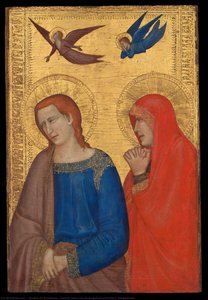 Saints John the Evangelist and Mary Magdalene - Giotto di Bondone
Acquiring Saints John the Evangelist and Mary Magdalene by Giotto di Bondone is far more than an aesthetic choice; it is a profound investment in the very dawn of human emotion within Western art. This Neapolitan diptych, emerging from the maestro’s influential years around 1335, marks a seismic shift from Byzantine abstraction toward a breathtaking naturalism that defines his enduring legacy.
The workshop's mastery is captured in the luminous gold leaf and the palpable, heavy grief etched into the saints' faces—a departure from rigid icons toward living, breathing humanity. The striking interplay of Saint John’s celestial blue and Mary Magdalene’s fervent red, set against an opulent, patterned gold background, demonstrates a level of craftsmanship that secures its position among the top 25 artworks of Giotto di Bondone .
For the discerning collector or interior designer, integrating this era of Florentine Gothic splendor into a contemporary space offers unparalleled prestige. A museum-grade oil reproduction carries the same aesthetic authority, allowing this historical masterpiece to anchor a modern luxury interior with timeless, soulful elegance.
Daedalus - Giotto di Bondone
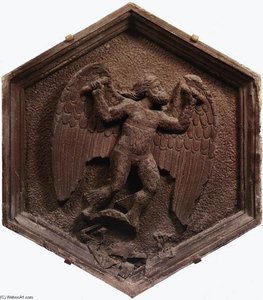 Daedalus - Giotto di Bondone
To encounter Daedalus by Giotto di Bondone is to witness the very moment art broke free from the rigid, golden constraints of the Byzantine era. This exquisite relief does not merely depict a myth; it captures the visceral ache of human longing. As you observe the intricate, textured carving, the weight of the wings and the palpable tension in the figure's posture evoke a profound sense of both peril and hope.
Giotto masterfully utilizes light and shadow to sculpt form, replacing flat symbolism with a breathtaking naturalism that breathes life into the legendary escape from Crete. For the discerning collector, integrating such revolutionary vision into one\'s environment is not mere decoration—it is an act of transformation. To surround oneself with this level of craftsmanship is to curate a gallery of the soul, turning a private space into a sanctuary where the textures of history and the depth of human emotion reside permanently.
Crucifixion - Giotto di Bondone
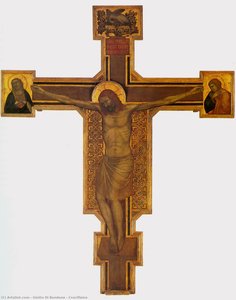 Crucifixion - Giotto di Bondone
In the hallowed halls of the Scrovegni Chapel, Giotto’s Crucifixion stands as a seismic shift in the history of Western art. This work is not merely a religious icon; it is a profound liberation from the flattened, golden rigidity of the Byzantine tradition. Here, Giotto introduces a visceral humanism, where the divine meets the earthly through palpable suffering and anatomical weight.
Through his revolutionary use of aerial perspective, the landscape recedes into a believable depth, inviting the viewer to witness a moment of shared, human grief. The central figure of Christ is no longer an ethereal symbol but a man of flesh and bone, his agony rendered with a raw, emotional truth that signaled the dawn of the Renaissance. To surround oneself with such a vision is to move beyond decoration; it is to transform a room into a gallery of the soul , where the heavy shadows and profound light of 1315 breathe eternal life into your private sanctuary.
Campanile - Giotto di Bondone
 Campanile - Giotto di Bondone
To encounter the Campanile by Giotto di Bondone is to witness the very moment art history shifted from the ethereal to the earthly. It is a rare privilege for any collector to contemplate a work that captures such monumental architectural gravity and spiritual intention.
As a cornerstone among the top 25 artworks of Giotto di Bondone , this piece embodies the dawn of naturalism. Moving away from the flat, gilded Byzantine traditions, Giotto utilizes subtle shading and texture to grant the tower a palpable, sculptural weight. The interplay of light upon the brickwork and the soaring verticality evoke a profound sense of Florentine pride and human aspiration.
For the discerning eye, this work offers more than historical insight; it brings a sense of timeless permanence to a refined interior. Its commanding presence and dignified, earthy palette resonate beautifully with modern luxury aesthetics, celebrating a legacy of strength, authenticity, and classical elegance.
The Entombment of Mary - Giotto di Bondone
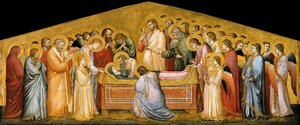 The Entombment of Mary - Giotto di Bondone
In The Entombment of Mary by Giotto di Bondone, the artist orchestrates a profound interplay of light and shadow that breathes life into the scene's heavy solemnity. The light, emanating from the upper right, creates a dramatic chiaroscuro effect that sculpts the mourning figures—Mary Magdalene and Nicodemus—giving them a physical weight and anatomical presence previously unseen in medieval art. This command of illumination was revolutionary; it broke the flat, symbolic traditions of the Byzantine style, securing this piece's rightful place among the top 25 artworks of Giotto di Bondone . By moving away from ethereal icons toward tangible, human emotion, Giotto paved the way for the Renaissance. For the discerning collector, a hand-painted oil reproduction of this masterpiece brings more than just history to a room; it introduces a sophisticated layer of texture and tonal depth. The visible brushstrokes and rich, light-drenched pigments of our fine art recreations allow this historical gravity to anchor a contemporary space, transforming a modern wall into a window onto the dawn of humanism.
Scrovegni - [11] - Marriage of the Virgin - Giotto di Bondone
![Scrovegni - [11] - Marriage of the Virgin](/media/artworks/images/thumbnails/e2/a8/e2a8050d63304601be6f83525f8938a1.jpg) Scrovegni - [11] - Marriage of the Virgin - Giotto di Bondone
Scrovegni - [11] - Marriage of the Virgin - Giotto di BondoneIn Marriage of the Virgin , Giotto di Bondone orchestrates a profound interplay of light that breathes life into the sacred ceremony. Rather than the flat, gilded surfaces of the Byzantine tradition, we witness a masterful use of soft illumination to sculpt the figures, creating a palpable sense of weight and three-dimensional presence. This delicate command of shadow—a precursor to true chiaroscuro—is precisely what secures this fresco's place among the top 25 artworks of Giotto di Bondone ; it transformed static icons into breathing, emotional human beings.
When captured in a premium hand-painted oil reproduction, these subtle tonal transitions and the luminous glow of the architectural backdrop offer more than mere decoration. They provide a sophisticated layer of depth and historical luxury, allowing the quiet drama of the light to anchor a contemporary room with an aura of timelessness and prestige.
View of the choir of towards the west - Giotto di Bondone
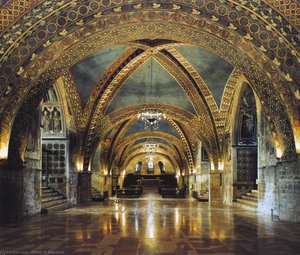 View of the choir of towards the west - Giotto di Bondone
Imagine standing within a sacred silence, where the heavy air of history meets the first light of a new era. In View of the choir towards the west by Giotto di Bondone , we witness the precise moment when the rigid, gilded icons of the Byzantine tradition began to breathe with human weight and architectural truth. This monumental fresco, housed within the Upper Church of San Francesco Basilica, stands as a cornerstone of his most significant achievements.
Giotto transcends mere architecture, using the delicate layering of pigments to sculpt space through light and shadow. One can almost feel the cool, solid presence of the towering columns and the soaring majesty of the vaulted ceiling, rendered with an unprecedented sense of volume and anatomical accuracy. By replacing flat, symbolic backgrounds with a tangible, three-dimensional reality, Giotto invites us into a world of human emotion and physical depth. Much like the curated masterpieces we select for the most prestigious collections today, this work proves that true art does not merely decorate a room—it transforms a space into a sanctuary of timelessness.
Allegory of Chastity (detail)2 - Giotto di Bondone
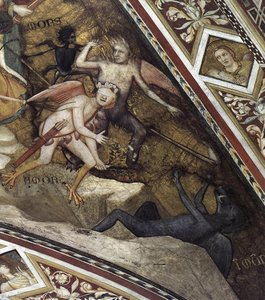 Allegory of Chastity (detail)2 - Giotto di Bondone
In the fragment of Allegory of Chastity , one does not merely observe a painting; one feels the palpable tension of a soul caught between divine grace and earthly temptation. Giotto captures that breathless moment of spiritual peril, where the weight of a falling angel meets the dark, encroaching shadows of the demonic. This work is essential to his legacy because it marks the precise moment art began to breathe with human emotion, breaking free from the rigid, golden stillness of the Byzantine era.
Through his revolutionary use of light and anatomical volume, Giotto transformed flat icons into living, breathing narratives. At ArtsDot , we honor this profound transition by offering meticulous, hand-painted oil reproductions. Our master artists recreate every dramatic shadow and textured brushstroke, ensuring that the raw, emotional power of Giotto’s fresco technique is preserved for your collection, bringing a piece of the Renaissance's very soul into the intimacy of your home.
Dream of Innocent III - Giotto di Bondone
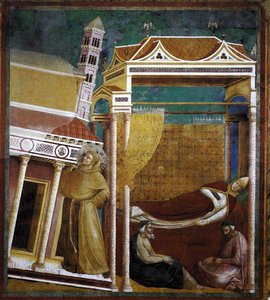 Dream of Innocent III - Giotto di Bondone
In the Dream of Innocent III , Giotto di Bondone captures a profound intersection between divine revelation and human vulnerability. As one of the most significant entries in our exploration of Giotto's top 25 artworks, this fresco marks a revolutionary departure from the rigid Byzantine style. By imbuing Pope Innocent III with palpable weight and emotional presence, Giotto invites us into a dreamscape where the boundaries between the earthly and the spiritual dissolve.
The vibrant reds and golds, paired with the delicate movement of birds within the scene, create a narrative tension that remains captivating centuries later. This masterpiece serves as a poignant reminder of how perception shapes our reality. For the discerning collector or interior designer, integrating such a profound piece—whether through a meticulous oil reproduction or a curated print—offers more than mere decoration; it introduces a timeless dialogue on authority, vision, and the enduring beauty of the human spirit into any sophisticated modern environment.
Políptico Baroncelli - Giotto di Bondone
 Políptico Baroncelli - Giotto di Bondone
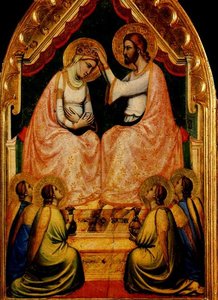
To possess a piece inspired by the Políptico Baroncelli by Giotto di Bondone is to invest in a profound legacy of human emotion and artistic evolution. As one of the top 25 artworks of Giotto di Bondone, this polyptych represents the definitive break from Byzantine abstraction toward a breathtaking naturalism. The work’s influence on the Renaissance is immeasurable; through its masterful use of light, weight, and expressive gestures, Giotto transformed religious iconography into a tangible, human experience. The rich textures of gilded frames and deep crimson accents offer a visual richness that has secured its status as a high-value treasure in the annals of art history.
In today’s most sophisticated interiors, the presence of such a masterpiece evokes an atmosphere of quiet prestige. A meticulously crafted oil reproduction allows the modern connoisseur to command this historical authority, integrating the soulful depth of the 14th century into the curated elegance of a luxury home or hospitality space.
Frescoes in the fourth bay of the nave - Giotto di Bondone
 Frescoes in the fourth bay of the nave - Giotto di Bondone
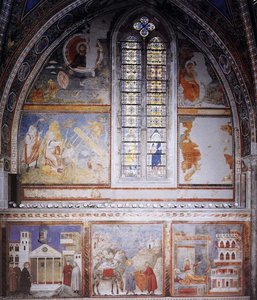
Imagine wandering through the hallowed, echoing corridors of the Florence Cathedral , where the atmosphere is thick with the weight of history. Suddenly, the walls themselves seem to stir with life. These are the Frescoes in the fourth bay of the nave by Giotto di Bondone . Created circa 1290, this work represents a seismic shift in Western art, breaking away from the ethereal, gilded flatness of Byzantine icons toward a profound, earthly naturalism. In these scenes depicting Saint Francis, Giotto uses light and shadow to sculpt anatomy, giving his figures a tangible, muscular presence. The interplay of vibrant pigments and architectural depth creates a window into a more human, emotional reality. This mastery of form and feeling does more than decorate a cathedral; it invites us into a shared experience of the divine, demonstrating why Giotto’s revolutionary vision continues to captivate the modern eye.
No. 46 The Seven Virtues: Hope - Giotto di Bondone
 No. 46 The Seven Virtues: Hope - Giotto di Bondone
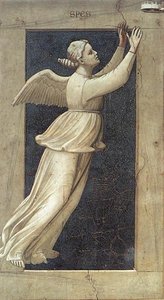
In the quiet gravity of Giotto’s 1306 masterpiece, we witness the very moment Western art began to breathe. As a cornerstone of the Scrovegni Chapel, The Seven Virtues: Hope earns its place among Giotto’s most essential works by replacing Byzantine abstraction with a raw, human struggle. This is not a depiction of serene peace, but of active, strenuous perseverance.
Through the pioneering use of chiaroscuro , Giotto grants the angelic figure a sculptural weight, pulling it from the flat, gilded backgrounds of the past into a tangible, three-dimensional reality. The muted palette of slate blues and earthy grays evokes a sense of profound solemnity, inviting the viewer to reflect on our own capacity for resilience amidst life's uncertainties. For the modern connoisseur, integrating such a powerful symbol of aspiration into a curated collection or a sophisticated interior provides more than mere aesthetic beauty; it introduces a meditative anchor of strength and historical depth that transcends the centuries.
joachim's dream - Giotto di Bondone
 joachim's dream - Giotto di Bondone
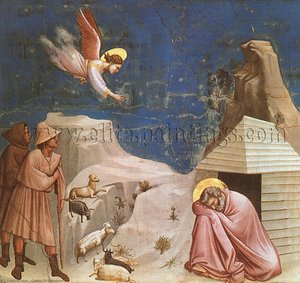
Imagine a stillness so profound it feels as though time itself has paused to listen to a divine whisper. In Joachim’s Dream , Giotto di Bondone captures this exact breath of sanctity. Part of his legendary Scrovegni Chapel cycle, this fresco marks a pivotal departure from the flat, gilded icons of the Byzantine era toward a new, breathing naturalism. As we gaze upon Joachim kneeling in his pink robe, surrounded by the gentle presence of sheep and a watchful dog, we witness the birth of human emotion in Western art. Giotto uses light and shadow to sculpt form, imbuing the scene with a weight and vulnerability that was revolutionary for 1305. This work earns its place among the top 25 masterpieces because it does not merely illustrate a prophecy; it invites us into a moment of spiritual awakening. Bringing such profound serenity into a modern space allows us to reconnect with the beauty of quiet contemplation and the enduring power of human connection.
The Last Judgement, detail of Jesus, 1305-13, Fresco, - Giotto di Bondone
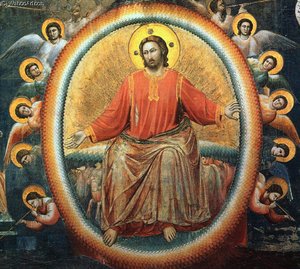 The Last Judgement, detail of Jesus, 1305-13, Fresco, - Giotto di Bondone
What if I told you that The Last Judgement, detail of Jesus by Giotto di Bondone was born from a moment of rebellion—a stroke of defiance against the rigid, golden flatness of the Byzantine era? This is not merely a fresco; it is a manifesto of human emotion. Its inclusion in our Top 25 is demanded by history, as Giotto breathed life, weight, and anatomical truth into the divine, transforming static icons into a celestial drama that pulses with movement.
To witness Christ at the center of this swirling, angelic assembly is to see the very dawn of the Renaissance. At ArtsDot, we believe such profound historical energy should not be confined to distant chapels. Imagine this masterpiece reimagined as a bespoke reproduction in your private study or a grand hotel lobby; it turns a mere wall into a window to the sublime, ensuring your space remains not just a room, but an enduring statement of culture and soul.
Alegoría de la Pobreza - Giotto di Bondone
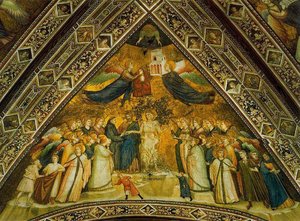 Alegoría de la Pobreza - Giotto di Bondone
What if I told you that Alegoría de la Pobreza by Giotto di Bondone was born from a moment of profound rebellion? This is not merely a fresco; it is a manifesto of human emotion. Its place in our Top 25 is demanded by history, marking the precise moment where the rigid, gilded traditions of the Byzantine era surrendered to the breathtaking naturalism of the Renaissance.
In this work, Giotto eschews golden backgrounds for a palette of soulful earth tones—ochre, umber, and crimson—to sculpt figures with unprecedented weight and volume. The solemn gathering of monks becomes a tangible, breathing reality, inviting us into a space of spiritual intimacy. At ArtsDot, we believe such transformative energy belongs in the modern collector's repertoire. Imagine this masterpiece as a hand-painted oil reproduction in your private library or a grand hotel lobby; it is more than decor—it is a profound statement of heritage that turns any room into a sanctuary of timeless beauty.
Ascension of Christ (Upper Church, San Francesco, Assisi) - Giotto di Bondone
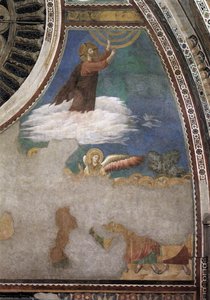 Ascension of Christ (Upper Church, San Francesco, Assisi) - Giotto di Bondone
In the Upper Church of San Francesco, Giotto di Bondone’s Ascension of Christ offers more than a religious narrative; it provides a window into the birth of human emotion in art. As one of the most profound entries in our exploration of the top 25 artworks of Giotto di Bondone , this fresco captures the precise moment where the flat, golden rigidity of the Byzantine era dissolves into a palpable, three-dimensional reality. Through a masterful use of cool, ethereal blues and grounded earthy ochres, Giotto directs our gaze upward, utilizing light not just as decoration, but as a sculptural tool to define form and divinity.
This revolutionary naturalism—the ability to imbue figures with weight and soul—remains deeply influential in the history of Western painting. For the modern connoisseur or interior designer, the piece’s atmospheric depth and serene color palette offer a blueprint for creating spaces of quiet grandeur and spiritual resonance, proving that Giotto's vision of transcendence is truly timeless.
Conclusion
As the light fades on this exploration of Giotto’s revolutionary vision, we are left with more than just a catalog of historical triumphs; we are left with the enduring pulse of human emotion. Giotto did not merely paint figures; he breathed life into them, pulling art from the gilded, ethereal heights of the Byzantine tradition and grounding it in the weight, the warmth, and the profound reality of our shared existence. These masterpieces remain vital, acting as silent, powerful narrators that continue to shape our modern interiors and stir our deepest sensibilities today.
At ArtsDot.com , we believe that such profound legacies should not be confined to the quiet halls of museums but should be able to reside within the very heart of your home. We strive to ensure this connection remains unbroken, bridging the centuries through the meticulous craft of our artists. Every reproduction we offer is a sacred dialogue with the past; our painters honor the original's soul, recreating the texture, the depth, and the transformative brushwork that defines Giotto’s hand.
Through our hand-painted oils, the revolution of the Renaissance is reborn—not as a mere image, but as a tangible, breathing presence of beauty and history. We invite you to rediscover this eternal narrative within our full collection , where every stroke serves as a tribute to the masters who first taught us how to truly see.