Introduction
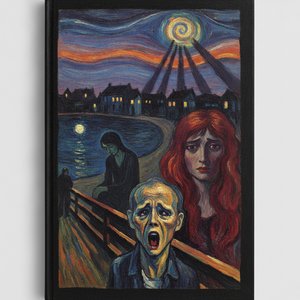
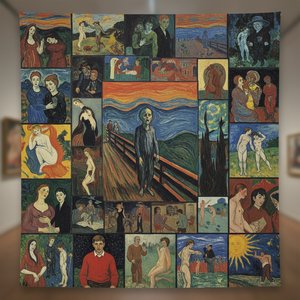
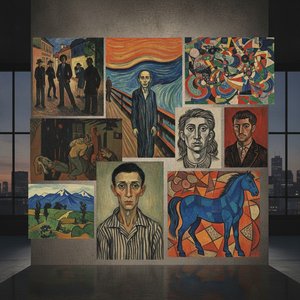
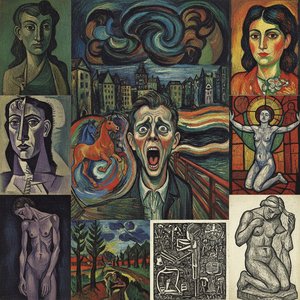
To step into the world of Edvard Munch is to walk through a gallery of the human soul, where the boundaries between external reality and internal emotion dissolve into swirling, visceral strokes of color. His work does not merely depict a scene; it captures the very vibration of existence—the tremors of anxiety, the weight of grief, and the haunting beauty found within our most profound vulnerabilities. As we prepare to explore his top 25 masterpieces , we are not just looking at canvases, but witnessing a lifelong dialogue between an artist and the shadows of his own psyche.
Born in the stark, evocative landscapes of Norway, Munch’s life was a tapestry woven with threads of profound loss. The early deaths of his mother and sister left an indelible mark on his spirit, fostering a preoccupation with mortality that would become the heartbeat of his "soul painting." Influenced by the bohemian radicalism of Kristiania and the vibrant, expressive energy of Paris, Munch moved beyond the constraints of academic naturalism. He embraced a language of distorted forms and symbolic intensity, synthesizing the bold palettes of the Post-Impressionists into a uniquely haunting, proto-Expressionist vision that would forever alter the course of modern art.
Why, in an age of digital perfection, do these works continue to resonate with such piercing clarity? Because Munch spoke a universal truth. His ability to externalize the invisible—the silent scream of loneliness, the feverish pulse of fear, and the bittersweet ache of longing—remains as relevant today as it was at the turn of the 20th century. In his hands, color becomes a psychological instrument, and line becomes an emotional conduit.
In the following curation, we invite you to journey through these seminal works. From his most iconic, world-renowned symbols of existential dread to his more intimate, luminous explorations of life and nature, each piece serves as a window into the enduring power of the human experience. Prepare to encounter the masterpieces that defined an era and continue to haunt, inspire, and move us all.
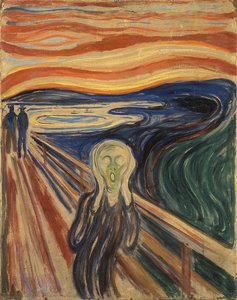
The Scream - Edvard Munch
A visceral echo of the human soul, The Scream by Edvard Munch remains an unparalleled exploration of existential dread and psychological depth. At ArtsDot.com, our mission has always been to democratize beauty, ensuring that such profound historical milestones are accessible to collectors worldwide. This masterpiece earns its place in our top 25 selection not merely for its fame, but for its revolutionary role in the birth of Expressionism; it moved art away from mere representation toward the raw, unfiltered depiction of internal emotion.
The composition is a masterclass in tension, where swirling, fiery oranges collide with melancholic blues, mirroring the protagonist's silent, agonizing cry. The distorted landscape and skeletal figure create an atmosphere of profound isolation that resonates across generations. For the discerning interior designer or collector, this artwork offers more than decoration; it provides a transformative presence. Through our meticulous, hand-painted oil reproductions, you can bring this iconic intensity into your home, office, or private gallery, allowing the turbulent beauty of Munch’s vision to anchor and inspire your modern space.
Melancholy - Edvard Munch
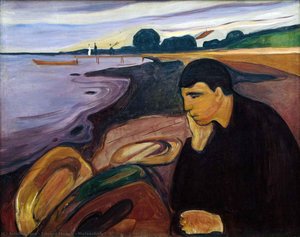 Melancholy - Edvard Munch
Acquiring Melancholy by Edvard Munch is more than a mere purchase; it is an investment in a profound psychological legacy and a testament to a collector's discerning taste. As one of the most significant works within the top 25 artworks of Edvard Munch, this 1894 masterpiece stands as a cornerstone of the Expressionist movement, commanding immense respect in the global art market for its raw, emotive power. The composition, featuring a solitary figure lost in contemplation against a somber shoreline, utilizes a haunting palette of deep blues, purples, and muted greens to externalize internal grief.
Munch’s masterful use of distorted forms and visible, energetic brushstrokes creates a tactile depth that transcends the flat surface of the canvas. The turbulent water and heavy, atmospheric light serve as symbols of the human condition's inherent fragility. For the modern connoisseur, integrating a high-quality, hand-painted oil reproduction of this work into a luxury interior provides an unparalleled sense of aesthetic authority. It brings a sophisticated, intellectual gravity to any space, echoing the timeless prestige of the original masterpiece.
Madonna - Edvard Munch
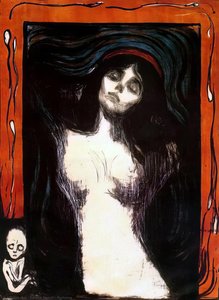 Madonna - Edvard Munch
In the pantheon of Edvard Munch 's most profound achievements, Madonna stands as a visceral masterpiece of early Expressionism. Created in 1894, this work transcends traditional religious iconography to explore the raw, often unsettling intersections of life, death, and maternity. It earns its place among the top 25 artworks of Munch through its unparalleled ability to externalize psychological distress into visual form.
The composition is a swirling vortex of fiery oranges and deep, suffocating blacks, where the central figure’s pale, anguished features emerge from a chaotic halo. Through distorted forms and jagged, emotive brushstrokes, Munch captures a sense of existential dread that remains strikingly relevant in our modern age. The presence of the ghostly, skull-like infant introduces themes of inherited suffering and the fragility of existence, challenging our very perception of beauty and sanctity.
For the discerning collector or interior designer, Madonna offers more than mere decoration; it provides a profound emotional anchor. Integrating such a powerful piece into a curated collection invites a timeless conversation between historical tragedy and contemporary aesthetic, transforming a space into a sanctuary for deep reflection and intellectual depth.
Christmas in the Brothel - Edvard Munch
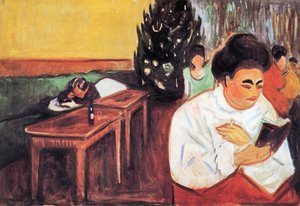 Christmas in the Brothel - Edvard Munch
In Christmas in the Brothel , Edvard Munch invites us into a world of profound psychological complexity, where the boundaries between public chaos and private introspection blur. The central figure—a woman deeply engrossed in her book—serves as an emotional anchor amidst a swirling, expressionistic atmosphere of warm reds and heavy, gestural shadows. While the setting suggests a bustling, somewhat unsettling social space, her focused gaze offers a rare moment of stillness, acting as a universal mirror for those seeking solace within the noise of modern existence.
Munch’s mastery of color and thick, impasto brushstrokes creates a textured landscape of human emotion, making this piece a cornerstone among the top 25 artworks of Edvard Munch . For the discerning collector or interior designer, integrating such a powerful work into a residence does more than decorate a wall; it transforms a personal sanctuary into a space for deep reflection. The painting’s ability to capture both the fragmentation of social life and the sanctity of individual thought provides an unparalleled emotional resonance, perfect for creating an atmosphere of sophisticated, soulful contemplation.
The Dance of Life - Edvard Munch
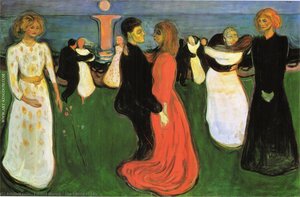 The Dance of Life - Edvard Munch
In the pantheon of Edvard Munch’s most profound achievements, The Dance of Life (1899) stands as a breathtaking pillar of Expressionist mastery. As a cornerstone of his celebrated Frieze of Life series, this work transcends mere depiction to become a symbolic cycle of human existence. The composition orchestrates a poignant dialogue between the stages of womanhood: the innocence of youth in white, the visceral passion of maturity in striking red, and the somber wisdom of age in black.
Munch utilizes a rhythmic, almost undulating brushwork that mirrors the turbulent sea in the background, creating a sense of movement that is both hypnotic and unsettling. The vibrant contrast between the luminous figures and the dark, swirling atmosphere captures the very essence of human connection—the tension between joy and inevitable loss. For the discerning collector or interior designer, integrating such a masterpiece into a curated space offers more than decoration; it introduces a timeless conversation about the fleeting beauty of our shared journey, making it an essential inclusion in any collection exploring the depths of the modern soul.
Ashes - Edvard Munch
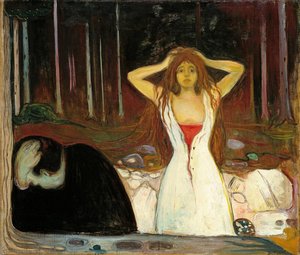 Ashes - Edvard Munch
In Ashes (1894), the lines of Edvard Munch’s brush are not merely drawn; they are choreographed in a haunting dance of grief and psychological tension. This masterpiece serves as a profound window into the artist's soul, where the boundaries between the physical forest and the internal psyche dissolve. A central figure with fiery, vibrant red hair stands in stark contrast to the muted, earthy shadows of the woods, her posture radiating an unmistakable sense of anguish.
The composition is a masterclass in emotional weight; as your eyes trace the verticality of the dark, looming trees, you encounter the unsettling presence of a shrouded figure lying prone in the shadows. This interplay of light and deep, somber tones creates a rhythm of melancholy that is both claustrophobic and deeply captivating. For the discerning collector or interior designer, integrating such an evocative piece into a space allows the walls to breathe rhythm , transforming a room into a sanctuary of profound introspection and sophisticated, dramatic storytelling.
Separation - Edvard Munch
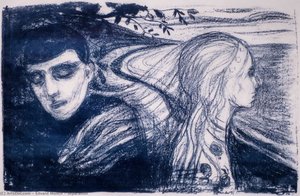 Separation - Edvard Munch
In Separation by Edvard Munch, a profound and somber midnight blue anchors the composition, casting a veil of melancholy over the entire scene. This deep, nocturnal hue does more than set a mood; it establishes an atmosphere of heavy, inescapable longing that is central to why this work remains one the top 25 artworks of Edvard Munch . The mastery lies in how Munch balances these bruised, dark tones with unexpected flickers of gold and the visceral red of a heart-shaped plant, creating a visual tension between grief and the enduring pulse of life.
For the discerning collector or interior designer, integrating this piece into a modern space offers a sophisticated way to anchor a room's emotional lighting. The painting’s palette of charcoal, slate, and deep indigo can serve as a dramatic focal point in a dimly lit study or a formal dining room, providing a sense of historical depth and quiet introspection. By echoing these moody, expressionistic tones through textiles or accent walls, one can curate a sanctuary that reflects the same hauntingly beautiful complexity found in Munch's most iconic Expressionist masterpieces.
Meeting in Space - Edvard Munch
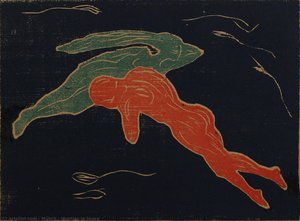 Meeting in Space - Edvard Munch
Imagine drifting through a boundless, midnight void, where the boundaries of the self begin to dissolve into the ether. In Meeting in Space , Edvard Munch invites us into this profound psychological expanse, presenting a cinematic encounter between two spectral figures. One figure, rendered in an unsettling, vibrant green, drifts against a second, more human form cloaked in deep red, both suspended within a stark, navy-black abyss.
This 1899 masterpiece is a cornerstone of the Expressionist movement, eschewing traditional perspective to prioritize raw, subjective emotion. Through the textured grain of lithography, Munch utilizes bold, sweeping lines and a striking, high-contrast palette to evoke a sense of cosmic isolation and spiritual longing. The way the colors seem to emanate an internal, otherworldly glow creates a dreamlike atmosphere that is both haunting and hypnotic. For the discerning collector, bringing this piece into a contemporary interior offers more than mere decoration; it provides a powerful focal point for reflection, injecting a sophisticated layer of intellectual depth and emotional resonance into any curated space.
Self-Portrait - Edvard Munch
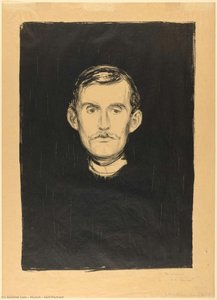 Self-Portrait - Edvard Munch
What story does the shadowed, undifferentiated void behind Self-Portrait by Edvard Munch tell? In this 1895 lithograph, the absence of a setting is as profound as the presence of the artist himself. Emerging from a period of intense personal grief and the burgeoning psychological movement of Expressionism, this work broke ground by turning the gaze inward, replacing external landscapes with the raw, internal topography of the human soul. Munch utilizes agitated, fragmented lines and a somber palette of blacks, browns, and warm beiges to etch a sense of profound vulnerability onto the stone.
For the discerning collector or interior designer, this piece serves as more than a historical landmark among the top 25 artworks of Edvard Munch ; it offers a sophisticated emotional anchor for a curated space. The work’s heavy verticality and monochromatic depth provide a quiet, commanding strength, ideal for creating a sanctuary of contemplation within a modern study or minimalist gallery. It invites an escape into the depths of history, where the boundaries between the observer and the artist's inner turmoil beautifully blur.
The Military Band on Karl Johan Street - Edvard Munch
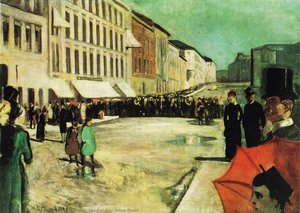 The Military Band on Karl Johan Street - Edvard Munch
In The Military Band on Karl Johan Street , Edvard Munch achieves a masterful command of compositional geometry that elevates a bustling Oslo street scene into a profound study of structural harmony. The painting is anchored by the central placement of the musicians, whose vertical forms create a rhythmic stability against the fluid, sweeping lines of the surrounding crowd. This deliberate balance between the organized movement of the band and the atmospheric dispersal of the onlookers creates a sense of timeless perfection, securing its place among the top 25 artworks of Edvard Munch .
Munch utilizes a palette of unsettling yellows, deep blues, and striking reds to evoke an emotional twilight, yet the underlying arrangement possesses a structural clarity that mirrors the principles of modern minimalist design. The way the figures are layered—some sharply defined in the foreground and others dissolving into the urban haze—provides a grounded, sophisticated aesthetic that resonates within contemporary interiors. It is this rare ability to marry psychological tension with a clean, architectural equilibrium that makes this piece an enduring masterpiece for any serious collector.
Winter Night - Edvard Munch
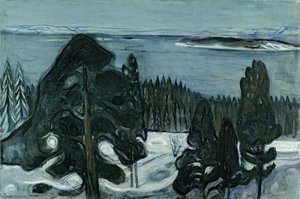 Winter Night - Edvard Munch
To encounter Winter Night is to step into a profound, frozen silence, a moment where Edvard Munch transcends landscape painting to touch the very marrow of human solitude. As one of the most evocative entries in our collection of the top 25 artworks of Edvard Munch, this 1900 masterpiece stands as a testament to the artist's ability to externalize the internal psyche. The composition is a masterclass in Expressionist restraint; through a somber palette of icy blues, stark whites, and deep, midnight shadows, Munch captures a world stilled by frost and introspection.
The jagged, angular silhouettes of foreground trees act as dark sentinels, guiding the eye across a desolate, snow-covered expanse toward a distant, frozen horizon. There is an undeniable architectural elegance to this work, making it a peerless choice for the sophisticated collector or interior designer seeking to introduce a sense of contemplative calm and intellectual depth into a modern space. It is not merely a depiction of a Norwegian winter, but a timeless exploration of stillness, offering a hauntingly beautiful focal point that resonates with the quiet luxury of a well-curated home.
Man and Woman I - Edvard Munch
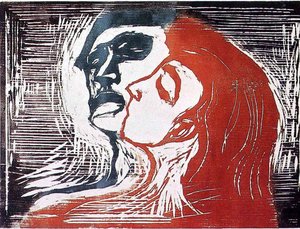 Man and Woman I - Edvard Munch
In Man and Woman I , the viewer is immediately confronted by the visceral materiality of Munch’s technique; the way the pigment clings to the wood panel creates a sense of raw, textured urgency. The brushwork does not merely define form but vibrates with psychological tension, where bold, simplified strokes and an arresting, crimson background collide to externalize deep-seated human anxieties. This piece is a cornerstone of the top 25 artworks of Edvard Munch because it transcends mere portraiture, utilizing a revolutionary Expressionist language of color and line to capture the very essence of intimacy and dread.
At ArtsDot.com, we believe such profound emotional depth should be felt, not just seen. Our master artists specialize in capturing this tactile, three-dimensional quality , employing heavy impasto and meticulous layering on 100% cotton canvas to ensure the visible brushstrokes and somber tonal ranges of Munch’s original vision are preserved. We bring the haunting soul of Expressionism into your private collection through hand-painted oil reproductions that honor the true, textured legacy of this masterpiece.
Kiss - Edvard Munch
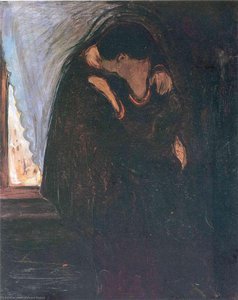 Kiss - Edvard Munch
While many associate Edvard Munch with the piercing terror of The Scream , his 1897 masterpiece, Kiss , reveals a much more intimate, haunting dimension of his psyche. In this evocative work, Munch moves away from outward hysteria toward a profound, inward-looking Symbolism. The painting captures a solitary figure enveloped in a dark, heavy cloak, lost in a state of deep, melancholic contemplation.
Technically, the piece is a triumph of Expressionist texture; the thick, gestural brushstrokes and heavy impasto create a palpable sense of emotional turbulence. Through a masterful use of chiaroscuro , a single light source illuminates the figure, casting dramatic shadows that underscore themes of isolation and the weight of existence. The blurred, indistinct background strips away the external world, leaving only the raw essence of human grief. As one of the top 25 artworks of Edvard Munch , Kiss possesses a quiet, commanding gravity. Its ability to command focus and evoke deep introspection makes it an extraordinary centerpiece for a sophisticated study or modern home office, inspiring an atmosphere of profound thought and creative stillness.
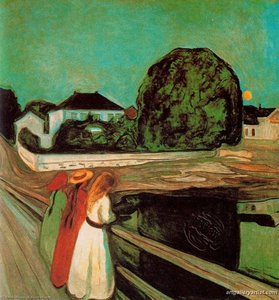
Girl on a Bridge - Edvard Munch
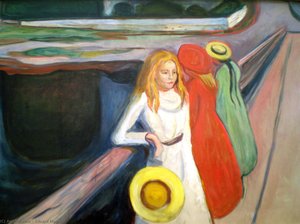 Girl on a Bridge - Edvard Munch
Acquiring Girl on a Bridge by Edvard Munch is more than an acquisition; it is an investment in a profound psychological legacy and a testament to refined, discerning taste. While many recognize Munch through the visceral intensity of The Scream , this particular work offers a more nuanced exploration of Symbolism, securing its rightful place among the top 25 artworks of Edvard Munch. The composition captures a delicate moment of companionship, where two figures stand beneath umbrellas, their connection framed by the bridge—a threshold between the tangible world and the artist's internal landscape.
Munch utilizes a hauntingly beautiful palette to evoke a sense of quiet prestige, using light and shadow to weave a narrative of intimacy and introspection. The soft, rhythmic brushstrokes and the melancholic atmosphere create a visual depth that resonates with the sophisticated textures of modern luxury interiors. Whether displayed as a large-format oil reproduction or a curated print, this masterpiece brings an unparalleled aesthetic authority and emotional gravity to any high-end space, serving as a timeless centerpiece for the serious collector.
Mother and Daughter - Edvard Munch
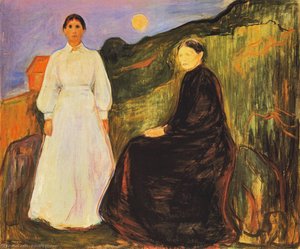 Mother and Daughter - Edvard Munch
In the quiet, shadowed corners of Edvard Munch’s 1897 masterpiece, Mother and Daughter , one finds a profound dialogue between intimacy and existential dread. The painting captures a moment of stillness that feels both sacred and unsettling; two figures are locked in an unspoken exchange, their connection draped in a muted, melancholic palette. As you gaze upon the soft, diffused light falling across the seated woman, the atmosphere shifts from peaceful contemplation to a palpable sense of unease.
Munch utilizes agitated, expressive brushstrokes and symbolic elements—such as the clock on the wall marking time's relentless march—to externalize the internal landscape of anxiety. This work is not merely a portrait; it is a visceral exploration of the human condition. For the discerning collector or interior designer, bringing such an iconic piece into a residence offers more than decoration. It introduces a layer of psychological depth and historical prestige, serving as a powerful focal point that invites reflection, much like a window into the very soul of Expressionism.
Portrait of Hanni Esche - Edvard Munch
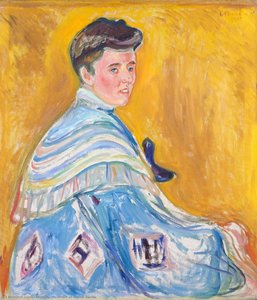 Portrait of Hanni Esche - Edvard Munch
In the Portrait of Hanni Esche , Edvard Munch captures a moment where light and soul converge, freezing a sense of quiet introspection within a vibrant, modern pulse. This masterpiece earns its place among the top 25 artworks of Edvard Munch through its profound ability to balance the intimate psychological depth of the subject with a bold, avant-garde color palette. The striking contrast between the deep, patterned blue of Hanni’s dress and the luminous, energetic yellow background creates a visual tension that is both captivating and emotionally resonant.
Munch’s signature expressive brushstrokes breathe life into the canvas, lending a tactile texture that transcends mere representation to evoke elemental force and power . The subject's thoughtful, slightly melancholic gaze invites a contemplative dialogue, making the piece an exquisite anchor for sophisticated modern interiors. Whether displayed in a grand hall or a private study, this portrait brings a sense of historical prestige and emotional intelligence to a contemporary space, embodying the very essence of the Expressionist movement.
untitled (6059) - Edvard Munch
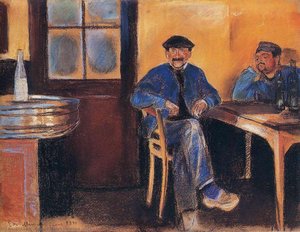 untitled (6059) - Edvard Munch
In untitled (6059) by Edvard Munch, the composition achieves a hauntingly beautiful equilibrium through its stark, geometric arrangement. The structural harmony is found in the heavy, horizontal lines of the weathered wooden table, which anchors the two figures and creates a sense of grounded, timeless perfection. This balance between the seated men and the verticality of the bottles provides a rhythmic stability that makes this piece an essential inclusion in our exploration of the top 25 artworks of Edvard Munch .
The monochrome palette strips away the superficial, leaving only the raw, tactile essence of the scene—the grain of the wood and the stark tonal contrasts. This minimalist approach creates a profound internal balance that resonates deeply with modern interior aesthetics; much like contemporary minimalist design, the work uses negative space and simplified forms to ground a room with quiet prestige. There is an enduring appeal in how Munch utilizes this structural simplicity to mask a deep, psychological unrest, inviting the viewer into a contemplative, somber atmosphere that feels both historically significant and strikingly modern.
Anxiety - Edvard Munch
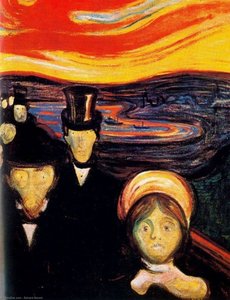 Anxiety - Edvard Munch
In Edvard Munch’s Anxiety , a bruised palette of deep purples and sickly yellows dominates the canvas, casting an unmistakable shadow of psychological unrest over the scene. This masterful use of discordant color is precisely why this work remains a cornerstone among the top 25 artworks of Edvard Munch ; he does not merely paint a sunset, but rather externalizes a visceral state of dread. The swirling, unstable brushstrokes and the heavy, saturated tones create an atmosphere where the boundary between the physical landscape and the human psyche dissolves.
For the discerning collector or interior designer, integrating a high-quality oil reproduction of this piece offers a profound way to anchor a room with emotional depth. The painting’s dramatic, moody light can serve as a focal point in a sophisticated study or a contemporary dining room, providing a contemplative weight that balances modern minimalism. By utilizing these intense, emotive hues, one can curate a space that feels both intellectually stimulating and deeply resonant, echoing the raw, expressive power of the Expressionist movement.
Jealousy - Edvard Munch
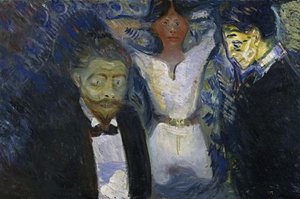 Jealousy - Edvard Munch
In Jealousy (1913), Edvard Munch transcends mere portraiture to present a visceral embodiment of psychological torment. This masterpiece does not simply occupy a wall; it commands the atmosphere of a room, transforming a living space into a gallery of the soul. The composition is masterfully unsettling, utilizing a muted palette of deep blues and somber greens that feel thick with unspoken resentment. As you observe the three figures, notice the profound tension held in their averted gazes and the central figure's subtle withdrawal—a gesture of betrayal captured in oil.
Munch employs his signature "soul painting" technique, where agitated brushstrokes and simplified, skeletal forms externalize an internal state of anxiety. The dimly lit, claustrophobic setting serves as a stage for the raw, human emotions that define the very essence of Expressionism. To possess a reproduction of this work is to invite the profound depth of Munch’s emotional landscape into your home, surrounding yourself with the genius of a man who dared to paint the invisible tremors of the human heart.
Girl with Doll. Erdmute Esche with Polar Bear and Doll - Edvard Munch
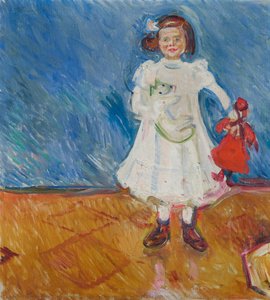 Girl with Doll. Erdmute Esche with Polar Bear and Doll - Edvard Munch
To encounter “Girl with Doll: Erdmute Esche with Polar Bear and Doll” is to step into a private, psychological sanctuary curated by the master of Expressionism himself. As one of the most profound entries in our collection of the top 25 artworks of Edvard Munch , this 1905 masterpiece transcends mere portraiture, offering a hauntingly beautiful window into the intersection of childhood innocence and existential shadow.
Munch employs a striking, emotive palette where deep, melancholic blues collide with sudden, visceral accents of red. The composition is masterfully unsettled; through asymmetrical lines and thick, tactile impasto , he creates a sense of dynamic instability that mirrors the human psyche. For the discerning collector or interior designer, this piece serves as a sophisticated focal point, bringing an unparalleled emotional intelligence to a refined space. It is not merely a painting of a child with her companions, but a textured exploration of memory and vulnerability—a timeless legacy of art that continues to resonate within the most prestigious modern galleries and private estates worldwide.
Death of Marat I - Edvard Munch
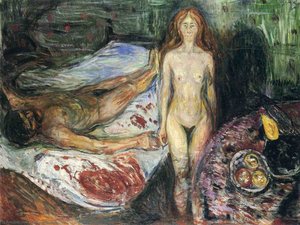 Death of Marat I - Edvard Munch
What story does the swirling, bruised atmosphere of Death of Marat I by Edvard Munch tell us about the intersection of political tragedy and personal grief? Painted in 1907, this profound work transcends a mere historical recreation of the revolutionary leader's assassination; it serves as a visceral window into Munch’s own tormented psyche. As one of the most significant pieces in our collection of the top 25 artworks of Edvard Munch , it captures a moment where the boundaries between external violence and internal trauma dissolve.
The canvas is saturated with an unsettling palette of sickly greens, deep purbless, and stark, wounded whites, applied with the agitated, rhythmic brushstrokes that define his expressionist mastery. For the discerning collector or interior designer, bringing such a piece into a curated space offers more than decoration; it provides a profound emotional anchor. This painting invites a sense of historical depth and psychological intrigue, allowing a modern home to resonate with the heavy, beautiful melancholy of a true masterpiece.
Despair - Edvard Munch
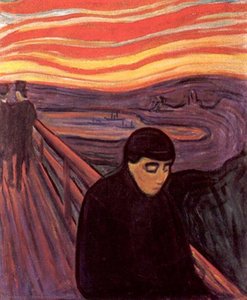 Despair - Edvard Munch
In Despair , the lines of Edvard Munch’s brushwork are not merely painted; they are choreographed to mirror a fracturing psyche. This 1892 masterpiece serves as a profound exploration of human isolation, where the heavy, somber tones of the oil on canvas create a space that feels both intimate and infinitely hollow. A solitary figure sits slumped at a piano, his posture a silent testament to the weight of existence, while the background figures watch with a chilling, detached indifference.
The composition is a dance frozen in time —a rhythmic movement of dark, muted hues and thick, expressive impasto that captures the very essence of Expressionism. The swirling, turbulent energy often found in Munch's work is channeled here into a suffocating atmosphere of melancholy. As you contemplate this piece, consider how its raw emotional depth could transform your own environment. What if your walls could breathe rhythm and hold such profound, quiet intensity? Bringing a reproduction of this caliber into a curated space allows the haunting beauty of Munch's psychological landscape to resonate within the modern home.
To mennesker. De ensomme (Reinhardt-frisen) Two Human Beings. The Lonely Ones (The Reinhardt Frieze) - Edvard Munch
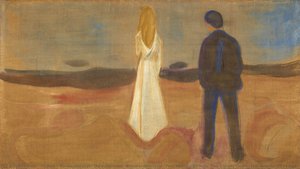 To mennesker. De ensomme (Reinhardt-frisen) Two Human Beings. The Lonely Ones (The Reinhardt Frieze) - Edvard Munch
In the hauntingly quiet corridors of Edvard Munch’s psyche, To mennesker. De ensomme (Reinhardt-frisen) stands as a profound testament to the ache of human isolation. At ArtsDot.com, our mission is to democratize such profound beauty, ensuring that the raw emotional depth of the Old Masters and Expressionist pioneers remains accessible to all. This masterpiece earns its place among the top 25 artworks of Edvard Munch through its masterful use of psychological space; by positioning two figures facing away from one another against a desolate, earthy palette of ochre and muted brown, Munch captures the very essence of silent disconnection.
The work’s influence on visual culture is undeniable, utilizing asymmetrical composition and gestural brushstrokes to externalize internal grief. It is an irreplaceable pillar of Expressionism, transforming a simple scene into a universal symbol of alienation. For the discerning collector or interior designer, this painting offers more than mere decoration; it provides a focal point of intense contemplation. Through our high-fidelity, hand-painted oil reproductions, you can bring this transformative, somber presence into your home, office, or private gallery, allowing Munch’s evocative legacy to anchor your personal space with unparalleled emotional gravity.
House in Moonlight - Edvard Munch
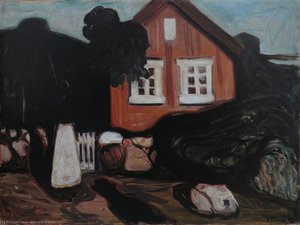 House in Moonlight - Edvard Munch
In House in Moonlight , Edvard Munch achieves a haunting structural equilibrium that serves as a cornerstone among the top 25 artworks of Edvard Munch . The composition is anchored by the stark, block-like geometry of the crimson house, which stands in powerful opposition to the fluid, menacing silhouettes of the surrounding trees. This interplay of heavy, grounded shapes against the ethereal, blurred lines of the moonlit sky creates a rhythmic tension—a visual pulse of anxiety and stillness. The flattened perspective and deliberate use of diagonal rooflines guide the eye through a landscape where domesticity meets the infinite.
This masterful balance between bold form and atmospheric void offers a profound connection to modern minimalist design ; much like a contemporary interior, the painting relies on a restrained palette and essential shapes to ground a space with emotional gravity. The striking contrast of the fiery red facade against deep, nocturnal blues provides a sophisticated focal point that brings both drama and a sense of curated calm to a high-end collection, proving why this 1895 masterpiece remains an enduring icon of Expressionist beauty.
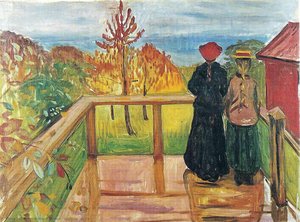
Women at the beach Sun - Edvard Munch
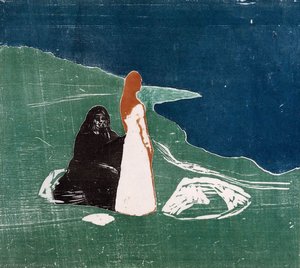 Women at the beach Sun - Edvard Munch
In Women at the Beach Sun , Edvard Munch transcends the boundaries of a mere seaside landscape to offer a profound exploration of human intimacy and psychological tension. As one of the most evocative pieces within our collection of the top 25 artworks of Edvard Munch , this 1896 masterpiece captures a delicate dialogue between light and shadow. Two figures stand upon a sun-drenched hillside; one, draped in black, gazes intently at her companion, while the other turns away, creating an unspoken narrative of longing and vulnerability.
The composition is a masterclass in Expressionism , where the golden late-afternoon light illuminates the scene with a deceptive serenity that masks an underlying melancholy. Munch utilizes breathtaking tonal gradations to ground these figures against the vast, shimmering expanse of the ocean and distant boats. To possess such a work is not merely to decorate a wall, but to invite a gallery of the soul into your home—transforming your space into a sanctuary where the heavy, beautiful textures of Munch’s emotional landscape can breathe.
Conclusion
To wander through the works of Edvard Munch is to embark on a journey through the very architecture of the human soul. His canvases do not merely sit upon a wall; they breathe, pulsing with the rhythmic echoes of anxiety, longing, and an unyielding resilience that transcends the decades since his passing. As we conclude this exploration of his most profound masterpieces, we find that these paintings are far more than historic relics preserved in museums; they are living presences. They possess the rare power to transform a silent room into a space of deep reflection, inviting us to confront our own shadows and find beauty within the turbulence of existence.
In the modern home, a Munch reproduction serves as a profound dialogue between the past and the present. Whether it is the haunting silhouette of a figure in a twilight landscape or the swirling, emotive colors of his more abstract compositions, these works anchor an interior with emotional gravity and intellectual depth. They remind us that art is not a mere decoration, but a mirror held up to our collective experience—a way to bridge the gap between our private vulnerabilities and the universal human condition.
As you seek to bring this evocative legacy into your own curated space, we invite you to explore the full collection of his works. Each hand-painted oil reproduction we offer is crafted with the same reverence for texture and emotion that Munch himself poured into his brushstrokes, ensuring that the visceral energy of his vision remains vibrant and eternal in your care.