Introduction
To step into the world of Gustav Klimt is to surrender to a sensory feast where the boundaries between reality and ornament dissolve into a shimmering haze of gold, pattern, and profound emotion. His work does not merely sit upon a canvas; it radiates, inviting the viewer into a decadent, ethereal realm that feels simultaneously ancient and avant-garde. As we wander through this curated selection of his top twenty-five masterpieces, we are not just observing paint on canvas, but witnessing the very heartbeat of the Vienna Secession —a movement born from a rebellion against the rigid, stifling academic traditions of the late 19th century.
Born into a family of engravers, Klimt carried the meticulous precision of goldwork into the soul of modern art. His evolution from a skilled architectural painter to the master of the legendary Golden Phase reflects a profound cultural shift in Europe, where the decorative arts and fine art merged to celebrate the beauty of the human form amidst intricate, symbolic mosaics. Through his use of precious metals, vibrant textures, and the delicate interplay of light and shadow, Klimt captured the tension of his era: the struggle between the burgeoning modern psyche and the lingering mysteries of the subconscious.
These works remain deeply resonant in our contemporary landscape because they speak to the universal languages of intimacy, eroticism, and the cyclical nature of life and death. In an age of digital fleetingness, Klimt’s tactile richness—the way his figures seem to emerge from a sea of geometric abstractions—offers a sanctuary of permanence and profound aesthetic depth. Whether it is the haunting grace of a portrait or the overwhelming opulence of a mosaic-like landscape, each piece serves as a window into a more romantic, symbolic existence.
In the following pages, we shall guide you through a definitive journey across his most significant achievements. From the iconic, gilded embrace of his most famous lovers to the evocative, swirling compositions that define his mature style, prepare to encounter the works that transformed the history of art and continue to enchant collectors and dreamers alike.
The kiss - Gustav Klimt
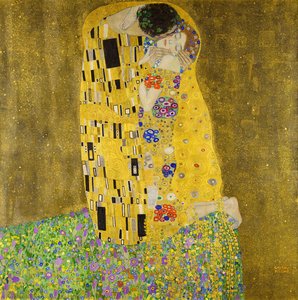
There is a luminous warmth in The Kiss by Gustav Klimt that seems to radiate from within the canvas itself—not merely as light, but as an invitation to intimacy. As one of the most iconic masterpieces in our collection, this work represents the pinnacle of Klimt’s legendary Golden Phase . To stand before it is to witness a sacred union, where the boundaries between two souls dissolve into a shimmering sea of gold leaf and intricate ornamentation.
The painting is a sensory marvel; notice how the geometric masculine patterns clash beautifully with the soft, floral feminine motifs , all enveloped in an opulent, gilded cloak. This isn't just a depiction of romance; it is a spiritual transcendence rendered through the lens of the Vienna Secession . The flattened perspective and mosaic-like textures create a dreamscape that feels both ancient and avant-garde. When you bring this reproduction into your home, it does more than decorate a wall—it serves as a profound reminder of the beauty found in connection, making the invisible emotions of love visible through every gilded brushstroke.
Portrait of Adele Bloch-Bauer I - Gustav Klimt
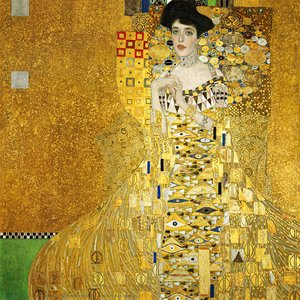
What if I told you that Portrait of Adele Bloch-Bauer I by Gustav Klimt was born from a moment of rebellion—a stroke of defiance against the ordinary? This is not merely a portrait; it is a gilded manifesto of the Vienna Secession. Its inclusion in our collection of the top 25 artworks of Gustav Klimt is essential, as it represents the pinnacle of his legendary 'Golden Phase,' where the boundaries between human form and decorative abstraction dissolve into shimmering light.
As you gaze upon the meticulous application of gold leaf and the hypnotic, swirling mosaics that envelop Adele, you feel the pulse of an era defined by opulence and mystery. The painting transcends literal representation, using symbolic eyes and geometric tessellations to create a Byzantine-like icon of modern femininity. At ArtsDot.com, we believe such profound beauty should not be confined to museum vaults. Imagine this masterpiece reimagined as a hand-painted oil reproduction in your own sanctuary; it transforms a mere wall into a statement of historical grandeur and refined taste, bringing the luminous soul of Klimt into the heart of your contemporary living space.
Bildnis Fritza Riedler, 1906 - Österreichische Galerie, Vienna - Gustav Klimt
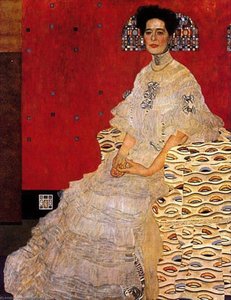
Step into the gilded atmosphere of 1906 Vienna, where the air feels heavy with the scent of opulence and the quiet weight of social expectation. In Bildnis Fritza Riedler , Gustav Klimt does not merely paint a woman; he constructs an icon of the Vienna Secession. The subject sits enveloped in a dramatic symphony of deep, saturated reds and shimmering gold pigments that seem to pulse with a life of their own. Her elaborate white gown, a mosaic of intricate floral patterns, contrasts breathtakingly against the dark, textured background, creating a visual depth that is both flat and infinitely complex.
Klimt’s mastery of texture—achieved through meticulous layering and pointillist-like applications—invites the eye to linger on every jewel-encrusted detail of her updo. There is a profound, melancholic elegance in her distant gaze, a sense of psychological isolation amidst extreme luxury. For the discerning collector, bringing this masterpiece into a contemporary space offers more than decoration; it introduces a focal point of historical gravity and refined artistry, transforming a room into a sanctuary of reflection and timeless, Art Nouveau splendor.
The Tree of Life - Gustav Klimt
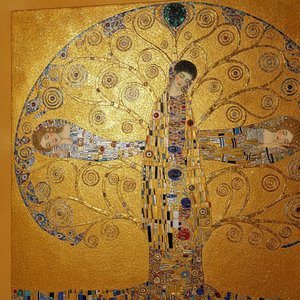
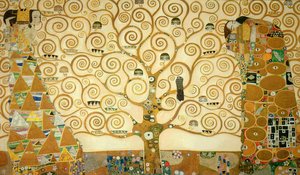
There is a profound, rhythmic pulse within The Tree of Life by Gustav Klimt that seems to vibrate long after you turn away. As one of the most breathtaking entries in our collection of the top 25 artworks of Gustav Klimt, this 1909 masterpiece does not merely decorate a wall; it transforms the very atmosphere of a room into something sacred and shimmering. The composition is an opulent tapestry of swirling gold leaf and organic spirals, where the boundaries between humanity and nature dissolve into a singular, gilded dream.
To stand before this work is to witness the pinnacle of the Vienna Secession movement. The intricate branches, heavy with symbolic motifs, act as a visual metaphor for our own interconnectedness. As light catches the textured layers of gold and oil, the tree appears to breathe, reminding us of the cyclical beauty of existence. Integrating such a piece into your home offers more than aesthetic luxury; it provides a window into a world of spiritual serenity and timeless elegance, making the invisible threads of life visible through Klimt's unparalleled mastery.
Beethoven Frieze; The Arts, Choir of Angels, Embracing Couple - Gustav Klimt
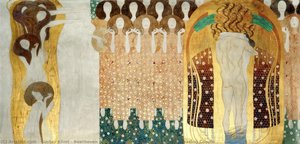 Beethoven Frieze; The Arts, Choir of Angels, Embracing Couple - Gustav Klimt
To stand before the Beethoven Frieze is to witness the very soul of the Vienna Secession movement. This monumental composition—comprising The Arts , Choir of Angels , and the Embracing Couple —is far more than a decorative triumph; it is a profound narrative of spiritual transcendence. Klimt masterfully weaves together the tactile opulence of his 'Golden Phase' with a dreamlike, Symbolist depth that invites deep contemplation.
As you move your gaze across the panels, you encounter a procession of elongated, ethereal figures emerging from a sea of gold leaf and intricate, organic patterns. The interplay of muted earth tones against luminous, gilded surfaces creates a sense of Byzantine majesty, while the sinuous, flowing lines evoke a rhythmic, almost musical movement. Through the use of layered impasto and delicate glazing, Klimt captures themes of devotion, sacrifice, and the eternal dance between humanity and the divine. For the discerning collector, possessing a reproduction of this frieze is not merely about decorating a wall; it is about inviting a transformative, sacred atmosphere into your private sanctuary.
Water Serpents II (Bewegtes Wasser sfondo) - Gustav Klimt
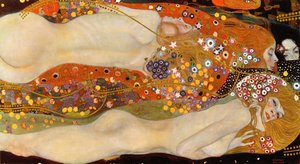 Water Serpents II (Bewegtes Wasser sfondo) - Gustav Klimt
In the pantheon of the top 25 artworks of Gustav Klimt , Water Serpents II (Bewegtes Wasser sfondo) stands as a breathtaking testament to the fluid boundaries between the human psyche and the natural world. Created during his transformative period, this masterpiece captures the very essence of Art Nouveau elegance , where the serpentine movement of the water mirrors the undulating rhythms of desire and the subconscious. Klimt’s mastery is palpable in the way he employs rich, golden hues and thick, tactile impasto textures to transform a reclining figure into a part of the elemental landscape.
This work earns its prestigious placement through its profound ability to evoke both tranquility and mystery; it is a visual poem of light and shadow. For the discerning collector or interior designer, integrating such a piece into a curated space offers more than mere decoration—it introduces a timeless conversation about beauty, fertility, and the primal forces of nature. To possess this imagery is to invite a sense of dreamlike opulence and quiet prestige into the modern home, bridging the gap between historical Symbolism and contemporary aesthetic luxury.
Farm Garden with Crucifix - Gustav Klimt
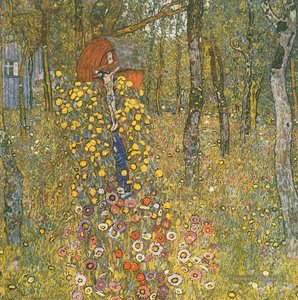 Farm Garden with Crucifix - Gustav Klimt
Acquiring a piece as profound as Farm Garden with Crucifix by Gustav Klimt is more than an aesthetic choice; it is a deliberate investment in a legacy of unparalleled taste and historical prestige. As one of the most evocative works within the top 25 artworks of Gustav Klimt, this 1911 masterpiece captures a rare intersection of Post-Impressionist vitality and the spiritual depth characteristic of the Vienna Secession.
The canvas is a symphony of sensory delights, where fiery yellows and lush greens dance in short, broken brushstrokes to create a luminous, textured meadow. A solitary figure, draped in blue, wanders through this floral paradise, her presence underscored by the subtle, haunting inclusion of a crucifix nestled among the trees. This juxtaposition of earthly bloom and divine reflection offers a contemplative depth that continues to command high market interest among serious collectors.
For the discerning interior designer, a museum-quality oil reproduction of this work brings an unmatched aesthetic authority to modern luxury interiors. Whether placed in a grand salon or a private study, its vibrant palette and soulful symbolism serve as a sophisticated focal point, echoing the quiet prestige of a true gallery masterpiece.
Music I - Gustav Klimt
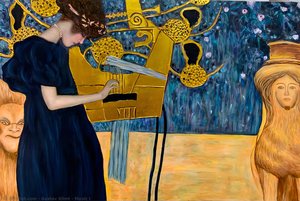 Music I - Gustav Klimt
What if I told you that Music I by Gustav Klimt was born from a moment of profound spiritual resonance—a visual symphony captured in oil? This masterpiece does not merely depict a musical performance; it orchestrates an encounter between the earthly and the divine. As one of the most evocative entries in our collection of the top 25 artworks of Gustav Klimt , this piece captures the artist's early mastery of Symbolism, where the delicate touch of a harpist meets a swirling, dreamlike atmosphere of deep blues and radiant golds.
The composition is a mesmerizing dance of Art Nouveau elegance, featuring fluid, organic lines and intricate decorative motifs that seem to vibrate with the very melody they represent. Its inclusion in this prestigious selection is essential, as it showcases Klimt's ability to transform a seated figure into an icon of cosmic harmony. At ArtsDot, we believe such profound beauty should not be confined to museum halls. Whether rendered as a hand-painted oil reproduction or a museum-quality print, Music I serves as a transformative centerpiece, turning a refined home or a sophisticated professional space into a sanctuary of timeless grace and artistic prestige.
Allegory of 'Sculpture' - Gustav Klimt
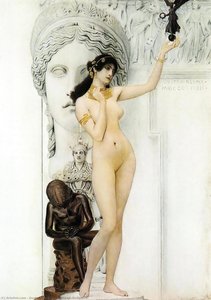 Allegory of 'Sculpture' - Gustav Klimt
In Allegory of 'Sculpture' , we witness a profound moment in Gustav Klimt’s early career, where the boundaries between classical realism and the burgeoning Symbolist movement begin to dissolve. Created in 1889, this work serves as a vital precursor to his later, more famous Golden Phase, capturing a sense of melancholic grandeur through a delicate interplay of light and shadow. The composition—featuring a nude female figure amidst decaying architectural ruins—evokes an atmosphere of timelessness and mystery.
The piece is a masterclass in texture; the soft, watercolor-like washes of muted tones contrast beautifully with the sharp, idealized forms of the classical statues. For the modern collector or interior designer, this artwork offers a sophisticated touch of Romanticism. Its palette of soft whites, warm golds, and earthy neutrals provides an exquisite anchor for high-end, contemporary spaces, bringing a sense of historical depth and quiet contemplation to any curated gallery wall. As one of the most significant early works in our collection of the top 25 artworks of Gustav Klimt , it remains a hauntingly beautiful testament to his technical mastery.
Birch Forest, 1903 - Vienna, Osterreichische Museum für Angewandte Kunst - Gustav Klimt
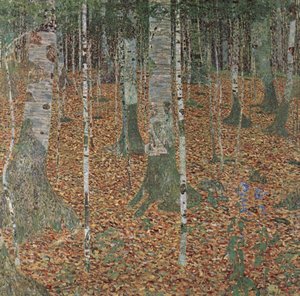 Birch Forest, 1903 - Vienna, Osterreichische Museum für Angewandte Kunst - Gustav Klimt
Before the world recognized him for the gilded opulence of his 'Golden Phase,' Gustav Klimt mastered the delicate art of atmospheric Impressionism, a transition captured profoundly in Birch Forest (1903). While many associate Klimt with heavy ornamentation, this masterpiece reveals a master of light and rhythm. The composition is a rhythmic dance of verticality; slender white birch trunks stand as silent sentinels amidst a mosaic of ochre, burnt orange, and deep umber leaves. A sudden, breathtaking touch of blue flowers pierces the earthy palette, offering a moment of unexpected vitality against the autumnal decay.
The technical brilliance lies in Klimt's short, broken brushstrokes that create a tactile, almost shimmering texture on the canvas, evoking the filtered light of an overcast Viennese afternoon. This work is not merely a landscape but a meditation on the cycles of life and the beauty of transience. For the discerning collector, placing such a serene, textured piece in a modern study or home office provides a sophisticated anchor—a window into nature’s quiet resilience that inspires deep focus and a tranquil, productive atmosphere.
Poppy Field - Gustav Klimt
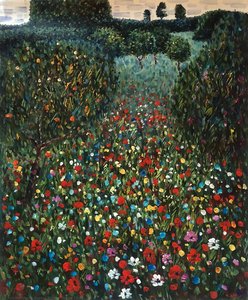 Poppy Field - Gustav Klimt
While many recognize Gustav Klimt for the shimmering opulence of his Golden Phase , Poppy Field (1907) reveals a different, more visceral side of the Austrian master. In this breathtaking landscape, the influence of his father’s gold-engraving heritage meets a profound, impressionistic devotion to the earth. Rather than focusing on the flat, Byzantine-inspired mosaics of Ravenna, Klimt here embraces a lush, tactile reality, using thick impasto techniques to make each crimson petal appear almost three-dimensional.
The composition invites us through a dark, hedge-formed archway into a riot of color—a vibrant meadow where reds, yellows, and blues dance against deep greens. This work is a masterclass in capturing the ephemeral; it celebrates the fleeting beauty of nature with an emotional depth that transcends mere botanical study. For the discerning collector, placing such a radiant masterpiece in a modern study or home office does more than decorate a wall; it fosters an atmosphere of boundless creativity and serene focus, mirroring the very vitality found within Klimt's swirling floral landscape.
Judith - Gustav Klimt
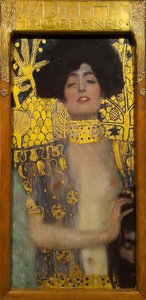 Judith - Gustav Klimt
In the pantheon of Gustav Klimt’s greatest achievements, Judith stands as a breathtaking testament to the power of the Vienna Secession and the intoxicating allure of the Art Nouveau movement. Created in 1901, this masterpiece transcends mere portraiture; it is an evocative exploration of female agency and regal confidence. The figure possesses a serene yet commanding presence, her form enveloped in a mesmerizing tapestry of organic lines and opulent ornamentation that anticipates Klimt’s legendary Golden Phase.
The painting’s visual language—characterized by shimmering textures, fluid silhouettes, and a rich, symbolic palette of gold and verdant greens—continues to profoundly influence contemporary luxury design. For the discerning collector or interior designer, Judith offers an unparalleled sense of drama and sophistication, making it a cornerstone in any curated collection of the top 25 artworks of Gustav Klimt. It remains a timeless symbol of resilience, where the delicate beauty of the aesthetic meets the profound strength of the subject, inviting viewers into a world of mythic elegance and eternal grace.
Avenue of Schloss Kammer Park - Gustav Klimt
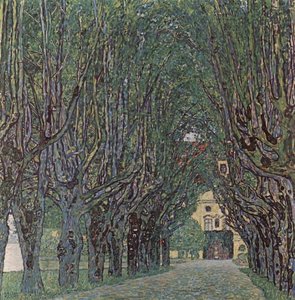 Avenue of Schloss Kammer Park - Gustav Klimt
In Avenue of Schloss Kammer Park , Gustav Klimt invites us into a contemplative sanctuary where the boundaries between the physical landscape and the subconscious begin to blur. Moving away from the opulent gold leaf of his famous Golden Phase, this 1912 masterpiece reveals a profound shift toward a more naturalistic, yet deeply symbolic, exploration of the Austrian countryside. The composition functions as a visual metaphor for a spiritual journey; the verticality of the slender, twisting trees creates a verdant tunnel that draws the eye toward a distant, sun-dappled destination.
The painting’s mastery lies in its atmospheric texture, utilizing a pointillist-inspired technique to create a shimmering, dreamlike light. A symphony of emerald, moss, and deep forest greens is punctuated by subtle warmth, evoking a sense of quietude and introspection. In today's fast-paced world, this artwork remains a vital cultural touchstone for curated interiors, offering a much-needed moment of organic serenity and a sophisticated connection to the enduring beauty of the natural world.
Hope II - Gustav Klimt
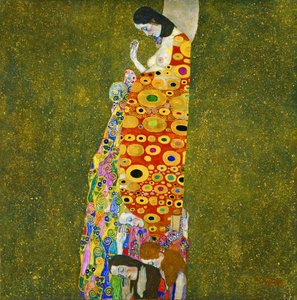 Hope II - Gustav Klimt
In Hope II , Gustav Klimt masterfully captures the profound intersection of vulnerability and spiritual resilience. As one of the most evocative entries in our collection of the top 25 artworks of Gustav Klimt , this 1908 masterpiece transcends mere portraiture to offer a window into the soul. The composition features a vertical arrangement of intertwined figures, draped in robes so densely adorned with vibrant reds, blues, and golds that they seem to pulse with life.
The painting exemplifies the artist's legendary Golden Phase , utilizing meticulous layering to create a shimmering, jewel-like surface. The interplay between the organic, swirling patterns and the soft, diffuse light creates an atmosphere of dreamlike transcendence. For the discerning collector or interior designer, this work brings an unparalleled sense of opulence and emotional depth to a space. Its rich, textured aesthetic—characterized by symbolic circular motifs and a luminous gold-green field—resonates perfectly with modern luxury interiors, offering a sophisticated focal point that celebrates the enduring power of Art Nouveau elegance.
Compositional Sketch for - Gustav Klimt
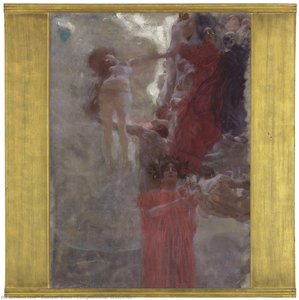 Compositional Sketch for - Gustav Klimt
In the Compositional Sketch for , Gustav Klimt invites us into a profound meditation on the fragility of existence, a work that stands as a cornerstone among the top 25 artworks of Gustav Klimt . This piece is far more than a mere preparatory study; it is a visceral, swirling vortex of symbolism where the boundaries between life and mortality blur. Through the presence of Hygieia and the hauntingly draped figures, Klimt explores the tension between medical hope and the inevitable shadow of death.
The painting’s visual language—characterized by thick impasto textures and a dramatic, almost theatrical use of light—resonates deeply with contemporary interests in psychological depth and the beauty of imperfection. As we observe the heavy, expressive brushstrokes and the somber, atmospheric palette, we see an early manifestation of the Secessionist spirit. In modern curated interiors, such a powerful piece serves as a sophisticated focal point, offering a timeless dialogue on the human condition that remains as provocative today as it was in 1898.
Head of a Man in Profile (Illustration for - Gustav Klimt
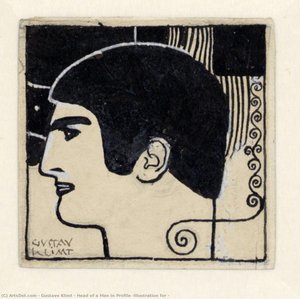 Head of a Man in Profile (Illustration for - Gustav Klimt
While Gustav Klimt is globally celebrated for the shimmering opulence of his Golden Phase, Head of a Man in Profile offers a profound, monochromatic window into his mastery of graphic intimacy. Created around 1898, this striking illustration captures a moment of quiet prestige, stripping away the gold leaf to reveal the raw, modernist soul beneath. As one of the essential works in our collection of the top 25 artworks of Gustav Klimt, it represents the artist's pivotal role in the Vienna Secession and his ability to command space through bold, angular lines and geometric simplicity.
The piece possesses a timeless, architectural elegance that resonates deeply with contemporary design sensibilities. Its interplay of stark black-and-white contrast and stylized Art Nouveau flourishes makes it an exquisite choice for sophisticated, minimalist interiors seeking a touch of historical avant-garde. By prioritizing essence over mere likeness, Klimt invites the viewer into a contemplative, enigmatic atmosphere, proving that even without color, his ability to evoke mystery and structural beauty remains unparalleled.
Portrait of Philip Friedrich Christoph, Count of Hohenzollern - Gustav Klimt
 Portrait of Philip Friedrich Christoph, Count of Hohenzollern - Gustav Klimt
Before the world knew him as the master of gold leaf and ethereal sensuality, Gustav Klimt demonstrated a profound command over the dramatic traditions of the past. The Portrait of Philip Friedrich Christoph, Count of Hohenzollern stands as a breathtaking precursor to his later revolutions, capturing a moment where academic precision meets the theatrical soul of the Baroque. In this work, we witness the early brilliance of an artist learning to manipulate light and shadow—the chiaroscuro —to sculpt a figure of undeniable nobility and command.
Its inclusion in our Top 25 collection is essential; it reveals the technical foundation upon which Klimt’s entire legacy was built. The meticulous rendering of military textures, from the cold sheen of armor to the heavy folds of fabric, serves as a masterclass in oil technique. At ArtsDot, we believe such profound historical gravity belongs in the modern interior. Whether gracing a private study or a grand hotel lobby, this portrait transforms a mere wall into a portal of prestige, inviting the timeless authority of the Prussian aristocracy into your personal sanctuary.
Mother with Two Children (Family) - Gustav Klimt
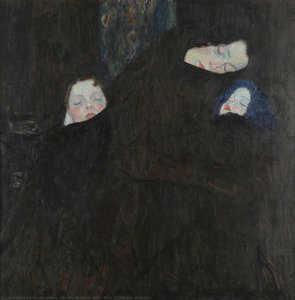 Mother with Two Children (Family) - Gustav Klimt
In Mother with Two Children (Family) by Gustav Klimt, the viewer is immediately drawn into a profound, quiet intimacy. Unlike the exuberant gold leaf of his more famous works, this 1910 masterpiece relies on a masterful manipulation of shadow and light. One can almost feel the heavy, velvety texture of the dark, brownish-black hues that envelop the sleeping figures, creating a somber yet sacred atmosphere. The brilliance of Klimt’s technique lies in the striking contrast; the luminous, tender skin tones of the mother and her children emerge from the darkness like sculpted islands of light, capturing a fleeting moment of domestic tranquility.
This delicate balance of chromatic restraint and emotional depth is what secures its place among the top 25 artworks of Gustav Klimt . At ArtsDot.com, we honor this technical complexity through our hand-painted oil reproductions. Our artists meticulously recreate every subtle tonal shift and soft brushstroke on 100% cotton canvas, ensuring that the tactile, three-dimensional soul of Klimt’s Symbolist vision is preserved for your private collection, bringing the quiet prestige of the Vienna Secession into the modern home.
Lady with Hat and Feather Boa - Gustav Klimt
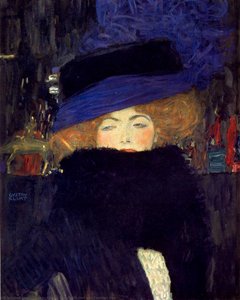 Lady with Hat and Feather Boa - Gustav Klimt
Before the world recognized him as the master of gold, Gustav Klimt was a student of architectural precision, a background that allowed him to infuse Lady with Hat and Feather Boa with an unexpected structural elegance. Painted in 1909, this portrait serves as a breathtaking bridge between the soft, light-drenched textures of Impressionism and the avant-garde spirit of the Vienna Secession. Klimt moves beyond mere likeness, utilizing a sophisticated palette of deep blues, royal purples, and midnight blacks to sculpt the subject's presence.
The technical genius lies in his masterful use of impasto ; the tactile richness of the voluminous fur collar and the delicate, feathered hat create a sensory experience that invites the viewer to touch the canvas. As the background dissolves into an atmospheric, blurred urban landscape, the woman’s direct, melancholic gaze anchors the composition with profound psychological depth. This interplay of opulent texture and introspective stillness makes it one of the top 25 artworks of Gustav Klimt . For the discerning collector, placing such a piece in a modern study or home office fosters an environment of focused elegance and quiet, intellectual ambition.
Girl-friends - Gustav Klimt
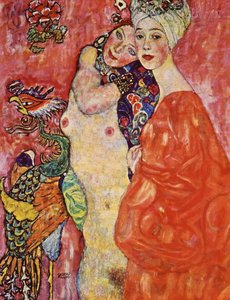 Girl-friends - Gustav Klimt
Owning Girl-friends by Gustav Klimt isn’t merely a purchase; it is an inheritance of the Viennese Secession’s most intimate spirit. Painted in 1916, this masterpiece serves as a profound dialogue between Symbolism and Art Nouveau, capturing a moment of tender, feminine connection that transcends time. As you gaze upon the intertwined figures, you are drawn into a world of sensory richness, where vibrant reds and deep blues collide with the delicate, organic floral motifs characteristic of Klimt’s late period.
The composition is a masterclass in duality: while the soft embrace of the women suggests spiritual serenity, the presence of symbolic birds and a coiled dragon introduces a tension between freedom and primal instinct. To bring this piece into your private collection via ArtsDot is to claim a lineage of taste . Whether through a hand-painted oil reproduction that preserves every meticulous brushstroke or a museum-quality print, Girl-friends allows you to host a legacy of beauty on your own walls, making the opulence of the Golden Phase a permanent part of your architectural narrative.
Spring - Gustav Klimt
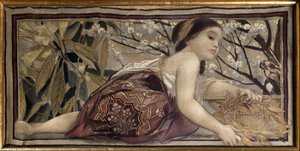 Spring - Gustav Klimt
Acquiring a piece inspired by Spring by Gustav Klimt is an investment in a legacy of unparalleled taste and refined aesthetic sensibility. As one of the most evocative early works within the top 25 artworks of Gustav Klimt, this 1884 masterpiece serves as a profound precursor to his legendary Golden Phase. While existing as a delicate preparatory study, its influence on the trajectory of the Vienna Secession is immeasurable, offering collectors a rare glimpse into the artist's nascent mastery of light and organic symbolism.
The composition envelops the viewer in a realm of serene reverie, where a reclining figure rests amidst a lush profusion of blossoms. One can almost sense the tactile texture of the earth and the luminous, ethereal glow of the flora, echoing the meticulous detail Klimt inherited from his father’s gold-engraving lineage. The interplay of soft charcoal lines and subtle washes creates an atmosphere of quiet contemplation and renewal. For the discerning interior designer, a high-quality oil reproduction of this work brings an unmatched aesthetic authority to modern luxury interiors, providing a sophisticated focal point that radiates timeless elegance and historical prestige.
Dancer, The - Gustav Klimt
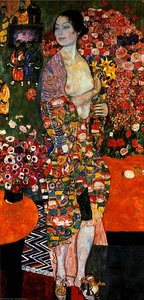 Dancer, The - Gustav Klimt
Step into a world of rhythmic elegance with The Dancer , a mesmerizing 1916 masterpiece by Gustav Klimt that captures the very pulse of life. As you gaze upon the canvas, you are immediately enveloped by a vibrant symphony of reds, lush greens, and sun-drenched yellows. The central figure, poised with an ethereal grace, stands amidst a cascading abundance of floral motifs, her presence radiating a vitality that feels both intimate and divine.
Klimt masterfully employs the decorative language of Art Nouveau, using flattened perspectives and intricate geometric patterns to create a sense of opulent harmony. The subtle aureole surrounding the subject elevates the scene from a mere portrait to a symbolic exploration of beauty and grace. In a contemporary interior, this painting serves as a profound focal point; its rich textures and energetic color palette can breathe life into a room, inspiring moments of creative reflection and bringing the timeless, luxurious spirit of the Vienna Secession into the modern home.
Ex-libris (bookplate) - Vereinigung Bildender Künstler Österreichs Secession - Gustav Klimt
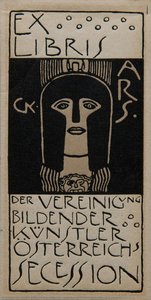 Ex-libris (bookplate) - Vereinigung Bildender Künstler Österreichs Secession - Gustav Klimt
In the Ex-libris (bookplate) - Vereinigung Bildender Künstler Österreichs Secession , Gustav Klimt offers a concentrated distillation of the Vienna Secession’s radical soul. This 1903 masterpiece is far more than a mere bookplate; it is a profound emblem of artistic rebellion. Through the stylized visage of Pallas Athena, Klimt captures the very essence of intellectual courage and the shimmering allure of the Byzantine-inspired aesthetic that defines his legendary Golden Phase.
As one of the most significant works among the top 25 artworks of Gustav Klimt, this piece serves as a gateway to his mastery of symbolic ornamentation. The interplay of radiant halos and intricate, swirling borders evokes a sense of sacred luxury that continues to inspire contemporary high-end design. For the modern collector or interior designer, the piece’s rich palette of gold, deep blues, and vibrant reds provides an unparalleled touch of historical opulence. It remains a timeless testament to how Klimt transformed graphic identity into a profound exploration of wisdom, beauty, and the enduring power of the avant-garde.
The Large Poplar Tree II (Coming Storm) - Gustav Klimt
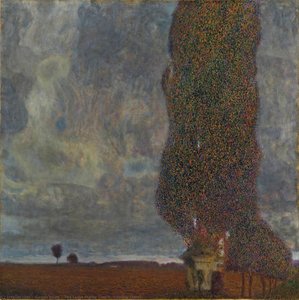 The Large Poplar Tree II (Coming Storm) - Gustav Klimt
Before the golden opulence of his later years fully took hold, Gustav Klimt demonstrated a profound mastery over the raw, elemental forces of nature. In The Large Poplar Tree II (Coming Storm) , we witness a breathtaking departure from rigid academicism, stepping into a world where the atmosphere itself feels alive with tension. This work is an essential inclusion in our curation of the top 25 artworks of Gustav Klimt because it captures the very soul of the Vienna Secession movement—the embrace of organic fluidity and symbolic depth.
The canvas vibrates with a restless energy; Klimt employs a mesmerizing palette of deep greens, fiery reds, and autumnal yellows that dance against a turbulent, swirling sky. Through a delicate sponge technique, he creates a tactile, pointillist-inspired texture on the leaves, making the tree appear as a living, breathing entity amidst the encroaching shadows of the storm. The composition serves as a powerful metaphor for resilience, standing tall against the inevitable winds of change. To possess such a piece is to invite a sense of dramatic movement and historical prestige into one's collection, reminding us that even in the midst of life's storms, there is an enduring, magnificent strength.
Beech Forest, 1902 - Dresden, Morderne Galerie - Gustav Klimt
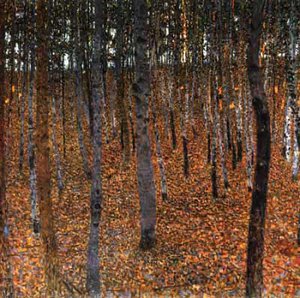 Beech Forest, 1902 - Dresden, Morderne Galerie - Gustav Klimt
To encounter Beech Forest, 1902 is to step into a private, luminous sanctuary curated by the hand of Gustav Klimt himself. As one of the most evocative entries in our collection of the top 25 artworks of Gustav Klimt, this masterpiece transcends mere landscape painting; it is an immersive experience of light and vitality. The composition draws the eye through a dense, rhythmic arrangement of towering trunks, where the vibrant, fiery orange of the leaves creates a breathtaking contrast against the deep, mysterious shadows of the undergrowth.
Klimt masterfully employs his signature Symbolist language here, using organic, almost geometric forms to celebrate the enduring strength of nature. For the discerning collector or interior designer, this work offers an unparalleled sense of quiet prestige. Its warm, autumnal palette and rich, textured depth provide a sophisticated focal point for refined modern interiors, bringing the timeless elegance of the Vienna Secession into the contemporary home. It is not merely a depiction of a forest, but a profound meditation on life, energy, and the beautiful mystery of the natural world.
Conclusion
To wander through the world of Gustav Klimt is to step into a gilded dream where the boundaries between the physical and the ethereal dissolve. As we conclude our journey through these twenty-five masterpieces, we find that his legacy is far more than a mere collection of historical artifacts; it is a living, breathing dialogue that continues to pulse within our modern consciousness. The shimmering gold leaf, the intricate mosaics of pattern, and the profound vulnerability of his subjects do not belong solely to the halls of the Belvedere or the archives of Vienna. Instead, they find their true home when they enter our private sanctuaries, transforming contemporary walls into portals of emotion and light.
Klimt’s ability to capture the delicate tension between Eros and Thanatos—between the ecstasy of life and the inevitability of loss—remains as potent today as it was during the height of the Vienna Secession. When we bring a hand-painted reproduction of his work into a home, we are not merely decorating a space; we are inviting an atmosphere of transcendence. His art teaches us to find beauty in complexity and to embrace the ornamental richness of the human experience. Whether through the sweeping grandeur of a large-scale mural or the intimate presence of a portrait, these works continue to shape our interiors, grounding our modern lives with a sense of timelessness and grace.
As the light fades on this exploration, we invite you to continue your own discovery and bring this enduring brilliance into your personal collection. We invite you to explore the full collection of Klimt’s most evocative works, where every brushstroke serves as a testament to a beauty that never fades.