Introduction
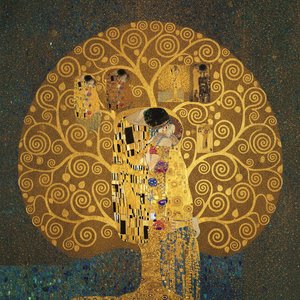
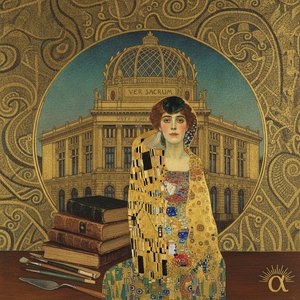
To step into the world of Gustav Klimt is to enter a realm where the boundaries between reality and ornament dissolve into a shimmering haze of gold, pattern, and profound emotion. His work does not merely sit upon a canvas; it radiates, pulling the viewer into an intimate dance of light and shadow that feels both ancient and startlingly modern. As you prepare to journey through these twenty-five definitive masterpieces, imagine yourself walking through a gallery where every corner reveals a new layer of decadence, from the meticulous, metallic textures inspired by his father’s goldsmithing roots to the sweeping, symbolic narratives of the Vienna Secession.
Born in the heart of Austria, Klimt emerged during a period of intense cultural transformation. At a time when the rigid structures of academic tradition were beginning to fracture, he led a rebellion of beauty. Through the formation of the Vienna Secession, Klimt broke free from conservative constraints, embracing the fluid lines of Art Nouveau and the intricate aesthetics of Japonism. His canvases became battlegrounds for new ideas, exploring the raw complexities of human intimacy, the cycle of life and death, and the intoxicating power of eroticism. This was an era of unprecedented psychological depth, where art sought to map the unseen landscapes of the soul.
These selected works remain deeply resonant today because they capture the universal tension between our physical existence and our spiritual aspirations. The "Golden Phase," characterized by its opulent use of gold leaf, offers a sensory experience that transcends time, making his subjects feel like icons of a lost, luxurious era. Yet, beneath the dazzling mosaics lies a vulnerability—a human touch found in the soft rendering of skin and the melancholic gaze of his portraits. Whether it is the geometric abstraction of his patterns or the organic flow of his figures, Klimt’s legacy is a testament to the enduring power of decorative beauty to convey profound truth.
In the following curation, we will explore the evolution of a master. From his early architectural commissions to the breathtaking complexity of his most famous portraits, this list serves as a guide to the works that defined an epoch and continue to captivate collectors and enthusiasts across the globe. Prepare to encounter the brilliance, the gold, and the enduring spirit of Gustav Klimt.
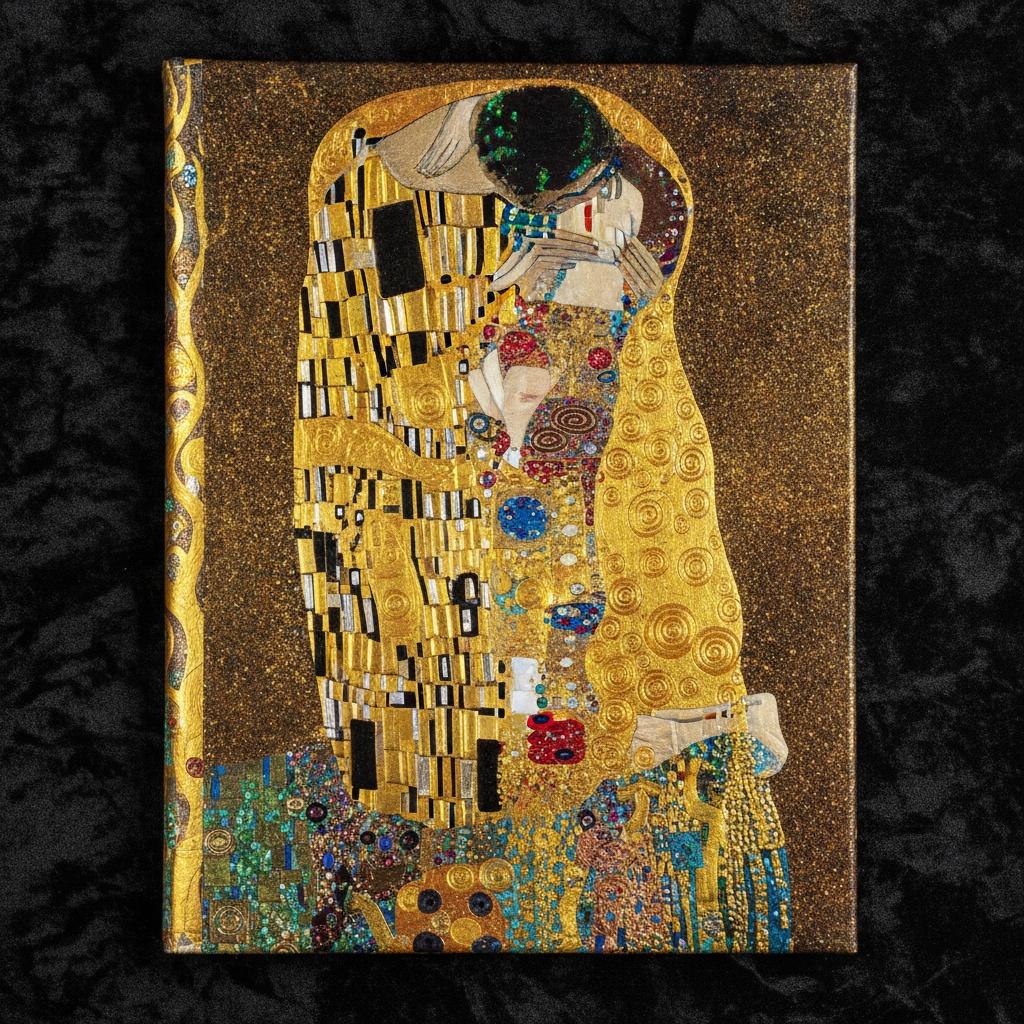
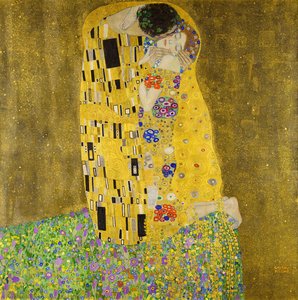
The kiss - Gustav Klimt
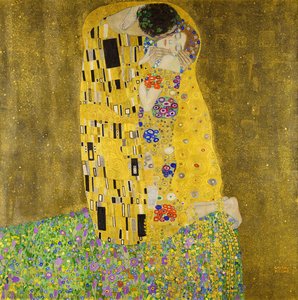 The kiss - Gustav Klimt
While many view The Kiss as a purely romantic gesture, its creation was deeply rooted in Klimt’s fascination with the Byzantine mosaics of Ravenna, where he sought to translate the permanence of gold into the fluidity of oil. This masterpiece, the pinnacle of his legendary Golden Phase , transcends simple portraiture to become a spiritual experience. Through the meticulous application of gold leaf and intricate patterns, Klimt achieves a breathtaking tension between the masculine geometric shapes and the soft, floral motifs of the feminine form.
The painting’s technical genius lies in its flattened perspective, which strips away reality to focus entirely on the luminous, shimmering embrace of the lovers. The jewel-toned accents—deep blues, reds, and greens—emerge from a sea of gold, creating a sense of divine protection and eternal union. As one of the top 25 artworks of Gustav Klimt , this piece offers more than mere decoration; its opulent textures and profound emotional depth provide an unparalleled focal point for a sophisticated study or executive office, inspiring a workspace defined by creativity, prestige, and intellectual richness.
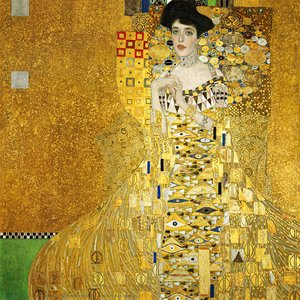
Portrait of Adele Bloch-Bauer I - Gustav Klimt
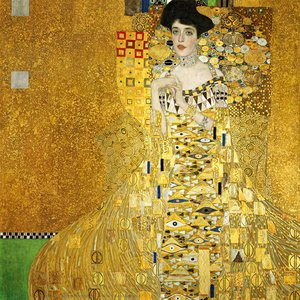 Portrait of Adele Bloch-Bauer I - Gustav Klimt
In Portrait of Adele Bloch-Bauer I by Gustav Klimt, the composition achieves a breathtaking structural harmony through a complex interplay of geometric tessellations and organic, flowing lines. The artwork is anchored by a central figure, yet it dissolves into a mesmerizing sea of gold leaf, where squares, spirals, and eye-like motifs create a rhythmic balance that feels both chaotic and perfectly ordered. This meticulous arrangement of shapes provides a sense of timeless perfection, ensuring its place as a cornerstone in the top 25 artworks of Gustav Klimt .
There is a profound connection between this masterpiece's internal equilibrium and the principles of modern minimalist design; despite its opulent ornamentation, the way Klimt uses flat planes and repetitive patterns provides a grounding effect that complements clean, contemporary aesthetics. As you gaze upon the shimmering gold surfaces, the light seems to dance across the textured impasto, evoking an emotional depth that transcends mere portraiture. It is not just a depiction of a woman, but a sensory experience of luxury and symbolic mystery that continues to captivate the modern eye.
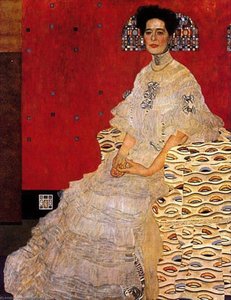
Bildnis Fritza Riedler, 1906 - Österreichische Galerie, Vienna - Gustav Klimt
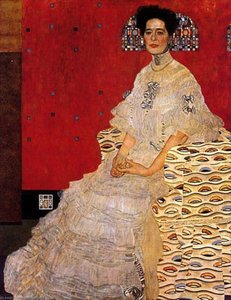 Bildnis Fritza Riedler, 1906 - Österreichische Galerie, Vienna - Gustav Klimt
To gaze upon Bildnis Fritza Riedler is to step directly into the gilded heart of the Vienna Secession. In this 1906 masterpiece, Gustav Klimt captures more than just a prominent socialite; he captures the very essence of an era defined by opulent tension and decorative splendor. The portrait stands as a vital entry in the top 25 artworks of Gustav Klimt because it perfectly balances the tactile richness of his 'Golden Phase' with a profound, psychological depth. As Fritza sits enveloped in a sea of deep reds and shimmering gold leaf, her expression remains enigmatically distant, suggesting a quiet melancholy beneath the surface of high-society luxury.
The painting’s brilliance lies in its mosaic-like texture—the way meticulous dots and organic patterns create a sense of breathing ornamentation. At ArtsDot.com, we specialize in preserving this sensory experience. Our hand-painted oil reproductions meticulously recreate Klimt's signature impasto and the luminous interplay of light and gold, allowing you to bring the sophisticated elegance and historical weight of this Austrian treasure into your own professional or private space.
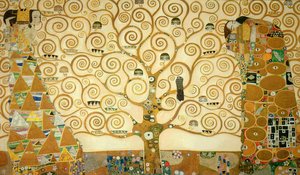
The Tree of Life - Gustav Klimt
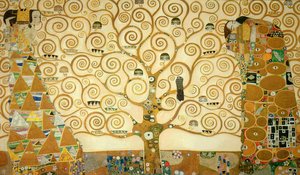 The Tree of Life - Gustav Klimt
Step into a realm of shimmering gold and swirling vitality with The Tree of Life . As you approach this 1909 masterpiece by Gustav Klimt, the canvas seems to breathe with an otherworldly light, driven by the meticulous application of gold leaf that defines his legendary Golden Phase. The central motif—a towering, ornamental tree—unfurls in a hypnotic dance of spirals and organic loops, symbolizing the eternal cycle of growth and interconnectedness.
The texture is profoundly tactile; the interplay of rich oil pigments and metallic luster creates a dynamic surface that catches the light with every movement. Within its intricate branches, stylized figures and architectural elements emerge from a creamy, ethereal background, evoking a sense of profound spiritual peace. For the modern collector, integrating such a piece into a professional or residential space offers more than mere decoration; it introduces an atmosphere of quiet prestige and contemplative calm. This work remains a cornerstone of the top 25 artworks of Gustav Klimt, serving as a luminous anchor that inspires creativity and timeless elegance in any architectural setting.
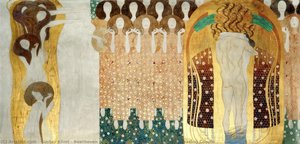
Beethoven Frieze; The Arts, Choir of Angels, Embracing Couple - Gustav Klimt
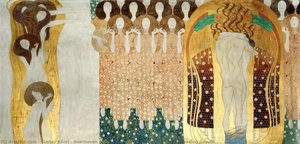 Beethoven Frieze; The Arts, Choir of Angels, Embracing Couple - Gustav Klimt
Step into a realm of gilded transcendence with the Beethoven Frieze; The Arts, Choir of Angels, Embracing Couple by Gustav Klimt. This monumental work acts as a cinematic procession of the soul, where the boundaries between the earthly and the divine dissolve into a sea of gold leaf and intricate ornamentation. As you move through its horizontal expanse, you encounter a rhythmic movement of elongated, nude figures that evoke the solemnity of Byzantine iconography combined with the fluid grace of Art Nouveau.
The atmosphere is thick with symbolic mystery; shimmering textures and soft, diffused light dance across organic shapes and stylized floral patterns, creating a dreamlike state of spiritual contemplation. The rich palette of earthy ochres, deep greens, and luminous golds provides a tactile depth that feels both ancient and avant-garde. In a modern interior, such a masterpiece serves as more than mere decoration; it is an architectural anchor that inspires profound reflection and brings a sense of timeless, opulent calm to any professional or private space.
Water Serpents II (Bewegtes Wasser sfondo) - Gustav Klimt
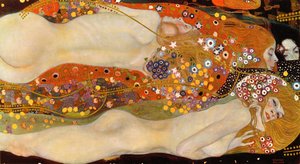 Water Serpents II (Bewegtes Wasser sfondo) - Gustav Klimt
To encounter Water Serpents II (Bewegtes Wasser sfondo) is to step into the fluid, dreamlike heart of Gustav Klimt’s Golden Phase. This masterpiece does not merely sit upon a wall; it breathes with the rhythmic pulse of the Vienna Secession. The composition draws the eye into a mesmerizing swirl of serpentine forms and undulating waves, where the boundaries between the human figure and the natural world dissolve into shimmering, golden textures.
Klimt utilizes a rich, impasto technique to build layers of light and shadow, creating a tactile experience that mirrors the movement of water itself. The reclining figure, nestled within organic, amorphous shapes, evokes themes of primordial beauty and the subconscious. Every curved line and vibrant, contrasting hue serves as a testament to the artist's mastery of Art Nouveau elegance. Owning this piece is an inheritance of Klimt’s profound legacy—a chance to bring a lineage of sophisticated taste into your own space, where the mystery of the water nymphs becomes a permanent, luminous presence.
Farm Garden with Crucifix - Gustav Klimt
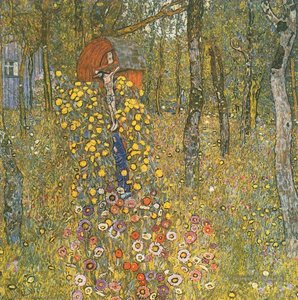 Farm Garden with Crucifix - Gustav Klimt
What if I told you that Farm Garden with Crucifix by Gustav Klimt was born from a moment of profound spiritual introspection—a stroke of brilliance that captures the very pulse of nature? This masterpiece earns its place among the top 25 artworks of Gustav Klimt by masterfully bridging the gap between the earthly and the divine. The canvas vibrates with an impressionistic energy, where fiery yellows and lush greens collide in a textured symphony of light and shadow.
As you observe the woman wandering through this floral meadow, shielded by her red umbrella, you feel the palpable tension between solitude and connection. The subtle inclusion of the crucifix introduces a layer of contemplative melancholy, transforming a simple garden scene into a profound meditation on existence. At ArtsDot.com, we believe such evocative power should not be confined to museums. By bringing this high-quality oil reproduction into your professional or private space, you turn a mere wall into a sanctuary of color and thought. It is more than decor; it is an invitation to find beauty in the fleeting moments of life.
Music I - Gustav Klimt
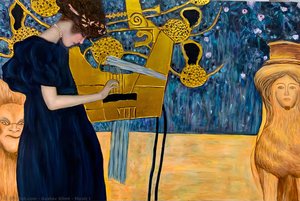 Music I - Gustav Klimt
Imagine standing in a quiet hall where the only sound is the soft, rhythmic vibration of a harp string, pulling you into a state of deep, meditative stillness. This is the atmosphere Gustav Klimt evokes in Music I . Created in 1895, this masterpiece captures a profound moment of spiritual harmony, blending the physical act of performance with a dreamlike, mystical realm. The painting features a central figure lost in musical contemplation, surrounded by swirling, organic patterns and symbolic figures that seem to emerge from a celestial fog.
As one of the top 25 artworks of Gustav Klimt , Music I earns its place through its masterful use of Art Nouveau fluidity and Symbolist depth. The rich interplay of deep blues, warm golds, and earthy tones creates a visual symphony that transcends mere decoration. For the modern professional or decorator, integrating such a piece into a corporate or hospitality space offers more than just aesthetic value; it introduces a sense of rhythmic serenity and intellectual prestige, transforming a standard environment into a sanctuary of culture and refined thought.
Allegory of 'Sculpture' - Gustav Klimt
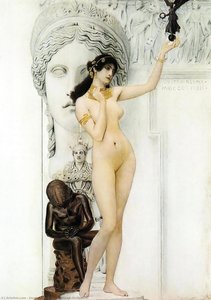 Allegory of 'Sculpture' - Gustav Klimt
In Allegory of 'Sculpture' by Gustav Klimt, the composition achieves a profound structural harmony through a sophisticated interplay of verticality and soft, organic curves. The artwork is anchored by the commanding presence of classical architectural elements, where the rigid lines of stone reliefs provide a stable geometric framework for the ethereal, nude female figure. This balance between the weight of monumental sculpture and the delicate, fluid forms of the human body creates a sense of timeless perfection that remains a standout among the top 25 artworks of Gustav Klimt .
The piece utilizes a muted, nostalgic palette of soft whites and warm golds, evoking a dreamlike atmosphere reminiscent of ancient ruins. Interestingly, this internal equilibrium—the way Klimt balances heavy, textured carvings against smooth, luminous skin—mirrors the principles of modern minimalist design . By stripping away unnecessary chaos to focus on essential forms and light, the work provides a grounding, sophisticated aesthetic that integrates seamlessly into clean, contemporary interiors, proving that even his early academic explorations possess an enduring, modern soul.
Birch Forest, 1903 - Vienna, Osterreichische Museum für Angewandte Kunst - Gustav Klimt
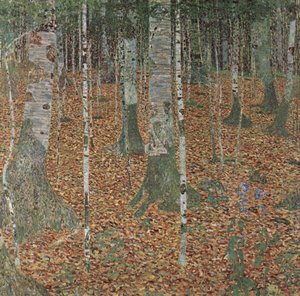 Birch Forest, 1903 - Vienna, Osterreichische Museum für Angewandte Kunst - Gustav Klimt
Imagine stepping into a quiet, sun-dappled clearing where the air is cool and the only sound is the soft rustle of falling leaves. Birch Forest (1903) transports you to this serene autumnal moment, capturing a sense of profound stillness and natural rhythm. In this masterpiece, Gustav Klimt moves away from his famous gold leaf ornamentation to embrace a breathtaking Impressionist elegance, using vertical birch trunks to create a rhythmic, mosaic-like pattern across the canvas.
This work earns its place among the top 25 artworks of Gustav Klimt through its masterful use of texture and light. The interplay of earthy ochres, deep browns, and striking white bark creates a tactile depth that feels almost alive, punctuated only by small, unexpected pops of blue flowers. It is a painting about the cycle of life—the beauty found in transition and decay. Integrating such a tranquil landscape into a modern space offers more than mere decoration; it provides a window to introspection, bringing the healing, restorative power of nature into the heart of your professional or personal environment.
Poppy Field - Gustav Klimt
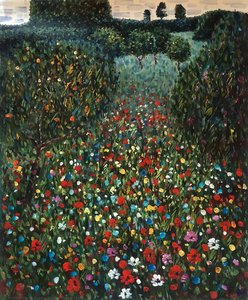 Poppy Field - Gustav Klimt
What story does the vibrant, sun-drenched landscape of Poppy Field by Gustav Klimt tell us about the fleeting nature of beauty? Created in 1907 during the artist's celebrated Golden Phase, this masterpiece emerged from a period where Klimt moved beyond rigid academicism to embrace the organic, flowing spirit of Art Nouveau. The painting captures a lush, wildflower meadow viewed through a dark, hedge-like archway, creating an immersive sense of depth and discovery.
The work is defined by its expressive impasto technique , where thick applications of red, yellow, and blue oil paint create a tactile, three-dimensional texture that breathes life into every petal. For the modern collector, this piece offers more than just visual splendor; it provides a curated escape. Integrating such a radiant, botanical scene into a professional or residential space evokes a sense of tranquility and historical grandeur. As one of the top 25 artworks of Gustav Klimt , Poppy Field remains an essential selection for those seeking to infuse their interiors with the profound emotional depth and rhythmic vitality of the Vienna Secession movement.
Judith - Gustav Klimt
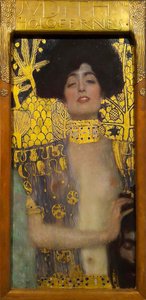 Judith - Gustav Klimt
In Judith , the lines of Gustav Klimt are not merely drawn; they are choreographed into a rhythmic display of power and sensuality. This 1901 masterpiece serves as a profound study in contrast, where the serene, commanding gaze of the female figure meets an explosion of Art Nouveau ornamentation. As one of the most significant works within the top 25 artworks of Gustav Klimt , it captures a moment where strength and grace perform a dance frozen in time.
The composition utilizes a rich, symbolic palette: shimmering gold leaf evokes divinity and wealth, while deep greens suggest the fertile pulse of nature. The texture is tactile and opulent, pulling the viewer into a world where the boundaries between human form and decorative pattern dissolve. It is more than a portrait; it is an atmospheric experience that invites your space to breathe rhythm . For those seeking to bring this level of historical harmony to a corporate or hospitality setting, Judith offers a transformative balance of chaos and exquisite, gilded order.
Avenue of Schloss Kammer Park - Gustav Klimt
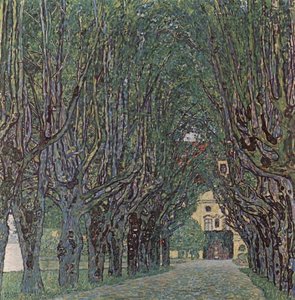 Avenue of Schloss Kammer Park - Gustav Klimt
In Avenue of Schloss Kammer Park , Gustav Klimt invites us to wander through a landscape that transcends mere scenery, offering instead a profound meditation on transition and the sanctuary of nature. As one of the most evocative pieces among the top 25 artworks of Gustav Klimt , this 1912 masterpiece moves away from his famed golden opulence toward a more atmospheric, Symbolist exploration of light and solitude. The composition functions as a natural corridor; tall, slender trees create a rhythmic verticality that draws the eye down a dappled path toward a distant, sun-drenched structure.
The visual language is a symphony of organic textures, where pointillist-inspired brushstrokes build layers of deep emerald, moss, and soft violet. This emphasis on texture and the interplay of light filtering through a dense canopy resonates deeply with modern interior aesthetics that prioritize biophilic design and tranquil, immersive environments. By capturing this sense of quietude and the mystery of the path ahead, Klimt ensures this work remains a vital cultural touchstone for those seeking emotional depth and natural harmony in curated collections.
Hope II - Gustav Klimt
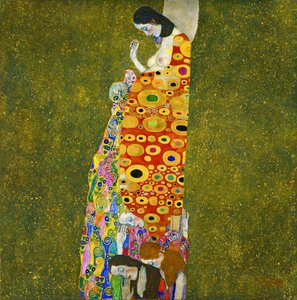 Hope II - Gustav Klimt
Hope II by Gustav Klimt is a profound exploration of intimacy and the interconnectedness of life, standing as a cornerstone among the top 25 artworks of Gustav Klimt . Created during his legendary Golden Phase in 1908, this masterpiece captures a sense of spiritual transcendence through its vertical arrangement of intertwined figures. The composition breathes with emotional depth, utilizing a luminous, speckled gold-green background that makes the vibrant reds, blues, and purples of the flowing robes appear to shimmer from within.
Klimt’s mastery of the Art Nouveau style is on full display here, where organic, swirling patterns merge seamlessly with the human form. For modern collectors and interior decorators, this piece offers an unparalleled sense of luxury and psychological complexity. Its rich, textured surfaces and jewel-like tones provide a sophisticated focal point for high-end spaces, echoing contemporary design trends that value bold ornamentation and symbolic storytelling. Hope II remains an enduring testament to Klimt's ability to blend decorative abstraction with the raw, vulnerable essence of the human experience.
Compositional Sketch for - Gustav Klimt
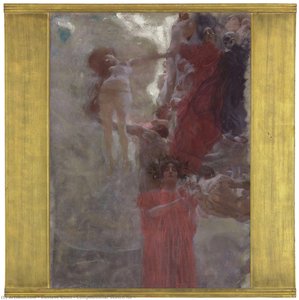 Compositional Sketch for - Gustav Klimt
In Compositional Sketch for , we witness the raw, unbridled energy of Gustav Klimt before the gilded serenity of his later years took hold. This 1898 work serves as a profound psychological blueprint, capturing a moment of intense transition within the artist's oeuvre. The composition is a swirling vortex of Symbolist tension, where the boundaries between life and mortality blur through thick, expressive impasto.
The eye is immediately drawn to the dramatic interplay of figures: the goddess Hygieia stands amidst a chaotic arrangement of limbs and shadows, her presence anchored by the striking red of a figure representing sickness. Klimt utilizes a flattened perspective and atmospheric, diffused lighting to create a dreamlike, almost unsettling depth. Every heavy brushstroke contributes to a sense of instability and movement, as if the figures are caught in a cosmic struggle between health and decay. To possess such a piece is to hold a fragment of the Vienna Secession’s rebellious spirit—a lineage of taste that brings the visceral intensity of Klimt’s creative process directly to your collection.
Head of a Man in Profile (Illustration for - Gustav Klimt
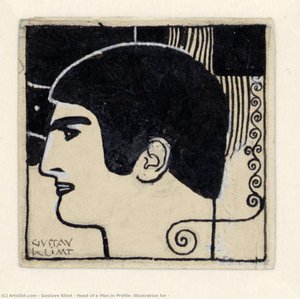 Head of a Man in Profile (Illustration for - Gustav Klimt
Step away from the shimmering gold of Klimt’s later years and enter a world of stark, graphic intimacy with Head of a Man in Profile . Created around 1898, this striking black and white illustration captures a moment of profound introspection, stripping away ornamentation to reveal the raw, modernist pulse of the Vienna Secession. The piece moves with an elegant simplicity, utilizing bold, angular lines and geometric planes that transform a human likeness into a sophisticated design element.
The composition breathes with a quiet, contemplative energy; the subject’s gaze is directed toward an unseen horizon, inviting the viewer into a state of shared reflection. There is a rhythmic beauty in the way Klimt uses thick outlines and simplified forms to create depth without traditional shading. For the modern professional or decorator, this work offers a powerful aesthetic anchor. Its monochromatic palette and structured, minimalist essence make it an ideal selection for contemporary corporate spaces or refined residential interiors, providing a sense of intellectual calm and timeless, architectural strength.
Portrait of Philip Friedrich Christoph, Count of Hohenzollern - Gustav Klimt
 Portrait of Philip Friedrich Christoph, Count of Hohenzollern - Gustav Klimt
In the Portrait of Philip Friedrich Christoph, Count of Hohenzollern , we witness a rare, early glimpse into the technical mastery that would later define Gustav Klimt. Long before his iconic golden era, this 1883 work reveals an artist already composing light like a master musician. The illumination in this piece is not merely a reflection of a physical source; it is a deliberate language used to sculpt the Count’s commanding presence. As you observe the dramatic interplay of chiaroscuro, you can feel the weight of the velvet and the cold precision of the armor, rendered with an almost tactile realism.
The composition uses an arched architectural frame to pull the viewer into a world of Prussian nobility and Baroque grandeur. Earthy tones are punctuated by sudden, regal flashes of crimson and gold, creating a sense of quiet prestige that breathes life into the canvas. This painting stands among the top 25 artworks of Gustav Klimt because it captures the foundational brilliance of his brushwork—a meticulous layering of oil that turns a historical portrait into a portal of atmospheric depth, waiting to bring a sense of timeless authority to any professional space.
Mother with Two Children (Family) - Gustav Klimt
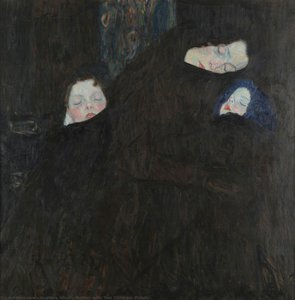 Mother with Two Children (Family) - Gustav Klimt
While many recognize Gustav Klimt for the shimmering opulence of his Golden Phase, Mother with Two Children (Family) reveals a startlingly intimate side of the master. There is a profound, whispered mystery behind this 1910 canvas; scholars believe the sleeping figures may reflect the artist's own private life, capturing the faces of children born from his intense personal relationships during this period. Moving away from flamboyant gold leaf, Klimt utilizes a strikingly restrained palette of deep, brownish-black hues to sculpt the luminous faces of the mother and her sons out of the shadows.
This technical mastery—using extreme chiaroscuro to create islands of light within an enveloping darkness—demonstrates a conceptual leap toward pure emotional resonance. The painting eschews grand narratives for a concentrated focus on domestic tranquility and the weight of silent devotion. For the discerning professional, integrating such a powerful study of focus and quiet strength into a modern home office or study creates an atmosphere of sophisticated contemplation, perfect for deep work and inspired thought.
Lady with Hat and Feather Boa - Gustav Klimt
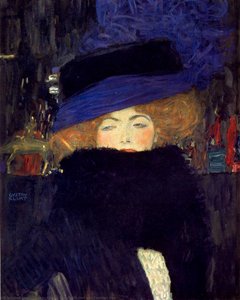 Lady with Hat and Feather Boa - Gustav Klimt
Imagine stepping into the soft, twilight atmosphere of a turn-of-the-century Viennese street, where the air is thick with mystery and the quiet rustle of silk. In Lady with Hat and Feather Boa , Gustav Klimt captures a fleeting moment of aristocratic poise amidst the burgeoning pulse of modern urban life. This portrait transcends mere fashion; it is a profound study of identity at the edge of a new era.
As one of the top 25 artworks of Gustav Klimt , this piece earns its place through its masterful command of texture and mood. The heavy impasto of the dark fur collar and the delicate, feathered hat create a tactile richness that draws the viewer into the subject's enigmatic gaze—a look that oscillates between confidence and a subtle, haunting melancholy. The cool palette of deep blues and purples evokes a sense of sophisticated serenity, making it an ideal centerpiece for those seeking to bring depth and contemplative calm to a professional or residential space. By integrating such a masterpiece into your environment, you invite the timeless elegance of the Vienna Secession into the modern day.
Girl-friends - Gustav Klimt
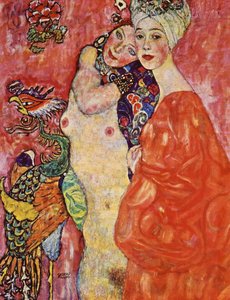 Girl-friends - Gustav Klimt
To encounter Girl-friends by Gustav Klimt is to step into a private moment of Viennese intimacy, a masterpiece that radiates the profound emotional intelligence characteristic of the world's top 25 artworks of 'Gustav Klimt'. Painted in 1916, this work transcends simple portraiture, offering a mesmerizing fusion of Symbolism and Art Nouveau that captures the delicate tension between earthly passion and spiritual grace.
The composition draws the eye into a vibrant tapestry of color; deep, inviting reds meet intricate floral motifs, creating a sensory experience that feels both ancient and avant-garde. Klimt’s masterful use of flattened planes and symbolic elements—such as the soaring bird representing aspiration and the coiled dragon signifying primal instinct—provides a narrative depth that continues to influence modern aesthetic standards. For the discerning collector or decorator, this piece serves as a cornerstone of refined taste. Its rich textures and evocative mood make it an unparalleled statement piece for luxury interiors, bringing a timeless legacy of beauty and sophisticated ornamentation to any high-end architectural space.
Spring - Gustav Klimt
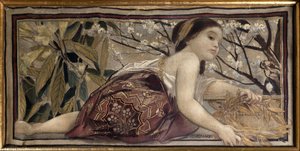 Spring - Gustav Klimt
What story does the lush, blossoming environment in Spring by Gustav Klimt tell us about the artist's earliest creative impulses? Painted in 1884, this evocative work serves as a profound window into Klimt’s formative years, predating his famous Golden Phase. Before he became the icon of the Vienna Secession, Klimt used this piece to explore the delicate intersection of human serenity and the vibrant renewal of nature. The composition features a woman reclining amidst a profusion of blossoms, where the soft interplay of light and shadow creates an atmosphere of quiet contemplation.
For those seeking to curate a sophisticated escape within a modern interior, this painting offers more than mere decoration; it provides a sense of historical depth and tranquil beauty. As one of the essential pieces in our collection of the top 25 artworks of Gustav Klimt , Spring brings an organic, rhythmic energy to any space. Its subtle textures and symbolic floral elements evoke a timeless harmony, making it a perfect selection for collectors looking to introduce a sense of peaceful, classical elegance into corporate or residential environments.
Dancer, The - Gustav Klimt
 Dancer, The - Gustav Klimt
In Dancer, The , the lines of Gustav Klimt’s brush aren’t merely drawn; they are choreographed . This masterpiece is not a static composition but a dance frozen in time , capturing a rhythmic vitality that pulses through its vibrant reds, greens, and yellows. As one of the most captivating entries in our collection of the top 25 artworks of Gustav Klimt, it exemplifies his ability to transform a portrait into an immersive sensory experience.
The central figure, draped in an elaborate gown, stands amidst a lush floral arrangement that symbolizes life and radiant beauty. Through a flattened perspective and intricate geometric patterns, Klimt achieves a profound visual harmony that bridges the gap between Symbolism and Art Nouveau. The painting’s opulent palette and the divine aureole surrounding the subject invite the viewer into a world of luxury and grace. What if your professional space could hold that same balance? What if your walls could breathe rhythm and elegance through such a legendary masterpiece?
Ex-libris (bookplate) - Vereinigung Bildender Künstler Österreichs Secession - Gustav Klimt
 Ex-libris (bookplate) - Vereinigung Bildender Künstler Österreichs Secession - Gustav Klimt
The Ex-libris (bookplate) - Vereinigung Bildender Künstler Österreichs Secession by Gustav Klimt is a profound distillation of the Vienna Secession’s rebellious spirit. More than a mere identifier for books, this 1903 masterpiece captures the very essence of artistic liberation through its striking use of symbolic imagery and ornamental intensity. As one of the most significant works in our collection of the top 25 artworks of Gustav Klimt, it serves as a visual manifesto, showcasing the transition from rigid academicism to the fluid, decorative language of Art Nouveau.
The composition centers on the stylized visage of Pallas Athena, the goddess of wisdom, crowned with a radiant halo that evokes the shimmering opulence of Byzantine mosaics. Klimt’s mastery of pattern and his precursor to the 'Golden Phase' are evident in the swirling, intricate borders that frame the central figure. Today, this work continues to influence modern design sensibilities, where its rhythmic geometry and rich, symbolic palette inspire high-end interiors and sophisticated graphic aesthetics. It remains a timeless testament to the power of intellectual independence and decorative brilliance.
The Large Poplar Tree II (Coming Storm) - Gustav Klimt
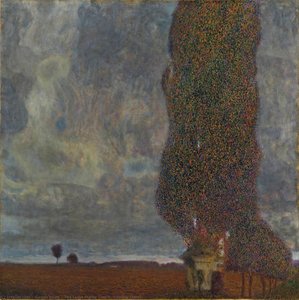 The Large Poplar Tree II (Coming Storm) - Gustav Klimt
Imagine standing in a quiet meadow as the air grows heavy and the light begins to shift; there is a palpable tension in the atmosphere, a breathless pause before the sky breaks. This is the profound emotion captured in The Large Poplar Tree II (Coming Storm) by Gustav Klimt. In this masterpiece, Klimt moves beyond his famous gold leaf to showcase a breathtaking fusion of Art Nouveau and Symbolism. The majestic poplar tree stands as a pillar of resilience, its branches adorned with vibrant reds, yellows, and purples that contrast against the swirling, turbulent clouds of an approaching storm.
This work earns its place among the top 25 artworks of Gustav Klimt through its incredible technical depth—using sponge techniques to create textured, organic foliage—and its ability to evoke the cycle of nature's strength and vulnerability. Bringing such a piece into a modern space offers more than mere decoration; it introduces a sense of dramatic serenity and a reminder of enduring grace amidst life's inevitable storms, enriching any professional or residential environment with timeless prestige.
Beech Forest, 1902 - Dresden, Morderne Galerie - Gustav Klimt
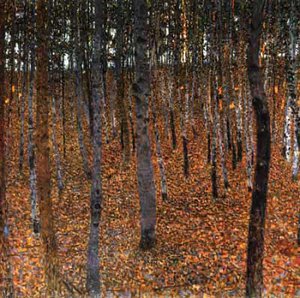 Beech Forest, 1902 - Dresden, Morderne Galerie - Gustav Klimt
In Beech Forest, 1902 , Gustav Klimt invites us into a sanctuary of light and organic geometry, where the boundaries between the physical world and the symbolic realm dissolve. As one of the most captivating entries in our collection of the top 25 artworks of Gustav Klimt, this piece moves away from his famed gold-leafed portraits to explore the raw, rhythmic vitality of the natural world. The composition is dominated by towering trunks and a vibrant canopy of orange leaves that pulse with an almost electric energy, representing life and enduring strength.
Klimt utilizes a flattened perspective and bold, decorative forms characteristic of the Vienna Secession, creating a sensory experience that feels both ancient and strikingly modern. The interplay of warm autumnal tones against darker undergrowth evokes a sense of mystery and refuge, making it a profound subject for contemplation. In today’s curated interiors, the painting’s ability to blend Art Nouveau fluidity with structural depth serves as a powerful cultural touchstone, offering a serene yet visually stimulating focal point that resonates with contemporary desires for connection to nature and organic elegance.
Conclusion
As we draw the curtain on this journey through Klimt’s luminous world, we find that his masterpieces do not merely exist as relics of a bygone Viennese era; they remain vibrant, breathing entities that continue to pulse with life. To stand before his work is to witness the eternal dance between the fragile human spirit and the opulent beauty of the universe. The shimmering gold leaf, the intricate mosaics of pattern, and the profound intimacy of his subjects serve as a bridge across time, connecting our modern sensibilities to the raw, symbolic depths of the human experience.
These paintings have transcended the museum walls to become silent, guiding presences in our most personal spaces. They possess a unique ability to transform a room into a sanctuary, echoing the quiet emotions of love, longing, and transcendence within the architecture of our daily lives. Whether through the bold textures of an oil reproduction or the delicate lines of a print, Klimt’s legacy invites us to find the extraordinary within the ordinary, reminding us that art is not just something we observe, but something we inhabit.
We invite you to continue this exploration and bring a piece of this gilded history into your own environment by browsing our full collection . May these works continue to inspire wonder, shape your surroundings, and serve as a timeless dialogue between the soul and the canvas.