The Birth of Rebellion: Breaking from Academicism in Fin-de-Siècle Vienna
 The Vienna Secession: A Rebellion of Form & Spirit in Fin-de-Siècle Art
The Historical Context: Vienna at the Turn of the Century Wikipedia: Vienna Secession The Vienna Secession (German: Wiener Secession; also known as the Union of Austrian Artists or Vereinigung Bildender Künstler Österreichs) is an art movement, close...
To understand the seismic shift of the Vienna Secession, one must first envision the stifling atmosphere of late 19th-century Vienna. The city was a majestic imperial capital, a jewel of the Habsburg Empire, yet it was also a place gripped by the rigid, suffocating traditions of historical academicism. For decades, the Künstlerhaus—the established Association of Austrian Artists—dictated the boundaries of acceptable taste, favoring a conservative, retrospective style that looked backward toward classical ideals rather than forward toward the burgeoning complexities of the modern age. This was an era of profound contradiction, where the grandeur of the imperial court existed alongside a pulsing, intellectual ferment that yearned for something new.
In 1897, a group of formidably talented visionaries decided they could no longer exist within these constraints. Led by figures such as Gustav Klimt, Koloman Moser, and Josef Hoffmann, this cohort staged a magnificent artistic revolt. They did not merely seek to create a new gallery; they sought to secede from the very concept of artistic stagnation. By resigning from the traditional institutions, they declared that art should no longer be a slave to history or a tool for mere imitation. This rebellion was born from a necessity to breathe, to explore the psychological depths and the decorative possibilities that the old guard refused to acknowledge. It was the beginning of a movement that would eventually redefine the visual language of Europe.
The Manifesto of Freedom: 'To Every Age Its Art' and the Secession Building
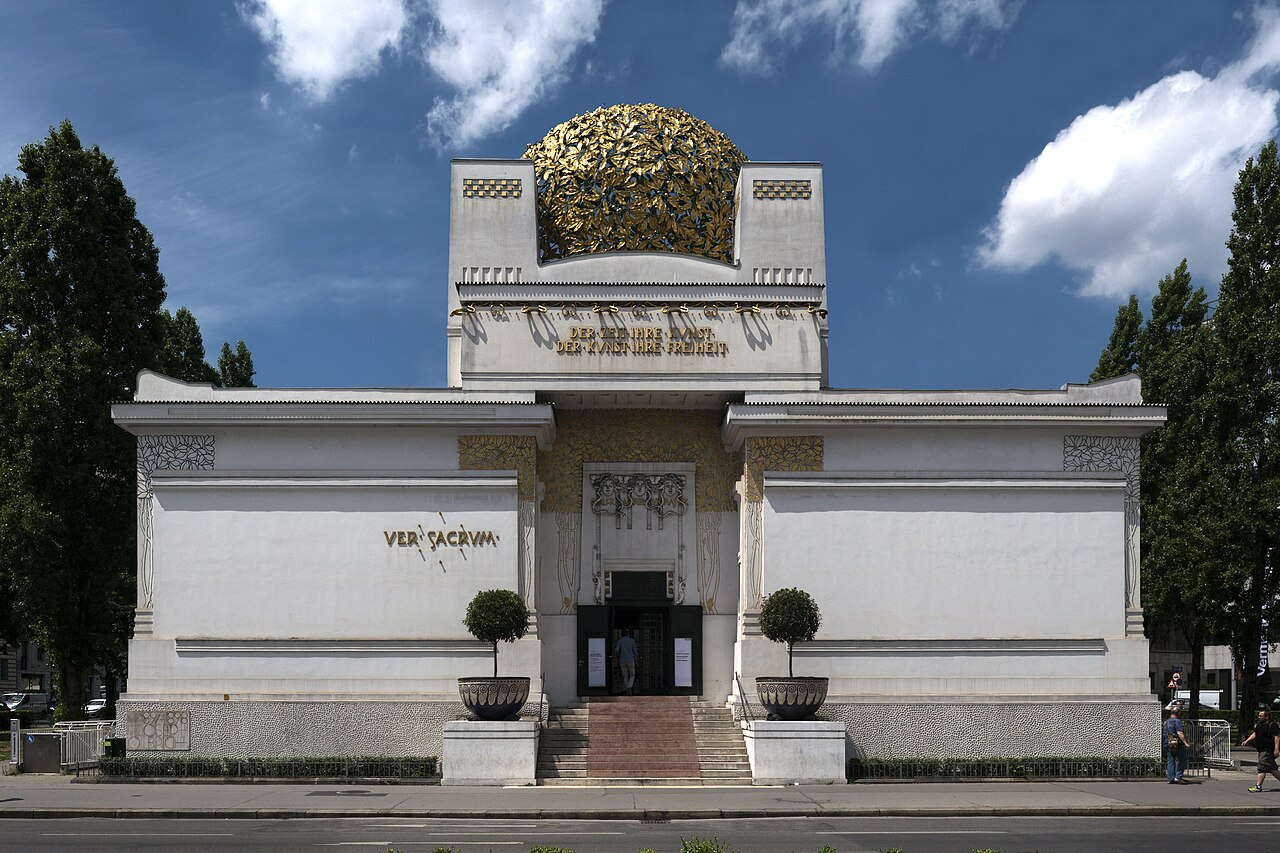 Secession Building
The Secession Building (German: Secessionsgebäude) is a contemporary art exhibition hall in Vienna, Austria. It was completed in 1898 by Joseph Maria Olbrich as an architectural manifesto for the Vienna Secession, a group of rebel artists that secede...
The spirit of this movement was encapsulated in its radical, defiant motto: “To every age its art. To every art its freedom.” This was more than a slogan; it was a manifesto for an era grappling with the dawn of modernity. The Secessionists believed that art must reflect the specific anxieties, triumphs, and textures of its own time. They sought to dissolve the boundaries between fine art, architecture, and design, creating a unified aesthetic experience that could permeate every aspect of daily life. This pursuit of creative autonomy required a physical sanctuary, a place where these new ideas could be exhibited without the censorship of traditionalist critique.
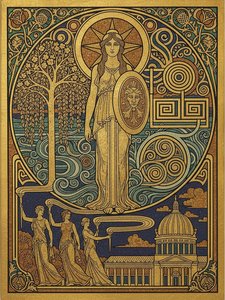
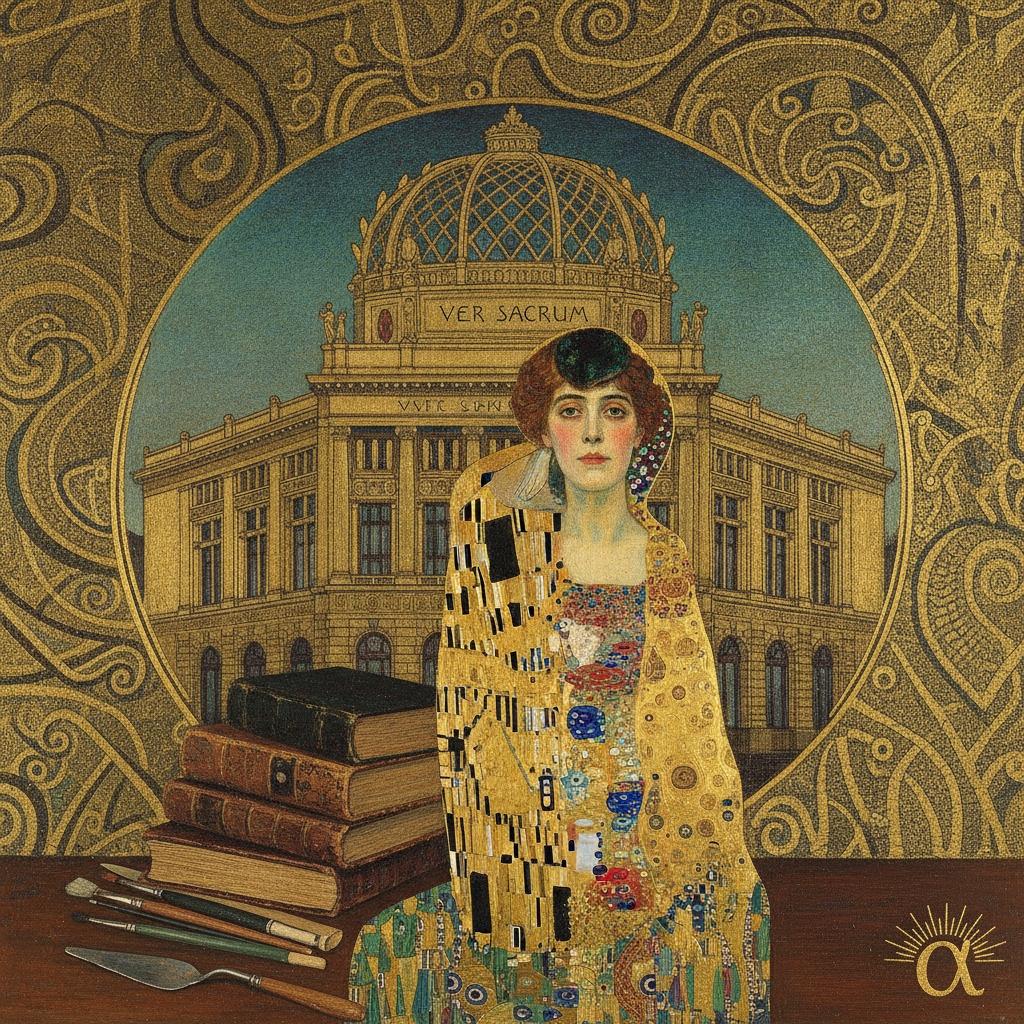
The realization of this sanctuary came in 1898 with the completion of the Secession Building, designed by Joseph Maria Olbrich. The structure itself serves as an architectural manifesto. Moving away from the heavy, stone-clad traditions of the past, the building features a striking, contemporary silhouette crowned by a colossal dome of intricate ironwork laurel leaves, lavishly gilded in gold. This shimmering canopy acts as a beacon, signaling a departure toward something more organic and ethereal. Within these hallowed walls, the movement found its beating heart, providing a stage for works that challenged the viewer to see the world through a lens of symbolism and stylized beauty.
Gustav Klimt and the Golden Age: Symbolism, Gold Leaf, and Human Desire
 The Kiss (Klimt)
The Kiss (German: Der Kuss) is an oil-on-canvas painting with added gold leaf, silver and platinum by the Austrian Symbolist painter Gustav Klimt. It was painted at some point in 1907 and 1908, during the height of what scholars call his "Golden Peri...
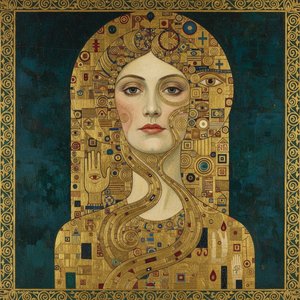
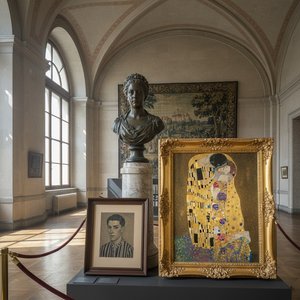
At the center of this golden revolution stood Gustav Klimt, an artist whose very name has become synonymous with the era's opulence. Born into a family touched by the craft of gold engraving, Klimt possessed an innate sensitivity to the allure of precious metals—a trait that would profoundly shape his aesthetic. During what scholars call his "Golden Period," Klimt moved beyond mere representation, using gold leaf, silver, and platinum to transform the canvas into an altar of beauty and mystery. His works, such as the iconic The Kiss, are not merely paintings; they are portals into a world where dreams and reality intertwine.
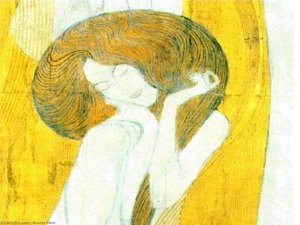
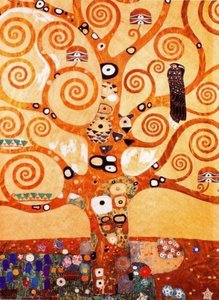
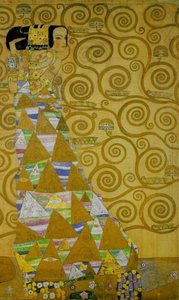
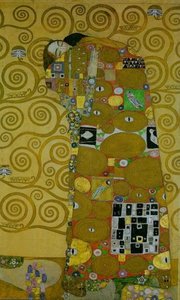
Klimt’s mastery lay in his ability to blend the decorative with the deeply psychological. Influenced by Japanese prints and Byzantine mosaics, he utilized intricate patterns and swirling motifs to explore themes of love, sexuality, and mortality. His portraits often featured women as powerful, enigmatic figures, adorned in shimmering robes that seemed to both conceal and reveal their inner truths. In works like the Stoclet Frieze, created for the Palais Stoclet, Klimt utilized a flattened composition and rich symbolism to meditate on the human condition—depicting the cycles of expectation, fulfillment, and hope. Through his use of gold, he elevated the ephemeral moments of human desire into something timeless and spiritual.
Gesamtkunstwerk: The Total Work of Art in Architecture and Design
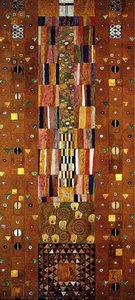 Stocletfrieze, 1905-09 - Vienna, Secession
A Monument to Modernity: Unveiling Gustav Klimt’s Stocletfrieze Gustav Klimt's *Stocletfrieze*, created between 1905 and 1909, isn’t merely a painting; it’s an immersive environment—a monumental cycle of art designed for the dining room of the Palais...
One of the most enduring legacies of the Vienna Secession was the pursuit of the Gesamtkunstwerk, or the "total work of art." For the Secessionists, a masterpiece was not confined to a single frame on a wall; rather, it was an immersive environment where every element—from the architecture of a room to the pattern on a chair and the design of a spoon—contributed to a singular, unified aesthetic vision. This philosophy rejected the fragmentation of modern life, seeking instead to create a harmonious existence through intentional design.
This concept was vividly realized in collaborations between painters, architects, and designers like Josef Hoffmann and Otto Wagner. The Stoclet Frieze serves as a primary example; it was not merely decoration but an integral part of the dining room within the Stoclet Palace, designed by Hoffmann himself. In such spaces, the boundaries between fine art and applied art were dissolved. The use of organic forms, geometric precision, and modern materials like iron and glass created a sense of dynamism and movement. This holistic approach to beauty ensured that art was not something merely observed in a museum, but something lived within, shaping the very atmosphere of the human experience.
Legacy of the Secession: How Modernism Redefined the Decorative Arts
 Art Nouveau
Art Nouveau ( AR(T) noo-VOH; French: [aʁ nuvo] ; lit. 'New Art') is an international style of art, architecture, and applied art, especially the decorative arts. It was often inspired by natural forms such as the sinuous curves of plants and flowers....
The ripples of the Vienna Secession extended far beyond the borders of Austria, influencing the broader Art Nouveau movement and laying the groundwork for much of 20th-century modernism. By championing the value of craftsmanship and the beauty of the handmade, the movement provided a necessary counterpoint to the rapid industrialization of the era. The Secessionists proved that the decorative arts could possess the same intellectual and emotional depth as the highest forms of sculpture or painting, elevating furniture, graphics, and architecture to the realm of profound artistic expression.
Today, we continue to find inspiration in their rebellion. The movement's emphasis on symbolism, its fearless exploration of human identity, and its pursuit of aesthetic unity remain vital themes in contemporary art. For those who wish to bring this era of unparalleled elegance into their own lives, the preservation of these masterpieces is essential. At ArtsDot.com, we honor this legacy by offering museum-quality, hand-painted reproductions of these canonical works. Our master artists use traditional techniques—layering oils on 100% cotton canvas to capture the true texture and depth of Klimt’s gold leaf or the architectural precision of the Secessionists—ensuring that the golden revolution continues to illuminate modern homes across the globe.