Introduction
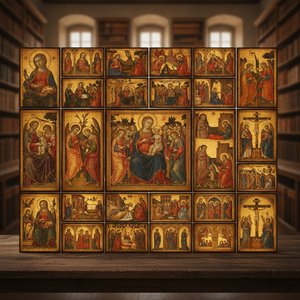
To step into the world of Duccio di Buoninsegna is to witness the very moment the rigid, golden stillness of the Byzantine era began to breathe with human emotion. As we prepare to journey through his most profound achievements, we are not merely looking at relics of the Sienese School; we are observing a revolution in light, grace, and narrative depth. Born in the vibrant heart of Siena around 1255, Duccio stood at a historic crossroads, acting as the bridge between the celestial, unmoving icons of the East and the burgeoning naturalism that would soon define the Italian Renaissance.
His canvases—and even more magnificent, his monumental altarpieces—possess a unique, lyrical quality. While he maintained the sacred reverence of gold leaf and divine symbolism, Duccio introduced something radical: humanity . In the subtle tilt of a Madonna’s head or the tender, weighted movement of a saint’s drapery, one finds the dawn of a new visual language. He moved beyond the flat, symbolic planes of his predecessors to experiment with spatial intimacy and a palette that felt harmoniously alive, as if the divine were finally descending into the earthly realm.
Today, these works remain deeply resonant, offering more than just historical significance; they offer a profound emotional connection. In an age of digital fleetingness, Duccio’s mastery reminds us of the power of permanence and the beauty of meticulous craftsmanship. His ability to infuse sacred stories with palpable tenderness continues to inspire collectors and historians alike, serving as a testament to the enduring strength of the Sienese spirit.
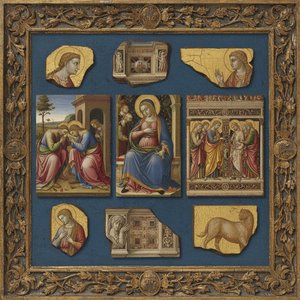
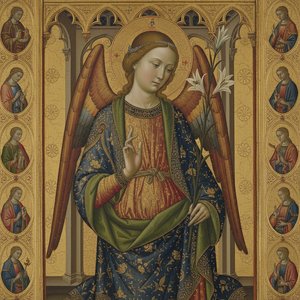
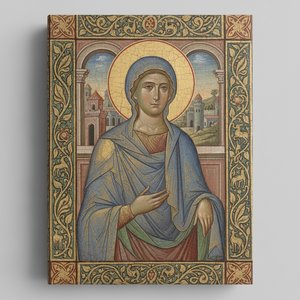
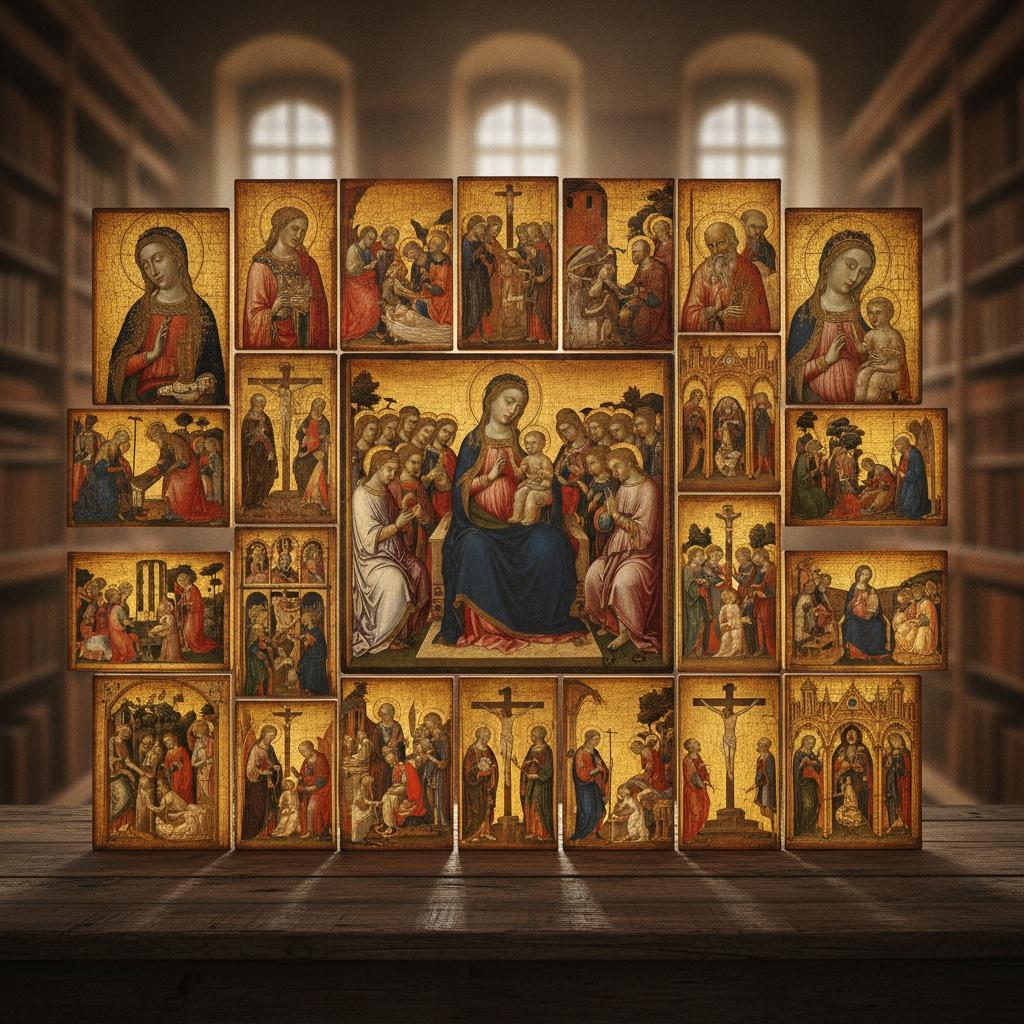
In the following curation, we invite you to explore twenty-five of his most essential works. From the iconic majesty of the Maestà to his more intimate devotional panels, each piece serves as a window into a transformative era of art history—a collection that celebrates the delicate dance between tradition and innovation.
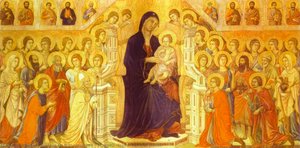
Maestà (Madonna with Angels and Saints) - Duccio di Buoninsegna
In the Maestà (Madonna with Angels and Saints) , Duccio di Buoninsegna captures a profound sense of celestial serenity through the tender, protective gaze of the Virgin Mary. As one of the most significant entries in our collection of the top 25 artworks of Duccio di Buoninsegna , this monumental altarpiece transcends its religious origins to offer a universal mirror of maternal grace and divine peace. The composition is a breathtaking symphony of gold leaf, deep ultramarine, and rich crimson, where layers of saints and angels emerge from a luminous, gilded background.
The psychological depth found in the subtle modeling of the figures—a hallmark of the Sienese School—invites the viewer into a state of quiet contemplation. For the discerning collector or interior designer, integrating a reproduction of this masterpiece into a private residence can transform a room into a sanctuary of profound reflection. The interplay of light and sacred symbolism provides an unparalleled atmosphere of calm, making it an exquisite centerpiece for any space dedicated to elegance and spiritual repose.
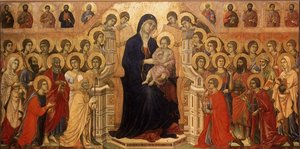
MaestÓ (front, central panel) - Duccio di Buoninsegna
To behold the central panel of the Maestà is to witness the very moment Italian art began to breathe with human emotion. As one of the most profound achievements in the top 25 artworks of Duccio di Buoninsegna , this masterpiece serves as a celestial gateway, unveiling a vision of divine majesty that has captivated collectors for centuries.
Duccio masterfully orchestrates a symphony of gold leaf and luminous tempera, where the Virgin and Child radiate a serene, quiet prestige amidst a crowded heavenly court. The composition is a breathtaking transition from rigid Byzantine tradition to a more tender, Gothic naturalism; notice how the rich ochres and radiant halos create an atmosphere of sacred opulence. For the discerning collector or interior designer, this work offers more than historical significance—it provides a focal point of timeless beauty. Its ability to infuse a sophisticated space with a sense of eternal light and spiritual depth makes it an incomparable icon of the Sienese School, embodying a legacy of grace that remains as relevant in a modern luxury setting as it was in 1311.
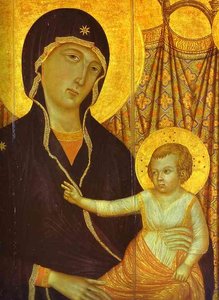
Rucellai Madonna - Duccio di Buoninsegna
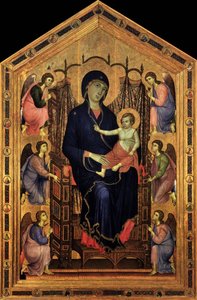 Rucellai Madonna - Duccio di Buoninsegna
What story does the celestial atmosphere within the Rucellai Madonna by Duccio di Buoninsegna tell of a world transitioning from the rigid Byzantine era to the tender warmth of the Italian Gothic? Created around 1285, this monumental altarpiece emerged from the artistic fervor of Siena’s golden age, commissioned by the Florentine Compagnia dei Laudesi . As one of the top 25 artworks of Duccio di Buoninsegna, it marks a revolutionary moment where sacred iconography began to breathe with human emotion.
The painting is a symphony of light and devotion; notice how the shimmering gold leaf and deep azure robes create a luminous texture that feels both divine and tactile. The figures, including twelve saints and ethereal angels, are arranged in a way that invites the viewer into a sacred, intimate space. For the modern collector, bringing such a piece into a curated home offers more than mere decoration; it provides a profound escape into history, evoking a sense of timelessness and spiritual grandeur through its masterful use of tempera and symbolic brilliance.
Annunciation - Duccio di Buoninsegna
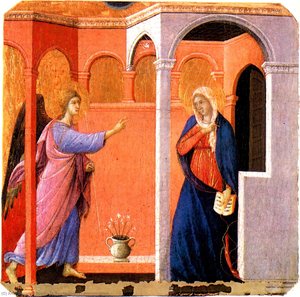 Annunciation - Duccio di Buoninsegna
In the quiet stillness of 1308, Duccio di Buoninsegna captured a moment of profound celestial intersection in his Annunciation . As you stand before this intimate panel, originally part of the monumental Maestà , you are not merely observing a biblical event; you are witnessing the dawn of human emotion in Italian art. The Archangel Gabriel descends with graceful, sweeping wings, meeting the Virgin Mary in a space where Byzantine gold leaf meets a burgeoning, lyrical naturalism.
The atmosphere is heavy with sacred significance, yet remarkably tender. Notice the delicate interplay of light upon the lilies and the symbolic weight of the deep red backdrop, which evokes both passion and sacrifice. The subtle gestures—the gentle grip on a scripture book, the poised tilt of a head—infuse the scene with a soulful humanity that transcends centuries. For the discerning collector, integrating such a masterpiece into a contemporary interior offers more than decoration; it introduces a sense of timeless serenity and contemplative depth, inviting a moment of grace into the modern home.
The Virgin and Child with Saints Dominic and Aurea - Duccio di Buoninsegna
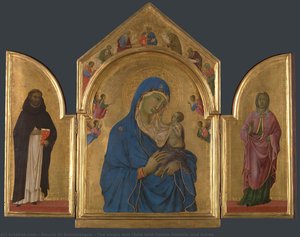 The Virgin and Child with Saints Dominic and Aurea - Duccio di Buoninsegna
In The Virgin and Child with Saints Dominic and Aurea , Duccio di Buoninsegna achieves a breathtaking geometric equilibrium that serves as a cornerstone of his legacy within the top 25 artworks of Duccio di Buoninsegna. The composition is anchored by a central, pyramidal stability; the Virgin Mary forms a sacred focal point, her serene silhouette balanced perfectly by the flanking presence of Saint Dominic and Saint Aurea. This structural harmony creates a sense of timeless perfection, where every line leads the eye toward the divine center.
There is a profound, quiet rhythm in the arrangement of the Old Testament prophets above, whose placement provides a celestial weight to the upper register. Much like the principles of modern minimalist design , Duccio utilizes a clean, intentional hierarchy that avoids clutter, allowing the luminous gold leaf and rich pigments to breathe. This balance between intricate symbolism and structural clarity offers an enduring appeal, providing a sophisticated aesthetic that grounds contemporary spaces with its ancient, rhythmic grace.
Nativity - Duccio di Buoninsegna
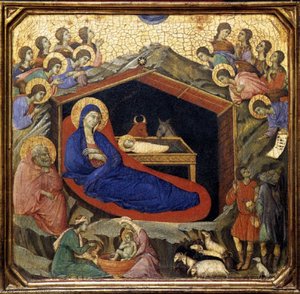 Nativity - Duccio di Buoninsegna
In Duccio di Buoninsegna's Nativity , one is immediately enveloped by a profound sense of quietude and sacred intimacy. The gaze directed toward the infant Christ does not merely observe; it radiates a tender, maternal devotion that bridges the gap between the divine and the human. As a cornerstone in our collection of the top 25 artworks of Duccio di Buoninsegna , this tempera on panel masterpiece captures the delicate transition from Byzantine rigidity to a more soulful, naturalistic Sienese Gothic style.
The composition breathes with life through its rich palette of deep lapis blues and warm, earthy ochres, while the soft light illuminating the manger creates a sanctuary of peace within the rustic cave. The presence of the ox and donkey adds a touch of earthly reality to this celestial event, inviting viewers into a moment of timeless reverence. For the discerning collector or interior designer, integrating such an emotionally resonant piece into a private study or a quiet corner of a home can transform a room into a space for profound reflection, offering a window into the very dawn of Italian Renaissance emotion.
Triptych - Duccio di Buoninsegna
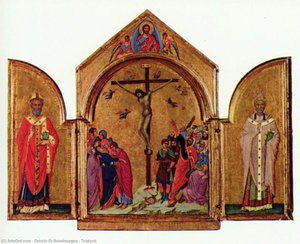 Triptych - Duccio di Buoninsegna
In the Triptych by Duccio di Buoninsegna, time seems to dissolve into a luminous haze of gold and grace, capturing a moment of eternal devotion frozen in the transition from Byzantine tradition to Sienese Gothic elegance. This masterpiece earns its place among the top 25 artworks of Duccio di Buoninsegna through its profound ability to weave sacred narrative with human tenderness. The central panel radiates an ethereal glow, where layers of translucent tempera and shimmering gold leaf create a celestial light that feels both otherworldly and intimately present.
As your eyes wander from the tender scene of Mary nursing the Christ child to the humble presentation of Jesus to the shepherds, you encounter a sensory journey of deep pigments and soft, emotive gestures. The rich textures of the wood panel and the meticulous detail of the surrounding saints offer a quiet prestige that transcends centuries. In a contemporary setting, such a piece serves as a sophisticated anchor, bringing a sense of historical depth, spiritual calm, and architectural grandeur to any curated collection or refined interior space.
Calling of Peter and Andrew - Duccio di Buoninsegna
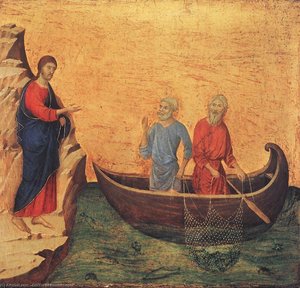 Calling of Peter and Andrew - Duccio di Buoninsegna
In the Calling of Peter and Andrew , one can almost feel the delicate, rhythmic texture of the tempera layers, where Duccio’s precise brushwork captures the tension between the rocky shoreline and the fluid sea. The painting is a masterclass in Sienese Gothic elegance; notice how the luminous gold accents catch the light, creating a celestial glow that transcends the physical panel. This work stands as a vital entry in our collection of the top 25 artworks of Duccio di Buoninsegna because it captures the exact moment where Byzantine formality begins to breathe with human emotion and nascent naturalism.
At ArtsDot.com, we believe such profound spiritual encounters deserve to be experienced with their original tactile depth. Our master artists meticulously recreate these visible brushstrokes and rich, layered pigments on 100% cotton canvas, ensuring that the three-dimensional soul of Duccio’s masterpiece is preserved for your private collection. We bring the quiet prestige of the Sienese School into the modern home, offering a window into the dawn of Italian vision through hand-painted excellence.
Ezekiel - Duccio di Buoninsegna
 Ezekiel - Duccio di Buoninsegna
In the quiet intimacy of Ezekiel , created around 1308, one encounters a profound moment of divine revelation. Though small in scale, this panel painting by Duccio di Buoninsegna commands the room with an aura of ancient authority. The figure emerges from a luminous, gilded background, where the meticulous application of gold leaf creates a celestial atmosphere that seems to vibrate with sacred light. As your eyes trace the delicate modeling of the prophet’s face and the heavy, geometric folds of his drapery, you witness the precise moment where Sienese Gothic elegance meets a burgeoning human naturalism.
The central symbol—the scroll held aloft—serves as a powerful anchor of wisdom and prophetic knowledge. For the modern collector or interior designer, integrating a reproduction of such a masterpiece offers more than mere decoration; it introduces a sense of historical gravity and contemplative calm. The interplay of rich pigments and shimmering gold provides a sophisticated focal point, perfect for an curated space seeking to inspire reflection and intellectual depth through the enduring legacy of the Sienese School.
Crucifixión con San Nicolás y San Gregorio. San Nicolás de Mira - Duccio di Buoninsegna
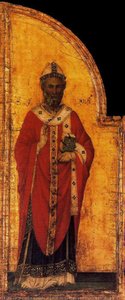 Crucifixión con San Nicolás y San Gregorio. San Nicolás de Mira - Duccio di Buoninsegna
In the Crucifixión con San Nicolás y San Gregorio , Duccio di Buoninsegna invites us into a profound moment of spiritual intersection, where the celestial meets the deeply human. This work is far more than a religious icon; it is a masterclass in the Sienese Gothic style, capturing the raw, emotive power that defines his greatest contributions to art history. As you contemplate this piece, notice how the luminous gold leaf creates an ethereal atmosphere, yet Duccio anchors the divine drama with a burgeoning sense of naturalism.
The composition breathes with a solemn dignity, showcasing the artist's ability to weave intricate textures—from the heavy, regal drapery of the saints to the delicate, sorrowful expressions that foreshadow the Renaissance. To possess a reproduction of such a masterpiece is to invite a transformative energy into your home, turning a private sanctuary into a gallery of the soul . Through his meticulous use of tempera and light, Duccio ensures that this depiction of faith remains an eternal, living presence in any curated collection.
Crucifixion - Duccio di Buoninsegna
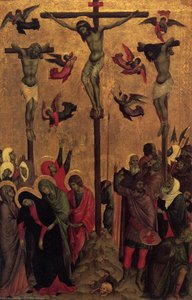 Crucifixion - Duccio di Buoninsegna
In the Crucifixion (circa 1310), Duccio di Buoninsegna captures a moment where the celestial and the earthly collide with breathtaking intensity. This masterpiece is not merely a religious icon; it is a profound emotional journey that invites the viewer to witness the very heart of human suffering and divine grace. As you stand before this work, the luminous gold background—a hallmark of Byzantine splendor—radiates a heavenly light, yet the figures possess a nascent naturalism that feels startlingly intimate.
Duccio masterfully balances the rigid, monumental drapery of the Sienese tradition with an emerging Italian expressionism. The central figure of Christ is flanked by smaller crucifixions, a deliberate compositional choice that expands the narrative of sacrifice across time and space. Notice the delicate interplay of light on the tempera-on-gesso surface; the sorrow etched into the faces of mourning angels and onlookers creates a palpable sense of pathos. To possess a reproduction of such a work is to invite a piece of history into your home, transforming a simple wall into a sacred gallery of the soul.
Agony in the Garden (detail) - Duccio di Buoninsegna
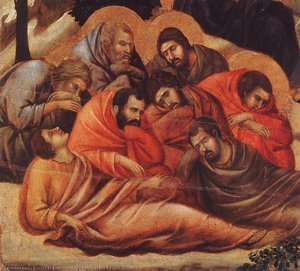 Agony in the Garden (detail) - Duccio di Buoninsegna
In the Agony in the Garden (detail) , Duccio di Buoninsegna does not merely paint a biblical event; he choreographs a moment of profound spiritual tension. The lines within this detail are not simply drawn; they are choreographed , guiding the eye through a rhythmic arrangement of figures that feel like a dance frozen in time. As we gaze upon the kneeling Christ, surrounded by disciples draped in symbolic, sacrificial reds, we witness the precise moment where Byzantine grandeur meets the tender pulse of human vulnerability.
The composition achieves a breathtaking balance, making the heavy weight of divine sorrow feel like a harmonious, breathing rhythm. The luminosity of the tempera on panel creates an ethereal glow, casting light upon faces etched with contemplative grace. This piece is a cornerstone of the top 25 artworks of Duccio di Buoninsegna because it transcends static iconography to offer something deeply visceral. Imagine your own collection holding this same equilibrium—where walls do not just display art, but breathe the very history and emotion of the Sienese School.
Last Supper - Duccio di Buoninsegna
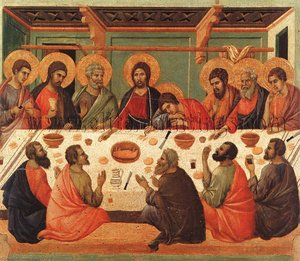 Last Supper - Duccio di Buoninsegna
To encounter the Last Supper by Duccio di Buoninsegna is to witness a profound moment of transition, where the rigid icons of the Byzantine era first began to breathe with human emotion. Housed in the Museo dell'Opera del Duomo, this 1308 masterpiece serves as a cornerstone in our collection of the top 25 artworks of Duccio di Buoninsegna, marking the dawn of a more naturalistic Italian vision.
Within this intimate tempera work, Duccio transcends mere religious iconography to stage a psychological drama. The scene is anchored by Christ at the center, yet it is the subtle movement—the furrowed brows, the expressive hands, and the heavy, expectant silence among the apostles—that captivates the discerning eye. His masterful use of light and shadow sculpts figures with a newfound volume, while a regal palette of deep reds and celestial blues imbues the composition with symbolic weight. For the modern collector, this work represents more than historical significance; it embodies a timeless aesthetic of grace and gravity, offering an unparalleled sense of narrative depth that resonates in even the most refined contemporary interiors.
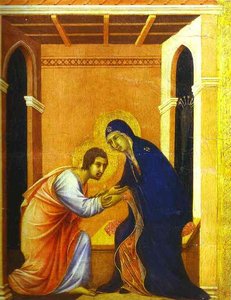
Washing of the Feet - Duccio di Buoninsegna
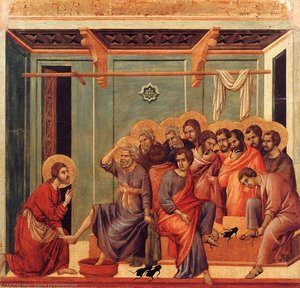 Washing of the Feet - Duccio di Buoninsegna
In the quiet, sacred atmosphere of Duccio di Buoninsegna’s Washing of the Feet , time seems to suspend itself. As part of the monumental Maestà altarpiece, this intimate panel captures a profound moment of divine humility. One can almost feel the stillness of the room, broken only by the soft movement of Christ as He tends to His disciples. Duccio masterfully employs the rich, luminous textures of tempera and gold leaf, characteristic of the Sienese School, to illuminate the scene with a celestial glow.
The composition is a delicate dance of light and shadow; the apostles surround the central figure in various states of reverence and surprise, their expressions rendered with an emerging naturalism that breathes life into the Byzantine tradition. The subtle presence of two birds adds a layer of tranquil symbolism, inviting a sense of peace to the viewer. For the discerning collector or interior designer, bringing a reproduction of this masterpiece into a contemporary space offers more than mere decoration; it introduces a meditative focal point that inspires reflection, grace, and an enduring sense of spiritual calm.
Conjectural reconstruction of the Maestà (front) - Duccio di Buoninsegna
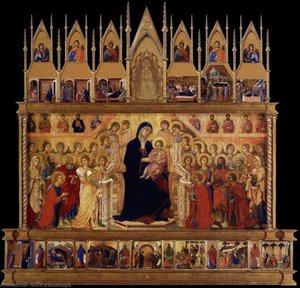 Conjectural reconstruction of the Maestà (front) - Duccio di Buoninsegna
To contemplate the Conjectural Reconstruction of the Maestà (front) by Duccio di Buoninsegna is to experience a profound encounter with the divine. It is not merely an image, but a celestial vision where the shimmering gold leaf meets a nascent, human tenderness. In this monumental composition, the Virgin Mary sits enthroned as the Queen of Heaven, her presence radiating a serene authority that anchors a swirling assembly of angels and saints. This work earns its place among the top 25 artworks of Duccio di Buoninsegna because it captures the very moment Italian art began to breathe, transitioning from rigid Byzantine icons to the emotive, flowing grace of the Gothic style.
The intricate architecture of arches and pillars frames a symphony of spiritual devotion, where every fold of drapery and subtle facial expression tells a story of faith. At ArtsDot, we honor this legacy through our hand-painted oil reproductions . Our master artists meticulously recreate the luminous textures and sacred depth of Duccio’s vision, allowing you to invite this timeless, majestic atmosphere into your own private collection with unparalleled authenticity.
Christ Mocked (detail) - Duccio di Buoninsegna
 Christ Mocked (detail) - Duccio di Buoninsegna
To encounter the Christ Mocked (detail) is to witness a profound fragment of history; owning such a piece from the top 25 artworks of Duccio di Buoninsegna is not merely a purchase, but an inheritance of the Sienese soul. Extracted from the monumental Maestà , this detail captures the raw, palpable tension where divine humility meets human cruelty. The composition vibrates with a dynamic, tragic energy: an older man’s accusatory finger pierces the stillness, his furrowed brow reflecting a malice that contrasts sharply with the veiled figure’s quiet, sorrowful resignation.
Duccio masterfully bridges the gilded majesty of Byzantine tradition with a burgeoning Gothic naturalism. Through subtle modeling and the interplay of light upon drapery, he transforms sacred iconography into a deeply human experience. For the discerning collector, this detail represents a lineage of taste—a way to bring the weight of the Trecento era into a contemporary space. With ArtsDot, this legacy is no longer confined to cathedral walls; it becomes part of your own architectural narrative, where every brushstroke serves as a silent nod to the masters.
Arrest of Christ (Fragment) - Duccio di Buoninsegna
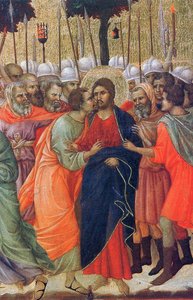 Arrest of Christ (Fragment) - Duccio di Buoninsegna
In the quiet intensity of Duccio di Buoninsegna's Arrest of Christ (Fragment) , we find ourselves standing at the precipice of a spiritual revolution. Painted around 1311, this fragment is far more than a mere remnant; it is a window into an era where Byzantine rigidity began to yield to a burgeoning humanism. As you gaze upon the scene, the tension is palpable. The arrest of Jesus is not depicted as a distant icon, but as a visceral, unfolding tragedy.
Duccio did not merely paint light; he composed it , using the luminous brilliance of tempera to create a language of divine presence amidst earthly turmoil. Notice how the light catches the metallic sheen of Roman helmets and the delicate textures of drapery, pulling the viewer into a swirling composition of movement and mounting dread. Every element, from the symbolic placement of the bowl to the emotional vulnerability in the figures' gestures, whispers of deeper theological truths. This masterpiece is a profound testament to the Sienese School, offering a portal of inspiration that brings the weight of history into the modern home.
Flight into Egypt - Duccio di Buoninsegna
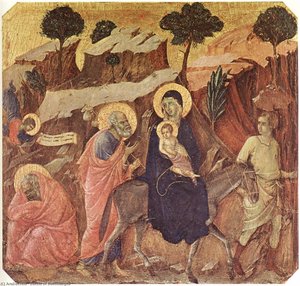 Flight into Egypt - Duccio di Buoninsegna
A profound sense of quietude and divine protection emanates from Flight into Egypt by Duccio di Buoninsegna, a work that captures the very breath of a sacred journey. As part of our curated selection of the top 25 artworks of Duccio di Buoninsegna, this piece stands as a masterclass in the transition from Byzantine formality to the tender humanism of the early Renaissance. Through the luminous gold leaf and the rhythmic, earthy tones of the landscape, Duccio invites us into a moment of profound vulnerability and faith.
The painting is indispensable to his legacy because it does not merely depict an escape; it orchestrates an emotional atmosphere where the celestial meets the terrestrial. The delicate interplay of light and the symbolic weight of each figure offer a spiritual depth that has captivated collectors for centuries. At ArtsDot.com, we believe such transformative beauty should not be confined to distant cathedrals. Through our meticulous, hand-painted oil reproductions, you can bring this timeless, meditative presence into your own home or professional gallery, allowing the majesty of the Sienese School to inspire your modern space.
Descent to Hell - Duccio di Buoninsegna
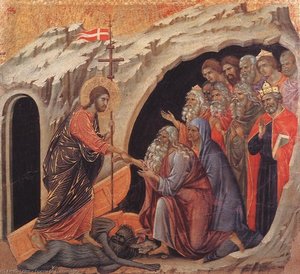 Descent to Hell - Duccio di Buoninsegna
In the Descent to Hell by Duccio di Buoninsegna, one is immediately struck by the luminous, layered depth of the tempera on wood. To observe this work is to witness the meticulous application of translucent glazes, where every stroke of pigment mixed with egg yolk creates a celestial glow that seems to emanate from within the cave itself. The texture of the drapery and the solemn, kneeling posture of Christ reveal a revolutionary shift from Byzantine flatness toward a profound, humanized emotionality.
This masterpiece stands within our collection of the top 25 artworks of Duccio di Buoninsegna because it captures the very dawn of the Proto-Renaissance, blending sacred symbolism with an intimate, tactile realism. At ArtsDot.com, we honor this technical brilliance by offering hand-painted oil reproductions that replicate these essential, visible brushstrokes and rich tonal ranges. Our artisans strive to preserve the three-dimensional soul of Duccio’s vision, ensuring that the spiritual weight and physical texture of this Sienese treasure can grace the walls of the most discerning collectors.
The Maestà Altarpiece, detail from the predella featu - Duccio di Buoninsegna
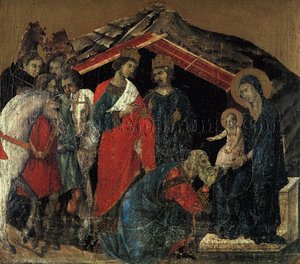 The Maestà Altarpiece, detail from the predella featu - Duccio di Buoninsegna
In the intimate scale of The Maestà Altarpiece, detail from the predella , we encounter the profound heartbeat of Sienese devotion. While the monumental Maestà commands the cathedral, these delicate predella panels offer a window into Duccio di Buoninsegna’s ability to weave the divine into the domestic. Within this scene, the vibrant reds of the figures' garments and the gentle presence of horses create a narrative that feels both sacred and deeply human.
This work earns its place among the top 25 artworks of Duccio di Buoninsegna through its masterful use of tempera on wood, where luminous glazes capture a soft, celestial light. The composition—rich with symbolic figures and tender gestures—serves as a precursor to the humanist movement, bridging Byzantine rigidity with emotional warmth. For the discerning collector or interior designer, such a piece offers more than mere decoration; it provides a soulful focal point. Integrating the essence of Duccio’s predella into a curated space invites a timeless conversation between historical grandeur and modern elegance, reminding us that true beauty lies in the quiet, detailed moments of grace.
Madonna and Child on a throne - Duccio di Buoninsegna
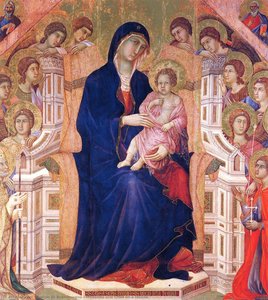 Madonna and Child on a throne - Duccio di Buoninsegna
In the Madonna and Child on a Throne , Duccio di Buoninsegna achieves what few masters of the Trecento could: a profound synthesis of celestial majesty and human tenderness. Created around 1311, this work is not merely a religious icon; it is a transformative experience for the viewer. As you gaze upon the Virgin Mary, you witness the precise moment where the rigid, golden formality of the Byzantine tradition begins to breathe with the warmth of Italian humanism.
The composition is a symphony of light and devotion. Duccio utilizes exquisite tempera techniques on wood, layering pigments to create a luminous depth that seems to radiate from within the throne itself. Surrounded by a celestial assembly of angels—some kneeling in solemn reverence, others hovering in graceful motion—the scene captures an atmosphere of sacred intimacy. The meticulous application of gold leaf serves as a window into the divine, while the subtle, emotive curves of the figures invite us into a more personal connection with the sacred. To possess such a piece is to invite a gallery of the soul into your own sanctuary.
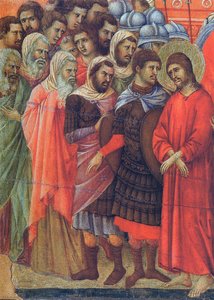
Pilate washes his hands - Duccio di Buoninsegna
 Pilate washes his hands - Duccio di Buoninsegna
In the quiet, hallowed atmosphere of the early fourteenth century, Duccio di Buoninsegna captured a transformative moment of moral crisis on wood. Within this panel from the monumental Maestà , the light does not merely illuminate the scene; it composes a silent, heavy language of guilt and evasion. As you stand before “Pilate Washes His Hands,” you witness the precise second where Pontius Pilate attempts to divest himself of responsibility, his hands meeting in an eternal gesture of regret.
Duccio moves beyond the rigid Byzantine tradition, infusing the scene with a burgeoning naturalism and profound pathos . The luminous tempera creates an ethereal glow, yet the atmosphere remains thick with tension. Notice the sharp, metallic presence of swords and the weight of the drapery, which ground this divine narrative in human reality. This masterpiece is essential to the top 25 artworks of Duccio di Buoninsegna because it transcends mere illustration; it invites you into a psychological trial where every shadow and gilded detail speaks of the crushing pressure of judgment.
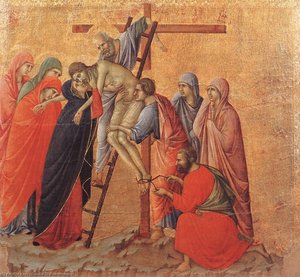
Deposition - Duccio di Buoninsegna
 Deposition - Duccio di Buoninsegna
To behold Duccio di Buoninsegna’s Deposition is to witness the precise moment where the rigid icons of the Byzantine era began to breathe with human sorrow. Created in 1308 as a profound component of the monumental Maestà , this work earns its place among the top 25 artworks of Duccio by capturing an unparalleled emotional gravity. The composition is a masterclass in controlled intensity; the warm golds and deep reds collide with the heavy, rhythmic drapery of mourning figures, drawing the eye inexorably toward the limp, sacred form of Christ.
Duccio does not merely paint a biblical event; he orchestrates a symphony of grief, using elegant linearity to bridge the gap between the divine and the earthly. This masterpiece redefined the trajectory of the Sienese School, introducing a nascent naturalism that would eventually pave the way for the Renaissance. At ArtsDot.com, we believe such profound narratives belong in the intimate sanctuaries of modern life. Whether as a hand-painted oil reproduction or a museum-quality print, bringing this Deposition into your home transforms a mere wall into a space of reflection, connection, and timeless historical prestige.
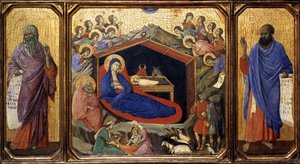
The Nativity between Prophets Isaiah and Ezekiel - Duccio di Buoninsegna
 The Nativity between Prophets Isaiah and Ezekiel - Duccio di Buoninsegna
In the quiet sanctity of The Nativity between Prophets Isaiah and Ezekiel by Duccio di Buoninsegna, time seems to suspend itself, capturing a celestial moment where the divine touches the earthly. This work earns its place among the top 25 artworks of Duccio through its breathtaking ability to bridge the rigid elegance of Byzantine tradition with a tender, burgeoning naturalism. The painting breathes with a soft, luminous warmth; notice how the delicate application of tempera glazes creates a sense of weightless light around the Virgin Mary, while the subtle textures of the surrounding figures invite a profound emotional intimacy.
The composition is a masterclass in symbolic storytelling, where the presence of the prophets Isaiah and Ezekiel anchors the sacred event within a grand theological narrative. For the modern collector or interior designer, this piece offers more than historical significance; its harmonious palette and serene atmosphere provide a sophisticated focal point that inspires contemplative calm. It is not merely a depiction of a birth, but an enduring testament to how light and color can shape human devotion, making it a cornerstone of the Sienese School's legacy.
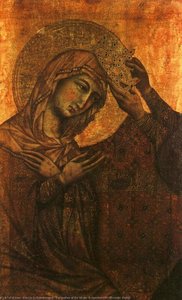
Coronation of the Virgin, Szépmüveszéti Muzeum, Budap - Duccio di Buoninsegna
 Coronation of the Virgin, Szépmüveszéti Muzeum, Budap - Duccio di Buoninsegna
To stand before the Coronation of the Virgin at the Szépmüveszéti Muzeum is to witness a celestial threshold where the golden stillness of Byzantium meets the tender pulse of human emotion. In this profound moment, Duccio di Buoninsegna captures the very instant Christ bestows the crown upon Mary, dissolving the boundaries between the earthly and the divine. The painting breathes with a sacred intimacy; one can almost feel the weight of the shimmering gold leaf and the quiet reverence of the heavenly court.
This masterpiece earns its place among the top 25 artworks of Duccio di Buoninsegna through its masterful synthesis of tradition and innovation. While the opulent textures evoke eternal majesty, the subtle naturalism in Mary’s serene posture introduces a soulful presence that was revolutionary for the Sienese School. For the discerning collector, such a work offers more than historical significance; it brings an unparalleled sense of grace and timelessness to a modern interior. Integrating this level of spiritual depth into one's home creates a sanctuary of peace, allowing the radiant blues and golds to inspire daily moments of profound contemplation.
Conclusion
As the light fades on our journey through Duccio’s profound vision, we find ourselves standing at the threshold of a world where the divine and the human first began to truly meet. To contemplate these twenty-five masterpieces is to do more than study the evolution of the Sienese School; it is to witness the very moment when the rigid gold of Byzantium began to breathe with the warmth of Italian grace. These works are not merely relics of a distant, fourteenth-century Siena, nor are they frozen artifacts locked behind museum glass. Instead, they remain living presences—vibrant, emotive, and enduringly relevant.
In every delicate curve of a Madonna’s smile and every meticulous stroke of gold leaf, there is a whisper of a timeless human connection that transcends the centuries. These paintings continue to shape our aesthetic sensibilities, offering a sense of serenity and historical depth that can transform a modern interior into a sanctuary of reflection. They remind us that beauty, when rooted in sincerity and craftsmanship, possesses an infinite lifespan.
Whether you are drawn to the monumental scale of the Maestà or the intimate tenderness found in his smaller devotional panels, we invite you to bring this legacy of light into your own space. We invite you to explore the full collection of Duccio di Buoninsegna, where our master artists meticulously recreate these sacred narratives on canvas, ensuring that the soul of the Sienese Renaissance continues to illuminate the homes and hearts of collectors worldwide.