Introduction
Imagine stepping into a hushed gallery, bathed in the warm glow of amber light. A subtle richness permeates the air—the color of aged wood, polished stones, and the heartwood of ancient trees. This is the realm of 'walnut' tones, a palette that has captivated artists for centuries, evoking feelings of nostalgia, intimacy, and timeless beauty. These aren’t simply browns; they are depths of umber, sienna, and ochre—colors born from the earth itself.
Throughout art history, walnut hues have held symbolic weight. In the Renaissance, these tones signified wealth and stability, appearing in depictions of noble interiors and religious figures. The Dutch Masters employed them to create a sense of realism and domesticity, capturing the quiet dignity of everyday life. Later, artists used variations of walnut to convey mood—from the somber introspection of Romanticism to the earthy grounding of Impressionism.
But beyond their historical context, these paintings resonate with us today because they tap into something deeply human. The warmth of walnut tones feels comforting and familiar, reminding us of cozy hearths, well-worn books, and the enduring power of nature. They invite contemplation, offering a respite from the often-harsh realities of the modern world.
In this collection, we’ll explore ten famous paintings where 'walnut' tones take center stage—masterpieces that demonstrate the versatility and emotional depth of this captivating palette. Prepare to be transported through time and artistic vision as we uncover the stories behind these iconic works and discover why they continue to inspire awe and wonder.
The Last Supper - Leonardo da Vinci
 The Last Supper - Leonardo da Vinci
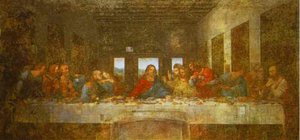
Before us lies a scene steeped in both drama and serenity—a moment frozen in time where faith, betrayal, and human emotion collide. We speak of Leonardo da Vinci’s The Last Supper (c. 1495-1498), an enduring icon of the Renaissance and a cornerstone of Western art.
Commissioned for the Convent of Santa Maria delle Grazie in Milan, this monumental fresco isn't merely a depiction of a biblical event; it’s a profound psychological study rendered with breathtaking skill. Da Vinci’s innovative use of tempera allowed for nuanced detail, though tragically contributed to its early deterioration—a testament to his relentless experimentation.
The composition is masterful in its balance and perspective, drawing the eye inexorably towards Jesus at the center. But it's the 'walnut' tones that truly captivate: the warm umbers of the table, the rich siennas of the apostles’ robes, and the ochre light filtering through the windows create an atmosphere of intimacy and gravity. These earthy hues ground the scene in reality while simultaneously elevating it to a realm of spiritual significance.
Despite centuries of restoration, The Last Supper retains its power to move us—a reminder that even within moments of profound upheaval, there exists a quiet beauty, a shared humanity. It’s this enduring resonance, coupled with Da Vinci's artistic genius, that secures its place among the Top 10 Famous Paintings Dominated by 'Walnut' Tones and continues to transform spaces and inspire contemplation today.
Nafeaffaa Ipolpo (also known as When Will You Marry.) - Eugène Henri Paul Gauguin
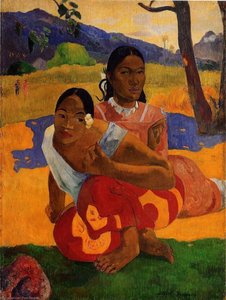 Nafeaffaa Ipolpo (also known as When Will You Marry.) - Eugène Henri Paul Gauguin
A quiet question hangs in the air—a subtle invitation to contemplate life, love, and societal expectations. We turn now to Paul Gauguin’s Nafea faa ipoipo? (also known as *When Will You Marry?*) from 1892, a painting that transcends its depiction of two Tahitian women to become a profound meditation on cultural identity and the human spirit.
Painted during his first sojourn in Tahiti, this artwork embodies Gauguin’s rejection of European academic conventions. He sought authenticity not through meticulous realism but through Synthetism—a bold simplification of form and an embrace of intensely saturated color. The 'walnut' tones here aren’t dominant in the way they are in other works, yet they provide a crucial grounding element: the warm earthiness of the women’s skin, the rich browns of their surroundings, anchoring the vibrant hues and lending a sense of intimacy.
The visible brushstrokes, deliberately unblended, imbue the scene with a tactile energy. The question posed by the title adds another layer of intrigue—a glimpse into Polynesian life filtered through Gauguin’s own complex perspective. It's this combination of artistic innovation, cultural exploration, and enduring mystery that secures its place among the Top 10 Famous Paintings Dominated by 'Walnut' Tones.
Today, *When Will You Marry?* continues to resonate—a reminder of the power of art to challenge our perceptions, evoke empathy, and invite us into worlds beyond our own. Its essence lies in its ability to transform a space not just with color but with contemplation.
The Baptism of Christ - Leonardo da Vinci
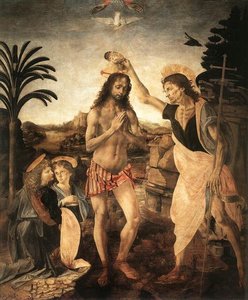 The Baptism of Christ - Leonardo da Vinci
There’s a stillness within Leonardo da Vinci’s The Baptism of Christ (c. 1475) that transcends the religious narrative—a quiet reverence captured in the delicate interplay of light and shadow, faith and form. Created during his apprenticeship with Andrea del Verrocchio, this painting is not merely an early work; it's a testament to the burgeoning genius of one of history’s greatest artists.
The subdued palette—dominated by earthy 'walnut' tones, accented by subtle blues and reds—creates a harmonious atmosphere. Leonardo’s contribution, particularly the ethereal left angel, is immediately apparent in its sfumato technique – a blurring of lines that imbues the figure with an otherworldly grace. This innovative use of oil glazing techniques created a depth and luminosity rarely seen before.
The painting's inclusion among the Top 10 Famous Paintings Dominated by 'Walnut' Tones speaks to its enduring power—a testament to the Renaissance spirit of naturalism, anatomical accuracy, and emotional resonance. It’s a scene that invites contemplation, reminding us of the beauty found in moments of spiritual awakening.
At , we strive to capture this very essence in our faithful reproductions—preserving not just the colors and forms but also the subtle textures and profound emotion that make The Baptism of Christ a timeless masterpiece. Bring this moment of serenity into your home, allowing its quiet beauty to transform your space.
Peasant Family - Pavel Filonov
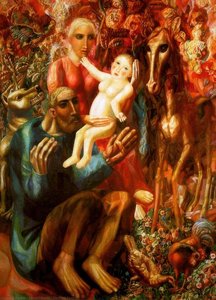 Peasant Family - Pavel Filonov
There’s a palpable energy within Pavel Filonov’s Peasant Family (1910)—a feverish intensity born from layered brushstrokes and symbolic weight. This isn't simply a depiction of the Flight into Egypt; it’s a visceral exploration of vulnerability, faith, and the desperate hope for sanctuary.
Filonov’s unique “Analytical Realism” sought to represent an object’s inner essence—its ‘soul’—through meticulous detail. The densely packed composition, dominated by warm 'walnut' tones – rich browns, oranges, and reds – evokes heat, urgency, and a sense of divine protection. These earthy hues aren’t merely aesthetic choices; they ground the scene in reality while simultaneously amplifying its emotional power.
The painting’s inclusion among the Top 10 Famous Paintings Dominated by 'Walnut' Tones reflects Filonov’s radical departure from traditional artistic conventions. He didn’t seek to *represent* flight; he sought to convey the very *feeling* of it—a testament to his profound understanding of human emotion and symbolic language.
At , we believe in bringing this same sense of emotional resonance into your home. Our faithful reproductions capture not just the colors and forms but also the textured depth and spiritual intensity that make Peasant Family a timeless masterpiece—a living artwork for refined spaces.
Christ Among the Doctors - Albrecht Dürer
 Christ Among the Doctors - Albrecht Dürer
Unveiled to discerning eyes, Albrecht Dürer’s Christ Among the Doctors (1506) is a rare and captivating glimpse into an intellectual dialogue—a moment of youthful wisdom challenging established authority. This oil on panel painting isn't merely a depiction of a biblical scene; it’s a testament to the power of knowledge, faith, and the burgeoning Renaissance spirit.
Executed with meticulous detail characteristic of the Northern Renaissance, Dürer masterfully captures the intensity of this exchange. The subdued color palette—dominated by warm 'walnut' tones – creates an atmosphere of quiet contemplation, drawing the viewer into the heart of the scene. These earthy hues aren’t simply aesthetic choices; they ground the painting in reality while simultaneously amplifying its emotional depth.
Its inclusion among the Top 10 Famous Paintings Dominated by 'Walnut' Tones reflects Dürer’s innovative approach to realism and his ability to convey complex theological ideas through subtle gestures and expressions. The compact grouping of figures and intense focus on individual characterization were groundbreaking for their time.
At , we believe in preserving this same sense of intellectual curiosity and artistic mastery. Our faithful reproductions allow you to bring the timeless beauty of Christ Among the Doctors into your home—a refined statement of taste and a legacy of enduring wisdom.
Europe after the Rain II - Max Ernst
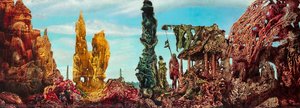 Europe after the Rain II - Max Ernst
Step into a landscape born from dreams—a world where nature and architecture intertwine in a breathtaking dance of color and form. We encounter Max Ernst’s Europe after the Rain II (1942), a masterpiece that embodies the spirit of Surrealism and offers a poignant reflection on a world scarred by conflict.
Created during the turmoil of World War II, this panoramic painting isn't merely a depiction of a fantastical scene; it’s a metaphor for resilience—a vision of nature reclaiming what was lost. The vibrant palette, dominated by warm 'walnut' tones – deep reds, rich golds, and earthy browns – creates an atmosphere of both beauty and unease.
Ernst’s meticulous attention to detail is captivating: rugged rock formations transition into ancient structures, blurring the lines between organic and man-made. The flowing lines and varied textures invite exploration, drawing the viewer deeper into this otherworldly realm. These earthy hues ground the painting in a sense of reality while simultaneously amplifying its emotional depth.
Its inclusion among the Top 10 Famous Paintings Dominated by 'Walnut' Tones speaks to Ernst’s groundbreaking artistic vision and his ability to evoke profound emotions through surreal imagery. Today, Europe after the Rain II continues to inspire—a reminder of the power of art to transform spaces and ignite our imaginations.
Claude Monet Painting by the Edge of a Wood - John Singer Sargent
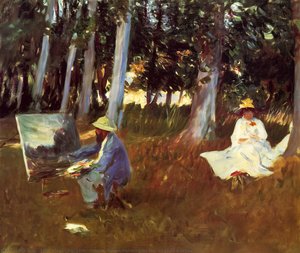 Claude Monet Painting by the Edge of a Wood - John Singer Sargent
Imagine a sun-dappled afternoon—the gentle rustling of leaves, the scent of wildflowers, and the quiet companionship of shared creativity. We turn now to John Singer Sargent’s Claude Monet Painting by the Edge of a Wood (1885), a captivating glimpse into the world of Impressionism and artistic life.
More than just a depiction of an artist at work, this painting is an intimate study of observation, companionship, and the fleeting beauty of light. The loose, visible brushstrokes—characteristic of the movement—prioritize capturing the *impression* of a scene rather than meticulous detail. Warm 'walnut' tones – earthy browns, greens, and subtle accents of red – create a harmonious atmosphere.
The composition is balanced yet naturalistic, drawing the viewer into this peaceful moment. The delicate rendering of light filtering through the birch trees—a hallmark of Impressionist technique—imbues the scene with an ethereal quality. Its inclusion among the Top 10 Famous Paintings Dominated by 'Walnut' Tones speaks to Sargent’s mastery and his ability to evoke a sense of serenity and contemplation.
Today, this painting continues to inspire—a reminder that beauty can be found in everyday moments and that art has the power to transform our spaces into havens of peace and inspiration.
The Ghent Altarpiece - Jan van Eyck
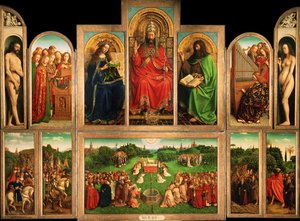 The Ghent Altarpiece - Jan van Eyck
To stand before Jan van Eyck’s The Ghent Altarpiece (1432) is to encounter a world reborn—a testament to the power of observation, faith, and artistic innovation. This monumental polyptych isn't merely a painting; it’s a gateway into the burgeoning Renaissance, irrevocably altering the course of European art.
Van Eyck’s groundbreaking use of oil paint – perfected through multiple translucent glazes – achieved an unparalleled luminosity and depth. The result is breathtaking realism: individual hairs, intricate fabric folds, the subtle play of light on skin—all rendered with meticulous precision. Warm 'walnut' tones form the foundation of this masterpiece, grounding the ethereal figures in a sense of earthly beauty.
Its inclusion among the Top 10 Famous Paintings Dominated by 'Walnut' Tones reflects not only its artistic brilliance but also its profound theological depth and symbolic richness. Every element—from architectural details to seemingly mundane objects—carries meaning, inviting contemplation and reverence.
At , we strive to capture this same sense of wonder in our faithful reproductions—allowing you to bring the timeless beauty of The Ghent Altarpiece into your home. Experience the power of art to transform your space and inspire a deeper connection to history and faith.
Still Life with Bible - Vincent Willem van Gogh
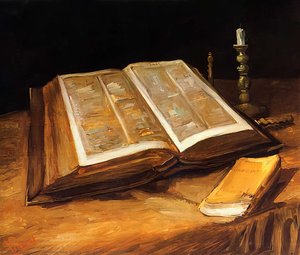 Still Life with Bible - Vincent Willem van Gogh
Unveiled from a period of quiet introspection, Vincent van Gogh’s Still Life with Bible (1885) offers a rare glimpse into the artist's evolving style and profound connection to the everyday. This evocative work—a humble arrangement of an open book and flickering candlelight—possesses a depth that belies its simplicity.
The painting’s inclusion among the Top 10 Famous Paintings Dominated by 'Walnut' Tones stems from Van Gogh’s masterful use of earth tones, creating a sense of warmth and solitude. The rich textures – visible brushstrokes on the wooden surface and aged pages—invite contemplation, while the soft glow of the candle symbolizes enlightenment and guidance.
More than just a depiction of objects, Still Life with Bible is an exploration of knowledge, faith, and the human condition. Its subdued palette and intimate composition resonate deeply with modern sensibilities, offering a timeless elegance that complements refined interiors. This piece isn’t merely art; it's a quiet invitation to pause, reflect, and connect with something deeper.
The Langlois Bridge at Arles - Vincent Willem van Gogh
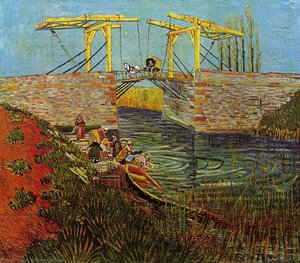 The Langlois Bridge at Arles - Vincent Willem van Gogh
Bathed in the golden light of Provençal afternoons, Vincent van Gogh’s The Langlois Bridge at Arles (1888) is more than a painting—it's an invitation to experience life itself. This iconic work, with its vibrant hues and dynamic brushstrokes, secures its place among the Top 10 Famous Paintings Dominated by 'Walnut' Tones through its masterful expression of community, leisure, and the sheer joy of being.
Van Gogh’s bold departure from realism—his use of impasto and expressive color—captures not just *what* he saw but *how* it felt to be present in that moment. The warm earth tones, particularly the rich yellows of the bridge, create a sense of visual energy and optimism. This painting isn't simply a depiction of a landscape; it’s an emotional resonance.
Today, The Langlois Bridge at Arles continues to inspire—its vibrant palette and dynamic composition lending themselves beautifully to modern interiors seeking warmth, character, and a touch of artistic soul. It reminds us that beauty can be found in the everyday, and that art has the power to transform our spaces into havens of joy and contemplation.
Conclusion
As the light fades on these ten masterpieces, we are reminded that their enduring power lies not merely in brushstrokes and pigment, but in their ability to connect us across centuries—to evoke shared emotions, ignite our imaginations, and offer a glimpse into the souls of those who came before. These paintings aren’t simply historic treasures; they are living presences, capable of transforming spaces and enriching lives.
The warmth of walnut tones, so beautifully captured in each work—from Van Eyck's meticulous realism to Van Gogh’s passionate expression—offers a timeless elegance that resonates deeply with the human spirit. It is a palette that speaks of earth, of hearth, of quiet contemplation and enduring beauty.
At , we believe that every masterpiece deserves to be experienced firsthand. That’s why our skilled artists lovingly recreate these iconic works—hand-painting each reproduction with the same dedication to detail and soul as the original creators. Bring the warmth and beauty of these paintings into your own home, and allow their timeless stories to unfold anew.
Explore our full collection and discover the artwork that speaks to you—a piece of history, a source of inspiration, and a lasting legacy for generations to come.