Early Life & Artistic Beginnings: From Leiden Harbor to a Painter's Path
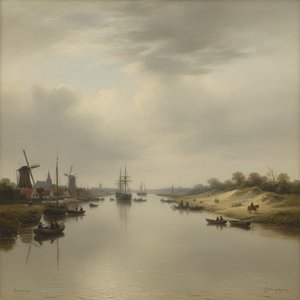
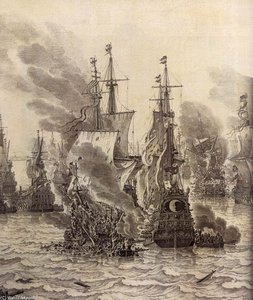
Willem van de Velde the Elder emerged from the bustling maritime world of Leiden, Netherlands, around 1610/11 – a period when the Dutch Republic was rapidly ascending as a global naval power. Unlike many artists of his time who were formally trained in academies, Van de Velde’s education was deeply rooted in direct observation and experience. His father, Willem Willemsz. van de Velde, was a skipper, instilling in young Willem an intimate understanding of ships, the sea, and the intricate dance between wind, water, and sail. This upbringing wasn't merely biographical; it fundamentally shaped his artistic vision. Early works weren’t grand canvases but meticulous pen paintings – detailed records of vessels, their rigging, and the subtle nuances of harbor life. These drawings weren’t intended as finished artworks in themselves, but rather served as studies, a visual archive of the ships that populated the Dutch waterways. His marriage to Judith Adriaens van Leeuwen in 1631 brought both domestic stability and a growing family, yet also hints at a complex personal life often punctuated by legal disputes – details that offer a glimpse into the man behind the masterful depictions of serene seascapes.
The Rise of Dutch Maritime Painting: A Reflection of National Identity
To understand Van de Velde’s significance, one must appreciate the context of 17th-century Holland. The Eighty Years' War had recently concluded, securing Dutch independence and ushering in a Golden Age of trade, exploration, and naval dominance. This newfound prosperity fueled an unprecedented demand for art that reflected national pride and celebrated maritime achievements. Prior to this era, seascape painting held a relatively modest position within the artistic hierarchy. However, as the Dutch Republic’s fortunes rose, so too did the prestige – and market – for paintings depicting their ships and seafaring prowess. Van de Velde was uniquely positioned to capitalize on this burgeoning interest. His work wasn't simply about portraying vessels; it was a visual testament to the economic engine of the nation, capturing the very essence of Dutch identity. The demand extended beyond mere documentation; collectors sought artworks that conveyed both the power and the beauty of their maritime endeavors.
Mastering the Medium: Pen Paintings, Oil Techniques, and Unparalleled Realism
Van de Velde initially distinguished himself through his extraordinary skill with pen and ink. These drawings are characterized by an astonishing level of detail – each rope, sail, and plank rendered with meticulous precision. However, recognizing the limitations of this medium for conveying atmospheric effects and dramatic light, he transitioned to oil painting later in life. This wasn’t a simple shift; it required mastering a new set of techniques. He developed a distinctive approach that combined careful observation with an intuitive understanding of color and composition. His brushwork is remarkably subtle, creating a sense of depth and realism rarely seen in earlier maritime art. He didn't strive for idealized representations but rather sought to capture the authentic appearance of ships at sea – the glint of sunlight on waves, the billowing of sails in the wind, the complex interplay of light and shadow. This commitment to accuracy wasn’t merely technical; it was a reflection of his deep respect for the subject matter.
Naval Battles & Daily Life at Sea: Documenting a Golden Age Fleet
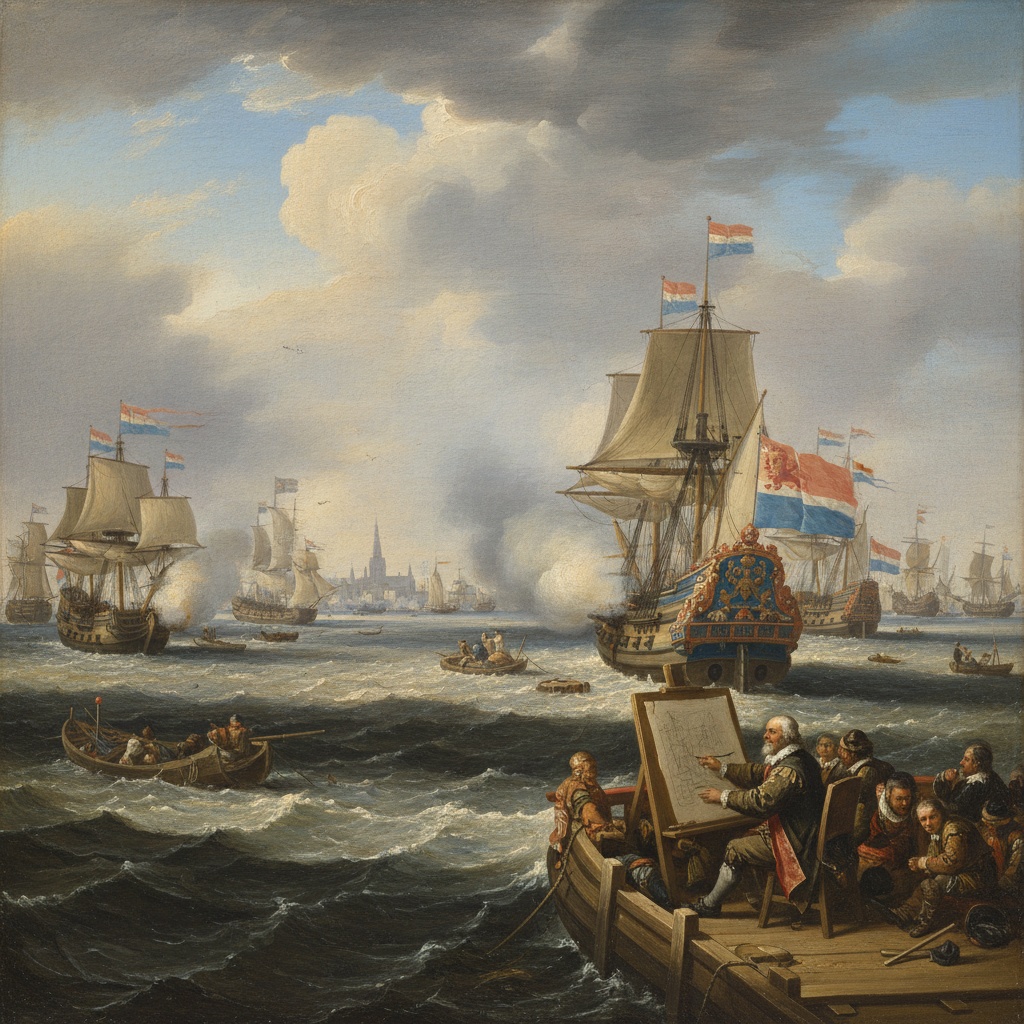
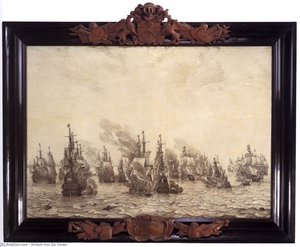
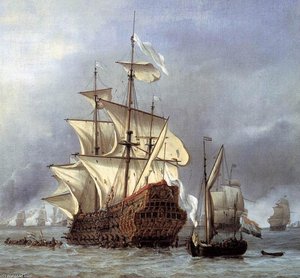
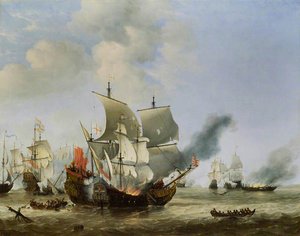
While Van de Velde is celebrated for his serene depictions of ships sailing in calm waters, his oeuvre also encompasses dramatic scenes of naval battles. These paintings offer invaluable insights into 17th-century maritime warfare – the tactics employed, the weaponry used, and the sheer chaos of combat. However, even these dynamic compositions are characterized by a remarkable degree of order and clarity. He meticulously documented the flags, rigging, and individual vessels involved in each engagement, providing a visual record that historians continue to study today. Beyond battles, Van de Velde also captured the more mundane aspects of daily life at sea – ships coming to anchor, crews engaged in routine tasks, and bustling harbor scenes. These works offer a comprehensive portrait of maritime existence during the Dutch Golden Age, revealing not only the power but also the human element inherent in seafaring.
Van de Velde's Legacy: Influence on Subsequent Artists & Enduring Appeal
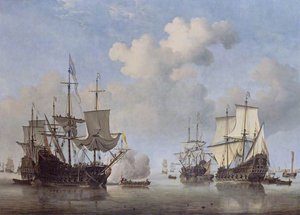
Willem van de Velde the Elder’s influence extended far beyond his own lifetime. His son, Willem van de Velde the Younger, continued his father’s legacy, further refining their techniques and establishing a family dynasty of marine painters. Artists like Simon Jacobsz de Vlieger also drew inspiration from Van de Velde's work, contributing to the flourishing of Dutch maritime painting in the 17th century. But his impact wasn’t limited to his immediate contemporaries. Later artists, captivated by his realism and attention to detail, studied his compositions and sought to emulate his style. Today, Van de Velde’s paintings are prized possessions in museums around the world – testaments to his enduring artistic vision. His works continue to resonate with audiences because they offer more than just a depiction of ships; they provide a window into a pivotal moment in history, capturing the spirit of innovation, exploration, and national pride that defined the Dutch Golden Age. A Dutch State Barge under Oars with Bezan Yachts, for example, exemplifies his ability to blend meticulous detail with a sense of grandeur, while Dutch Ships Coming to Anchor showcases his mastery of atmospheric perspective and dynamic composition.
Exploring Key Works: 'A Dutch State Barge' & 'Dutch Ships Coming to Anchor'
Consider A Dutch State Barge under Oars with Bezan Yachts. The painting isn’t merely a depiction of a vessel; it’s a celebration of Dutch power and prosperity. The barge itself is richly adorned, reflecting the wealth and sophistication of the Republic. The surrounding yachts, meticulously rendered, symbolize the nation's maritime prowess. Similarly, Dutch Ships Coming to Anchor demonstrates Van de Velde’s ability to capture the energy and complexity of a bustling harbor scene. The composition is dynamic, with ships maneuvering in various directions, crews engaged in activity, and sunlight glinting off the water. Both paintings exemplify his signature style – meticulous detail, realistic depictions, and an intuitive understanding of light and atmosphere. These works are not simply historical documents; they are artistic masterpieces that continue to captivate audiences centuries later.