
Introduction: Pyne and the Spirit of an Era
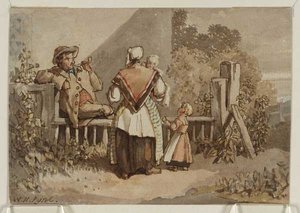 William Henry Pyne
William Henry Pyne: English painter & illustrator known for picturesque scenes, costume studies, & royal residences engravings. Explore his work!
William Henry Pyne, a name perhaps less immediately recognizable than his contemporaries Turner or Girtin, nevertheless occupies a crucial position in understanding the artistic and social currents of early 19th-century England. Born in London in 1769, Pyne’s career spanned a period of immense change – from the waning years of Georgian elegance to the burgeoning industrial revolution and the rise of a new middle class eager for representations of their world. He wasn't merely documenting scenes; he was capturing a spirit, an evolving national identity reflected in both grand architectural statements and the quiet dignity of everyday life. While often overshadowed by more flamboyant figures, Pyne’s meticulous technique, coupled with his keen eye for detail and later, his insightful writing on art history, cemented his place as a significant chronicler of his time.
From Royal Residences to Everyday Life: A Focus on Subject Matter
William Henry Pyne (1769 in London – 29 May 1843 in London) was an English writer, illustrator and painter, who also wrote under the name of Ephraim Hardcastle. He trained at the drawing academy of Henry Pars in London. He first exhibited at the Roya...
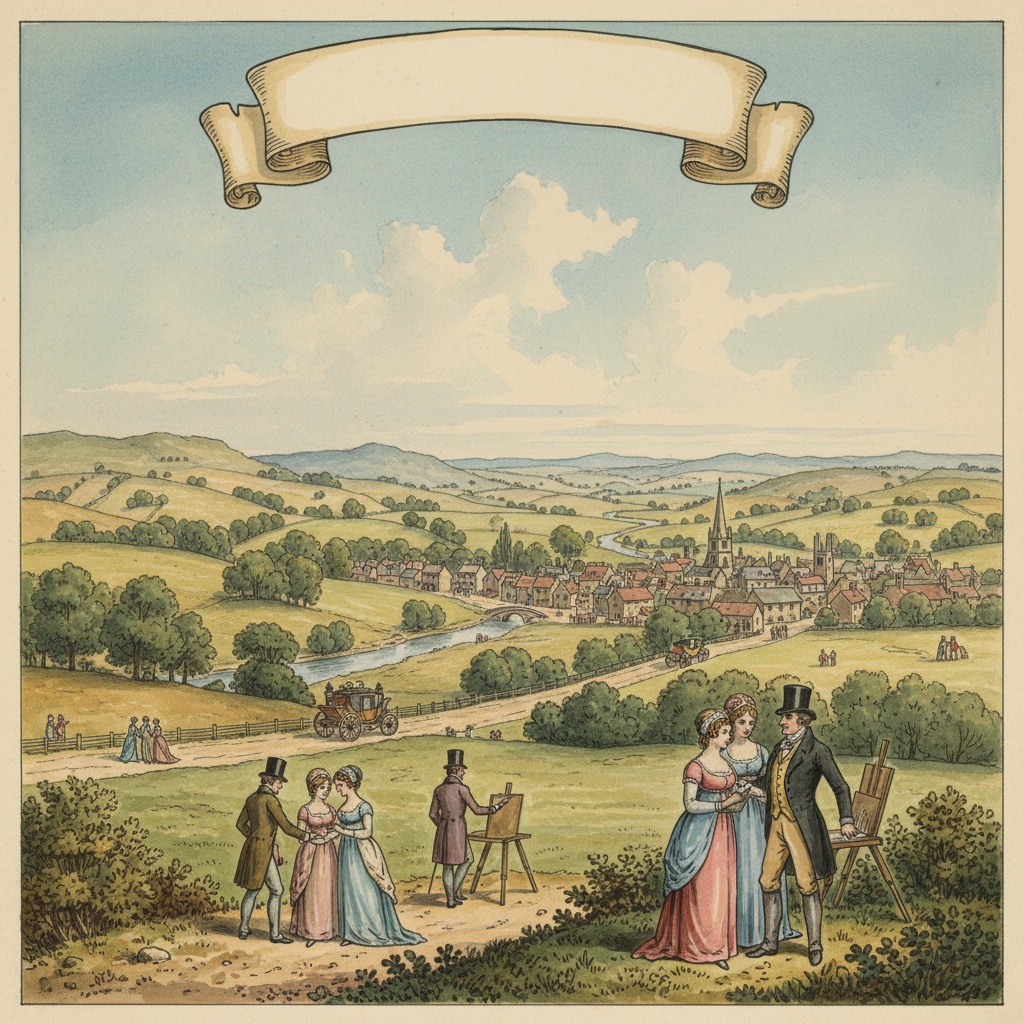
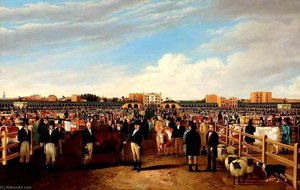
Pyne's artistic output was remarkably diverse. He began by specializing in picturesque settings, often depicting groups of people rendered with delicate precision in pen, ink and watercolour. However, it’s perhaps his depictions of royal residences that initially garnered him attention. His ambitious project, The History of the Royal Residences, published between 1816 and 1819, offered an unprecedented glimpse into the interiors and exteriors of Windsor Castle, St. James's Palace, Carlton House, Kensington Palace, and Hampton Court Palace. These weren’t simply architectural renderings; they were carefully constructed narratives of power, taste, and national pride. But Pyne wasn’t content to solely portray the lives of the elite. His seminal work, The Costume of Great Britain, published in 1805, marked a turning point. Featuring sixty paintings of professional and working-class men and women engaged in their daily routines, it offered a rare and valuable snapshot of society beyond the aristocracy. This shift reveals Pyne’s growing interest in documenting the fabric of English life as a whole.
The Rise of Watercolour: Pyne's Contribution to a New Medium
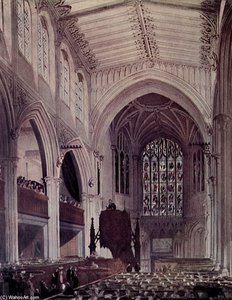 St Margaret's, Westminster
Explore William Henry Pyne’s ‘St Margaret’s, Westminster,’ a stunning 18th-century watercolor capturing the grandeur of this Gothic cathedral. Detailed architecture & serene atmosphere.
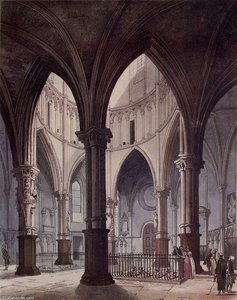
Pyne was not simply *a* watercolourist; he was instrumental in elevating watercolour from a primarily amateur pursuit to a respected and increasingly popular art form. He became one of the founding members of the Royal Watercolour Society in 1804, an institution dedicated to promoting the medium and its practitioners. This act alone speaks volumes about his commitment to establishing watercolour as a legitimate artistic discipline. His technique was characterized by meticulous detail, subtle washes of colour, and a remarkable ability to capture atmospheric effects. Works like St Margaret’s, Westminster, and Temple Church demonstrate this mastery – the grandeur of the Gothic architecture rendered with both precision and a serene, almost ethereal quality. He understood that watercolour wasn't merely about replicating reality; it was about capturing its essence, its mood, and its inherent beauty.
Pyne as Topographer: Capturing England’s Architectural Heritage
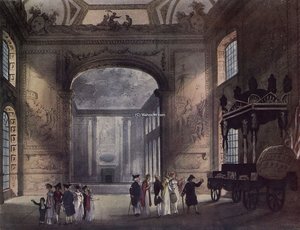 Greenwich Hospital, The Painted Hall
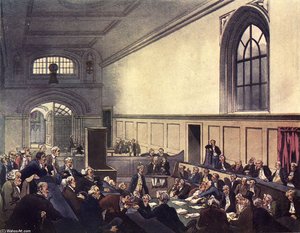
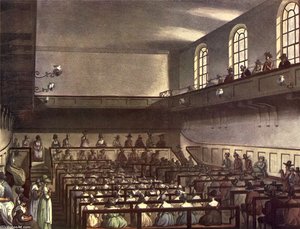
Beyond the royal palaces, Pyne possessed a particular fascination with England’s architectural heritage. He meticulously documented numerous churches, hospitals, and public buildings, creating a visual record of a nation undergoing rapid transformation. Greenwich Hospital, The Painted Hall, for example, showcases his ability to capture both the scale and intricate detail of these monumental structures. This wasn't simply about aesthetic appreciation; it was an act of preservation, a desire to document buildings that were often threatened by neglect or modernization. His topographical paintings offer invaluable insights into the architectural styles and urban landscapes of early 19th-century England, providing a visual archive for future generations. He approached each building not just as a structure but as a repository of history and cultural significance.
Beyond the Brush: Pyne, Writing and Social Commentary
Pyne’s talents extended beyond painting and illustration; he was also a prolific writer. Perhaps most notably, he penned a series of anonymous articles titled ‘The Rise and Progress of Water-Colour Painting in England’, published in the Somerset House Gazette in 1823–24. These insightful essays not only traced the development of watercolour but also offered critical commentary on contemporary art practices and the evolving tastes of the public. Writing under the pseudonym Ephraim Hardcastle, he provided a unique perspective on the artistic landscape, often championing the work of his peers while subtly critiquing prevailing trends. His later writings, including gossipy columns for the Literary Gazette and the novel The Twenty-ninth of May, reveal a sharp wit and keen observation of social manners.
Legacy and Influence: Pyne’s Place in Art History
While financial difficulties plagued his later life – he faced imprisonment for debt more than once, ultimately dying a poor man in 1843 – William Henry Pyne's contribution to English art remains significant. His meticulous watercolours continue to captivate with their detail and atmospheric quality, offering a unique window into the world of early 19th-century England. More importantly, his role in establishing the Royal Watercolour Society and his insightful writings on art history cemented his place as a key figure in shaping the artistic discourse of his time. Today, his works are held in major museum collections worldwide, including the Royal Collection and the British Museum, ensuring that his legacy continues to inspire and inform. Explore the captivating world of William Henry Pyne with ArtsDot.com, where you can discover high-quality reproductions of his masterpieces and delve deeper into the art and history of this remarkable artist.