
Early Life & Artistic Foundations: Philadelphia Roots and Weber's Influence
 Wikipedia: William Trost Richards
William Trost Richards (November 14, 1833 – November 8, 1905) was an American landscape artist. He was associated with both the Hudson River School and the American Pre-Raphaelite movement. == Early life and education == Richards was born on Novemb...
William Trost Richards, born in 1833 in the burgeoning city of Philadelphia, emerged from a milieu steeped in artistic tradition yet poised for innovation. His early education at Central High School provided a solid foundation, but it was his apprenticeship with the German artist Paul Weber between 1850 and 1855 that truly ignited his passion and shaped his technical prowess. Weber, a respected figure known for his ornamental metalwork designs, instilled in Richards not only meticulous draftsmanship but also an appreciation for detail – a characteristic that would become synonymous with Richards’s mature style. This period wasn't merely about acquiring skills; it was about cultivating a discerning eye and understanding the interplay of form and light, principles crucial to his later success as a landscape painter. While working as a designer and illustrator, Richards began exhibiting in 1852, an early indication of his burgeoning talent and ambition within Philadelphia’s vibrant art scene.
The Hudson River School & Pre-Raphaelite Affiliations: A Synthesis of Styles
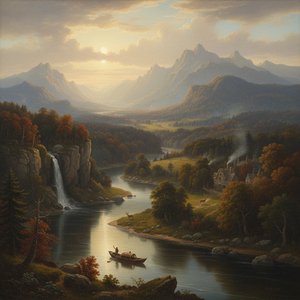
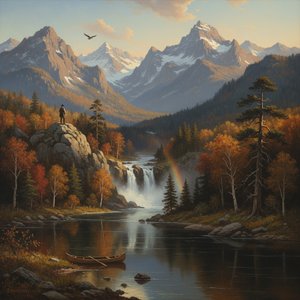
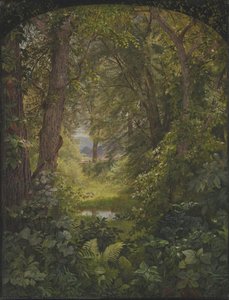
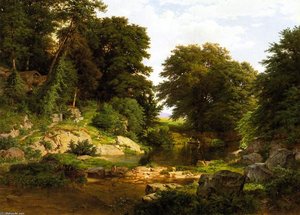
Richards' artistic trajectory wasn’t confined to a single school of thought. He became associated with both the esteemed Hudson River School and the American Pre-Raphaelite movement, a fascinating confluence that defined his unique aesthetic. The Hudson River School, celebrated for its romantic depictions of the American wilderness, instilled in Richards a reverence for nature's grandeur and scale. However, unlike some of his contemporaries who favored dramatic, idealized landscapes, Richards gravitated towards a more precise and intimate portrayal of the natural world. This is where the influence of the Pre-Raphaelites comes into play. Inspired by the meticulous detail and vibrant color palettes of early Renaissance masters, Richards rejected the prevailing romanticized conventions in favor of an almost photographic realism. He sought to capture not just the *impression* of a landscape but its very essence – every leaf, every ripple of water, every nuance of light rendered with painstaking accuracy.
Mastering Luminism: Light, Atmosphere, and the Pursuit of Realism
Luminism is a style of American landscape painting from the 1850s to 1870s, characterized by effects of light in a landscape, through the use of aerial perspective and the concealing of visible brushstrokes. Luminist landscapes emphasize tranquility,...
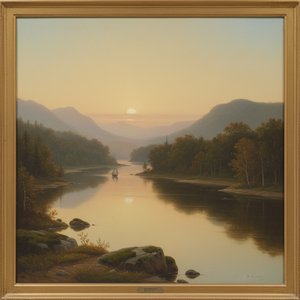
By the 1850s, Richards had begun to forge his own path within the landscape tradition, becoming a pivotal figure in the development of Luminism. This distinctly American style, characterized by its emphasis on atmospheric effects and tranquil scenes, perfectly suited Richards’s temperament and artistic sensibilities. Luminist paintings aren't about grand narratives or dramatic events; they are about capturing fleeting moments of beauty – the soft glow of moonlight on water, the hazy stillness of a summer afternoon. Richards excelled at conveying these subtle nuances through his masterful use of aerial perspective and concealing visible brushstrokes. His works evoke a sense of serenity and contemplation, inviting viewers to immerse themselves in the quiet majesty of nature. A prime example is ‘Lake Winnipesaukee,’ where the luminous moonlit scene and soft hues create an almost ethereal atmosphere, showcasing Richards’s ability to capture light with unparalleled sensitivity.
Spiritual Resonance in Richards’ Landscapes: Transcendentalism and Nature's Sublime
Landscape painting, also known as landscape art, is the depiction in painting of natural scenery such as mountains, valleys, rivers, trees, and forests, especially where the main subject is a wide view—with its elements arranged into a coherent compo...
Beyond technical skill, Richards’s landscapes possess a deeper spiritual resonance. His work reflects the burgeoning influence of Transcendentalism, a philosophical movement that emphasized the inherent goodness of both people and nature. For Richards, painting wasn’t simply about depicting scenery; it was about capturing the divine presence within the natural world. His meticulous attention to detail wasn't merely an exercise in realism but a way of honoring the beauty and complexity of creation. The quietude and stillness that permeate his paintings invite contemplation and evoke a sense of connection to something larger than oneself – a feeling often described as the sublime. This spiritual dimension elevates Richards’s work beyond mere representation, transforming it into a powerful expression of faith and reverence.
New Hampshire & Rhode Island: Key Locations and Evolving Artistic Focus
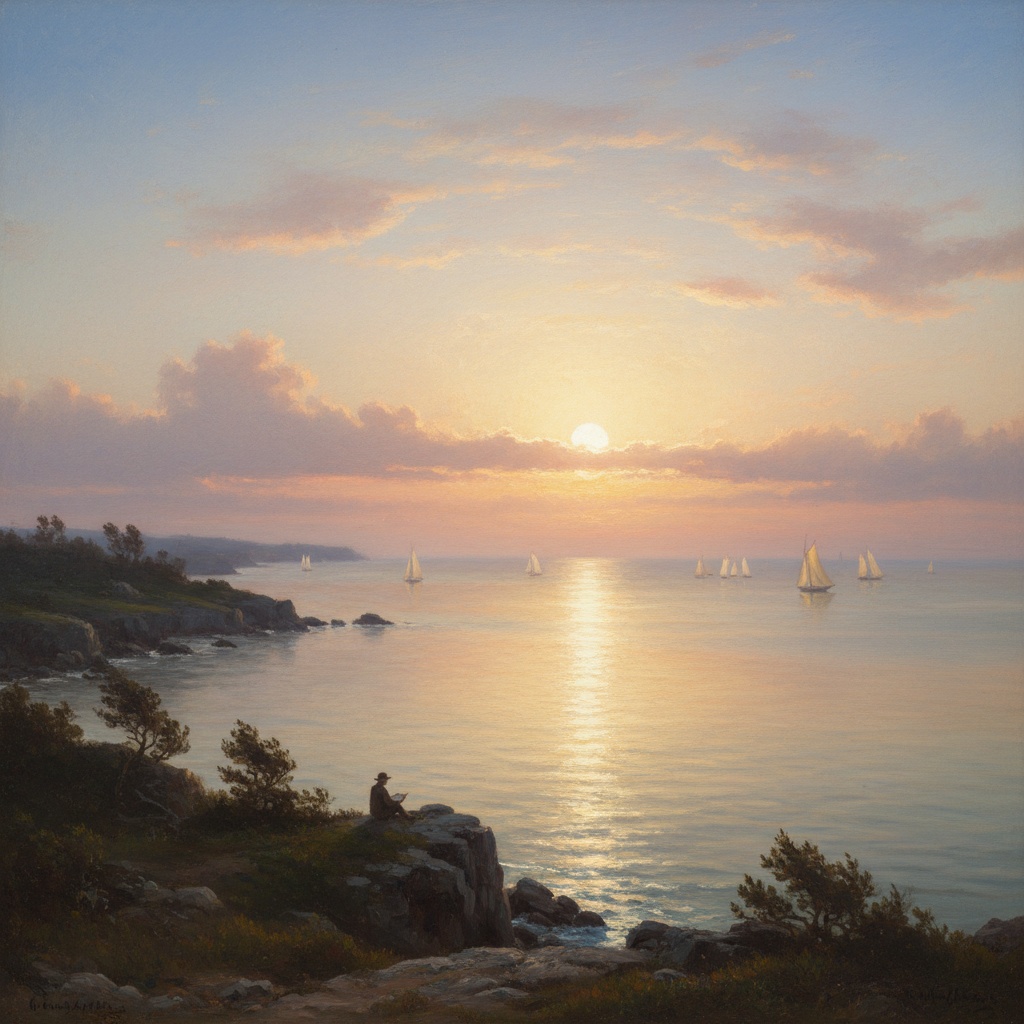
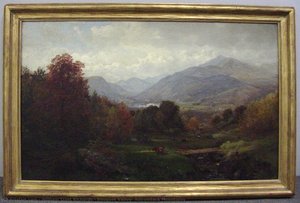
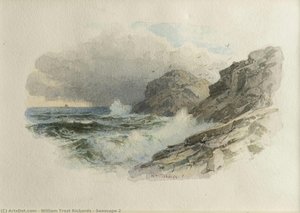
The landscapes of New Hampshire, particularly the White Mountains, proved to be a pivotal source of inspiration for Richards throughout the 1870s. It was during this period that he produced many of his most acclaimed watercolor views, now treasured in institutions like the Metropolitan Museum of Art. These works are characterized by their breathtaking detail and luminous quality, capturing the rugged beauty of the mountains with remarkable precision. Later in life, Richards settled in Jamestown, Rhode Island, where he continued to work until his death in 1905. This move marked a shift in his artistic focus towards marine watercolors. Standing *in* the water, rather than simply observing it from afar, allowed him to capture the dynamic energy of waves and the subtle interplay of light on the ocean’s surface. His Rhode Island period demonstrates a continued commitment to realism but with an added sense of immediacy and vitality.
Legacy and Influence: Richards’ Place in American Art History
William Trost Richards left an indelible mark on American art history, bridging the gap between the Hudson River School and the Pre-Raphaelite movement while forging his own unique path as a master of Luminism. His dedication to meticulous detail, atmospheric perspective, and spiritual resonance continues to inspire artists and captivate audiences today. His works are featured in prominent museums across the country – from the National Gallery to the Saint Louis Art Museum – testament to his enduring legacy. Richards’s rejection of romanticized conventions and insistence on capturing the truth of what he saw paved the way for a new generation of landscape painters who valued accuracy, intimacy, and a deep connection to nature. His influence can be seen in the works of countless artists who followed, solidifying his place as a pivotal figure in the American landscape tradition.