A Legacy Forged in Stone and Space: The Life and Work of Alcino Soutinho
Alcino Peixoto de Castro Soutinho, a name synonymous with the vibrant ‘School of Porto’ movement, was born on November 6th, 1930, in Vila Nova de Gaia, Portugal. His life, tragically concluding in Porto in 2013, represents a remarkable synthesis of architectural vision and sculptural sensibility. More than simply a builder of structures, Soutinho was an artist who imbued his creations with a profound understanding of form, function, and the unique spirit of his homeland. He wasn’t merely designing buildings; he was crafting experiences, shaping environments that resonated with both practicality and poetic grace. His early artistic inclinations led him to the Porto School of Fine Arts in 1948, where he initially pursued sculpture before transitioning to architecture, completing his degree in 1957. This foundational training would prove pivotal, informing a career characterized by an exceptional sensitivity to spatial dynamics and material presence.
The Shaping of a Modernist Vision
Soutinho’s emergence coincided with a period of significant intellectual ferment within Portuguese architecture. The ‘School of Porto,’ a collective of forward-thinking architects, embraced rationalism and modernism while simultaneously seeking to articulate a distinctly Portuguese identity. This delicate balance – the embrace of international styles coupled with a deep respect for local traditions – became a defining characteristic of Soutinho’s work. A crucial moment in his development came in 1961 when he received a scholarship from the Calouste Gulbenkian Foundation, enabling him to study museology in Italy. This period proved transformative, exposing him to diverse architectural approaches and fostering collaborations that would shape his early career. He spent several years working for the Fundação das Caixas da Previdência, designing affordable housing units across northern Portugal – projects that demonstrated a commitment to social responsibility and an emerging mastery of functional design. He also held teaching positions at both the ESBAP and later at the Faculty of Architecture of the University of Porto from 1972 until his retirement in 1999, nurturing generations of architects with his unique perspective.
From Museums to Municipalities: A Diverse Portfolio
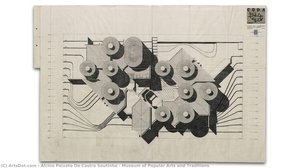
The breadth of Soutinho’s portfolio is a testament to his versatility and unwavering dedication to architectural excellence. While he engaged in numerous private commissions – designing elegant homes that seamlessly integrated into the Portuguese landscape – it was his public works that truly cemented his reputation. The Amadeo de Souza-Cardoso Museum in Amarante, completed in 1982, garnered international acclaim and earned him the prestigious Europa Nostra award for restoration work on the Castle of Vila Nova de Cerveira. This project exemplifies his ability to create spaces that not only showcased art but also enhanced the visitor experience through thoughtful design and a harmonious relationship with its surroundings. Beyond museums, Soutinho’s contributions extended to social housing complexes, urban renewal projects, and civic structures like auditoriums and libraries.
CTFD Portogaia: A Monument to Sporting Excellence
Perhaps his most recognizable achievement is the Centro de Formação e Desenvolvimento Futebol do Porto (CTFD Portogaia), a state-of-the-art football training complex inaugurated in 2002. This ambitious undertaking, costing approximately €16 million, served as a hub for FC Porto’s senior, reserve, and youth teams. The CTFD wasn't simply a collection of fields and buildings; it was a carefully planned ecosystem designed to foster athletic development and community spirit. The complex stands as a powerful symbol of Soutinho’s ability to translate abstract architectural principles into tangible spaces that served a vital social function.
A Lasting Influence on the Portuguese Landscape
Alcino Soutinho's legacy extends far beyond the physical structures he created. He embodied a commitment to civic improvement, a deep understanding of Porto’s unique character, and an unwavering belief in the power of architecture to shape lives. As a key figure within the ‘School of Porto,’ he helped redefine Portuguese modernism, forging a path that balanced international influences with local traditions. His work continues to inspire architects and designers today, serving as a reminder of the enduring power of thoughtful design and artistic vision. He left an indelible mark on the landscape of Portugal, not just through his buildings but also through the generations of students he mentored and the principles of excellence he championed throughout his distinguished career.