A Legacy Forged in History and Light
Alexander Willem Maurits Carel Ver Huell was far more than a mere chronicler of the past; he was an artist who breathed life into the silent echoes of Dutch history. Born in 1822 into a lineage defined by both maritime strength and artistic grace, his very foundation was steeped in the traditions of the Netherlands. As the son of the distinguished naval officer Quirijn Maurits Rudolph Ver Huell and the talented aquarellist Christina Louisa Johanna Hester de Vaynes van Brakell, Alexander inherited a unique duality—a fascination with the structured world of duty and the fluid, emotive realm of color. Though his academic path initially led him to the halls of Leiden University to study law and literature, the call of the canvas proved irresistible, allowing him to transform legal precision into a profound narrative depth that would define his career.
The Ethereal Dance of Watercolor and Landscape
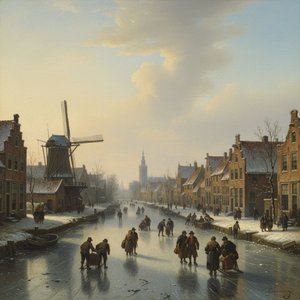
Beyond the grand historical stages, Ver Huell possessed a delicate mastery over the more intimate aspects of nature. His travels across Europe allowed him to refine a technique deeply rooted in the Romantic tradition, yet uniquely tempered by a Dutch sensibility for clarity and light. He found his greatest expression in the medium of watercolor, where he could manipulate atmospheric perspective to create landscapes that felt both tangible and dreamlike. Through subtle shifts in shadow and the careful layering of translucent washes, he captured the fleeting nuances of light that define a moment. His ability to render the quiet majesty of the natural world served as a precursor to his larger-scale endeavors, proving that even the smallest landscape could hold a universe of emotion and a profound sense of place.
Chronicles of Resilience and National Identity
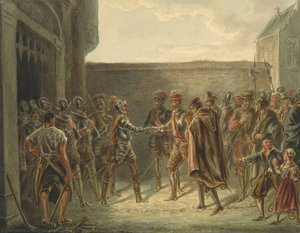
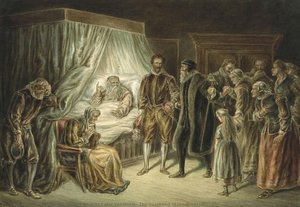
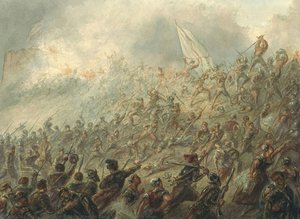
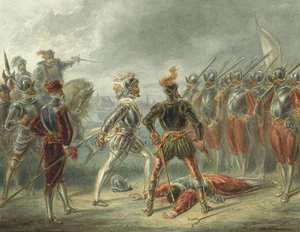
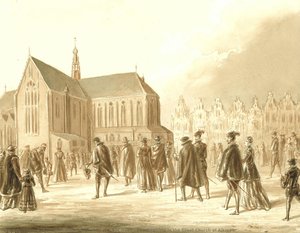
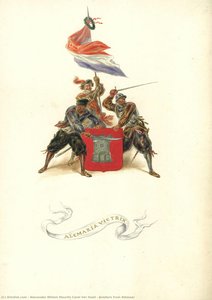
It was in his monumental historical canvases, however, that Ver Huell truly secured his place in the pantheon of great Dutch painters. He possessed an uncanny ability to move beyond the mere depiction of military maneuvers, choosing instead to focus on the human soul caught in the gears of conflict. His works concerning the siege of Alkmaar stand as breathtaking testaments to this vision. In masterpieces such as Soldiers of the Prince of Orange enter Alkmaar and Thanksgiving in the Great Church of Alkmaar, he does not simply present a battle; he presents a people. He captures the trembling fear of the besieged, the resolute strength of the defenders, and the unwavering faith that sustains a community under pressure. His brushwork conveys the psychological weight of history, making the viewer a witness to the very resilience of the Dutch spirit through works like Soldiers from Alkmaar and The Siege.
A Life of Purpose and Philanthropy
Ver Huell’s contribution to society extended far beyond the borders of his studio. Having achieved significant personal wealth, he dedicated much of his later life in Arnhem to philanthropic endeavors, using his resources to support various good works and community needs. This spirit of generosity mirrored the dignity he sought to portray in his subjects. Even as a writer and an intellectual, his life remained a cohesive tapestry of service, art, and historical reverence. Today, his legacy endures not just in museums, but in the way we perceive the triumphs and tribulations of the Dutch past—a vision rendered with unmatched grace and an eternal respect for human dignity.