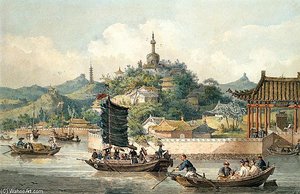
The Visionary of the Macartney Embassy
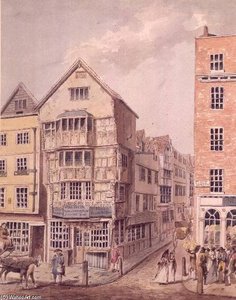
Born in the quiet landscape of Maidstone, Kent, on April 10th, 1767, William Alexander emerged as a painter whose delicate touch and observant eye would eventually bridge the gap between the English countryside and the imperial splendor of China. His early life was shaped by the traditional foundations of British art education, beginning at Maid and moving toward the vibrant, competitive atmosphere of London in 1782. Under the tutelage of masters such as William Pars and Julius Caesar Ibbetson, Alexander developed a technical proficiency that favored clarity, harmony, and a certain grace of outline. His talent did not go unnoticed; the legendary Sir Joshua Reynolds took notice of the young artist, providing a level of professional validation that would propel him into the prestigious Royal Academy Schools in 1784.
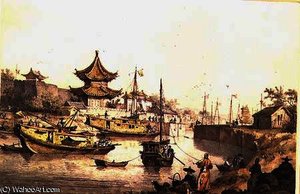
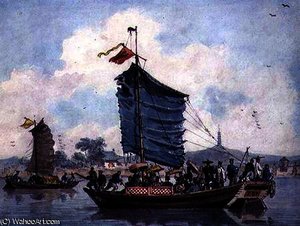
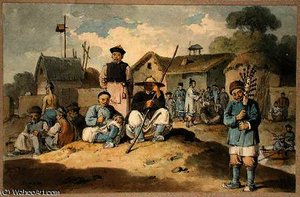
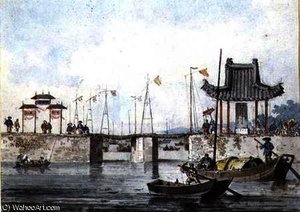
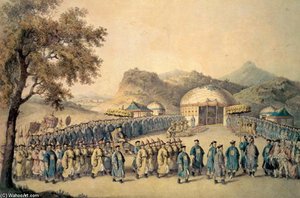
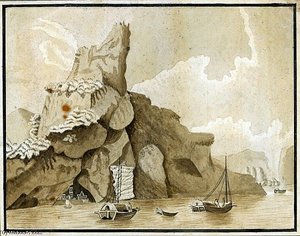
The true metamorphosis of Alexander’s career, however, occurred not in a London studio, but amidst the sweeping vistas and intricate cultural tapestries of the East. In 1792, he was appointed as an official draughtsman for the Macartney Embassy to China. This monumental diplomatic voyage offered him a window into a world largely unseen by the British public, and Alexander seized it with unparalleled diligence. His work during this period transcended mere documentation; through his watercolours and sketches, he captured the very soul of Chinese society, from the grand architectural silhouettes of Peking to the nuanced, everyday customs of its people. These visual records became essential components of Sir George Staunton's historical accounts, lending a vivid, breathing reality to the written word.
A Legacy of Detail and Discovery
Upon his return to England in 1794, Alexander did not merely retreat into the familiar; instead, he transformed his experiences of the Orient into finished compositions that captivated the Royal Academy exhibitions. His ability to translate the exoticism of the East through a lens of British refinement created a unique aesthetic—one where the precision of English watercolour met the vibrant, often overwhelming, textures of the Far East. This period of his life was marked by an incredible versatility, as he moved seamlessly between the creation of topographical landscapes and more intimate, emotive studies of human character.
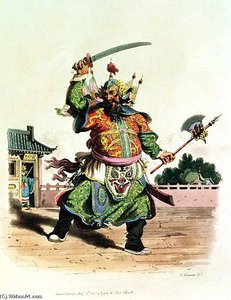
Beyond his role as a traveler, Alexander’s contributions to the world of printmaking and curation were equally profound. His work on “The Costume of China,” a series of exquisitely colored prints, remains a testament to his ability to blend ethnographic accuracy with artistic elegance. This dedication to the preservation of visual truth eventually led him to a significant institutional role: in 1808, he became the very first Keeper of Prints and Drawings at the British Museum. In this capacity, he helped shape the way art was preserved and studied for future generations.
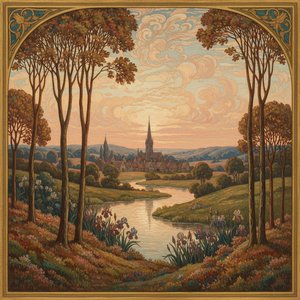
The enduring significance of William Alexander lies in his dual identity as both a meticulous chronicler and a sensitive artist. His oeuvre serves as a vital historical bridge, offering a window into an era of global encounter. Whether through the serene river landscapes of his youth or the complex, culturally rich scenes of his travels, his work remains defined by:
- Technical Mastery: A signature style characterized by a delicate execution and a harmonious use of colour palettes.
- Cultural Documentation: His pivotal role in providing the visual vocabulary for the British understanding of Imperial China.
- Artistic Versatility: The ability to navigate between the rigid requirements of topographical drawing and the expressive freedom of portraiture and landscape.
- Institutional Impact: A lasting legacy within the British Museum, ensuring the protection of much-needed artistic heritage.
Though his life was relatively short, ending in 1816, the imprint left by William Alexander continues to resonate. He remains a master of tranquility and detail, an artist who looked upon the world with an unwavering commitment to capturing its true, multifaceted beauty.