The Weaver of Cherokee Echoes
In the delicate interplay of light and shadow found within a plaited white oak vessel, one finds the enduring spirit of Alyne Driver. Born on June 4, 1943, in Gainesville, Florida, Driver was an artist whose life, though spanning only five decades, served as a profound bridge between ancestral tradition and contemporary recognition. Her work was never merely about the creation of objects; it was an act of cultural preservation, a rhythmic weaving of history into the very fibers of the natural world. As a member of the Cherokee Nation, her artistic identity was inextricably linked to the stories, symbols, and landscapes of her people, allowing her to transform raw organic materials into sophisticated works of fine art that resonate with both structural strength and poetic grace.
The foundations of Driver’s aesthetic were laid in her deep connection to her Cherokee roots. Growing up amidst the rich oral and visual traditions of her ancestors, she developed a keen eye for the storytelling potential inherent in craftsmanship. This lineage of creativity was further enriched by her familial ties to Jesse Aaron, a celebrated sculptor whose evocative depictions of the American Southwest provided a powerful precedent for using art to capture the essence of indigenous identity. Through this influence, Driver learned that an artist does not simply represent a culture but embodies its resilience and continuity.
Mastery of the White Oak
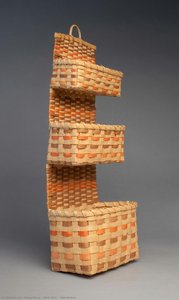
The hallmark of Alyne Driver’s contribution to Native American art lies in her unparalleled mastery of the white oak wall basket. These pieces are far more than decorative containers; they are complex tapulated structures that demand an extraordinary level of technical precision. Her process was a testament to patience and a deep reverence for the environment. She often sourced strands of white oak bark from trees that had stood for over a century, recognizing that the strength of the wood mirrored the resilience of the Cherokee people. By weaving these aged fibers into tightly braided patterns that could span several feet, she achieved a remarkable textural richness and structural integrity.
Her technique involved a sophisticated use of natural dyes, often utilizing walnut and bloodroot to imbue the pale oak with earthy, soulful tones. This meticulous method required her to balance the physical demands of heavy weaving with the delicate artistry of pattern design. The resulting baskets, such as her notable wall basket featuring graduated rectangular pouches, demonstrate a seamless blend of utility and high art. Each loop and braid served as a silent language, communicating a connection to the land and a dedication to the preservation of skills passed down through generations of Cherokee artisans.
Legacy and Cultural Significance
Driver’s recognition extended far beyond the borders of her community, finding a home within prestigious institutions and the esteemed Qualla Arts & Crafts Mutual. As a member artisan of this historic cooperative—the nation’s oldest and foremost Native American artisan collective—her work stood as a certified testament to genuine Indian enterprise and excellence. Her pieces have been honored by the U.S. Department of the Interior, ensuring that her vision remains part of the permanent historical record of American craftsmanship.
The significance of Alyne Driver’s work lies in its ability to evoke the past while remaining vibrantly present. Through her hands, the white oak became a medium for much more than basketry; it became a vessel for memory. Her legacy continues to inspire collectors and scholars alike, serving as a reminder that true art is found in the intersection of meticulous skill, cultural pride, and an unbreakable bond with the natural world. Even decades after her passing in 1997, the echoes of her Cherokee tradition remain woven into the very fabric of her extraordinary creations.