The Dawn of a Revolution: The Life of Anita Malfatti
In the vibrant, culturally evolving landscape of early twentieth-century Brazil, few names resonate with as much transformative power as Anita Catarina Malfatti. Born in São Paulo in 1889, Malfatti emerged not merely as a painter, but as a catalyst for a profound aesthetic shift that would forever alter the trajectory of South American art. Her journey began within the formal confines of the Escola de Belas Artes in São Paulo, yet her spirit was far too expansive to be contained by the rigid academicism that dominated the era. Driven by an insatiable curiosity and a desire to connect Brazil with the burgeoning avant-garde movements of the West, she sought inspiration beyond her borders, absorbing the radical energies of Europe and America.
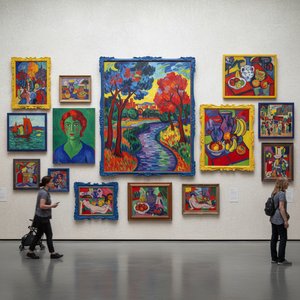
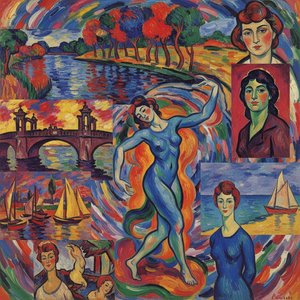
Malfatti’s early training provided her with a technical foundation, but it was her exposure to Expressionism and Fauvism that ignited her true creative fire. These movements, characterized by their use of distorted forms and non-naturalistic, emotive colors, offered her a new vocabulary to express the complexities of the human experience and the burgeoning identity of her homeland. As she integrated these international influences into her work, she began to dismantle the traditionalist expectations of the Brazilian elite, replacing them with a bold, visceral approach to subject matter and technique.
A Scandalous Debut and the Birth of Modernism
The year 1917 stands as a watershed moment in art history, marking the arrival of Malfatti’s solo exhibition in São Paulo. This exhibition was nothing short of a cultural earthquake. To an audience accustomed to the polite, representational styles of the academy, Malfasting's canvases appeared jarring and even provocative. Her use of aggressive brushwork, fragmented figures, and a palette that defied reality sparked intense controversy and even public outcry. Critics of the time were often harsh, viewing her departure from tradition as an affront to national taste.
However, what many dismissed as chaos was actually the first breath of Brazilian Modernism. This period of friction was essential; it forced a dialogue between the old world and the new. Malfatti’s courage in presenting such unconventional work laid the groundwork for the legendary Semana de Arte Moderna (Week of Modern Art) in 1922. Alongside her contemporaries, she became a central figure in a movement that sought to forge a uniquely Brazilian modern identity—one that was deeply rooted in local reality yet conversant with the global avant-garde.
Legacy and Artistic Evolution
Throughout her career, Malfatti’s work underwent a fascinating evolution, moving through various stages of experimentation. While her early works are celebrated for their raw, expressionistic intensity, her later pieces demonstrate a refined mastery of form and a nuanced approach to light and space. Her ability to navigate the tension between subjective emotion and formal structure remains one of her greatest artistic achievements.
The significance of Anita Malfatti extends far beyond the canvases she left behind. Her legacy is woven into the very fabric of Brazilian cultural history:
- Pioneering Spirit: She acted as the primary bridge between European modernism and the development of a distinct Brazilian aesthetic.
- Cultural Catalyst: Her 1917 exhibition served as the spark that ignited the modernist movement in Brazil, challenging the hegemony of academic art.
- Enduring Influence: Her bravery paved the way for subsequent generations of artists to explore identity, abstraction, and social commentary without fear of traditionalist backlash.
Today, her masterpieces, such as Untitled (1917), reside in prestigious institutions like the Museu de Arte de São Paulo, serving as enduring testaments to her revolutionary vision. Anita Malfatti remains a symbol of artistic courage, reminding us that true progress often begins with a single, controversial stroke of the brush.