A Visionary in Exile: The Art of Anne Marguerite Hyde de Neuville
In the turbulent dawn of the nineteenth century, as the fires of the French Revolution reshaped the destiny of Europe, a remarkable artistic voice emerged from the shadows of political exile. Anne Marguerite Hyde de Neuville, born Henriette Anne Marguérite Joséphine Rouillé de Marigny, was far more than a mere aristocrat caught in the tides of history; she was a sensitive observer whose delicate hand captured the fleeting essence of a changing world. Though her life was defined by the displacement and uncertainty common to the French nobility of her era, her artistic journey led her to the rugged landscapes and diverse faces of the American Northeast, leaving behind a visual legacy that serves as a precious window into the early American experience.
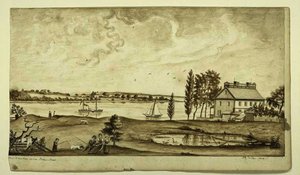
Her story is inextricably linked to her husband, Jean-Guillaume, baron Hyde de Neuville, an ardent royalist whose political convictions forced the couple into a nomadic existence. After fleeing the upheaval in Paris and navigating the complexities of Napoleon’s reign, the couple arrived in New York in 1807, carrying with them nothing but their dignity and a profound curiosity about their new surroundings. It was during these years of American residency—stretching from the bustling streets of New York City to the pastoral stretches of New Jersey and Connecticut—that Anne Marguerite’s talent as a self-taught watercolorist truly blossomed. Her work became a silent diary of her travels, documenting the landscapes of the Hudson River and the majestic presence of Niagara Falls with an intimacy that few contemporary travelers could replicate.
The Delicate Brush: Technique and Subject Matter
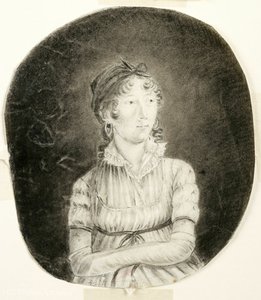
As a self-taught artist, Anne Marguerite did not rely on the rigid academic structures of the French salons; instead, her style was born of direct observation and an instinctive understanding of light and form. Her medium of choice, watercolor and pencil, allowed for a spontaneous fluidity that perfectly suited her role as a traveling chronicler. There is a profound tenderness in her renderings of people—ranging from intimate family portraits to ethnographic sketches of Native Americans—that transcends simple documentation. She possessed a rare ability to capture the subtle nuances of expression, imbuing her subjects with a sense of individual humanity and dignity.
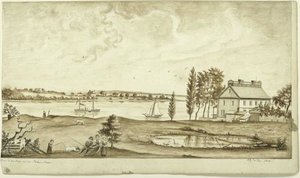
Her landscapes are equally evocative, characterized by a meticulous attention to detail that reveals her keen eye for the natural world. In her depictions of the American wilderness and burgeoning settlements, one can sense the interplay between the untamed beauty of the frontier and the quiet encroachment of civilization. Her compositions often feature:
- Intimate Portraiture: Small-scale, sensitive likenesses that capture the psychological depth of her subjects.
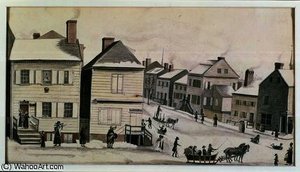
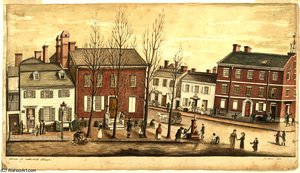
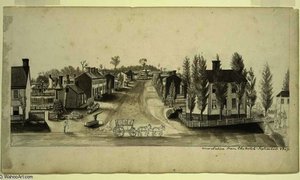
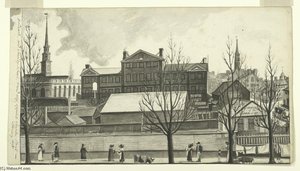
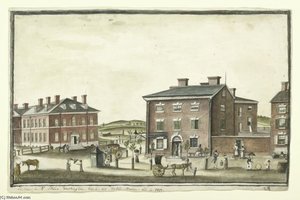
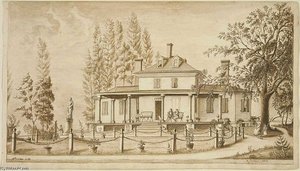
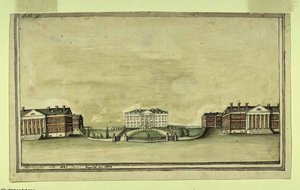
- Topographical Precision: Detailed sketches of architectural landmarks, such as churches and early American homesteads, which provide invaluable historical records.
- Atmospheric Landscapes: Watercolors that utilize soft washes to convey the misty mornings of the Hudson Valley or the dramatic scale of natural wonders.
A Lasting Legacy of Historical Insight
The significance of Anne Marguerite Hyde de Neuville’s oeuvre extends far beyond the aesthetic merits of her watercolor technique. In an era before the ubiquity of photography, her collection of over 200 drawings and paintings serves as a vital ethnological and historical archive. Her work provides rare, firsthand visual evidence of the social fabric of the early United States, documenting customs, clothing, and environments that have long since vanished. Through her eyes, we witness the transition of the American landscape during the Federalist era, seeing both the grandeur of nature and the quiet rhythms of daily life.
Though she eventually returned to France following the political shifts in Europe, her heart remained tethered to the observations she made during her American exile. Today, her contributions are celebrated not only for their artistic grace but for their role as a bridge between two worlds. She remains a testament to the power of the artist to find beauty and purpose amidst upheaval, transforming the displacement of an aristocrat into a profound gift of historical preservation for the world.